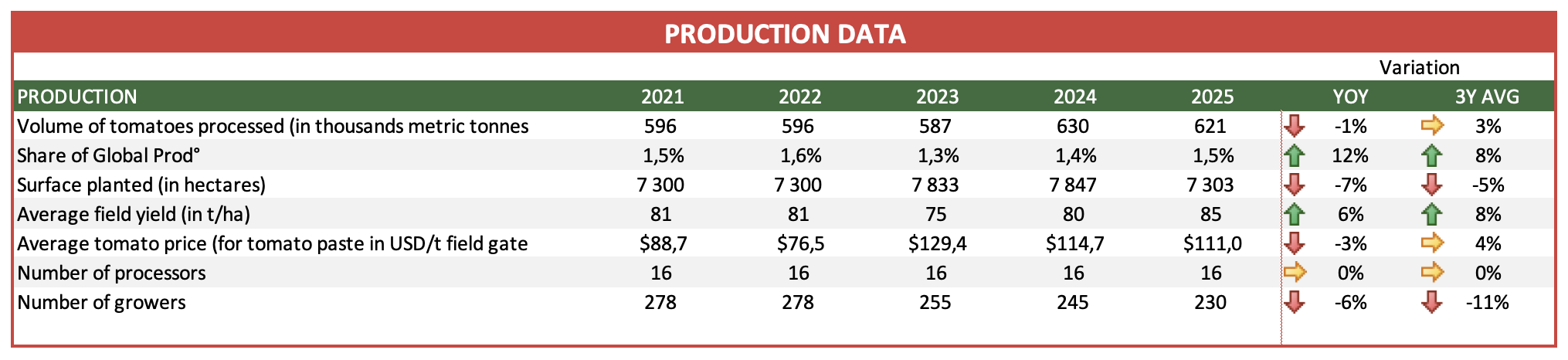
The processing tomato industry in Argentina is a highly specialized, technologically advanced agro-industrial sector. Though small on a global scale—accounting for roughly 1% of the international market—it plays an essential economic role domestically. The sector is defined by intense regional concentration, high technological adaptation, and an ongoing battle to balance domestic self-sufficiency against aggressive import competition.
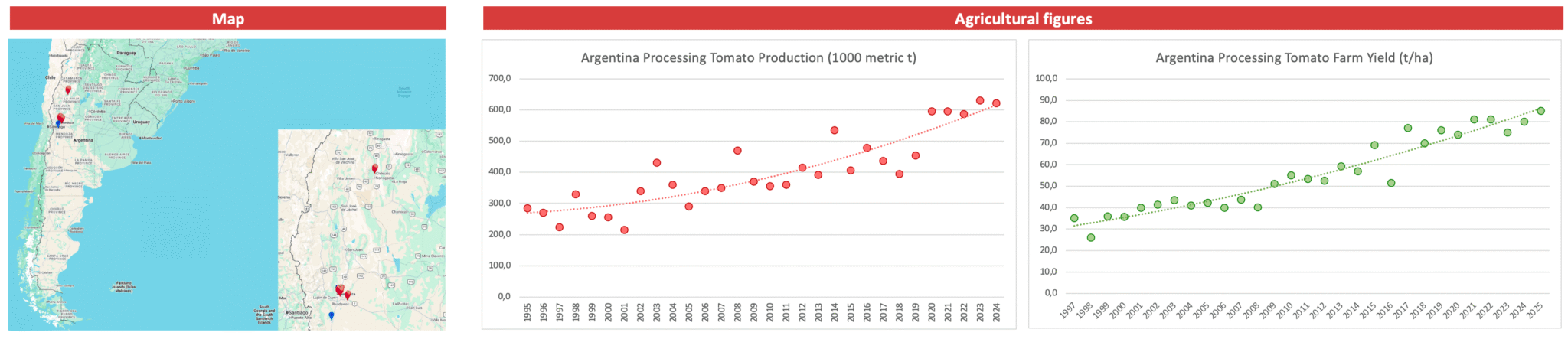
- The heartbeat of Argentina’s tomato processing industry lies in the Cuyo region, specifically the provinces of Mendoza and San Juan. Together, these two provinces account for over 80% of the country’s total industrial tomato cultivation. Benefiting from an arid climate, low relative humidity, and high solar radiation, this region experiences exceptionally low natural disease pressure.
- The remaining production is scattered across the Northwest (NOA- Noroeste Argentino), including Salta and Jujuy, and minor pockets in Río Negro.
Because the Cuyo region relies on a desert landscape, water management is everything. The industry features a remarkably high level of modernization, spearheaded by Asociación Tomate 2000. In San Juan, for example, over 95% of the industrial tomato acreage utilizes advanced drip-irrigation systems fed by Andean snowmelt. Furthermore, around 75% of transplanting and 85% of harvesting are entirely mechanized, pushing average regional yields to an impressive 100 tonnes per hectare—with elite growers reaching up to 150 tonnes.
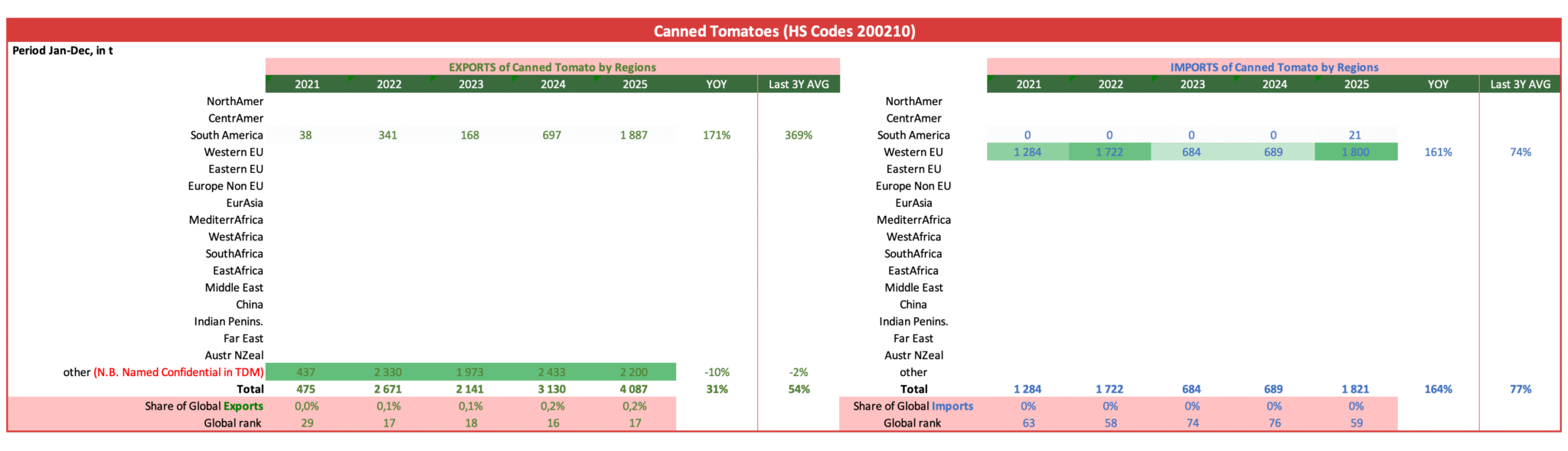
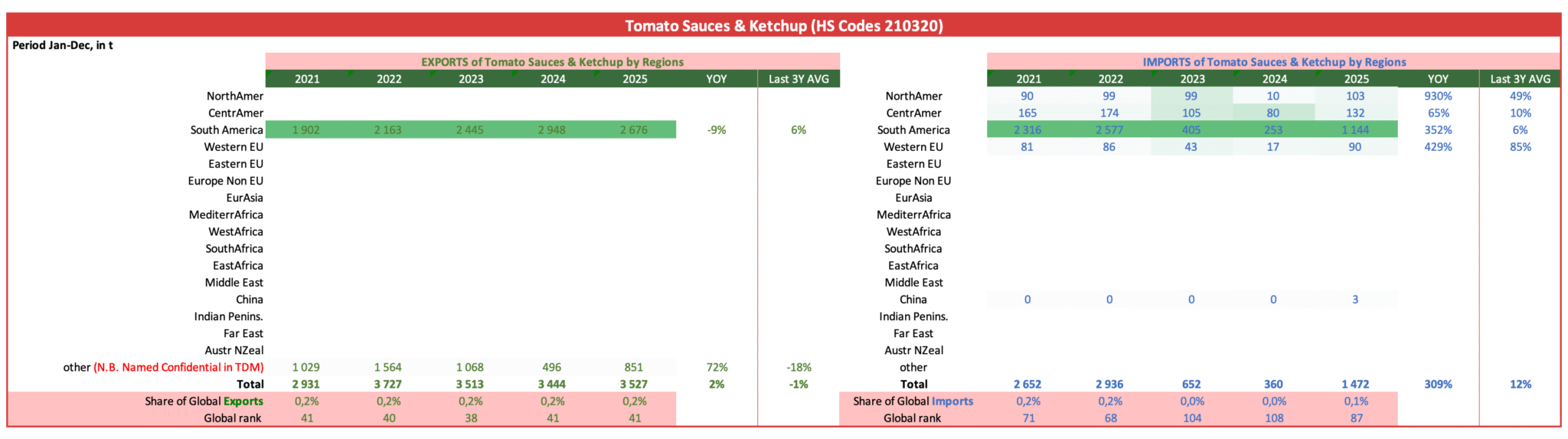
The Argentine harvest runs tightly from mid-December through late April. The industry’s primary commercial focus is the production of tomato paste, purees, whole peeled canned tomatoes, and diced varieties. A large proportion of 28-32 brix paste is typically packed into drums to be used later by domestic food brands for ketchups and sauces, while a significant portion goes directly into consumer Tetra Packs and cans.
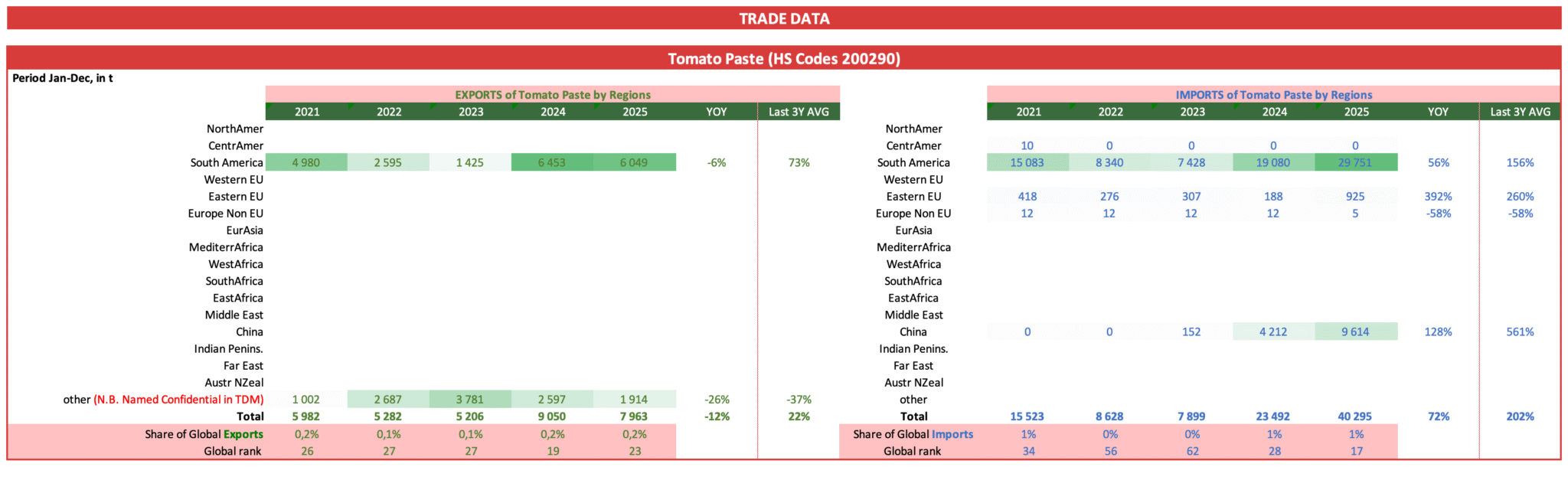
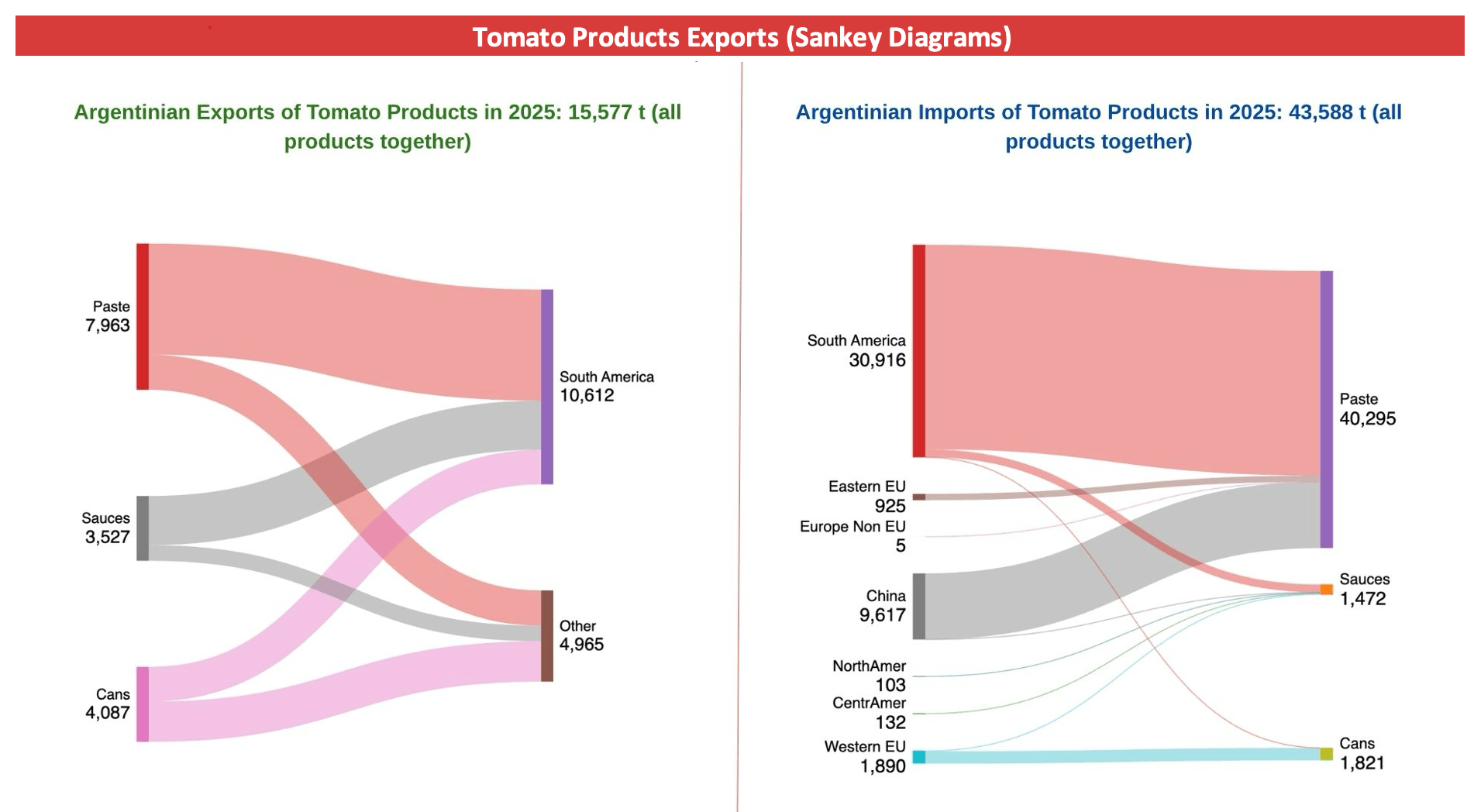
The defining paradox of the Argentine industry is that despite its high efficiency, Argentina does not produce enough processing tomatoes to satisfy its own domestic consumption. Argentines are among the highest consumers of processed tomato products in South America, demanding roughly 600,000 to 720,000 metric tonnes of raw equivalent annually. Historically, domestic supply hovers closer to 450,000 to 550,000 tonnes. This structural deficit forces Argentina to import the remaining balance—primarily high-concentrate paste from neighbouring Chile, and increasingly, ultra-competitive suppliers like China.
The industry is currently navigating a complex transitional period. High production costs—ranging between $7,000 and $8,500 per hectare due to expensive mechanization, fuel, and imported fertilizers—have raised the financial break-even point for local farmers to 80-85 tonnes per hectare. Concurrently, a combination of heavily accumulated global stocks, robust import pressure, and cooled domestic retail demand has squeezed processing margins. Industrial plants have temporarily scaled back contracted volumes, preferring to deplete existing inventories.