News
Western Europe Sees Record Heat as El Niño Intensifies
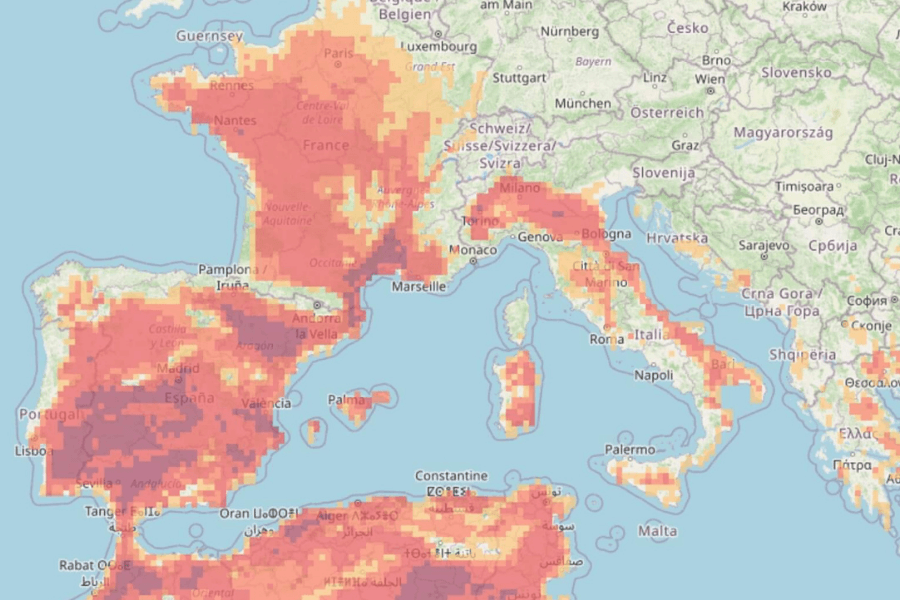
According to Copernicus Climate Change Service, July 2026 tied with July 2024 as the joint-second warmest July recorded globally, driven by historic heat across Western Europe and unprecedented ocean temperatures. While the month saw sharp regional contrasts across the European continent—with cooler-than-average conditions settling over Scandinavia and Eastern Europe—Western Europe capped off its warmest June–July period on record.
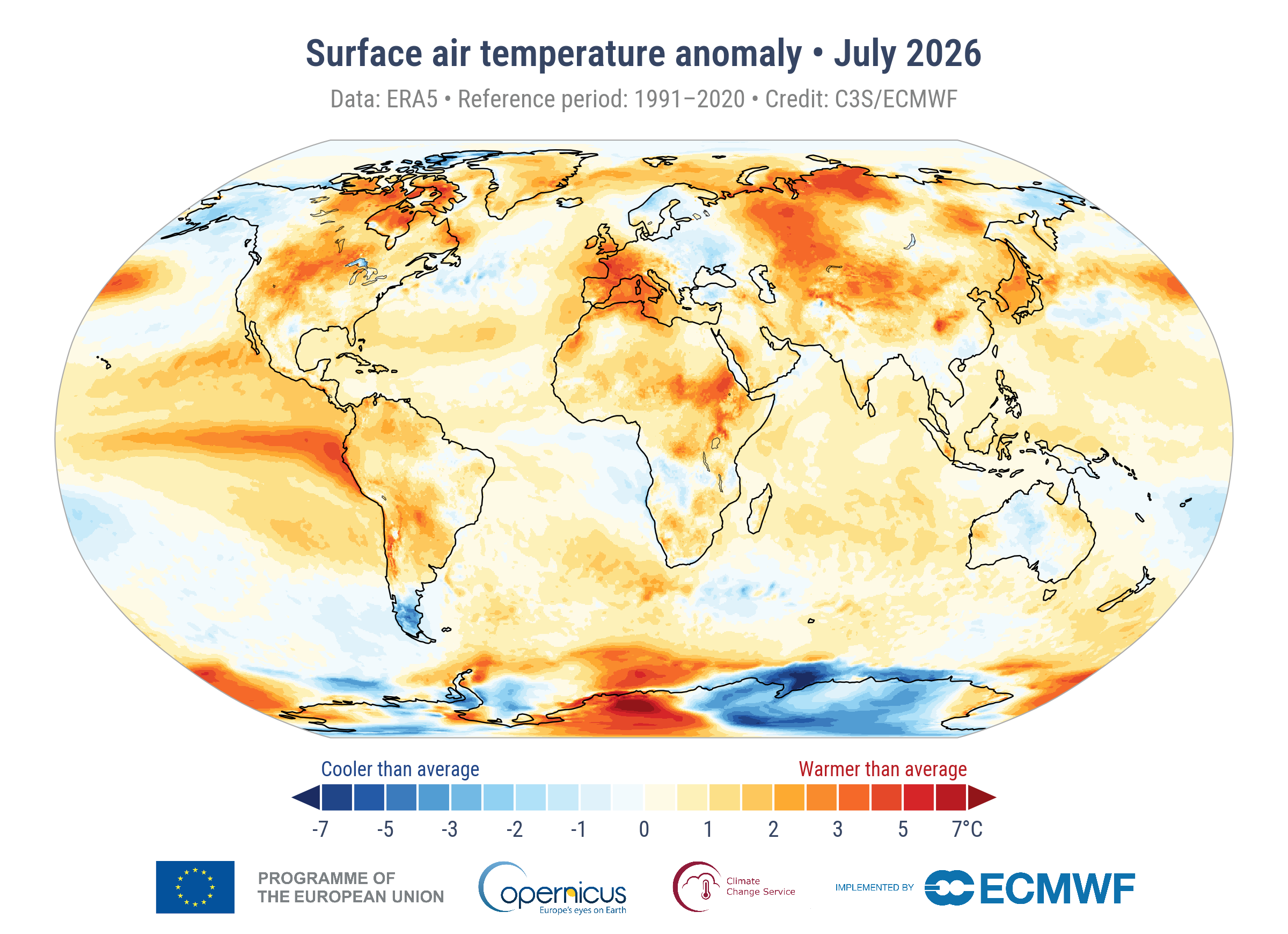
The European heat was defined by a stark west-east temperature divide. Across France, Germany, northeastern Spain, England, Switzerland, and western Italy, monthly temperatures soared between 3°C and 5°C above average, propelled by recurring heatwaves during the first half and final days of the month. National monitoring confirmed that France experienced its warmest July on record, while Spain recorded its joint warmest. Meteorologists attributed this sharp spatial divide to a high-pressure area positioned northwest of the UK and Ireland, which pulled warm North African air northward along its western flank while drawing cooler polar air southward into Eastern Europe.
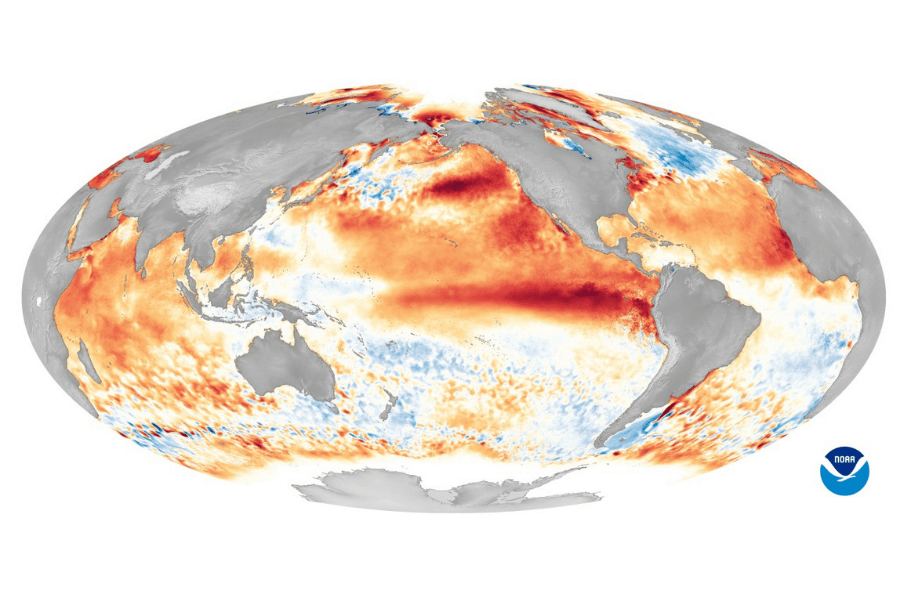
Beyond the European landmass, extra-polar sea surface temperatures reached their highest July levels on record, driven in part by a rapidly developing El Niño in the equatorial Pacific. According to the World Meteorological Organization’s latest Global Seasonal Climate Update, El Niño is expected to steadily intensify into a strong event during the August–October 2026 season, with seasonal-average sea-surface temperature anomalies forecasted to exceed 2.9°C in key monitoring regions. This strengthening Pacific warming is coinciding with a positive Indian Ocean Dipole phase—where the western Indian Ocean warms relative to the eastern side—along with widespread above-average temperatures across the Tropical Atlantic. Together, these compounding ocean drivers are expected to dominate global climate patterns through late autumn, significantly increasing the likelihood of above-normal land temperatures globally while heightening regional risks for drought, severe flooding, and wildfires around the Indian Ocean basin and beyond.
Addressing the critical need for proactive risk management ahead of these shifting weather patterns, WMO Secretary-General Celeste Saulo emphasized, “El Niño is one of the most closely monitored climate phenomena in the world. But forecasts in themselves do not prevent hazards, people do. This El Niño developing against the backdrop of unprecedented ocean heat and rising temperatures, provides governments and communities with a window of opportunity to anticipate risks and act before impacts unfold. The decisions we make today will shape the impacts we experience tomorrow.“
UN Secretary-General António Guterres also issued a stark warning regarding the trajectory of the phenomenon, noting: “El Niño is not just on our doorstep – it is inside the house and turning up the heat. And this is only a warm-up act. El Niño is strengthening – adding fuel to a planet already on fire with scorching heat domes, apocalyptic wildfires and record hot seas.“
The next WMO’s Global Seasonal Climate Update, scheduled for release in early September, will provide a broader assessment of climate conditions, including El Niño/La Niña Update.
Sources: Copernicus, World Meteorological Organization