News
War on wilt with Africa-wide trials
Bacterial wilt is one of the most devastating tomato diseases in tropical and subtropical regions. Host-plant resistance offers a durable solution, and it is encouraging to see WorldVeg making progress in the fight against this disease.
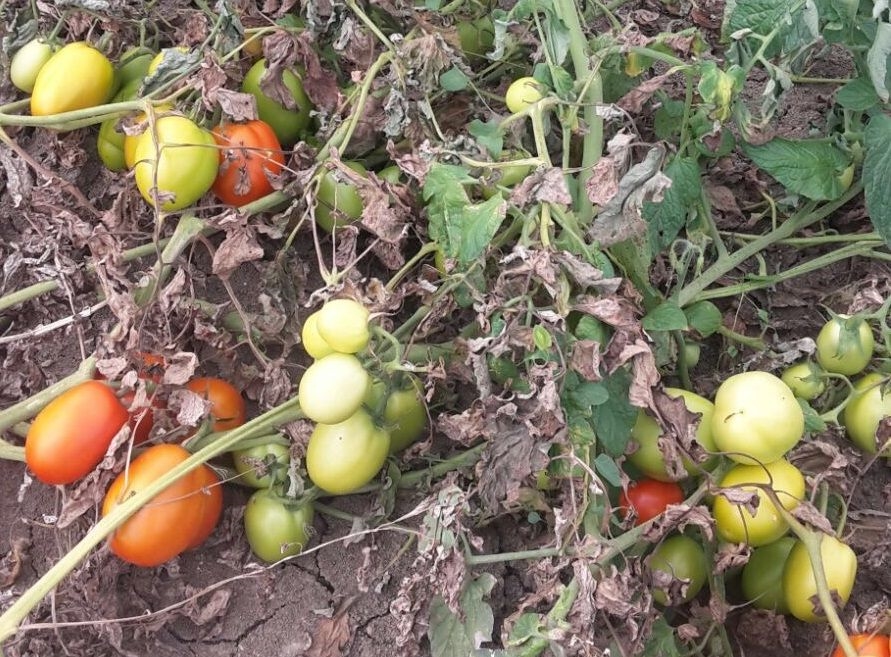
Bacterial wilt, caused by bacteria in the Ralstonia solanacearum species complex, can devastate crops with frightening speed. The bacteria choke plants from the inside, invading the vessels that carry water up from the roots until they begin to clog. Starved of water, an apparently healthy plant can quickly wilt and die.
Once established in a field, bacterial wilt is extremely difficult to control. The bacteria can persist in soil, water, crop residues and other host plants, and in badly affected areas the disease can severely restrict production of susceptible vegetable crops for years.
The scale of the problem in Africa is considerable. According to WorldVeg-led research, bacterial wilt has been reported in at least 29 African countries, with tomato losses ranging from 35% to 100% depending on the country. In Nigeria, researchers have documented areas where losses were so severe that tomato production became virtually impossible, while disease incidence has reached 100% in some parts of neighbouring Benin.
Climate change could make the challenge harder. Temperature is an important factor influencing bacterial wilt, while high temperatures can also affect the ability of plants to resist the disease – adding to the need for varieties whose resistance holds up across different environments.
New lines of defence
Breeding resistant varieties offers one of the most practical ways to protect farmers. But there is a complication: the bacteria that cause bacterial wilt are highly diverse, and resistance that works against one population may not work against another.
That’s the challenge a four-year World Vegetable Center (WorldVeg) initiative with six seed companies is trying to explore and solve. Drawing on multiple sources of bacterial wilt resistance identified in tomato diversity conserved in the WorldVeg genebank in Taiwan, researchers developed breeding lines carrying different combinations of resistance.
Twelve tomato lines and 15 new pepper lines were then provided to the six companies as part of a special project under the African Vegetable Breeding Consortium (AVBC), a joint initiative of WorldVeg and the African Seed Trade Association (AfSTA). The same lines were showcased during the Consortium’s annual workshop in Benin, recently with four identified for their combination of bacterial wilt resistance and important horticultural characteristics including yield, fruit size and shape, and plant vigor.
For pepper, there are currently no reliable, publicly available genetic markers that breeders can use to select plants for bacterial wilt resistance. The AVBC project is testing promising WorldVeg pepper lines across different environments to validate the markers and identify the most durable sources of tolerance.
Testing resistance across Africa
Participating seed companies will test the breeding lines at multiple locations across Africa, sharing the results with WorldVeg. Trial sites are being selected to expose the material to different climates, soils and bacterial wilt populations. By combining, or “pyramiding”, several resistance genes in the same plant, researchers hope to build stronger resistance; the trials will show which combinations work best in different environments. The companies will also send bacterial samples from the trial sites to WorldVeg for identification and characterization.
By matching bacterial populations with the resistance pyramiding that works against them, the project aims to establish which combinations are most effective in different production areas – helping breeders develop varieties with the right protection for particular locations, while also searching for resistance that works more broadly.
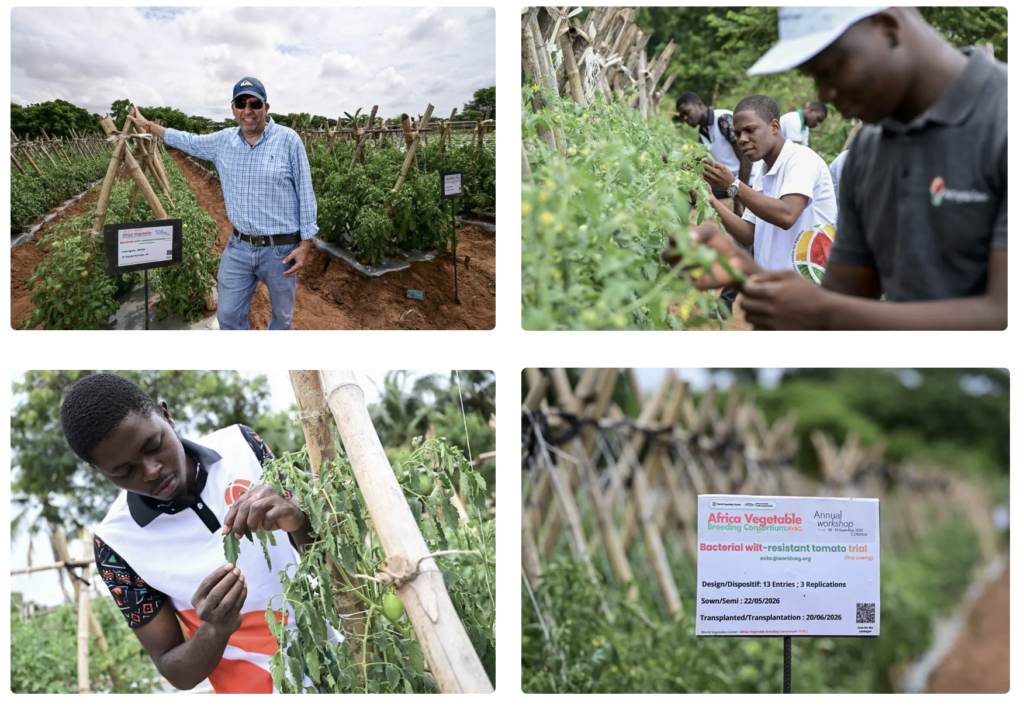
“We’re closing in on bacterial wilt,” said Dr. Assaf Eybishitz, lead tomato breeder at WorldVeg and leader of the AVBC Bacterial Wilt Special Project. “If we can develop tomatoes and peppers that withstand the disease locally, we can bring affected land back into production and give farmers the confidence to grow these vegetables.”
He continued: “The key is working out which combinations of resistance genes are needed where. If a seed company has to combine seven resistance genes in a new variety, that’s a huge breeding task and could take years. But if we can show that only two or three are needed to protect a tomato in a particular area, that’s much more manageable and speeds up the delivery of resistant varieties to farmers. That’s what we’re trying to crack.”
Participating companies will receive promising breeding lines alongside genetic information and data showing where different types of resistance perform best. For pepper, they will also receive new molecular markers to help them breed for bacterial wilt resistance. The project runs until 2030.
“Not only is this an important step in the fight against bacterial wilt in Africa,” continued Eybishitz. “It gives participating companies a valuable head start in bringing resistant varieties to market.”
The AVBC project is part of a wider WorldVeg effort to tackle bacterial wilt on multiple fronts. Alongside breeding resistant varieties, researchers are exploring grafting susceptible varieties onto disease-resistant rootstocks, and testing beneficial microbes that can suppress the disease. Supporting this, WorldVeg’s Beneficial Microbe Bank brings together promising strains for research and development, including biocontrol agents candidates that have already shown activity against bacterial wilt. Researchers are also exploring approaches such as biofumigation, the use of natural compounds released by certain plants to suppress Ralstonia in the soil.
WorldVeg is also strengthening disease surveillance and diagnostics, including through the new Taiwan-ASEAN Pest and Disease Surveillance Network and its VeggieMon platform, which helps countries track pathogens and emerging outbreaks. Together, the work spans the chain from detecting bacterial wilt and understanding where different strains occur, to supporting efforts to prevent its spread, reduce the bacteria in affected soils and develop crops better able to withstand it.
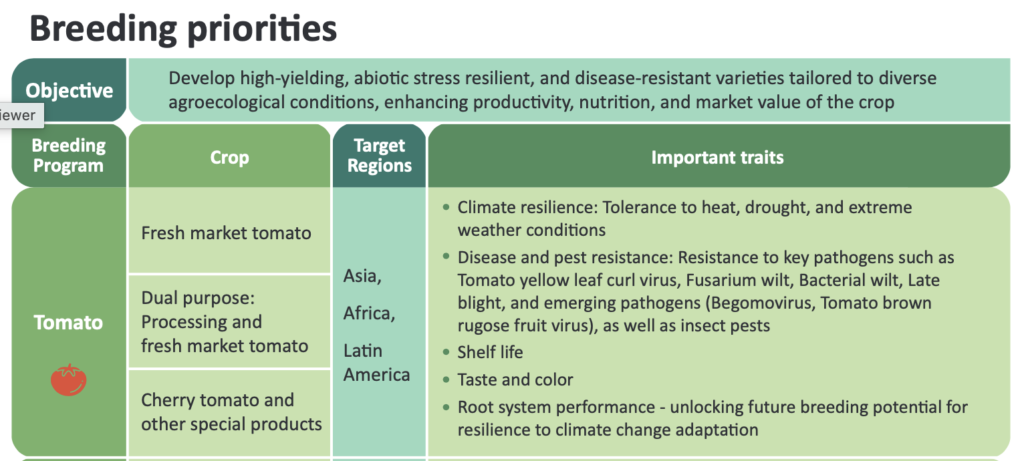
This work is part of the Action Area on Climate Resilience in the WorldVeg Global Strategy 2026-2033 which highlights the organisation’s breeding priorities: