News
Tomato Bites by Morning Star, October 5, 2023 Release
California’s Tomato Crop 2023: Insights and Expectations for the Final Stretch
Morning Star colleague Aaron Giampietro is back with another Tomato Bites by Morning Star update. The 2023 tomato processing season is in its final month of production providing us with a better perspective on potential outcomes and key factors influencing this year’s quality, yields, and economics.
Morning Star colleague Aaron Giampietro is back with another Tomato Bites by Morning Star update. The 2023 tomato processing season is in its final month of production providing us with a better perspective on potential outcomes and key factors influencing this year’s quality, yields, and economics.
 “Hello everyone. This is Aaron Jim Petro from the Momingstar Packing Company with your October 5th, 2023 tomato bite update.
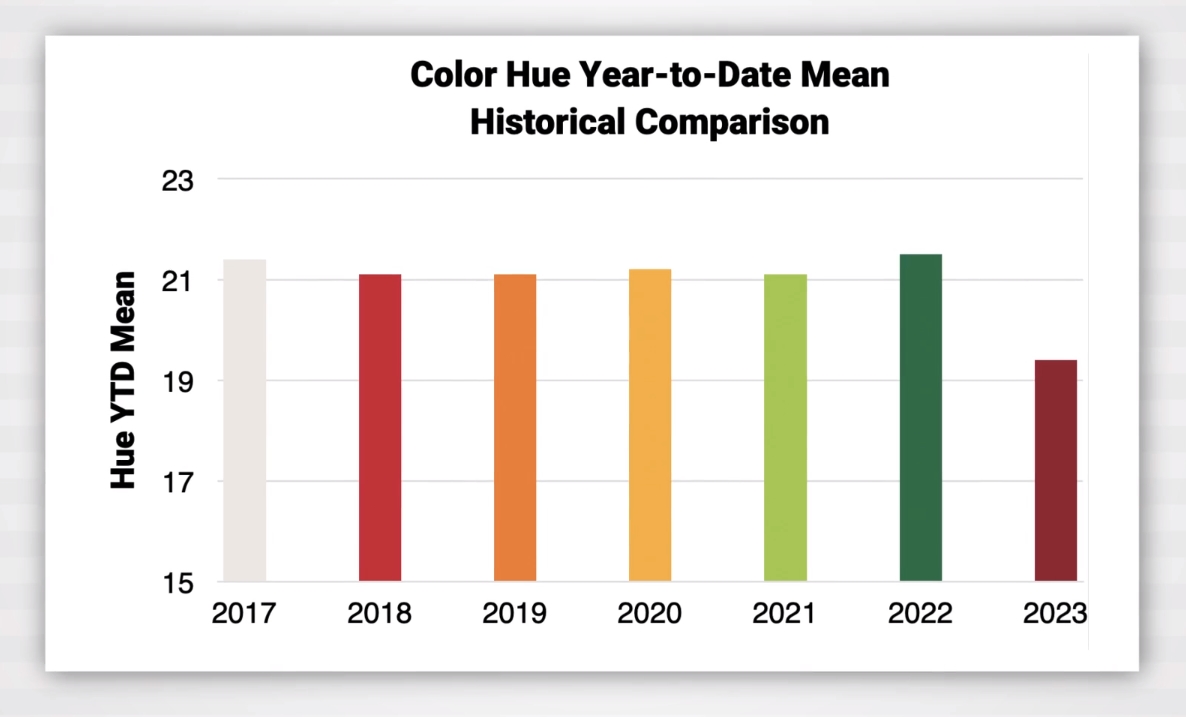
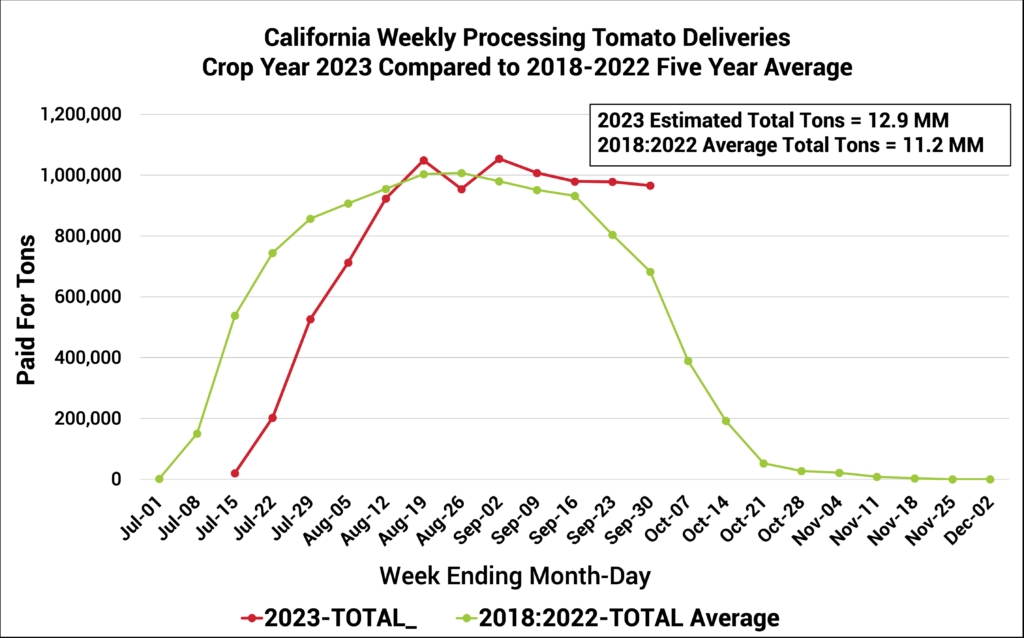
Each crop year has its unique challenges and factors that shape its outcome. Now that September has concluded, we can more clearly identify the key factors influencing this year’s quality, yields and economics. First, as of September 30th, the cumulative harvest stands at 9.4 million paid short tons. This is 72% of the August USDA NASS estimate of 12.9 million paid short tons. To reach this target, California processors must maintain a production of 1 million short tons per week for the first three weeks of October before reducing to half capacity in the final week. Given the past five years, achieving this would be unprecedented and requires ideal weather conditions and flawless supply chain execution. Secondly, this year's California summer weather has been stable, promoting high field yields and quality fruit after three consecutive scorching summers. This year was milder, ranking as the state's 34th warmest in the past 129 years. Such conditions have positively impacted fruit maturity without compromising yield and color. The HUE color of raw tomatoes, where a lower score indicates better color, is trending at its best since the adoption of the HUE measurement, the early above average field yield reported in August has since moderated.
We anticipate field yields to decrease as we move through October due to shorter daylight hours and the onset of cooler moist fall weather.
The National Oceanic Atmospheric Administration’s recent October outlook indicates a slight probability of above average rainfall for October. However, California’s expected to experience higher temperatures during the same period.
Meanwhile, a strong El Nino has formed in the Pacific, suggesting higher likelihood of above average precipitation in California between December and March. The favorable weather has not only alleviated 90% of California's drought conditions, but also reduced the state's natural gas consumption. Decreased cooling demand combined with hydropower from full reservoirs and the state's ambitious push for solar power and battery storage has resulted in a surplus of natural gas inventories. California recently hit a peak instantaneous solar output on September 26th of over 16 gigawatt hours.
The National Oceanic Atmospheric Administration’s recent October outlook indicates a slight probability of above average rainfall for October. However, California’s expected to experience higher temperatures during the same period.
Meanwhile, a strong El Nino has formed in the Pacific, suggesting higher likelihood of above average precipitation in California between December and March. The favorable weather has not only alleviated 90% of California's drought conditions, but also reduced the state's natural gas consumption. Decreased cooling demand combined with hydropower from full reservoirs and the state's ambitious push for solar power and battery storage has resulted in a surplus of natural gas inventories. California recently hit a peak instantaneous solar output on September 26th of over 16 gigawatt hours.
Another record was set in late September for maximum battery discharge, sending over 5.2 gigawatts of stored electricity back to the grid during peak demand.
 These expanding investments will continue to provide stability when California's weather inevitably swings from one extreme to another. As we approach the final month of production, it is crucial for everyone in the California tomato industry to remain motivated and resilient. Our shared goal is to uphold California's reputation as a reliable global leader in our segment."
Some complementary data
Source: morningstarco.com