News
Moderate satisfaction expressed at the agreement reached on May 19 at EUR 150 /mT for the 2023 season in northern Italy. For the agricultural sector, the industry has been strengthened by this episode where representatives of the growers' interests – the "open-air factories" – showed synergy and coherence and where the industrial side demonstrated that it values the sector as a whole. As for the industrial sector itself, the ANICAV maintains that with an increase of nearly 40% of the base price, this agreement is unsatisfactory, but it feels that a sense of responsibility has prevailed.
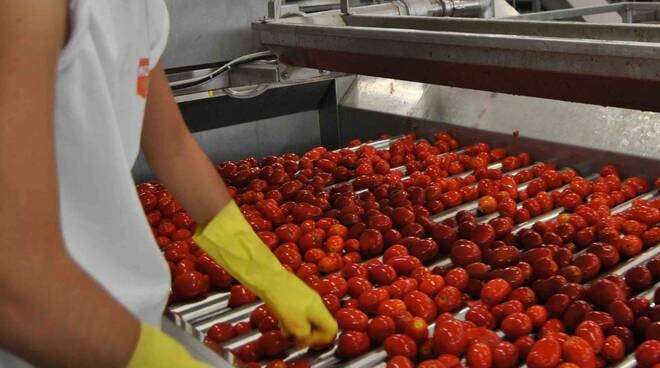
The very long negotiations for the price of processing tomatoes in northern Italy was concluded on May 19 with an agreement that meets the expectations of agricultural producers. Although it comes late in relation to planting operations, the growers' representative organizations declared themselves satisfied with the price of EUR 150 per metric tonne (field-gate) concluded for the 2023 season, 20 euros higher than the initial proposal of the processors' side.
As for the ANICAV, after the conclusion of the framework agreement for the management of the next processing tomato season in the northern basin of Italy, the national association of canning industries speaks of "long and intense negotiations, marked by an attitude of permanent rigidity of the agricultural parties that in no way wanted to listen to the arguments of industrial operators."
 The agreement provides for the confirmation of the 2022 contractual framework with regard to quality standards, with the exception of some improvements for late tomatoes, with an average reference price of EUR 150 /mT, the highest ever recorded, as the ANICAV points out, as it amounts to an increase of more than 40% compared to 2022.
"The sense of responsibility prevailed," says Bruna Saviotti, coordinator of the ANICAV Territorial Committee of the Northern Basin, "with the emergency situation affecting Emilia-Romagna, especially in the eastern area of the region, and the awareness of what represented a definitive break in the negotiations of our sector, prompting us to reach an agreement, even if it was not satisfactory for our companies."
ANICAV President Marco Serafini stated: "In the difficult times we have been experiencing, 'cohesion' is the only answer that an industry like ours can provide. The industrial sector has done its part while being aware of the difficulties that can arise from such a high average reference price."
For Confagricoltura national President, Massimiliano Giansanti, and local leaders of Emilia-Romagna (Marcello Bonvicini), Parma (Roberto Gelfi) and Piacenza (Filippo Gasparini), "the agreement reached on the price of processing tomatoes in northern Italy is good because it takes into account our considerations. The price of EUR 150 /mT, which we had already indicated at the beginning of the month as the target of the negotiations, takes into account the increase in costs and prices of processing tomatoes fixed by our direct competitors in other Member States, as well as the dynamics of the market."
 "We are convinced that the industry can grow and be strengthened as long as value is created for all its different stages."
The agreement also provides for an additional premium (+1 euro/tonne/day starting from 12 September) for late tomatoes. "This is an important incentive to extend the harvest beyond mid-September," emphasized President Giansanti. "The industry's commitment to review the chart on product quality requirements in order to include corrections in the next framework agreement for 2024 is also of great importance."
Marcello Bonvicini stated: "The entire industry is advantaged, at a critical time for the social and economic fabric. The industry's compliance with the requests of the farming sector is a step towards convergence around a common position at the table with the large retail chains."
Like his counterparts, Roberto Gelfi points out that "Producers' organizations have consolidated their role by skilfully compacting supply; not without effort, the industry has demonstrated its cohesion and sense of responsibility in protecting a precious product of strategic importance to our economy. What we had hoped for finally happened, namely the implicit recognition of the reference price that world markets had already ratified, notably through agreements signed in Spain, California and with a number of Italian companies."
"As an agricultural organization, we have demonstrated the capacity of the productive world to aggregate, which is the only real leverage available to agricultural operators needing to redefine the price system. We must also acknowledge the openness shown by the processing sector, confirming the centrality of Italian products in the area of commercial policies."
Henceforth, "we need to think about the efficiency of a campaign that will not be spared agronomic difficulties and which, already due to unfavorable weather conditions (recent frosts and floods), is starting with a loss of at least 20% of its crop compared to 2022."
"We also need supermarkets to recognize the good work done by both the agricultural and industrial sides of the industry, guaranteeing a competitive price for tomato-based products on their shelves."
 The President of the AINPO (Inter-provincial Association of Fruit and Vegetable Producers), Filippo Arata, expressed his satisfaction with the agreement that has just been signed, calling it "the result of a long negotiation, conditioned by the particular agronomic situation, in which each party interpreted its role appropriately, and which finally led, in a responsible manner and with the appropriate adjustments, to a fair result for all."
Filippo Arata was keen to "also thank the industrial parties, because at the end of the day, we are all thinking about the future. The agreed price is not random, but the result of careful, weighted calculations of real costs that could not be ignored."
Sources: askanews.it, terraevita.edagricole.it, informatoreagrario.it, gazzettadiparma.it, corrieredellacalabria.it, ilpiacenza.it, piacenzasera.it, liberta.it