News
Groundwater Mandates Hit California Tomato Growers
For the first time, California tomato growers operating in some of the state’s most acutely water-stressed agricultural zones must officially report how much groundwater they are taking. For generations, Central Valley landowners have been free to pump water from wells on their private property without state oversight, but a hard deadline of May 1, 2026, has brought that era to a close.
The State Water Resources Control Board opened its online platform, the Groundwater Extraction Annual Reporting System (GEARS), requiring tomato growers in the probationary Tule and Tulare Lake groundwater subbasins to log in and submit detailed usage data. Following recent adjustments by the state board, this initial reporting period was set to capture all groundwater extractions spanning from July 15, 2024, through September 30, 2025.
To assist local producers, the State Water Board mailed out official notice letters containing unique “Correspondence IDs” required to access GEARS. However, state regulators emphasize that even if a grower did not receive a letter due to incomplete county parcel information, they are still legally mandated to track their usage, contact the board, and submit their reports to avoid future enforcement actions.
This strict tracking system forms the baseline for the state’s intervention framework. By collecting specific volumetric data, the agency is establishing a fee structure to fund its oversight—charging landowners a base fee of $300 for each active well, plus an extraction fee of $20 for every acre-foot of water pumped. Low-income residents, public schools, and water systems serving disadvantaged communities may apply for fee waivers, but only if their extractions were filed by the May 1 deadline.
Conversely, a recent resolution adopted by the State Water Board on April 7, 2026, provides targeted relief for the smallest operators. Tomato growers who extract 20 acre-feet or less of groundwater per year—and do not export that water outside the subbasin—are officially excluded from these probationary reporting mandates and associated fees.
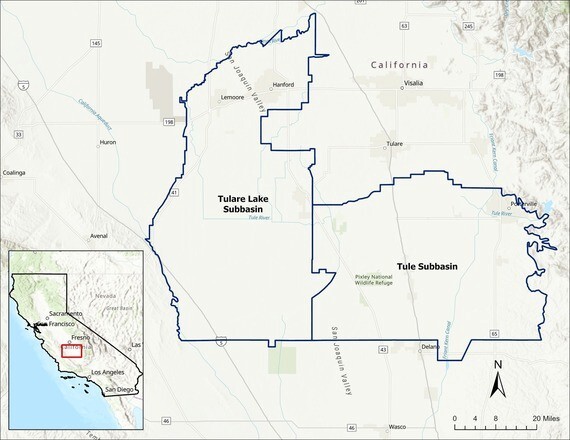
The strict state intervention comes after the local Groundwater Sustainability Agencies (GSAs) in the Tule and Tulare Lake regions were placed on probation in 2024 for failing to curb excessive pumping. Decades of heavy agricultural extraction have caused the underground water table to plummet, forcing the land to sink. Parts of the Tulare Lake region have subsided by more than 6 feet since 2015, severely damaging critical water delivery infrastructure, including the Friant-Kern Canal.
While regional farming bureaus have mounted legal challenges against the state’s intervention—arguing that the sudden financial fees and complex reporting systems are hurting businesses during a difficult economic period—the state maintains that these measures are vital. State officials point out that local GSAs can still regain control and exit state probation by submitting alternative compliance mechanisms and demonstrating a clear, coordinated path toward sustainable long-term water management.
Sources: LA Times, State Water Resources Control Board, California Department of Water Resources.