News
A few days after the terrible floods that hit northern and central Italy on May 2, 3 and 4, then on May 16, 17 and 18, it is still too early to draw up an exact assessment of the short, medium and long-term damage caused to all the sectors concerned. Damage is still being assessed, and the fruit and vegetable sector has been deeply and durably affected. For the time being, processing tomato crops have not been spared, but appear to be relatively unscathed compared with the agricultural sector as a whole.
 According to the Italian press, Legacoop Romagna estimates that over a hundred cooperatives have been affected by the bad weather. These include companies operating in the agri-food, services, construction, industry, transport and logistics, social, cultural, tourism, fishing and retail sectors. For the record, these cooperatives, which include nearly 272,000 farms and employ over 20,000 people, had developed a production value recorded at over five billion euro in 2021.
The Italian press explains that "all the branches of the agricultural sector are now on their knees, from fruit and vegetables to seeds and wine, with impacts extending from production to processing. Initial estimates, which are currently being updated, already point to a collapse in summer and autumn production, with very serious consequences not only for member growers but also for employment. Among the most significant examples of the economic disaster caused to agriculture, we should mention areas in excess of 6,000 hectares that have been completely flooded on several occasions, which fall under the responsibility of the agricultural cooperatives in the Ravenna region. They have lost most of their production."
This comment is in line with information provided on May 22 by local operators in the processing tomato sector: "Regarding damages to crops due to the heavy rains and flooding, at this stage there is no official report available. The towns and the area involved in the flooding are in the province of Ravenna, Forlì, and Cesena, where tomato cultivation is not so relevant. Ferrara, known to be the second largest province for cultivation after Piacenza, was marginally affected. The rest of the provinces in western Emilia, in Lombardia and Piemonte ,received 75-100 mm of rain in about ten days, but without floods. More relevant damages are for organic crop since Ravenna represents the second largest province for organic tomatoes with more than 600 hectares out of a total of about 7.500.”
For the record, in 2022, the surfaces planted with processing tomatoes in the various provinces were as follows:
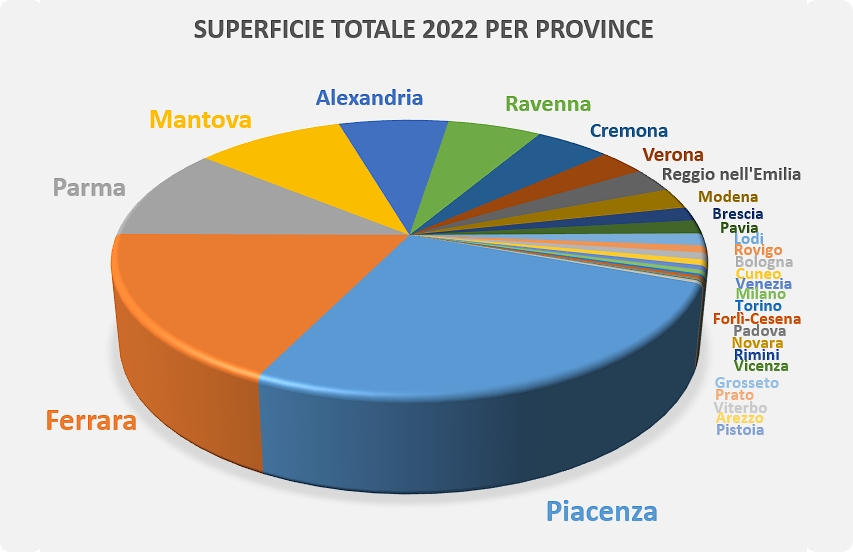
Northern region (Piacenza – Vicenza): 36,919 hectares
South-central region (Grosseto – Pistola): 104 hectares
Total North + South-central: 37,024 hectares
Source: Pomodoro Nord Italy IO 2022 campaign report
South-central region (Grosseto – Pistola): 104 hectares
Total North + South-central: 37,024 hectares
Source: Pomodoro Nord Italy IO 2022 campaign report
Subject to ongoing estimates, local operators have estimated that 1,500 hectares have been affected by the harsh weather, including 300 to 400 hectares totally destroyed. The question now is whether or not (and when) some of these areas can be replanted in June for a later harvest, an option that the POs will be considering in the next few days.
At this stage, 70% of the crop has now been planted, and this rainy spell and the delay caused by the holdup in transplanting operations could disrupt the progress of the season by delaying crop development and ripening, and causing a slowdown in deliveries early September, followed by a surge in the last few weeks of that month.
At this stage, 70% of the crop has now been planted, and this rainy spell and the delay caused by the holdup in transplanting operations could disrupt the progress of the season by delaying crop development and ripening, and causing a slowdown in deliveries early September, followed by a surge in the last few weeks of that month.
Speaking on May 24 about the tomato season, Confcooperative Romagna President Mauro Neri said that in some areas, "the tomato campaign has been completely wiped out, an immense damage, with a risk that farmers could abandon land in which they have invested considerable sums in recent years – often small growers with average holdings of 5-6 hectares, many of whom are of advanced age and will not be able to reinvest."
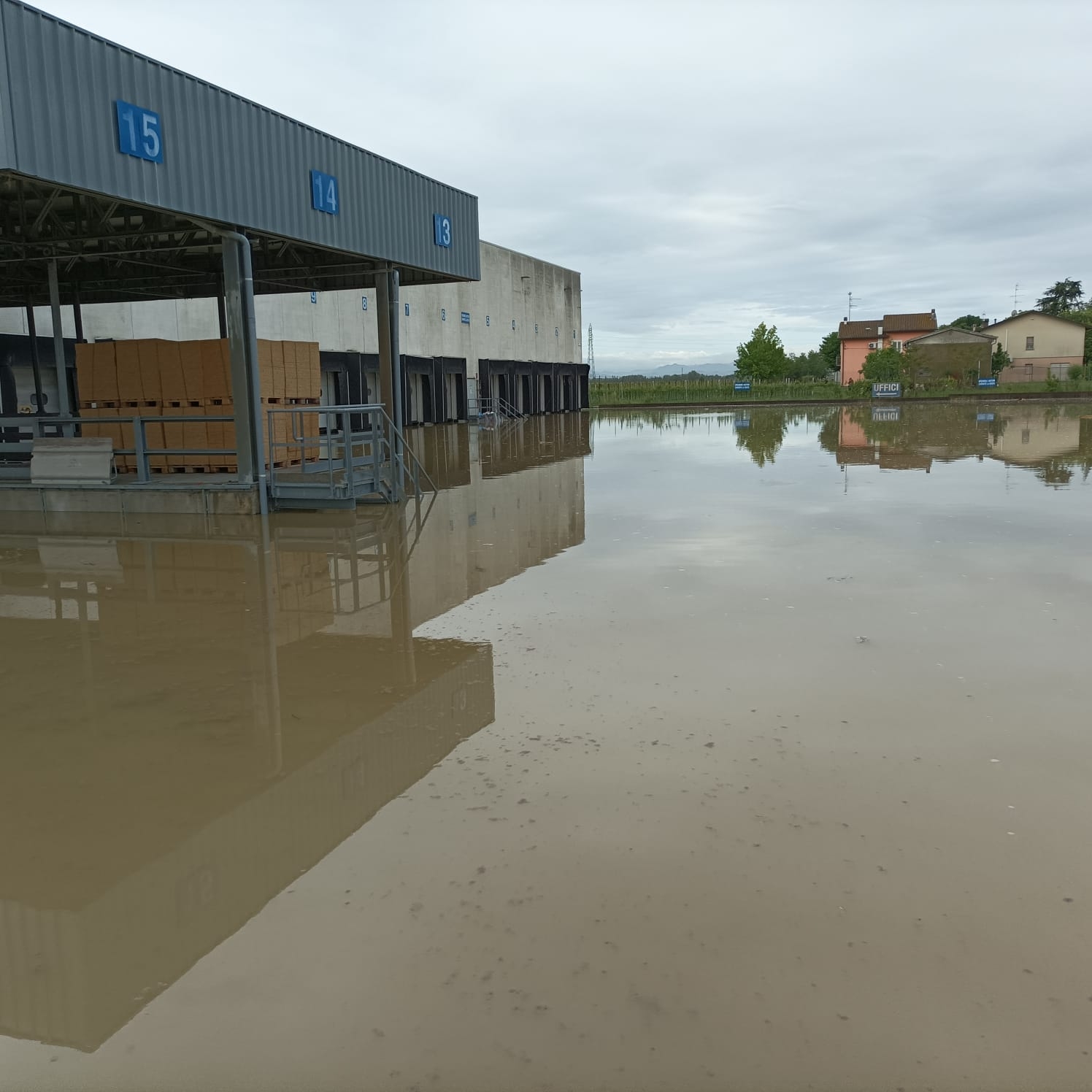 The same day, Conserve Italia announced the resumption of production and shipments at its fruit juice plant in Barbiano di Cotignola (Ravenna), while underlining "its concerns about crop damage."
According to the company, the automatic warehouse was only marginally affected by the flood, and should soon be back to full capacity to guarantee customer supplies. Juice and nectar production at Barbiano, on the other hand, is currently at a standstill, and for the moment it is not possible to predict when it will be able to restart. Conversely, production has resumed at the other fruit juice plant in Massa Lombarda (Ravenna), which was not flooded and has also been able to resume shipping activities.
On the other hand, the company's managers are concerned about the considerable damage to growers' fields in Emilia-Romagna, which has caused a lot of worry. "It is still too early," says Conserve Italia President Maurizio Gardini, "to quantify the huge damage suffered by the Barbiano plant, as well as by our members' tomato and vegetable fields. A considerable part of our agricultural social base has been badly damaged by the floods, and the availability of raw material for the next season will most probably be lower than expected."
Sources: professional sources, Italia Ortofrutta, Coldiretti, Confagricoltura, Legacoop, myfruit.it, corrierediviterbo.it