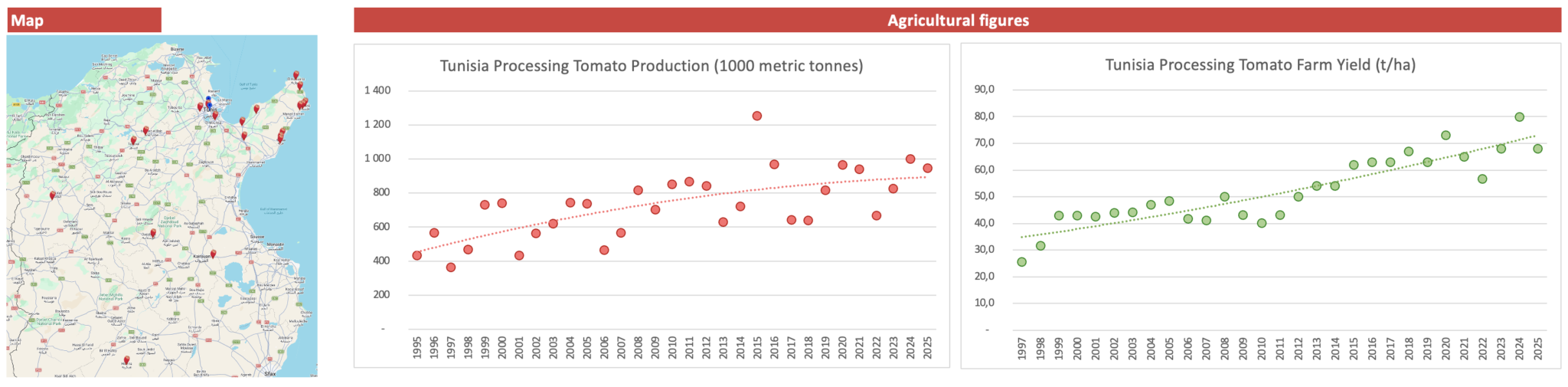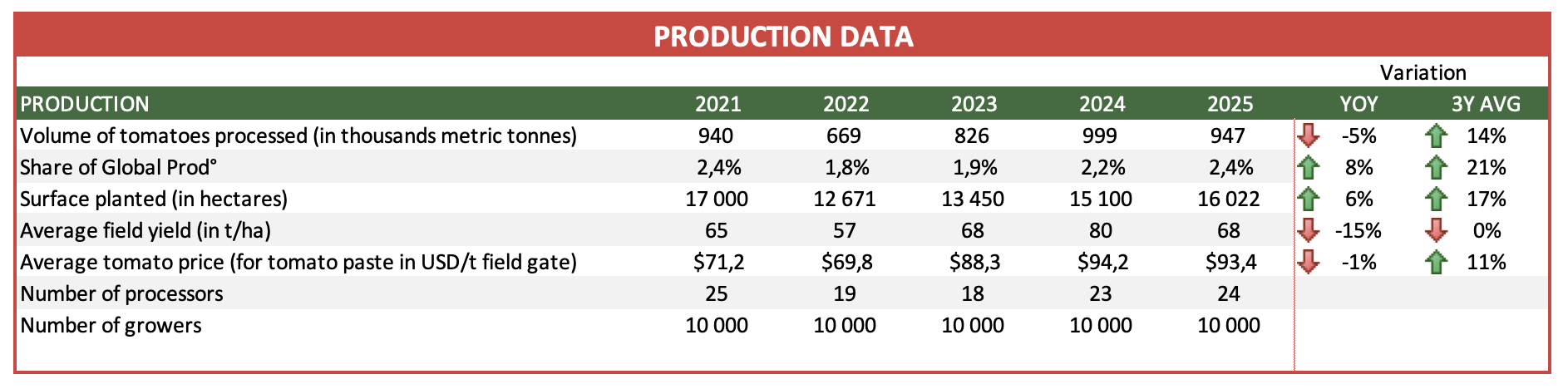
With an average of 880 000 tonnes of tomatoes processed over the last five years, and a record production of 1.2 million tonnes in 2015, Tunisia is the biggest producer in Africa and a major producer in the Mediterranean Basin.
Tomato processing started in the early 1900s in Tunisia and there were up to 42 in the 1990s. Nowadays, there are 29 factories with a total daily processing capacity of 38,000 tonnes, against only 13,000 tonnes in the 1980s.
The processing tomato production is based in several regions with the historical Cap-Bon area, in the North-East, representing about 46% of the total facility capacity, with also the region of Kairouan and Sidi-Bouzid, in central Tunisia, Jendouba in the north-east and Gafsa, in central Tunisia.
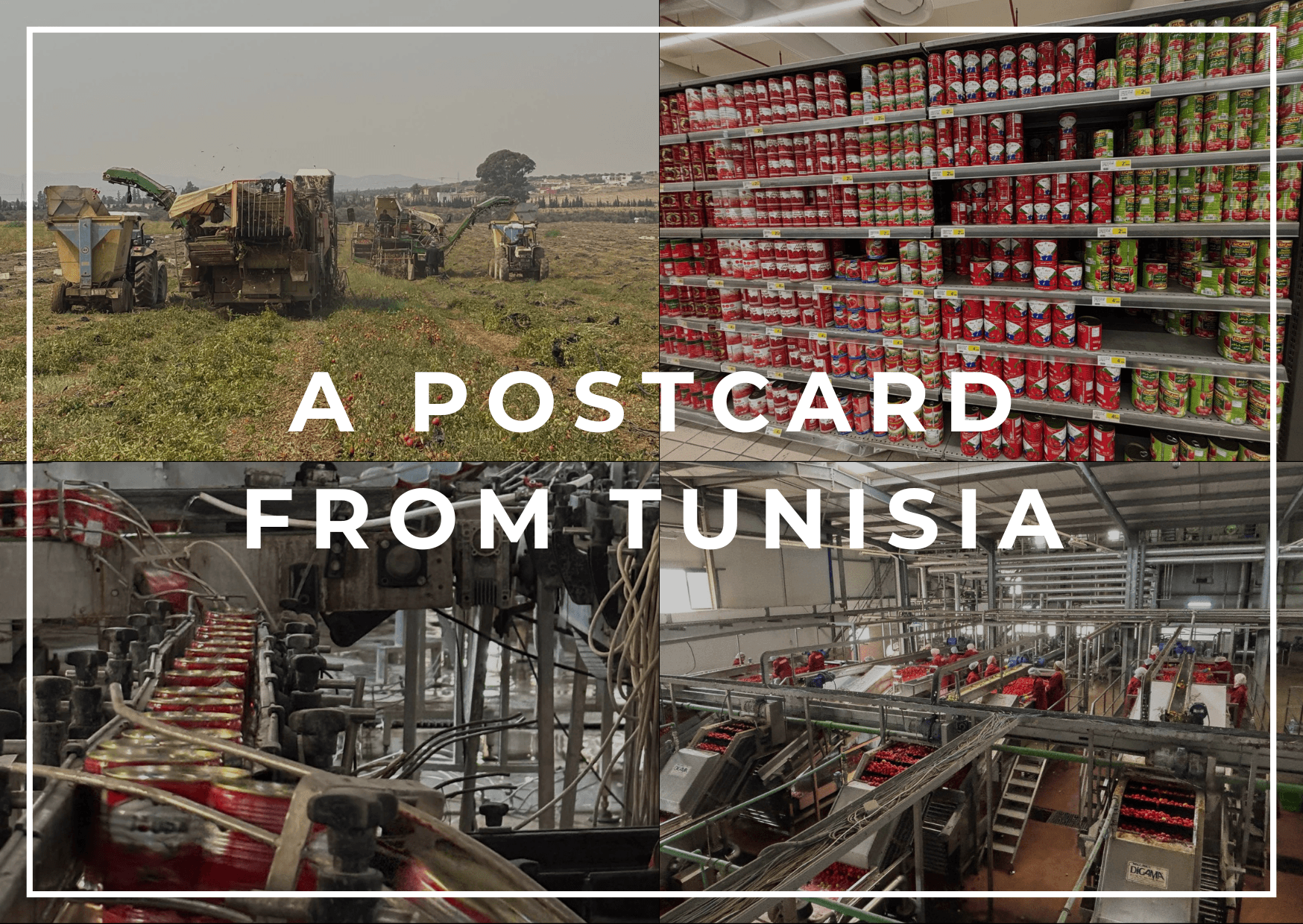
The tomato farming engages close to 10,000 growers for a total cultivated surface generally of approximately 14,000 ha, as surfaces were reduced in 2022 and 2023 due to drought. Average yields grew from 26 t/ha in 1995 to about 68t/ha now thanks to the generalisation of drip irrigation. Most of the processing is concentrated between early July and mid August, with smaller volumes processed later. Most of the tomatoes are still hand harvested, although mechanical harvesting is expanding, and not contracted with processors but sold to collectors who deliver processors or sell on for the fresh market.
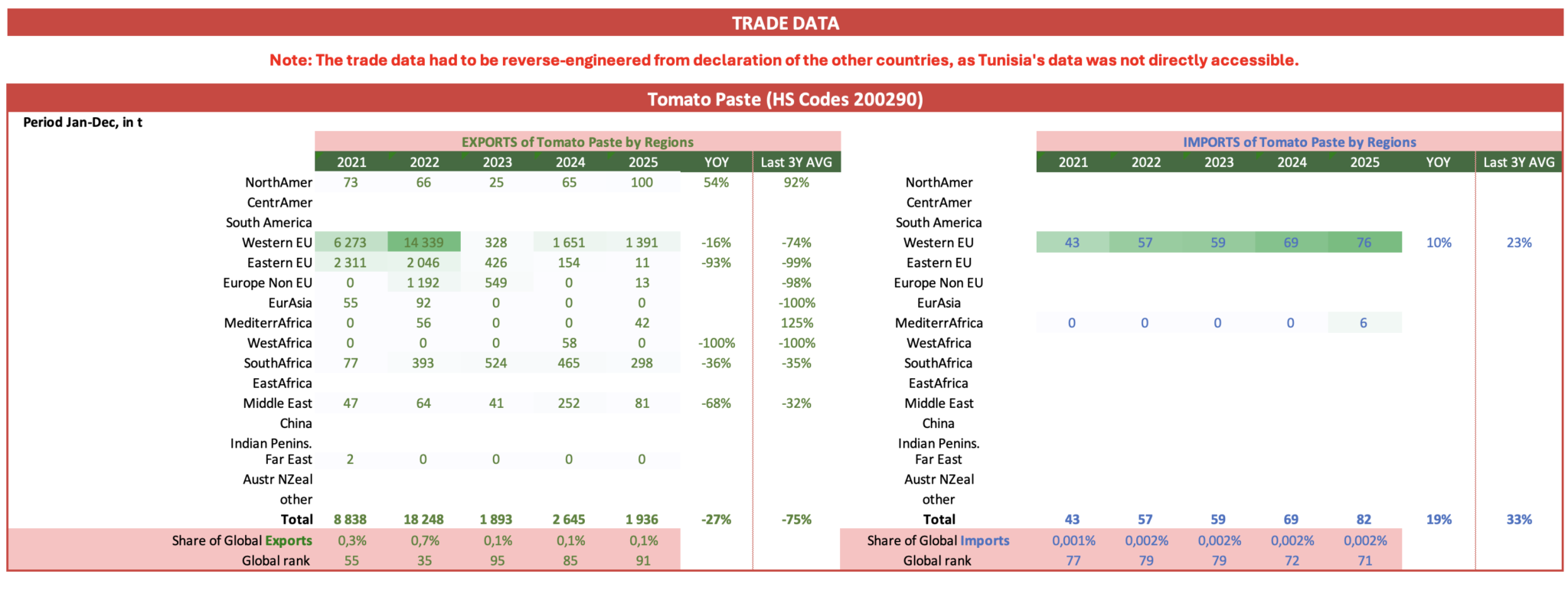
The main processing activity is the production of up to 150,000 tonnes of tomato paste in consumer packs to satisfy a high local demand of this item, Tunisia being one of the world’s biggest consumers of tomato paste per capita, and some small export volumes in cans or in bulk.
Fresh tomato consumption accounts for 15% of total volumes, while sun-dried tomatoes represent 5%, and specialty derivatives make up the remaining 3%.
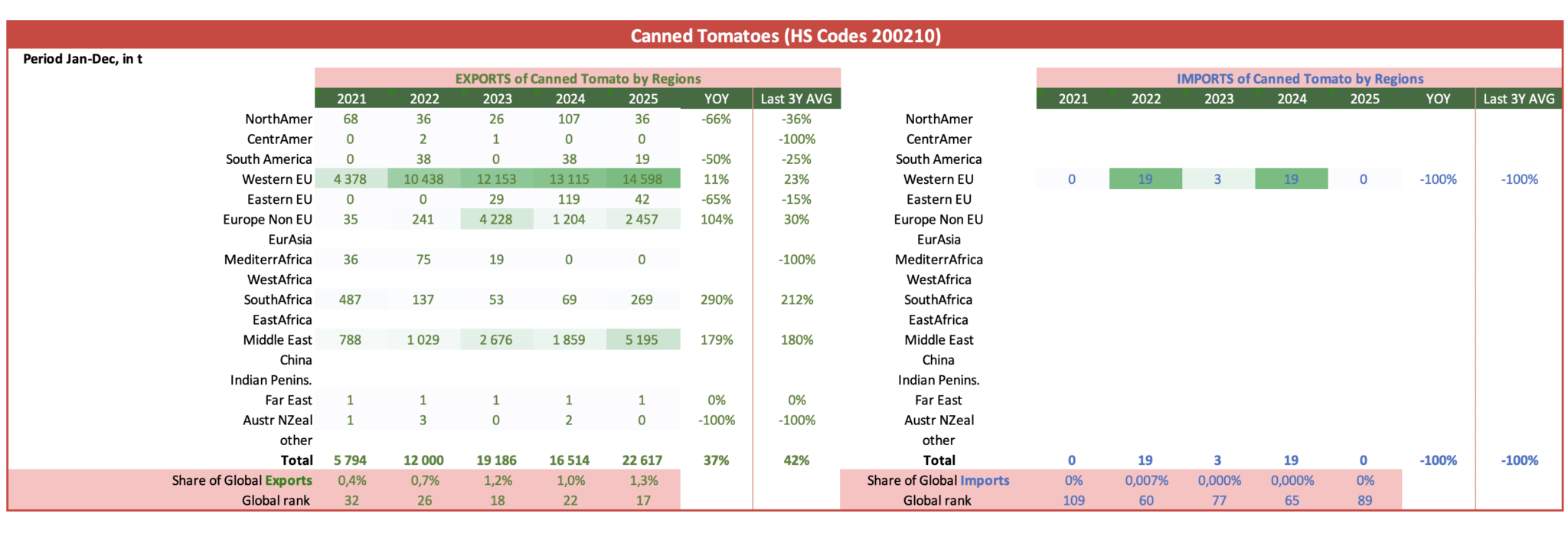
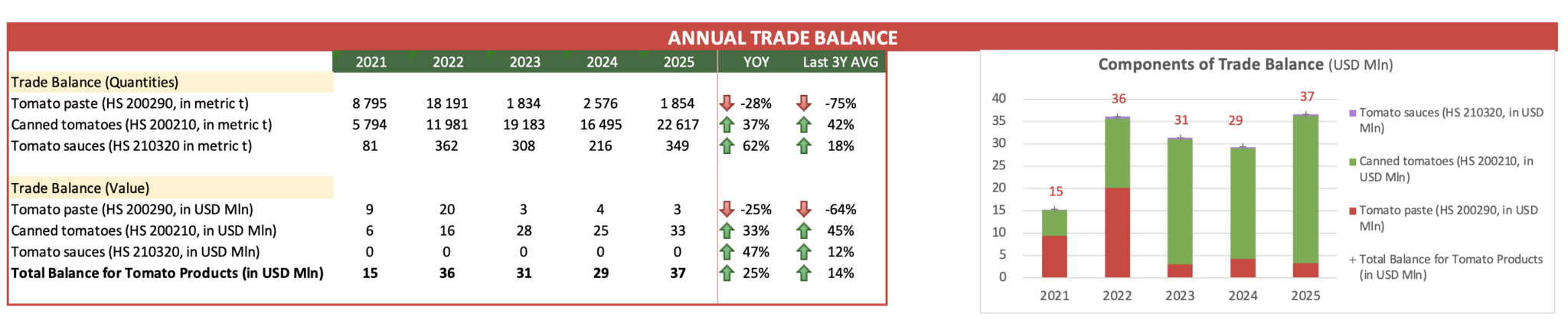
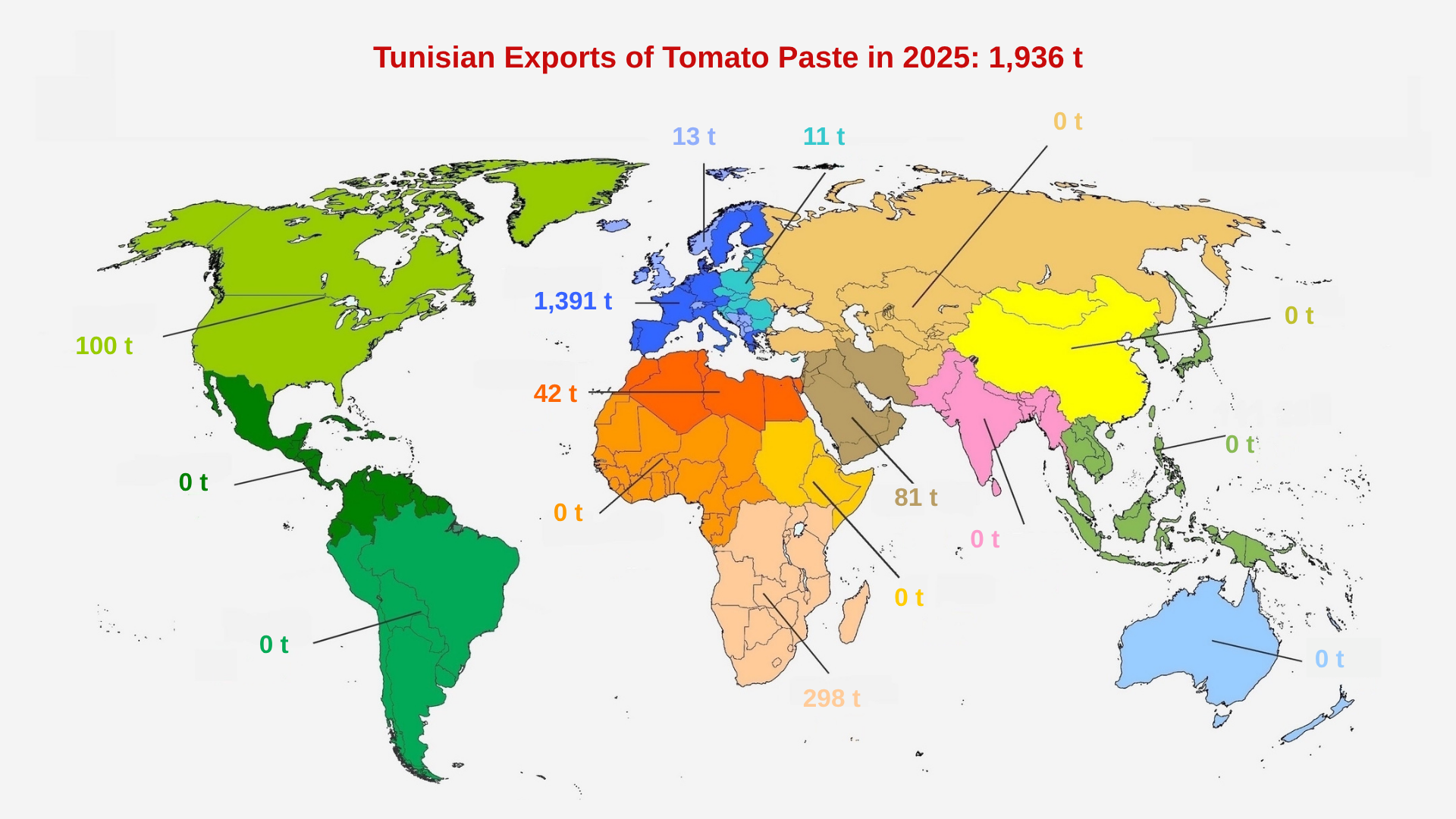
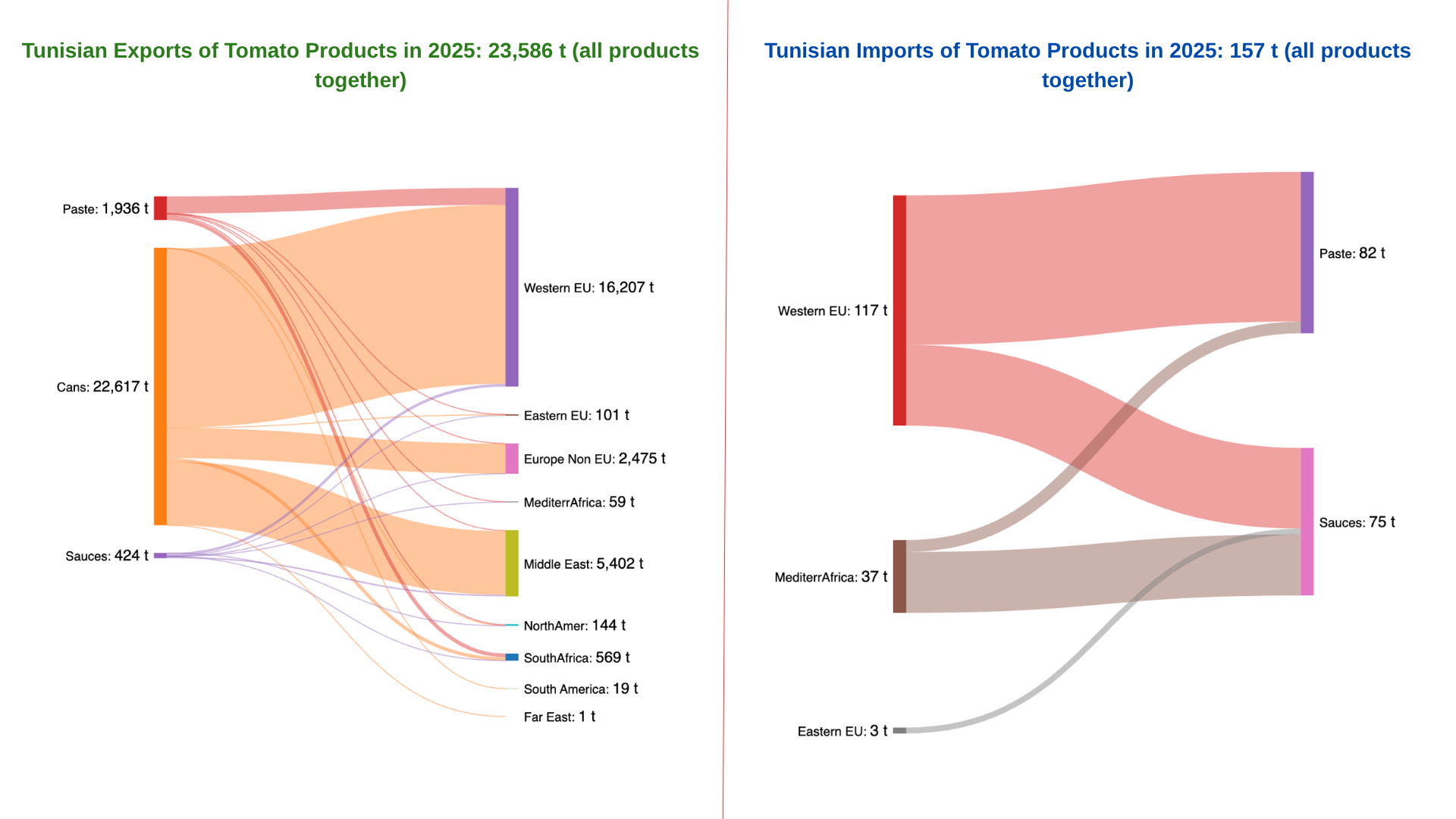
Tunisia exports about 10,000 to 15,000 tonnes of tomato paste and a few thousand tonnes of canned or dried tomatoes.
The tomato processing industry in Tunisia is represented within AMITOM and WPTC by GICA.