News
As the global processing tomato harvest reaches its critical late-season phase, climate monitoring agencies have issued stark warnings that the weather anomalies disrupting crops this year are part of a much larger, historical atmospheric shift. Latest intelligence points to a rapidly accelerating El Niño event alongside record-breaking ocean temperatures that threaten to reshape growing conditions across key agricultural regions well into 2027.
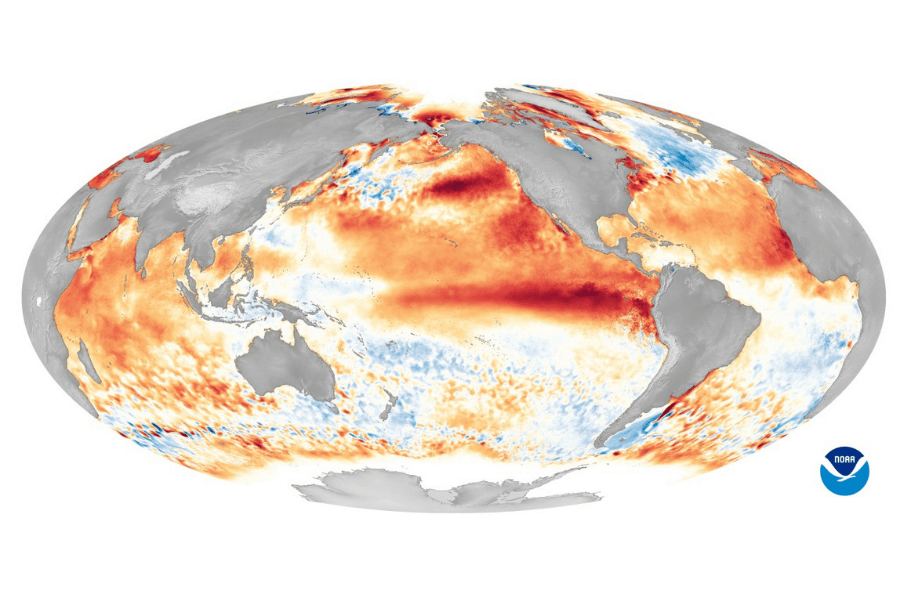
According to updated modeling released by the UK Met Office, the developing 2026 El Niño is now tracking to become an unprecedented phenomenon, potentially marking the largest atmospheric heating event since the 19th century. Lead forecasters report that sea-surface temperature anomalies in the central equatorial Pacific are projected to exceed baseline averages by more than 3°C during its winter peak. Reinforcing this alert, the U.S. National Oceanic and Atmospheric Administration (NOAA) issued an official ENSO Diagnostic Discussion confirming a greater than 90 percent chance that a “very strong” El Niño will persist through the Northern Hemisphere fall and winter. Crucially, NOAA scientists now calculate a 69 percent probability of a historic event exceeding strength benchmarks dating back to 1950. Adding weight to these projections, Australia’s Bureau of Meteorology (BOM) reported in late August that relative Niño 3.4 index values reached +2.45°C—confirming the fastest January-to-August strengthening rate in modern record-keeping and signaling an event likely to persist well into autumn 2027. For an industry reliant on predictable seasonal cycles, a shift of this magnitude far surpasses recent operational benchmarks, where even a 2°C rise constitutes a major disruptor.
Northern Hemisphere Dynamics
In Northern California, agricultural analysts monitoring the NOAA forecasts warn that the heavy winter atmospheric rivers typically associated with extreme El Niño events could bring severe localized flooding to the Central Valley. While precipitation helps replenish depleted reservoirs, saturated soil conditions and winter ground-prep delays threaten to disrupt the crucial spring 2027 planting windows for processing tomatoes.
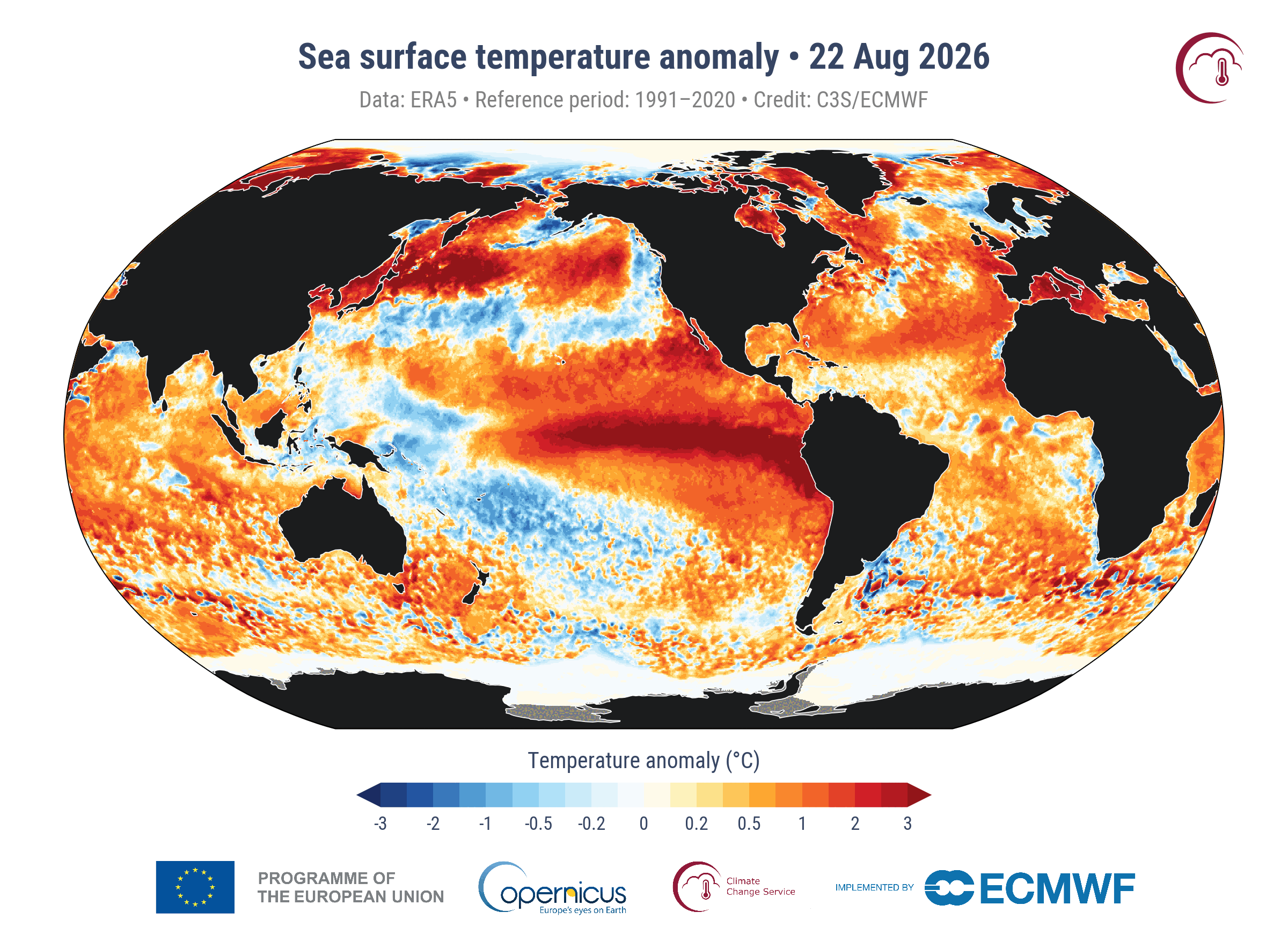
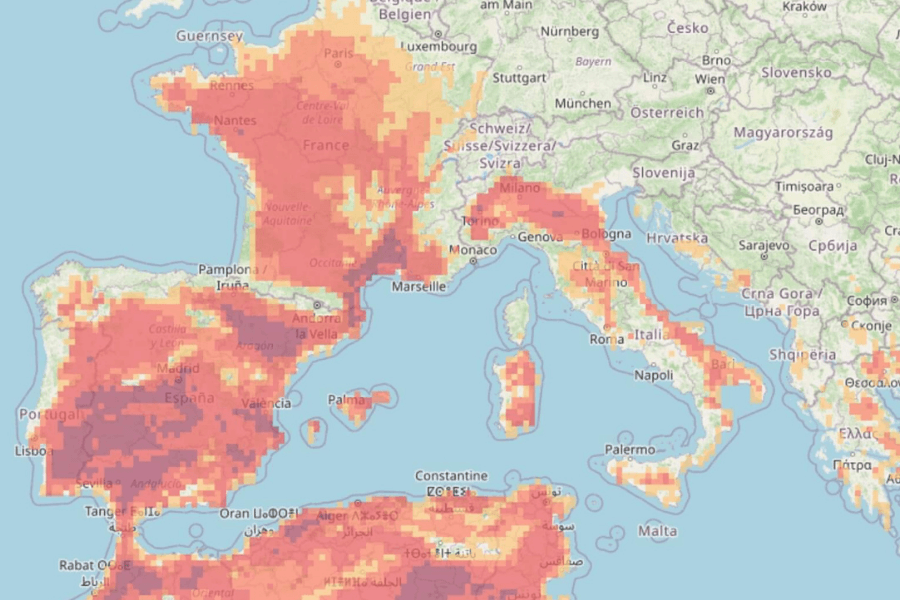
Across the Atlantic, Mediterranean growers are facing the immediate physical impacts of the heat coupled with ocean warming. Fresh data published by the Copernicus Climate Change Service confirms that the daily global sea surface temperature surged to an all-time high of 21.10°C on August 22, beating the previous record set in March 2024. What alarms climatologists most is the late-summer timing: breaching all-time ocean records in late August signals an extraordinary transfer of thermal energy into the atmosphere. The impact on European fields is already starkly documented in the European Commission Joint Research Centre’s (JRC) MARS Bulletin. The JRC reports that persistent summer heatwaves and severe water deficits across western and southern Europe—particularly in key production zones across France, Italy, and Spain—have substantially impaired summer crops, causing accelerated plant senescence and strict irrigation limits. Furthermore, new research published in Science analyzing historical coral archives reveals that modern El Niño cycles are roughly 40 percent stronger today than during pre-industrial times, demonstrating how human-driven baseline warming is actively supercharging these natural oscillations.
Southern Hemisphere Reality: Contrast and Local Realities
As Southern Hemisphere producers launch their 2026/2027 cycles, regional field reports reveal a nuanced picture where winter precipitation has yielded immediate hydrological benefits, even as atmospheric instability creates short-term operational hurdles.
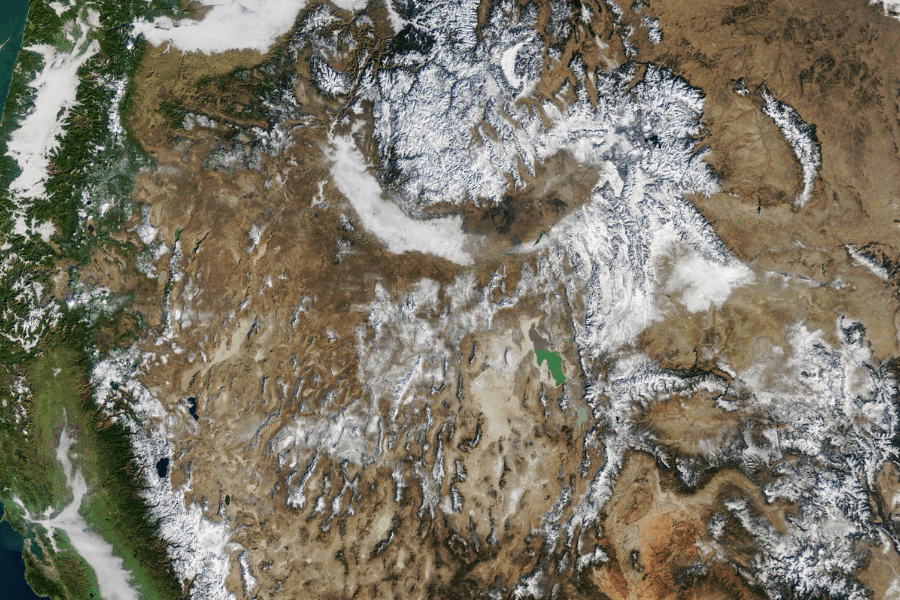
In Chile, processors report a welcome departure from recent years of chronic drought. Heavy rain systems in June and August—interspersed with a dry July—have significantly replenished water reservoirs and built up an exceptional snowpack in the Andes, securing irrigation supplies for all crop development stages. Chilean transplanting has commenced on schedule without major storm disruptions, though meteorologists note that El Niño could still trigger unseasonal late rainfall during September or October.
In Argentina, the regional impact displays a starker contrast between water recovery and thermal volatility. Growers report an extraordinary winter snowfall that has successfully pulled key production regions out of critical water deficits. However, the broader atmospheric patterns linked to El Niño are keeping average temperatures lower than normal. In San Juan, despite transplanting kicking off in week 36, isolated unseasonal frosts have delayed early field operations, with further freezing temperatures expected to persist for several weeks. Local governments are simultaneously ramping up investments in flood damage prevention amid municipal warnings of a stormy season, while local agricultural meteorologists emphasize that long-term regional effects remain highly localized.
Long-Term Industry Outlook
For processing tomato growers and processors navigating a harvest already constrained by localized drought, extreme thermal spikes, and unseasonal storms, these global metrics carry concrete strategic implications. The World Meteorological Organization warns that the combination of intense ocean warming and a strengthening El Niño will drive widespread rainfall deficits across Central America, tropical South America, and parts of Asia, while increasing the likelihood of unseasonal precipitation and severe winter storms across Southern Europe. Because the atmospheric heat released by an El Niño peak typically lags by several months, scientists expect 2027 to become the hottest year on record globally. As the industry assesses raw material yields and contracts for the coming years, extreme thermal volatility and water management appear set to remain central factors in global crop planning.
Sources: UK Met Office, Australia Bureau of Meteorology (BOM), NOAA, Copernicus C3S, European Commission Joint Research Centre (JRC), World Meteorological Organization, University of California Santa Barbara (Science), professional sources in Chile and Argentina.