News
Large atmospheric waves threaten global food production
Extreme weather patterns are raising the risk of a global food crisis, and climate change will make this worse. Researchers have discovered jet stream patterns that could affect up to a quarter of global food production.
In a new study published on December 9, 2019 in Nature Climate Change, scientists show how specific wave patterns in the jet stream strongly increase the chance of co-occurring heatwaves in major food producing regions of Northern America, Western Europe and Asia. Their research finds that these simultaneous heatwaves significantly reduce crop production across those regions, creating the risk of multiple harvest failures and other far-reaching societal consequences, including social unrest.
Lead author, Dr Kai Kornhuber from the University of Oxford's Department of Physics and Colombia University's Earth Institute, said: "Co-occurring heatwaves will become more severe in the coming decades if greenhouse gases are not mitigated. In an interconnected world, this can lead to food price spikes and have impacts on food availability even in remote regions not directly affected by heatwaves”.
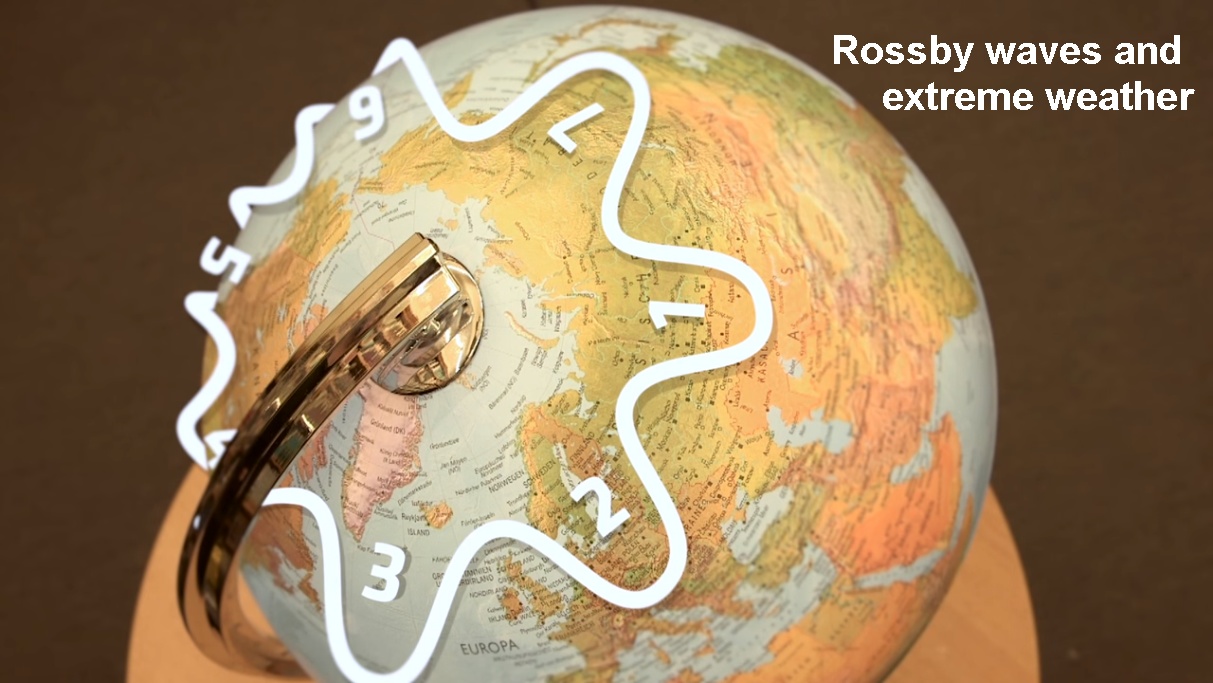
In particular, when the jet stream — the high-altitude air current that steers storms and separates air masses, takes on more undulating and persistent wavy shapes (technically known as “Rossby waves,” after the scientist Carl-Gustaf Rossby), extreme heat events become more common in particular parts of the world. These locations include the breadbasket regions of western North America, Western Europe, western Russia, and western Asia, depending on the exact jet stream pattern that develops and locks into place. These regions – traditionally very important for the production of processing tomatoes – are particularly susceptible to these atmospheric patterns that get heat and drought locked into one place simultaneously where they then affect crops production yields.

"We found a 20-fold increase in the risk of simultaneous heatwaves in major crop producing regions when these global scale wind patterns are in place. Until now this was an underexplored vulnerability in the food system. We have found that during these events there actually is a global structure in the otherwise quite chaotic circulation. The bell can ring in multiple regions at once and the impacts of those specific interconnections were not quantified previously."
Dr Dim Coumou, co-author from the Institute for Environmental Studies at VU Amsterdam, said: "Normally low harvests in one region are expected to be balanced out by good harvests elsewhere but these waves can cause reduced harvests in several important breadbaskets simultaneously, creating risks for global food production."
Dr Elisabeth Vogel, co-author from Melbourne University, said: "During years in which two or more summer weeks featured the amplified wave pattern, cereal crop production was reduced by more than 10% in individual regions, and by 4% when averaged across all crop regions affected by the pattern."
Dr Radley Horton, co-author from the Lamont-Doherty Earth Observatory at Colombia University, said: "If climate models are unable to reproduce these wave patterns, risk managers such as reinsurers and food security experts may face a blind spot when assessing how simultaneous heat waves and their impacts could change in a warming climate."
The scientists conclude that a thorough understanding of what drives this jet stream behaviour could ultimately improve seasonal predictions of agricultural production at the global scale and inform risk assessments of harvest failures across multiple food-producing regions.
 Some complementary data
A video is available at:
https://www.youtube.com/watch?time_continue=16&v=MzW5Isbv2A0&feature=emb_logo
Source: sciencedaily.com, washingtonpost.com/