News
Il Filo Rosso 2020: consumption takes off, and the industry faces new challenges
 The 8th edition of the "Filo Rosso del Pomodoro" ("The Red Thread of Tomatoes") took place on 3 December, in the form of an online meeting because of sanitary conditions imposed by the Covid pandemic. This annual event was organized by the ANICAV to discuss the information and opinions of the various protagonists of the processing tomato industry. It was chaired by Antonio Ferraioli, President of the ANICAV.
The central theme of the meeting was the importance and value of this year's data as the basis for an analytical approach to understanding the mechanisms of the world of food processing, all the more essential in the context of a season as difficult and fraught with critical issues as the last one has been.
The discussions highlighted the extent to which the value of data represents a remarkably important and topical subject for the industry: the reliability of information is the base on which political decision-makers develop targeted actions to support the sector and on which companies determine and implement production and market strategies, as well as taking operational decisions.
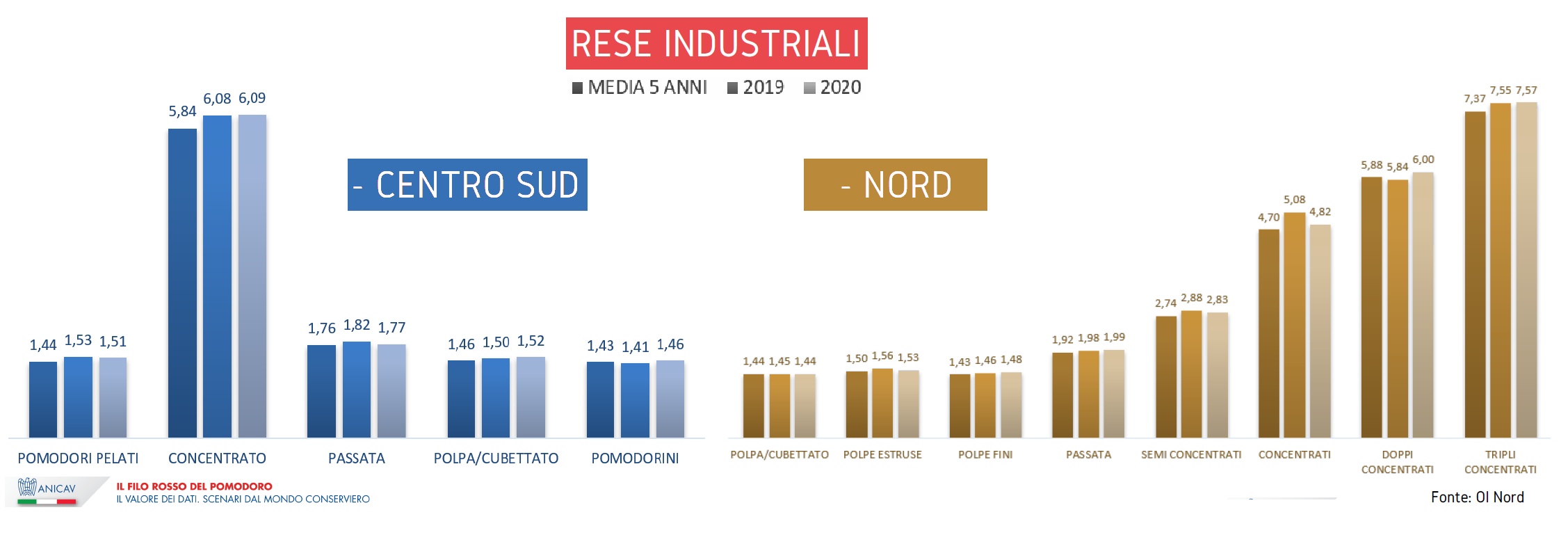
The 2020 tomato processing season in Italy, which ended a month ago, has proved complicated in more ways than one. Although the programmed quantities were larger and the harvest made significant volumes of raw material available to processors, compliance with the high quality-standards for manufacturing passata, peeled tomatoes, pulps and canned cherry-tomatoes also required the use of larger volumes of fresh tomatoes, to the point that industrial yields recorded a notable decrease.
In the South-Central basin, crops in the province of Foggia, which is the largest production area in the entire region, experienced a considerable decline in agricultural yields due to water supply difficulties, with an additional further increase in the price of raw materials.
The Covid-19 crisis also impacted this year's performance – and continues to do so – while the season started with virtually zero inventories of retail conditionings. This situation is a consequence of the increase in consumption first recorded during the spring confinement period, which has been continued since then.
Consumption
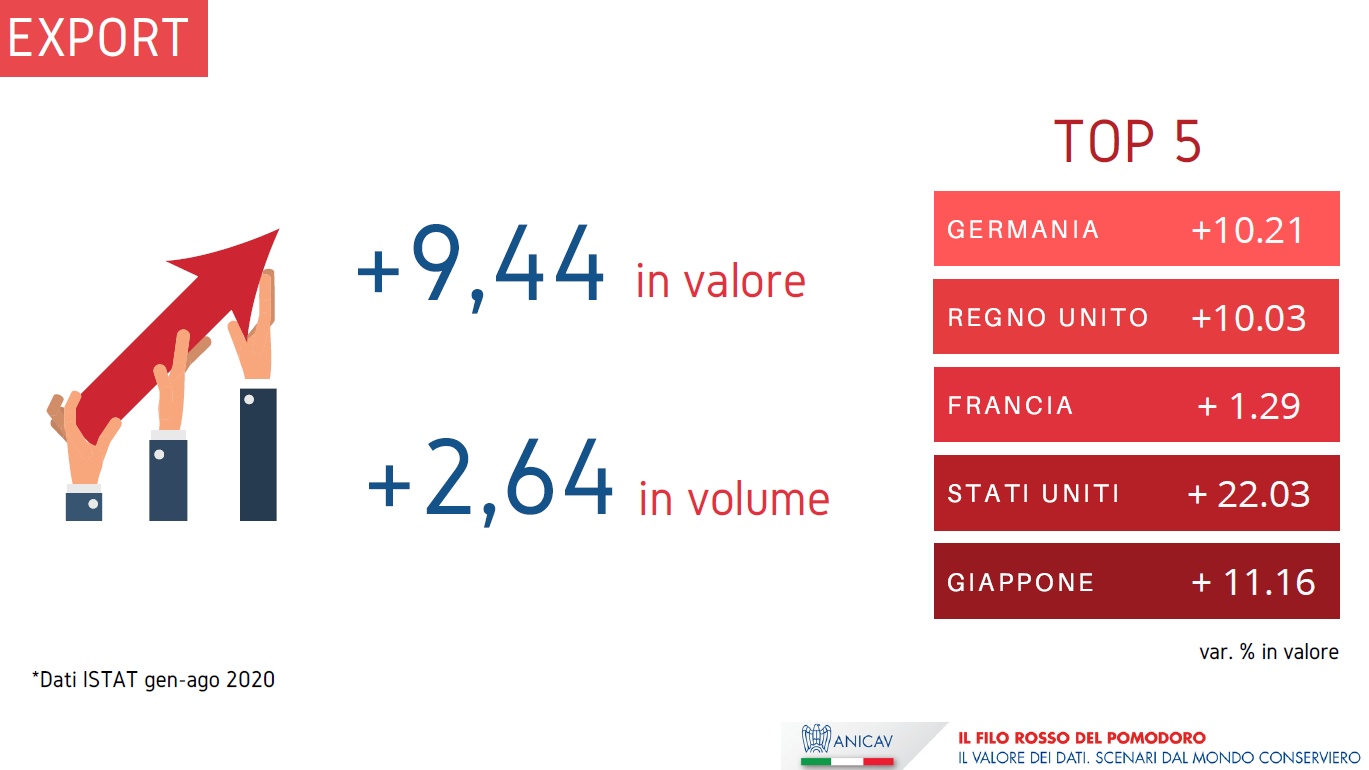
From the point of view of consumption, Italy has confirmed its position as the leading producer and exporter of processed tomato products intended directly for end consumers: approximately 60% of the country's "red preserves" are exported. Over the first eight months of 2020, exports of tomato products grew by 2.64% in volume and 9.44% in value (ISTAT data). At the opening of the debates, production and consumption data were the subject of two presentations, one by Giovanni De Angelis, General Director of the ANICAV, and another by Marco Serafini, Director of the Association, who carried out an analysis of Italian, European and worldwide production (see additional data at the end of this article and the accompanying documents).
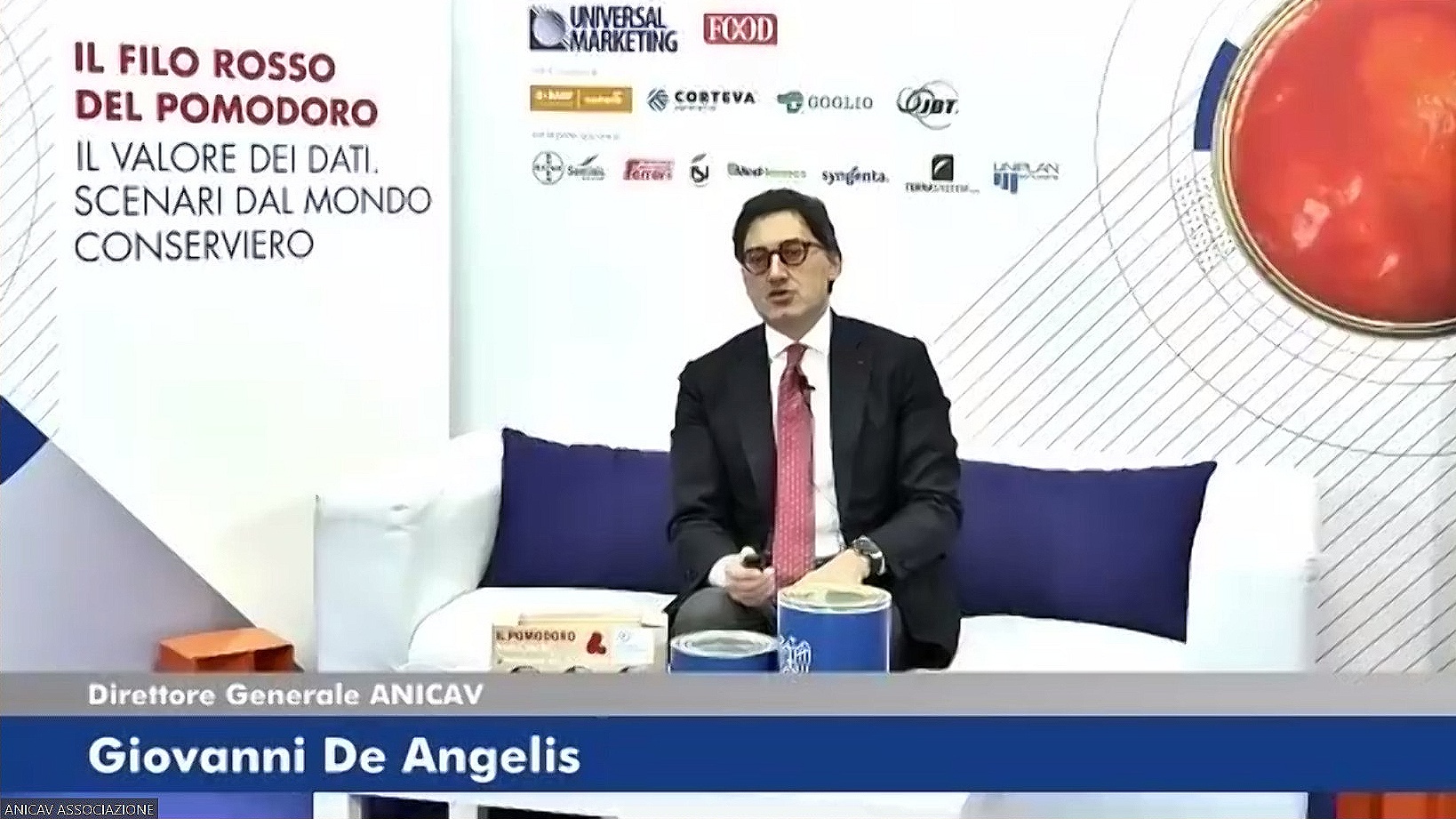
Giovanni De Angelis, General Director of the ANICAV
The Italian industry has for years been the undisputed benchmark of the processing tomato industry. It is the third largest producer of tomatoes in the world after the United States and China, and represents 13% of production worldwide and 53% of Europe's crop, with a turnover of EUR 3.5 billion, including 1.8 billion generated by exports.
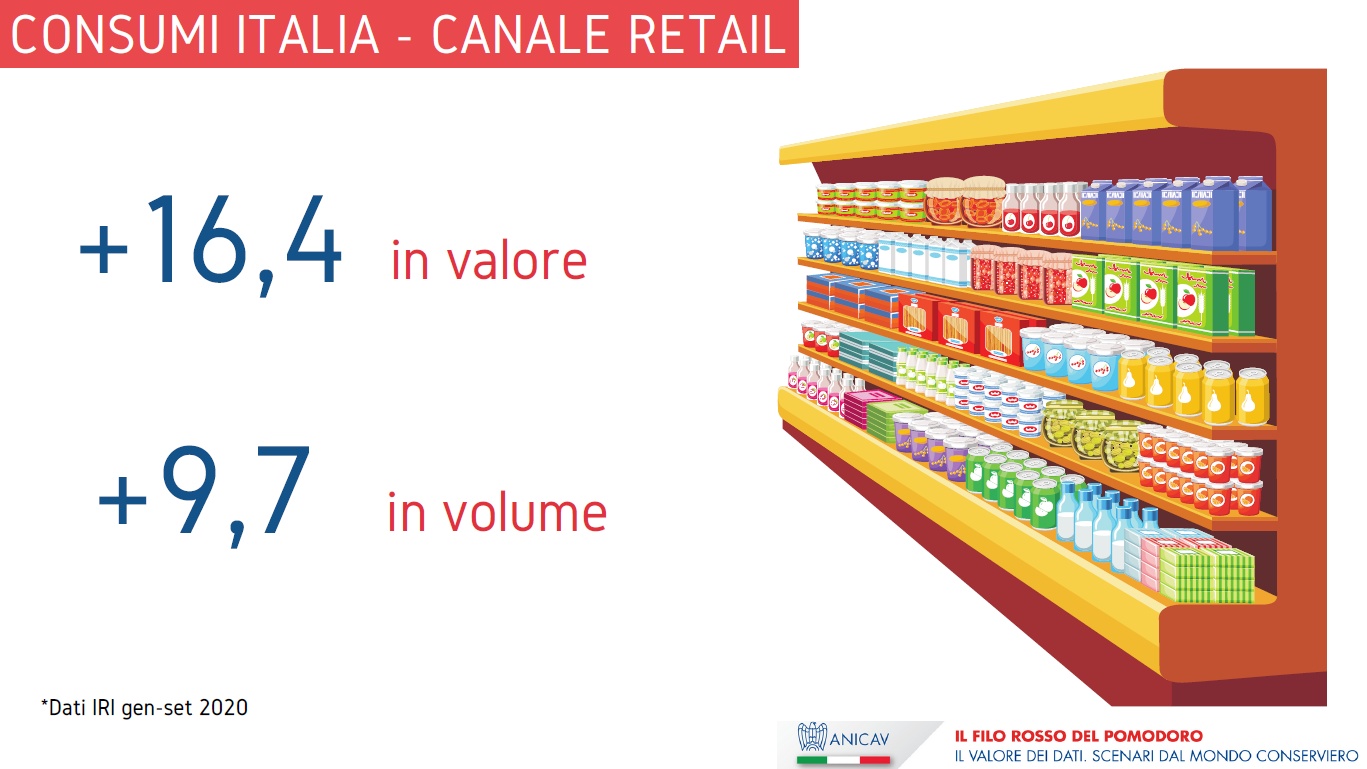
The vitality of the sector has also been confirmed at the level of domestic consumption, through the various retail channels (hypermarkets, supermarkets, self-service and discount), which, as of 30 September 2020, had increased sharply both in volume (+9.7%) and in value (+16.4%) compared to the same period of the previous year (IRI data), due to the surge in purchasing behavior observed during the first confinement.
The European Commission also recognizes the importance of the value of data. During the discussions led by Antonio Casana, President of Tomato Europe, Marijke van Schagen and Celine Keidel, from the DG Agri, presented the observatory projects on market prospects developed by the European Commission. These plans testify to the close attention being paid by European authorities to the Italian experience, which they regard as an example of good practices in the field of data processing and control. These steps are part of the implementation of the regulation on unfair trade practices throughout the agri-food industry.
The round-table discussion
 Discussions were concluded by a round table with the participation of three major international players of the tomato processing industry: Antonio Ferraioli, AD La Doria Spa and president of the ANICAV, Francesco Mutti, AD Mutti spa, and Manuel Vàzquez Calleja, CEO of the Conesa Group.
It emerges in particular from the discussion that consumption data, even if it describes an increase linked to a crisis situation, a consequence of the pandemic and the surplus storage behavior caused by the first sanitary confinement, nevertheless shows that the Italian industry is facing a trend reversal: tomatoes "made in Italy", which were until now relegated by the market to the rank of a trade commodity (with the consequence that products are undervalued and suffer from an image deficit) are once again among the products deliberately chosen by consumers who currently consider them as an important food item to be kept in reserve.
All stakeholders are hoping that this trend will be confirmed in the post-Covid period, when consumers once again include products with a shorter shelf-life and pay more attention to prices.
The debates also largely focused on the new challenges that the industry will have to face, in particular concerning the increasing generalization of new purchasing channels (e-commerce), unfair trade practices and new forms of labor organization. Participating processors also commented on the importance for the entire tomato industry of sharing data regarding production, consumption and inventories, for the implementation of better programming and production planning.
 Conclusions of the meeting were passed on to the Minister of Agricultural, Food and Forestry Policies, Teresa Bellanova. In addition to expressing her sustained interest in a strategic industry such as the processing tomato sector, the Minister announced the funding of a program for promoting the Italian tomato industry and the fact that priority attention is being given by the MiPAAF (the government ministry) to the necessary evolution of irrigation networks. Finally, the Minister expressed MiPAAF's commitment to conclude as soon as possible the process of recognition of a PGI for peeled tomatoes.
Some complementary data
Giovanni De Angelis' presentation provided the final figures for the North and South-Central components of Italy's 2020 season, in terms of planted surfaces and quantities processed, underlining in passing the increases and decreases that have occurred in each of the regions.
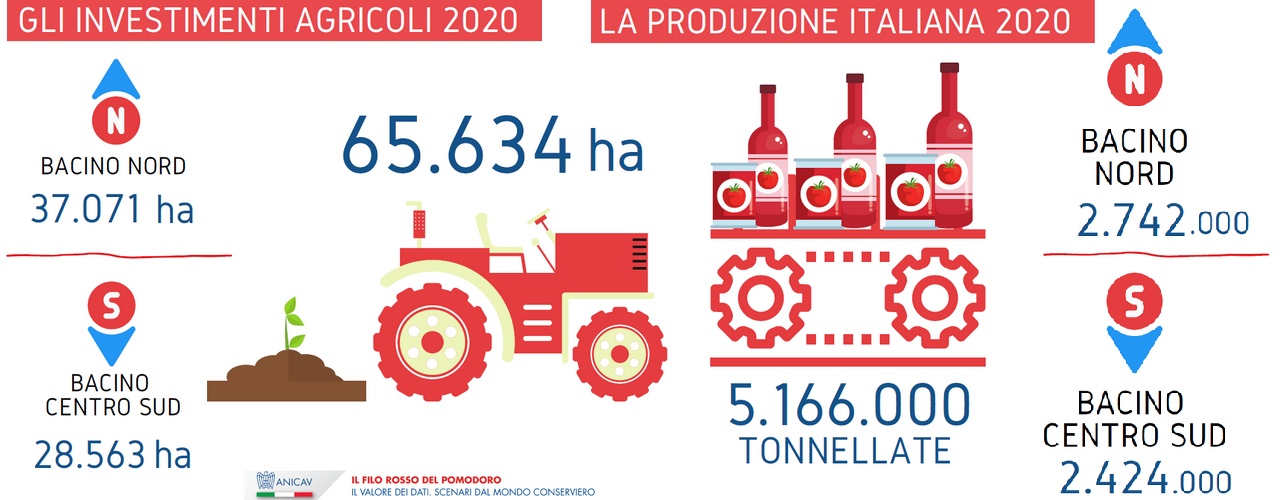
Returning to the quality requirement for processed products and its impact in terms of industrial yields, the General Manager of the ANICAV provided details of these parameters for the different categories of products and described their recent evolution.
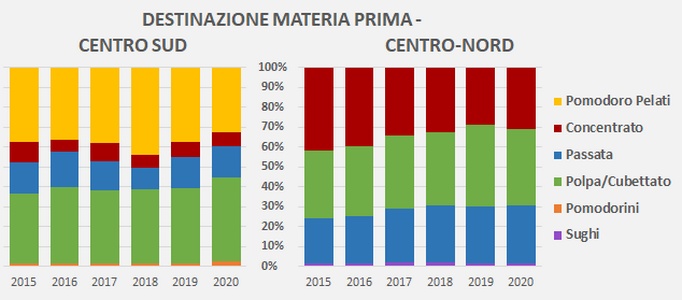
He also underlined the different vocations of the processing operations in Italy's two main production regions by detailing the respective distributions of raw materials according to the types of products marketed.
The Managing Director of the ANICAV ended by underlining Italy's excellent performance, both on foreign markets and domestically.
As for Marco Serafini, he placed the Italian data presented by Giovanni De Angelis in the broader context of European and world production.
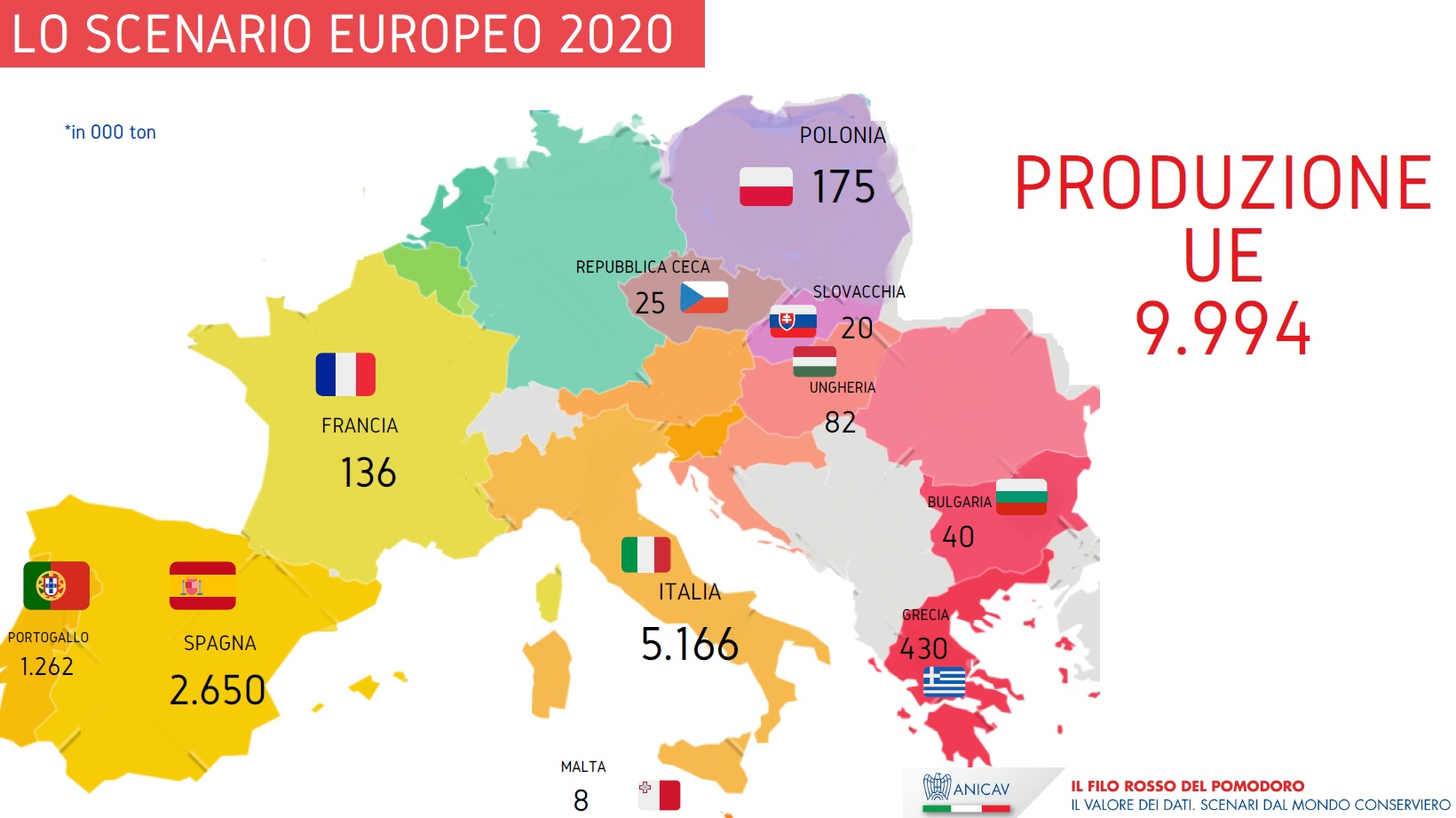
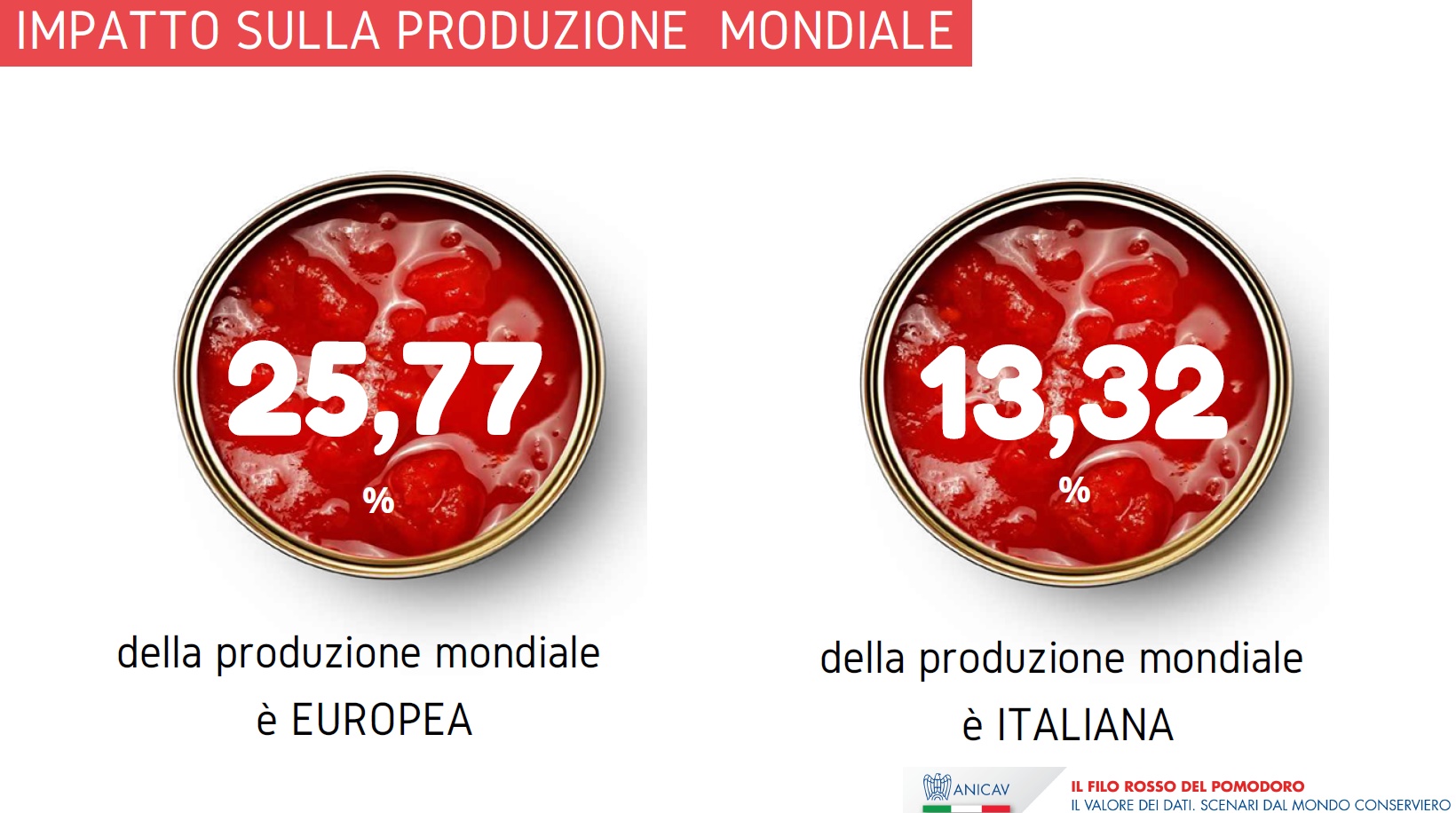
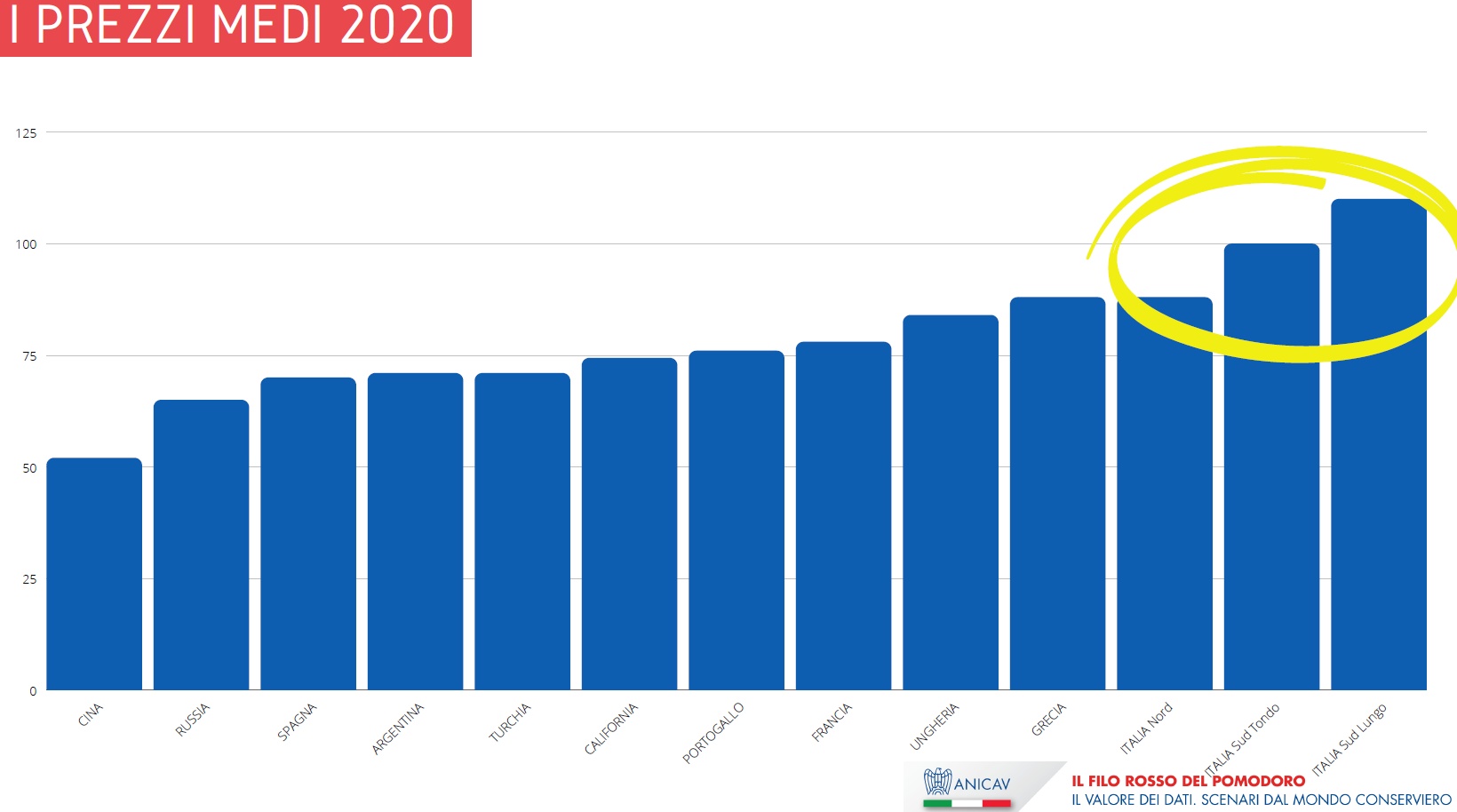
He also returned to the importance of the prices of raw materials, which are higher in Italy – in both the North and in the South-Central region – than in other countries operating at a global level, and commented on the impact of these prices in terms of competition.
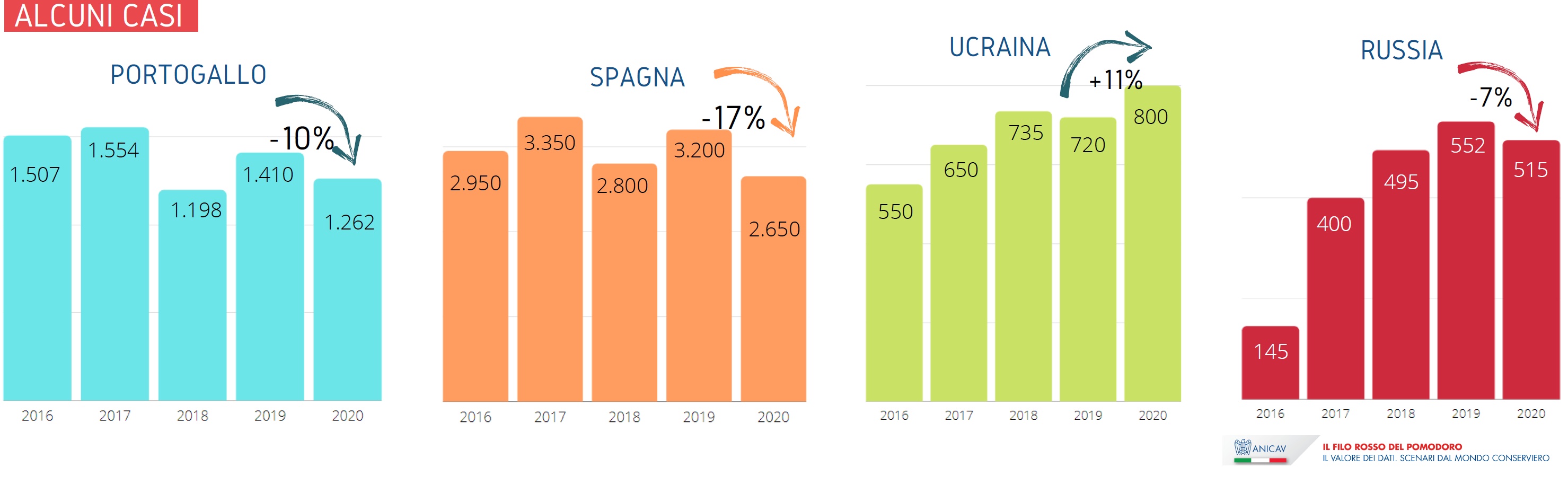
Finally, Marco Serafini commented on recent developments in the levels of operations in Italy's main competitor countries within the European context.
Source: ANICAV, freshplaza.it
Further details in the attached documents: