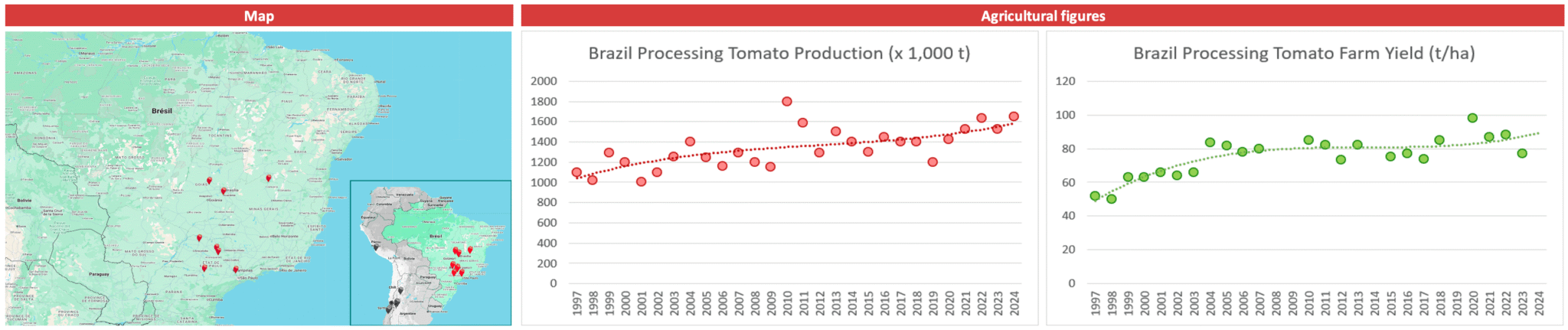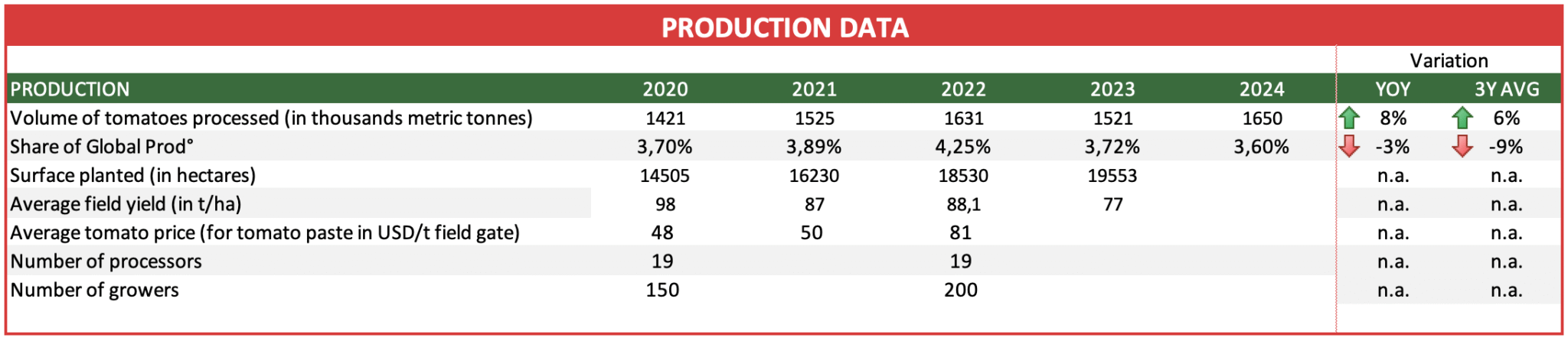
The volume of tomatoes processed annually in Brazil fluctuates between 1.2 and 1.7 million tonnes annually with an average of 1,55 million tonnes of tomatoes processed on average over the last five years.
Brazil stands out as one of the few countries that grow tomatoes for industrial processing during the winter, unlike the others that have favourable climatic conditions only in the summer. As a result, all of the country’s production regions grow tomatoes between February and October, with the transplanting period taking place from February to June and the harvest from June to October each year. The production is mainly concentrated in the states of Goiás (responsible for almost 70% of the total produced), Minas Gerais and São Paulo.
Tomatoes are cultivated by 150 to 200 growers in large fields with average surfaces of 110 to 150 hectares per farm, mostly on central pivot irrigation. Growing tomatoes for processing involves advanced agricultural technology and mobilises an extensive production chain. Recent years have seen consistent growth in Brazilian productivity with average yields of around 80 to 90 t/ha, but with large annual variations depending on weather conditions.
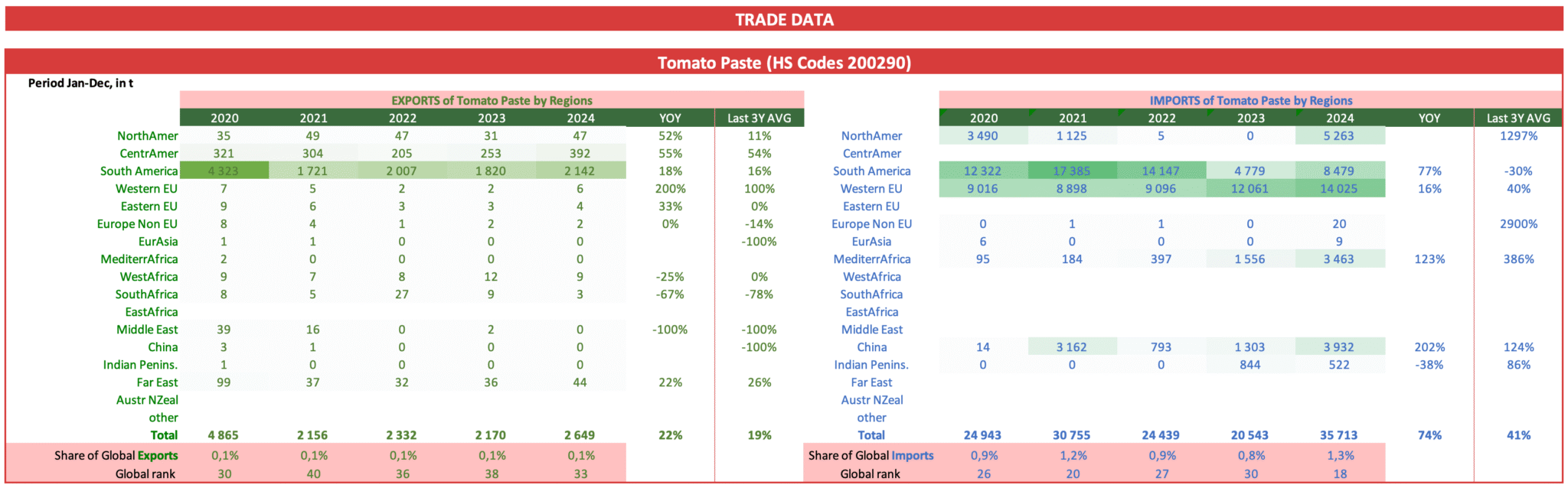
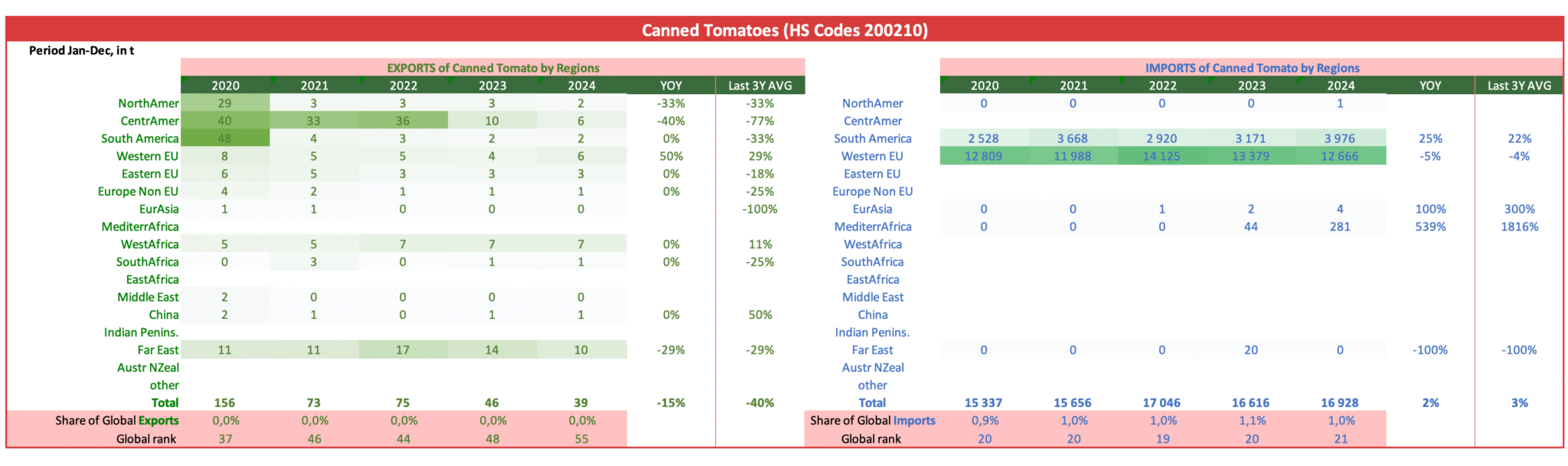
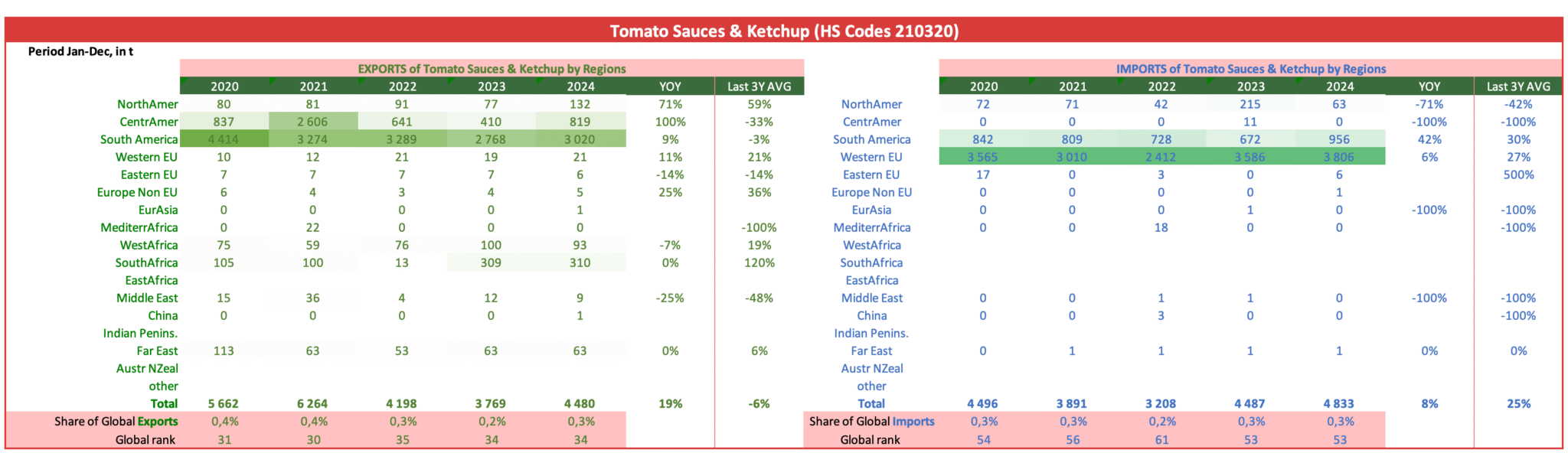
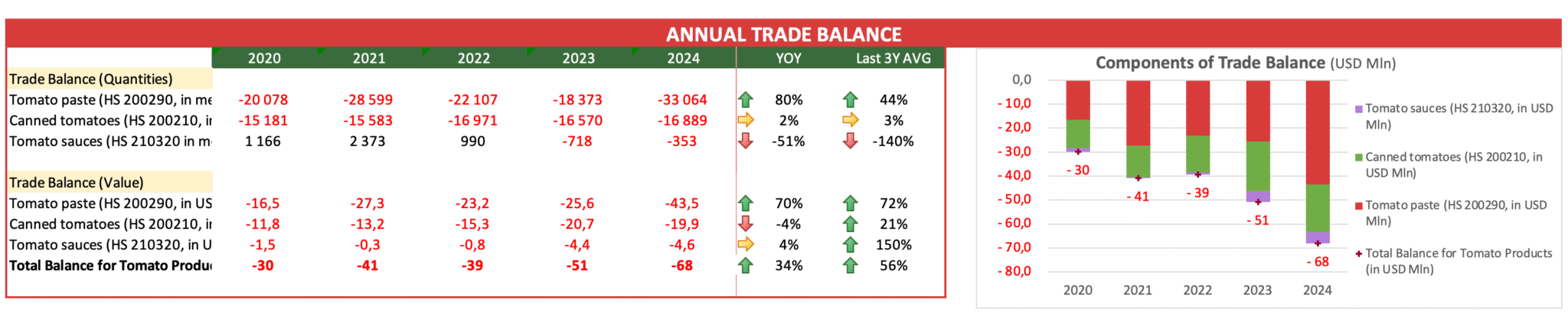
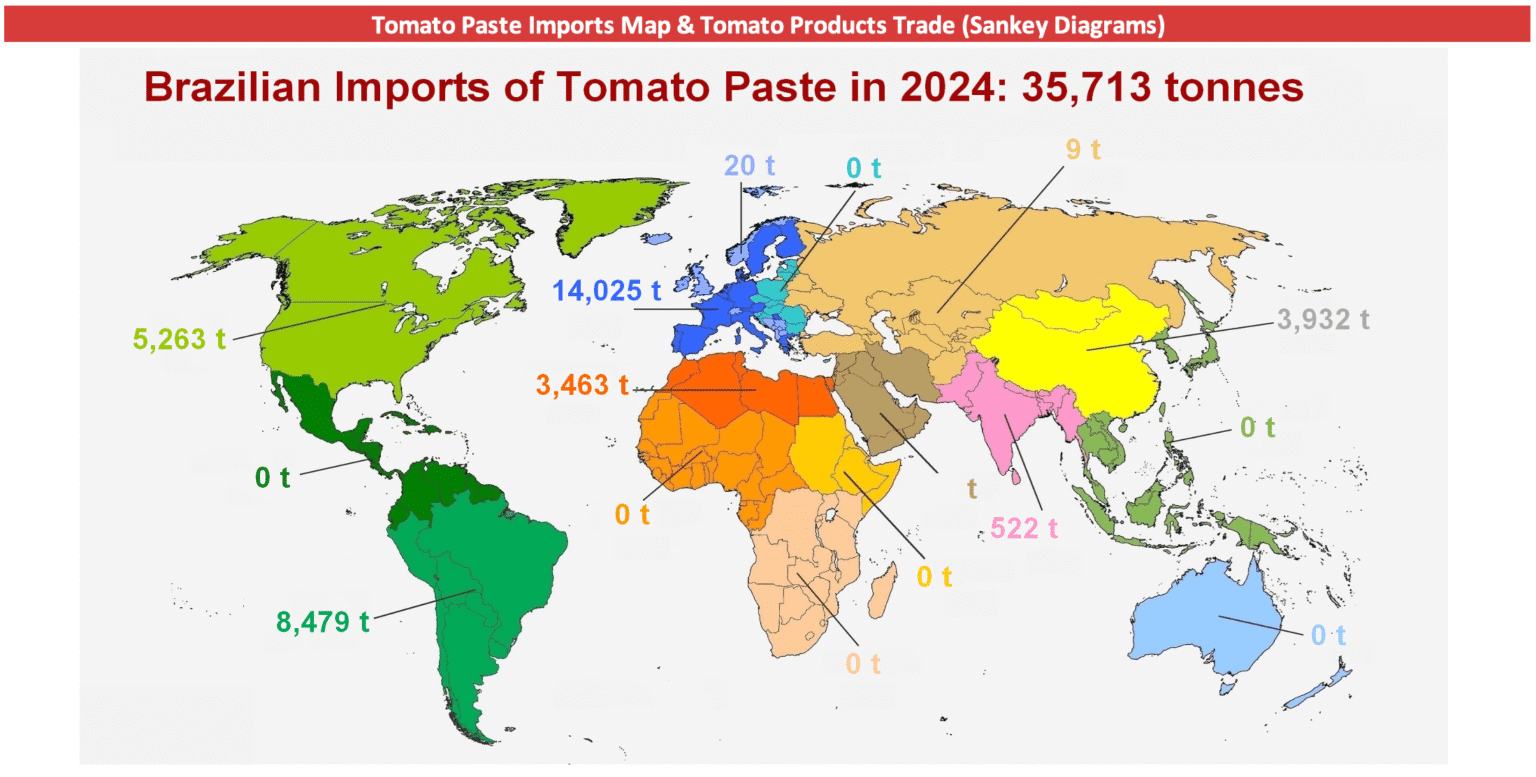
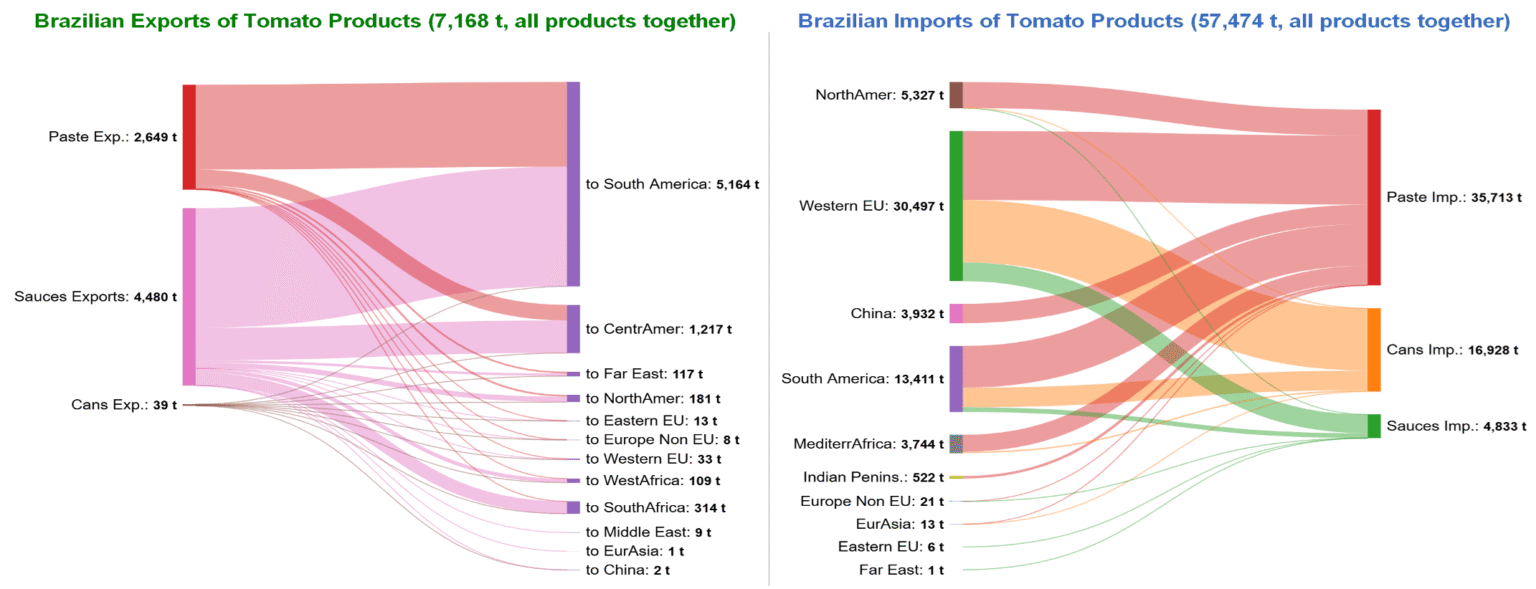
Typically, the Brazilian market serves internal consumption and fulfils the internal market’s quality standards, with a a varied range of mainly low concentration products. Despite the recent increase in domestic production, the country is still partly reliant on imports. Brazil’s trade is chronically in deficit with the import diced tomatoes, whole-peeled tomatoes and high quality standard paste mainly from Chile, Peru and the US.
The Brazilian tomato processing industry is represented within WPTC by TOMATE BR.