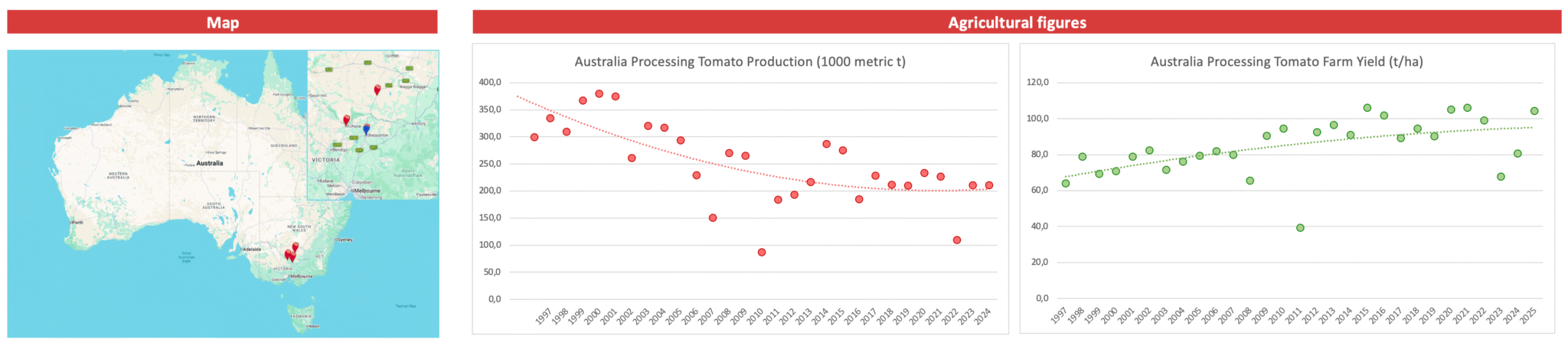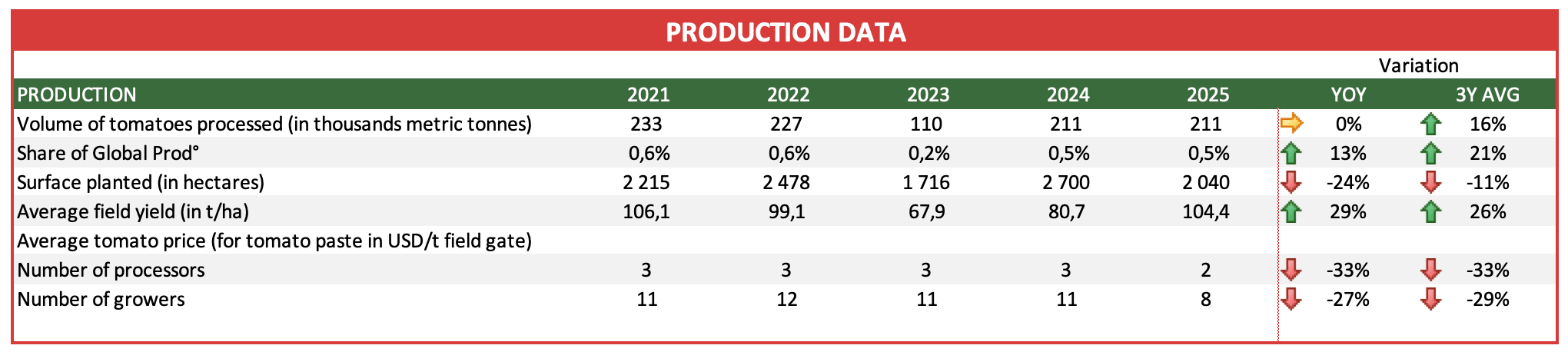
Australia achieved a record average processing tomato yield in 2025/26, but a smaller planted area reduced total production. Australia produced 0.5% of global supply and are ranked 21st globally on the basis of processing tomato volume. The industry remains focused on sustaining it’s domestic market, where high import volumes and global oversupply continue to constrain local production and processing.
Industry and production
Eight specialist grower businesses produced 161,151 tonnes in 2025/26, down 23.6% from 211,011 tonnes in 2024/25. Production is concentrated in northern Victoria and southern New South Wales. Victoria supplied 78.2% of the crop and New South Wales 21.8%. Two companies processed the crop: Kagome received 92.3% and SPC 7.7%. No organic tomatoes were processed.
The planted area fell to 1,475 hectares, the lowest in more than 30 years of industry records. Of this, 1,370 hectares were harvested, or 93% of the planted area. Average yield reached 117.6 tonnes per harvested hectare, compared with 104.4 tonnes in 2024/25. The smaller planting program allowed growers to select more favourable soils, contributing to the record result.
Crop management and seasonal conditions
All production used sub-surface drip irrigation, with transplants accounting for 86% of the planted area and direct seeding 14%. Despite strong yields, heatwaves, localised hail and heavy March rainfall created challenges. Late rain delayed harvest and reduced fruit quality, leaving some crops unharvested. Average soluble solids were 4.75%, below the 5.0% benchmark preferred by processors.
The Australian Processing Tomato Research Council (APTRC) supports cultivar improvement through its trial program. Seventeen cultivars were grown commercially in 2025/26. H3402 remained the largest by area, closely followed by UG16112, reflecting a more diverse cultivar base and continued efforts to improve yield, soluble solids and seed-supply resilience.
Domestic market and trade
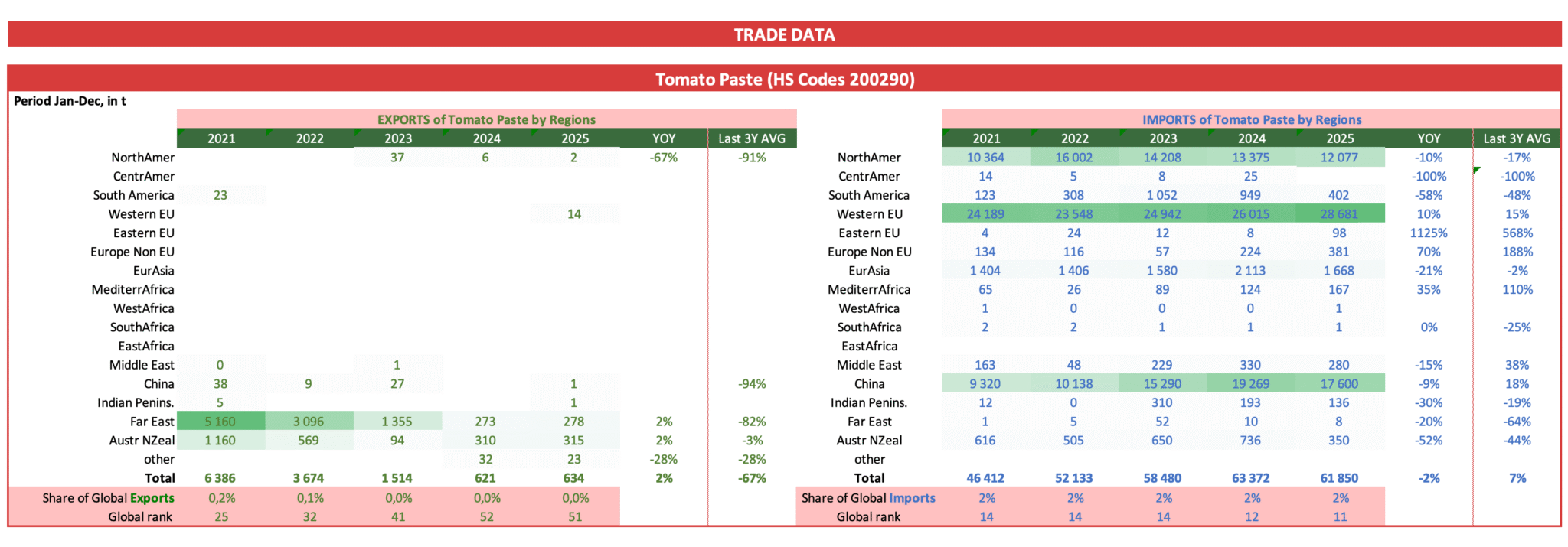
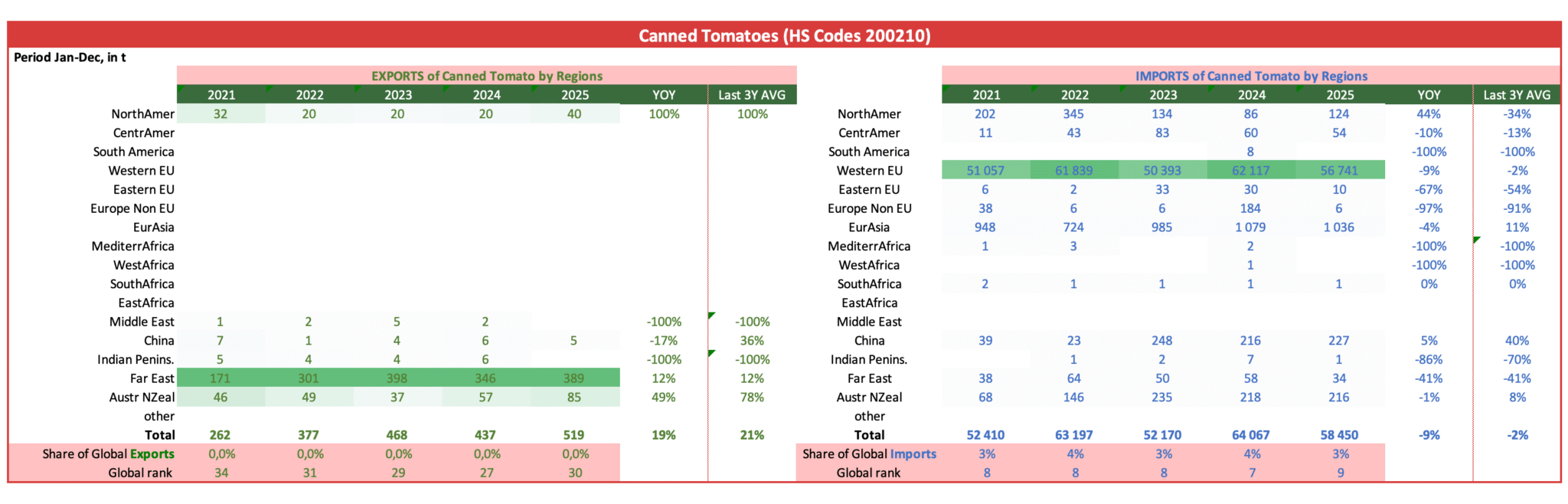
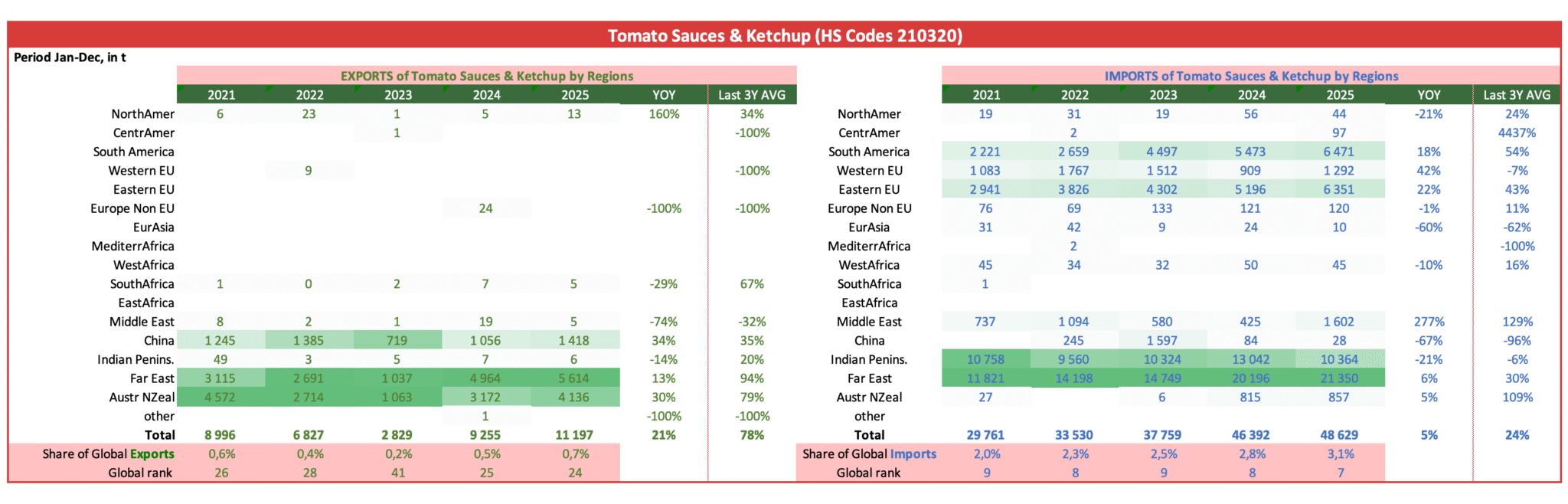
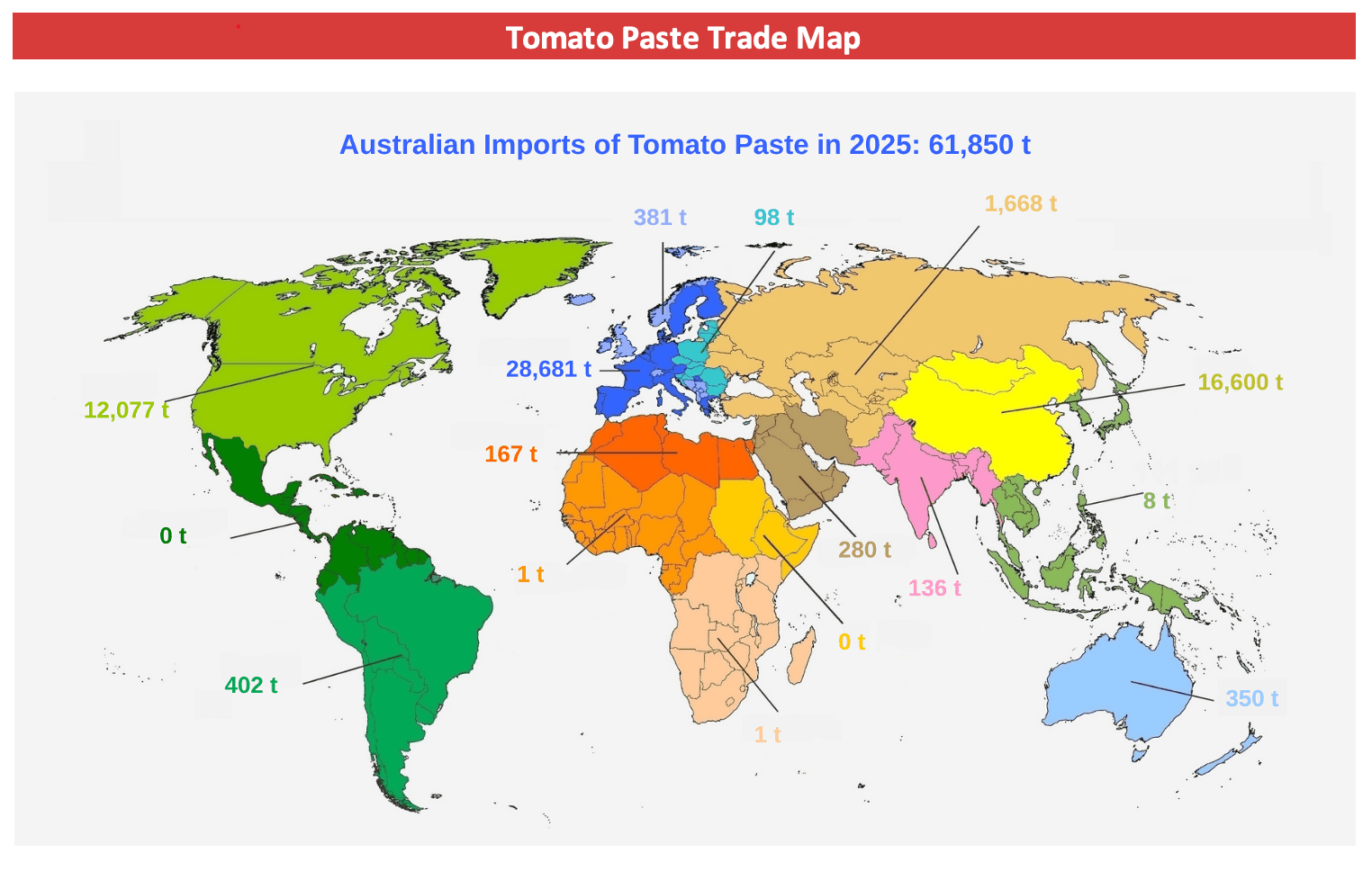
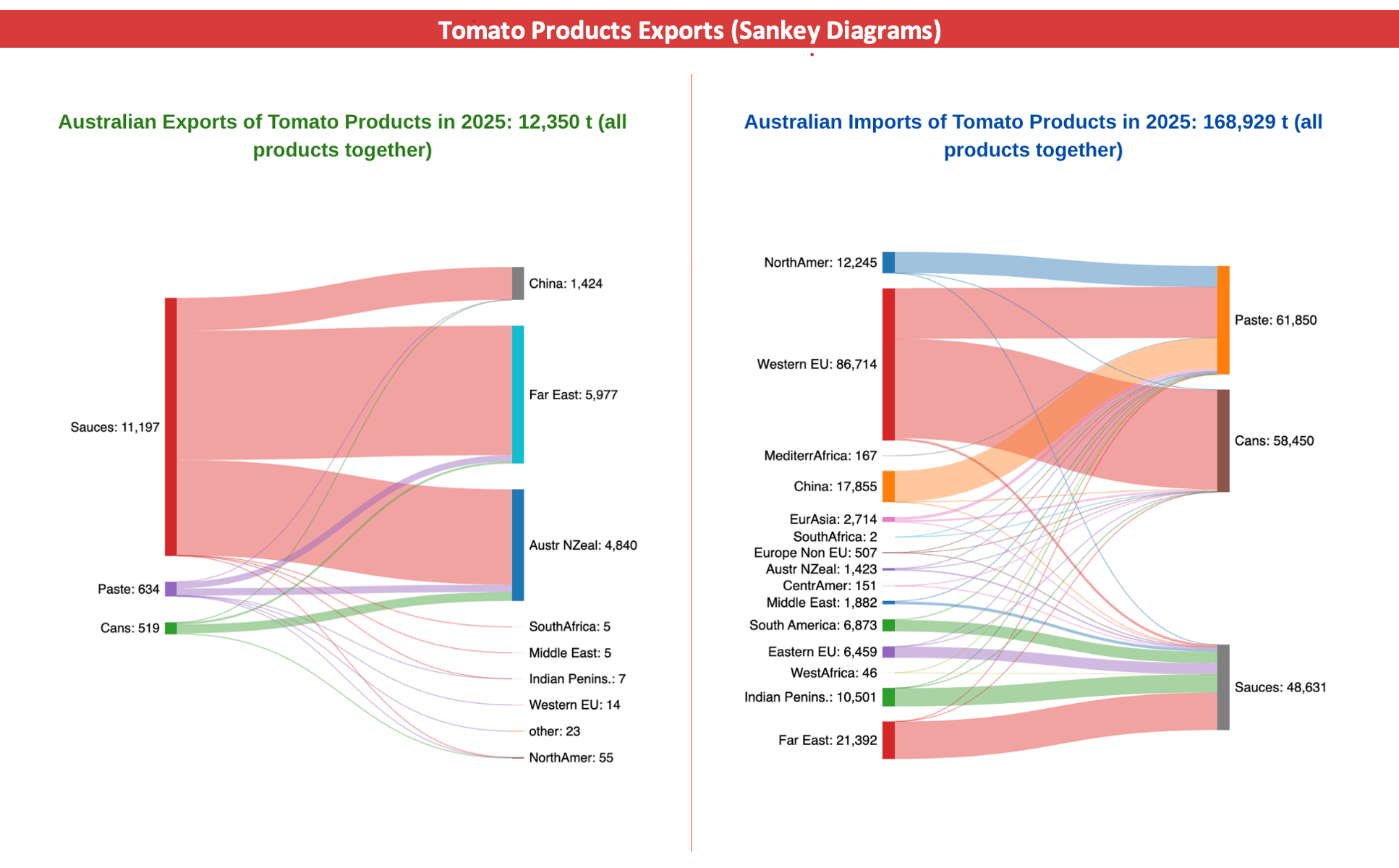
In calendar year 2025, apparent domestic demand was 674,834 tonnes in raw-tomato equivalent, with per-capita consumption around 24 kg, consistent with long-term averages. Imports supplied approximately 80% of this demand. Import volumes totalled 540,744 tonnes in raw-tomato equivalent, down 1.9% from 2024 but still the second-highest level recorded since 2010. Italy supplied 64% of imports, followed by China at 14% and the United States at 8%.
Exports increased 18.3% to 27,061 tonnes in raw-tomato equivalent, mainly sauce and ketchup. New Zealand remained the largest export market. Trade figures cover calendar year 2025, while crop results cover 2025/26; apparent demand estimates also exclude changes in year-end stocks.
Outlook
The survey forecasts production of 142,000 tonnes for 2026/27, reflecting continued pressure from global oversupply and lower-cost imports. With underlying consumption broadly stable, the main opportunity is to increase the share supplied by Australian-grown and processed tomatoes. Although the aim is to increase volume back above 200,000 tonnes in the coming few years, stronger support from retailers, local markets and government, alongside an easing of global oversupply, are all highly important to recovery.