News
Italy: the industry is pursuing its reorganization
Strategies employed by Mutti, Cirio and Pomì for the future of tomatoes
The Italian tomato processing industry has been evolving in its approach to the business.
With the acquisition of historic brand De Rica by the Consorzio Casalasco del Pomodoro, the arrival of the Belgian investment fund Verlinvest in the capital of Mutti and the opening of a Conserve Italia subsidiary in the United States, recent months have seen a number of signs of a new reorganization of the country's industrial production of paste, peeled tomatoes, passata and sauces.
The tomato industry is one of the emblematic sectors of Italy's food traditions and of the Mediterranean diet, but it is also a highly fragmented sector, which includes very few companies able to measure up to the competition on the international markets and to face the low price logic imposed by big chain retail distributors.
The latest Nomisma report on agriculture shows that the industry benefits from a solid health bill. With a total turnover of EUR 3.6 billion – of which more than half (EUR 1.7 billion) is achieved on foreign markets – Italy is the world's biggest exporter of tomato pulp and peeled tomatoes (for a value of EUR 869 million in 2016) and the second biggest exporter after China for passata and pastes, with a turnover of EUR 678 million last year. Sauce exports brought in EUR 175 million for the Italian industry in 2016.
The TOP5 control 80% of the Italian market
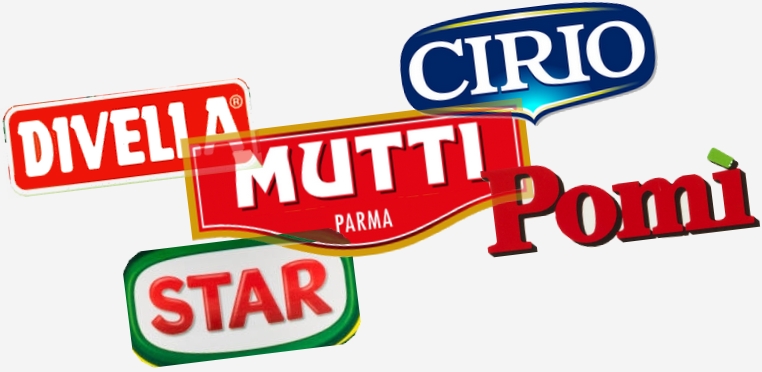 Until the beginning of the 2000's, the number of companies in this sector exceeded 200. Today, after a first phase of consolidation, less than 100 companies process tomatoes in Italy, but even more importantly, the five biggest operators – Mutti, Conserve Italia, Star, Divella and Casalasco – control 80% of the market. And the future could bring a further series of mergers and acquisitions.
It is because the domestic Italian market no longer offers sufficient scope for growth that exports have become the only driver for development. Italian homes consume less pasta – and therefore less accompanying sauces – as they get used to culinary traditions from different ethnic backgrounds and favor new "natural" eating habits in 2016, thereby causing further decreases in the consumption of tomato products: according to Iri data, large chain retail distribution dropped 2.1%. Over the first semester, this dip in sales has continued: the biggest drop was recorded for the peeled tomato category (-6.8%), while pulp and paste have dropped respectively 3.3% and 3.7%.
According to Iri analysts, the slowdown is more considerable in terms of value than in terms of volume: sales have been globally stable, but suffer from the promotional pressure that concerns up to 49% of the total sales volume of tomato products, whereas its only concerns about 26% on average for other products. So operators are seeking profitability by focusing on the higher-value segments of the market like juices, ready-to-use sauces and organic products, all of which are growing. This approach on the part of processors is typical of a sector where the main product has become particularly commonplace, a fact that Iri expresses by concluding that processing tomatoes have now become a "commodity": on supermarket shelves, no less than 70 references jostle for space, reflecting the major fragmentation of production and contributing to fierce competition in terms of prices.
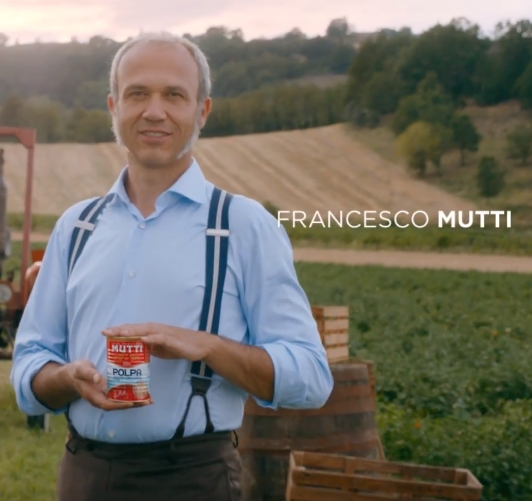 For Francesco Mutti, who is chairman of the eponymous company based in Parma, tomato processing leader for all of Italy, with a market share of 26% and a turnover of EUR 261 million, "the domestic market, though it is very big, is shrinking and this is to be expected in the current context of increasingly globalized consumption. Even in Germany, people are consuming less and less beer and more and more wine. Tomato-based products are also affected by this evolution in people's tastes. In and of itself, this is not a bad thing. 'Made in Italy' pulped or peeled tomatoes should instead take example on the efforts made to develop public appreciation for wine, then focus on quality and image in order to sell throughout the world."
Francesco Mutti has been particularly open and transparent in his explanations of how his company managed to increase its market share in Italy by taking over the market shares of competitors, but has stated that the success of this approach – double-figure growth – is based on foreign markets where his turnover increased by 20% last year. "Quality, efficiency and, above all, a solid company – these are the ingredients for success. I am convinced that our industry could manage very well in coming years, but also that we must inevitably go through a new phase of consolidation."
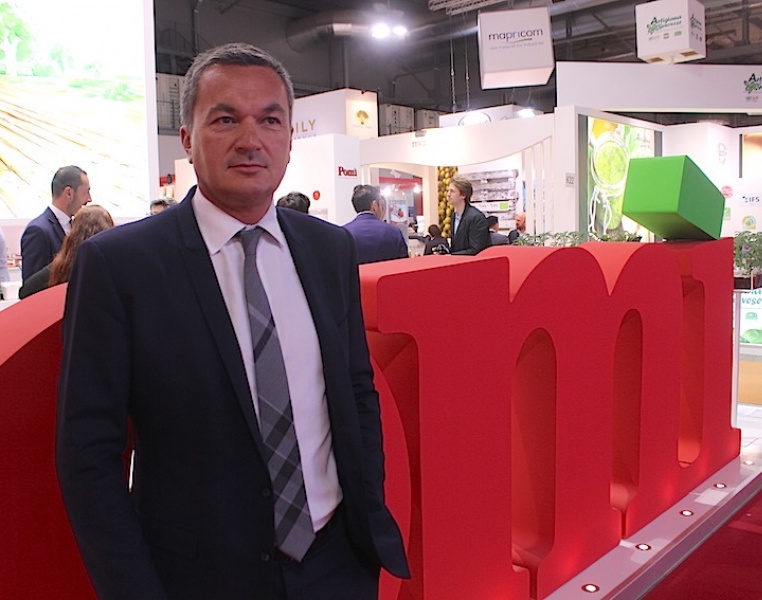 The Consorzio Casalasco del Pomodoro, which recently bought up the De Rica brand from Generale Conserve, also has the ambition of becoming a major league player in the passata category. Costantino Vaia, the General director of Consorzio, underlined the significance of this deal: "Our industry is facing an unavoidable challenge, which has been brought about by globalization, and it is important to take it up by focusing on collaboration and synergistic measures. The Casalasco project has brought together the Pomì and De Rica brands. These are complementary brands, the first of which is well established for TetraPak packaged products, while the second is stronger in the premium ranges, and they are perfectly suited for a consolidated integrated industry, from field to processing plant."
Casalasco is a consortium of cooperatives, gathering 360 affiliated agricultural companies: with De Rica, Pomì becomes the country's third biggest operator, with a 6% market share, right behind Mutti and Conserve Italia. "Over the past few years, Vaia added, we have carried out several acquisitions and we are continuing to grow in the field of external operations, not only in the tomato sector, but also with other vegetables, as we seek to develop both in Italy and abroad, where we currently export 65% of our total sales."
 Conserve Italia, another giant of the cooperative system, based in Bologna, which produces canned vegetables and fruit juice (Cirio and Valfrutta are two brands among others), reports a turnover of several billion euros and has also been growing with determination. This company has resolutely been pursuing its internationalization, notably thanks to a new subsidiary that it opened in recent months in the United States, on the basis of a major distribution agreement for Cirio products in stores of the Walmart chain.
"The Walmart stores where Cirio products are available, explained Pier Paolo Rosetti, General director of Conserve Italia and President of Conserve Italia USA, account for 30% of Walmart's total sales in the USA. Our products are already found in the aisles dedicated to 'True Authentic Italian', which has always been highly appreciated by American consumers."
In the South as well, companies are betting on the synergy factor. This is one of the reasons why, in order to extend its operations in the tomato products sector, the La Doria group bought up the Pafial company in 2014. This holding controls the companies Delfino and Althea, which run factories set up in the regions of Naples and Parma, specializing in the production of ready-to-use sauces prepared according to traditional Italian recipes.
See also our recent articles in the current news section, using the "Italy" keyword.
Sources: parma.repubblica.it