News
Italy: the domestic market is holding up well
The annual penetration rate of canned tomatoes has reached 87%
According to data from the Growth from knowledge (GfK) consumer panel, 87% of Italian households purchased canned tomatoes in the twelve months from February 2021 to January 2022.
As with many packaged consumer goods categories, market penetration has increased in recent years, from 84.8% in 2019 to 87% in 2021. However, unlike the majority (58%) of the other categories whose penetration continued to grow even in the year 2021, canned tomatoes recorded a gradual leveling off, notably dropping 1.4 penetration points down from the maximum recorded in 2020.
The average purchase frequency was 12 occurrences per year, while households spend an average of about 25 euros per year on this category. This amount is also down slightly from 2020, but still higher than pre-Covid levels.
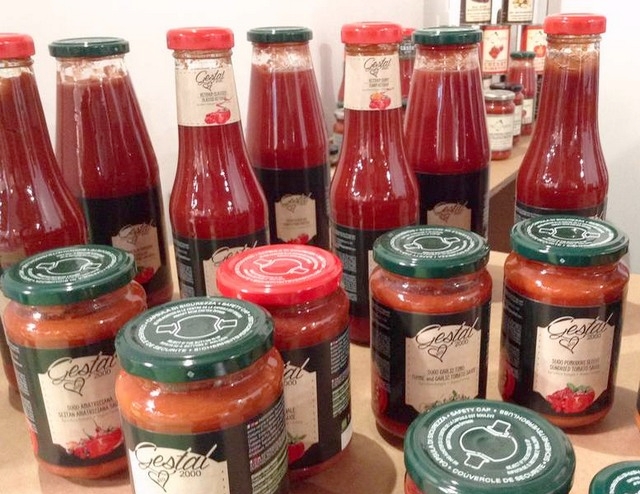
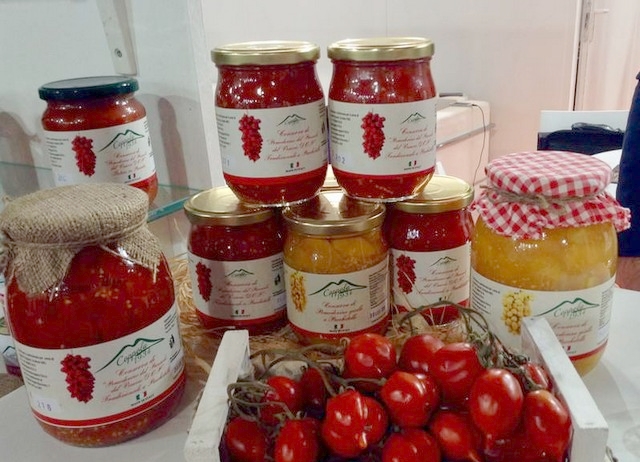 The canned tomato market is driven, in terms of penetration, by passata (71.4% penetration, with dynamics that are similar to the overall market), pulp (55.2% penetration, down about 3 points from last year), peeled tomatoes and cherry tomatoes (33.6%, down from both the 2020 record and from 2019 levels), and most recently by tomato pastes, purchased by about 7.7 million families during the period running February 2021-January 2022 (29.5% penetration). This last segment is showing a progressive leveling off pattern close to that of the sector as a whole.
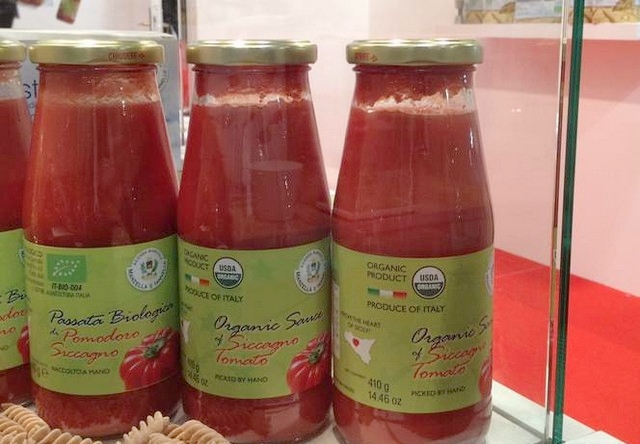
 As shown by the GfK consumer panel (the largest continuous data collection panel in Italy with 15,000 households as of mid-2022), the canned tomato category is one of those with the highest response level to the "organic" argument. More than 3.8 million households have purchased "organic" canned food at least once in the past year, a figure that is 3% higher than in the pre-Covid period, although the dynamics in this segment are also gradually leveling off compared to the record results of 2020. The "organic" effect impacts both passata (purchased by 2.4 million households) and pulped tomato (more than 1.6 million purchases), and has motivated the purchase of peeled tomatoes and cherry tomatoes by approximately 800,000 households, a figure that is also growing steadily.
 According to Marco Pellizzoni, Sales Director of GfK Consumer Panel Italy, an analysis of the evolution of household purchasing behavior clearly reveals the emergence of two key phenomena in terms of marketing channels: firstly, the penetration rate of discounter retailing, which was around 36.8% two years ago, has now risen to 40.9%; secondly, online purchases have risen from 6.9% two years ago to 11.7% over the period to January 2022.
In terms of socio-demographic profile, the organic category clearly reaches a very wide consumer market and manages to penetrate all target audiences. Most of the 13% of non-buyer households are located in the south of the country (where "homemade" products present a real competition challenge), and are found in the low-middle-class socio-economic strata, being generally younger households whose main buyer is under 44 years old.
Some complementary data
An analysis of the data provided by the Italian sector for the 2021 season shows that the production of organically grown tomato products mobilized 451,000 metric tonnes (mT) of fresh tomato, harvested on surface areas covering 6,343 hectares.
During this season, surfaces planted with organic crops in the northern region accounted for 63% of Italy’s total organic planted surfaces.
The quantities harvested in the south-central region represented 41% of total Italian volumes.
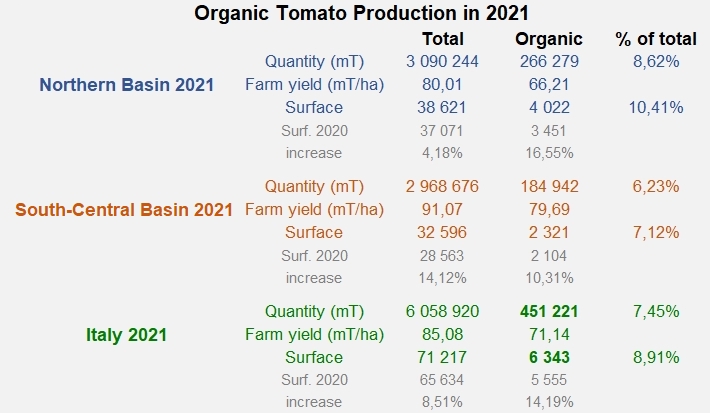
Sources: freshplaza.it, Amitom