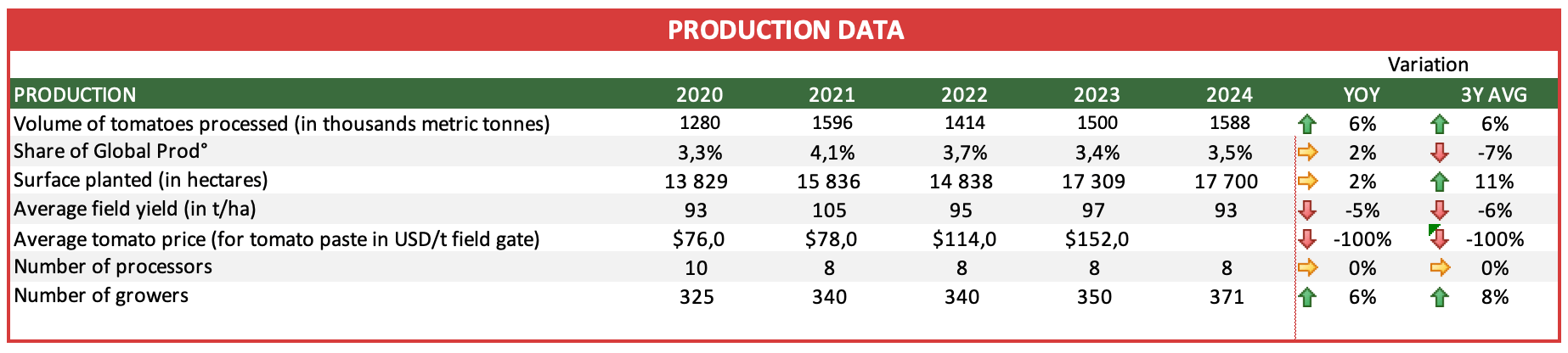
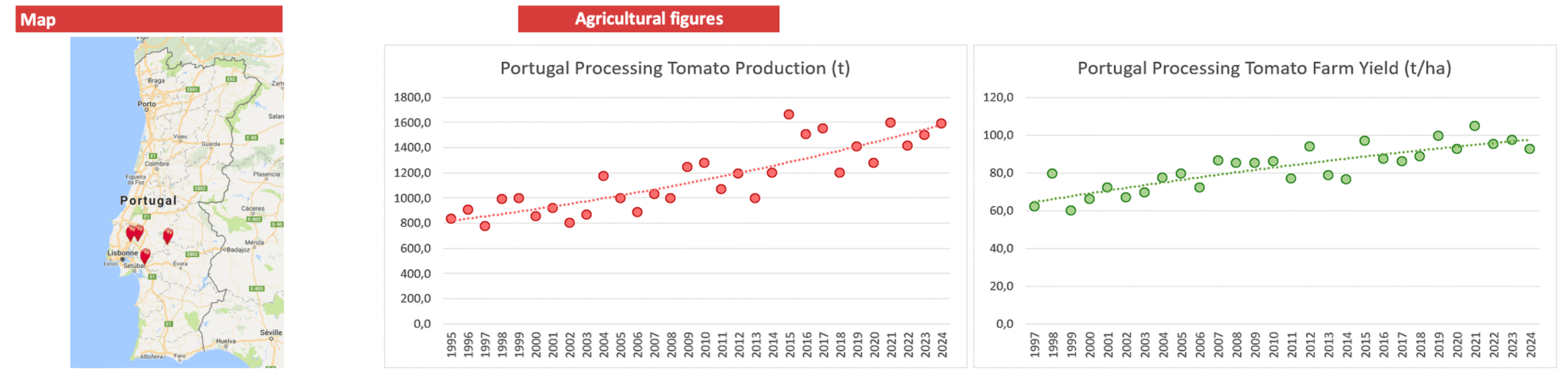
During the last ten years, the volume of tomatoes processed in Portugal has averaged 1.5 million tonnes, up from from annual volumes of about one million tonnes in the early 2000s. Exports represent 93% of Portuguese production.
Processing tomatoes are mainly produced in the plains of the river Tejo (agricultural region of Ribatejo), north-east of Lisbon where 90 % of the crop is grown, and in the south-east (the region of Alentejo) which accounts for 10% of the crop.
Along the Tejo, small holdings are associated with intensive multiple-crop farming on the fertile soils of deep loamy clay. The climate is ideal, with very dry summers and rains only in the spring, with some risk of floods in April/May. Large temperature variations between day and night enhance the colour of the fruits and Portuguese tomato products are valued for their good colour. Agricultural production evolved since the start oof these century, and while a few years ago, almost the entire crop was produced by small farmers, « seareiros », who rented small fields (3-5 ha) and would work with their families, now more typical farmers are now larger than 100 hectares using the most advanced technology. The larger farmers’ now plant in excess of 1000 hectares of tomatoes.
In the Alentejo region in the south, the climate is drier ,and cultivation is more extensive with large fields which are also fully mechanized.
Thanks to the good weather conditions, good agricultural practices with generalised drip irrigation, and the used of selected hybrids the national average yields on the c. 17 000 hectares planted are nearly 95 t/ha, while many farmers can get 120 t/ha. The farm-price of fresh tomatoes is a result of free negotiations between the processors and growers’ organizations which represent the 350 growers. Each year circa 100,000 to 150,000 tonnes of tomatoes are produced in Portugal under contract with neighbouring Spanish processors.
There are 8 tomato processing firms in Portugal, of which two are amongst the very largest European processors. Tomato paste remains the dominant product, absorbing over half of the total volume, but in the last few years, the production of crushed and diced tomatoes has developed significantly, also for export. Tomato powder is also produced from tomato paste by spray-drying, outside the harvesting season. Some firms also produce tomato pizza sauces, natural or flavoured with various spices. Ketchup production and that of various tomato sauces is increasing significantly.
Portuguese tomato processors are represented within AMITOM and WPTC by AIT.
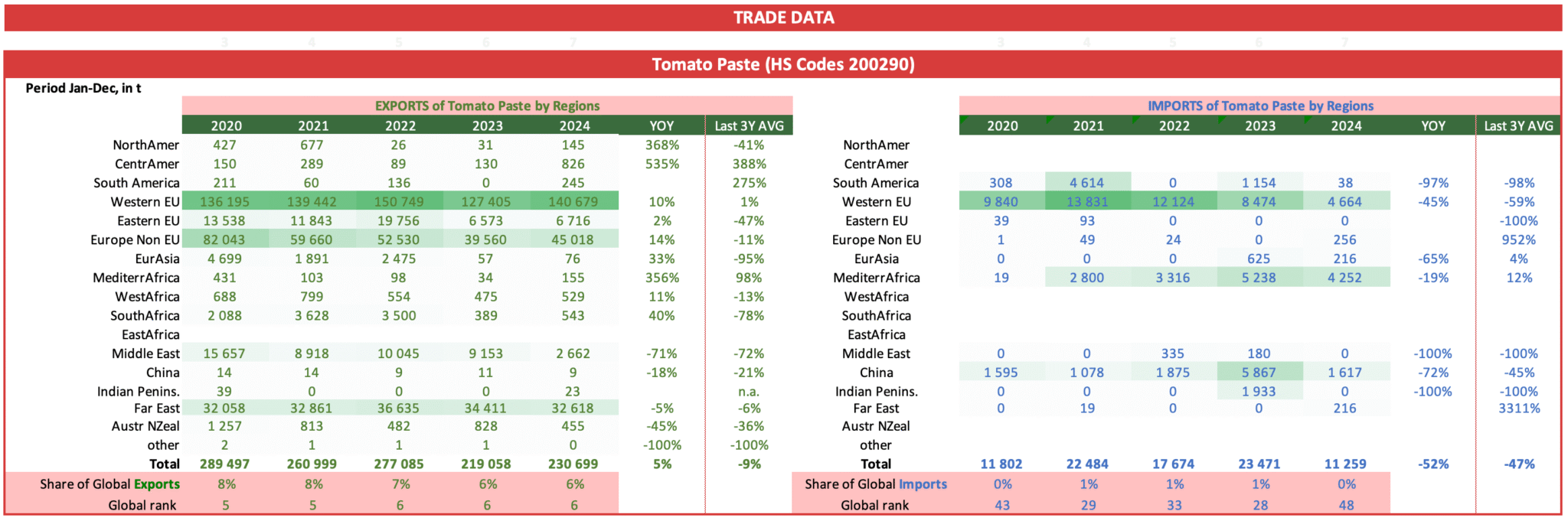
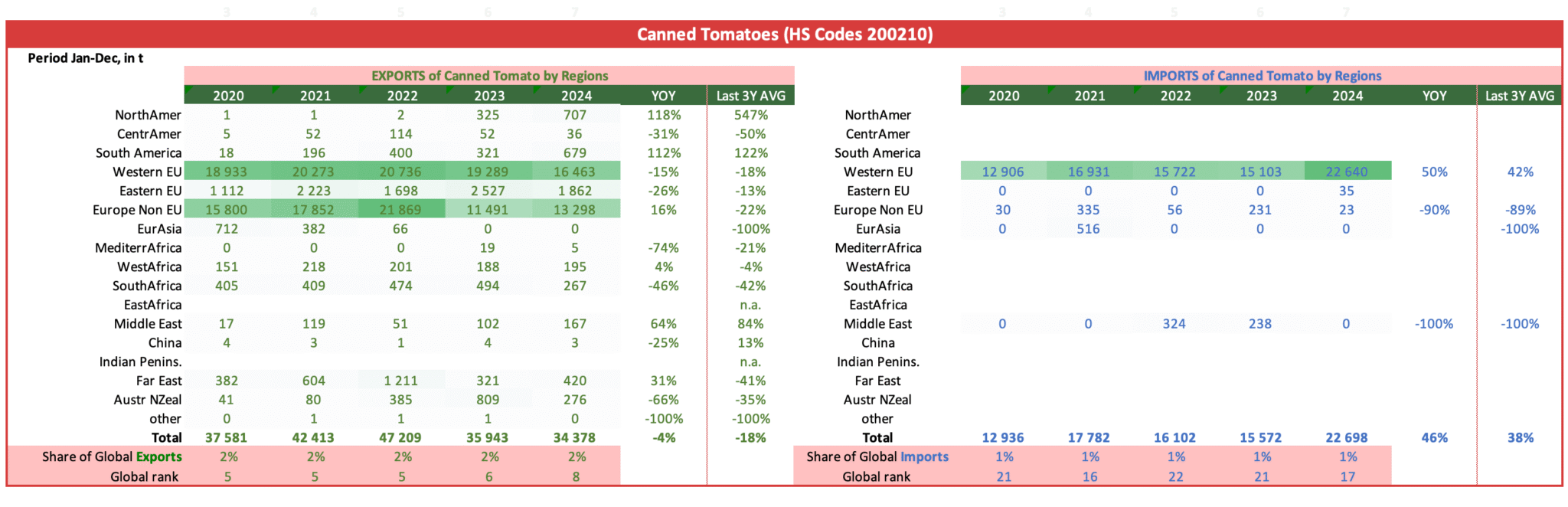
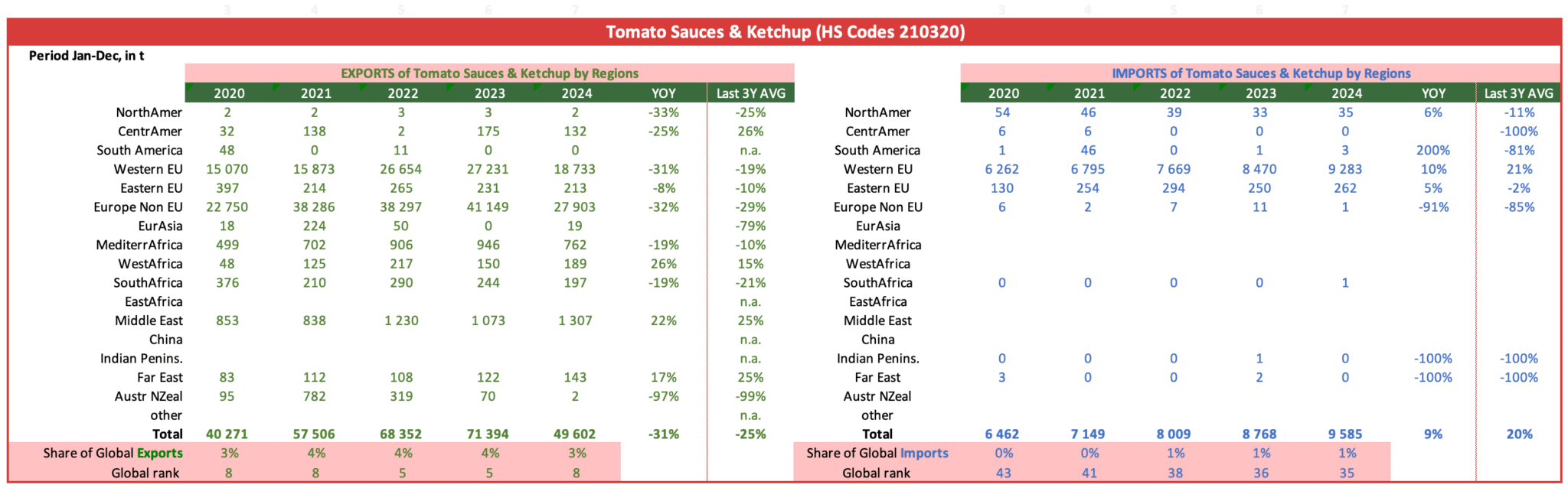
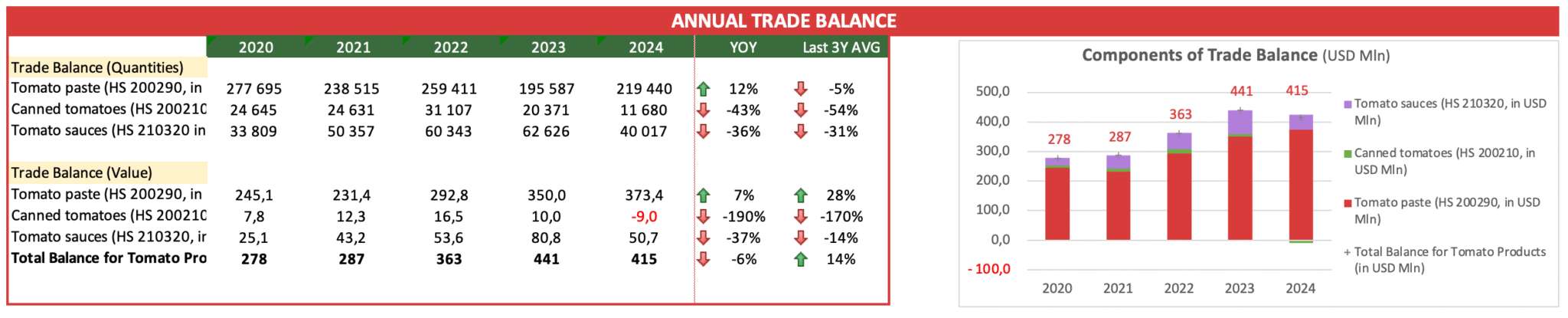
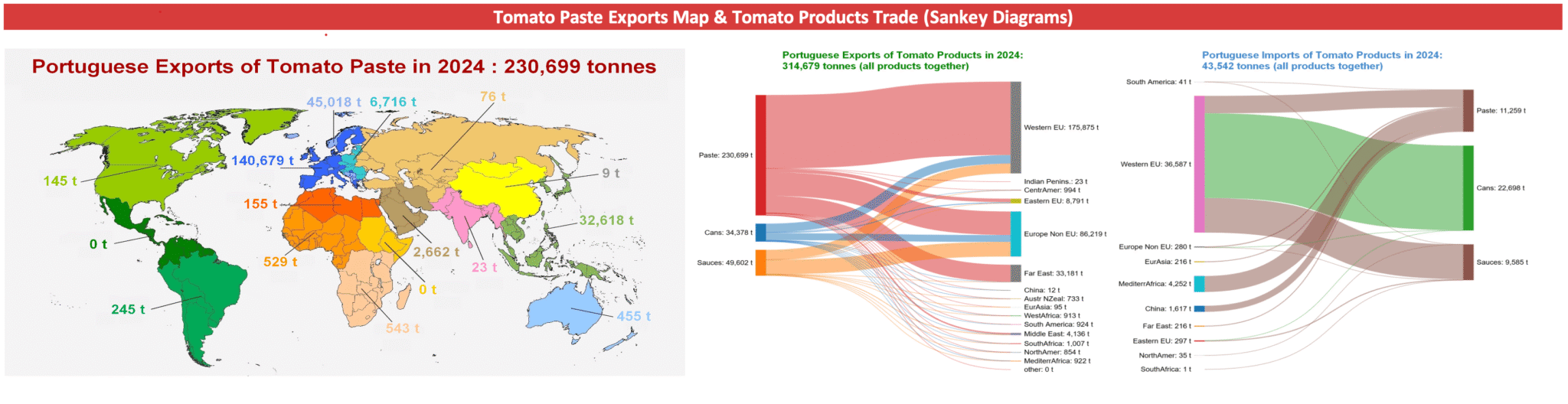
(click on any of the images to expand it)