Through governmental incentives. the tomato processing industry in China grew rapidly from a capacity of 50 000 tonnes in 1995 to more than 12 million tonnes in the late 2010s becoming the second largest producer after California and the biggest exporter of tomato paste in the world. Over the last ten years, production averaged 6 million tonnes, although with large annual variations, with a minimum of 3.8 million tonnes in 2018 and a maximum of just above 10 million tonnes in 2024.
Xinjiang is the major processing area in China, accounting for more than 80% of the national production. The main area for tomato cultivation is in the northwest of the region (more than 60% of the total), with about 20% of the total production located in Southern Xinjiang. Xinjiang enjoys a dry continental climate, with little rain in summer, long daylight hours, and general conditions that are ideal for growing tomatoes, and there is a good irrigation network.
The second largest production region is situated in Inner Mongolia. This province has enjoyed rapid growth in the 2010s and now accounts for about 20% of the total volume processed in China. The third region is located in the Gansu province and accounts for about 5 to 10% of the total Chinese production of tomato paste. There is also a small production in the Ningxia region.
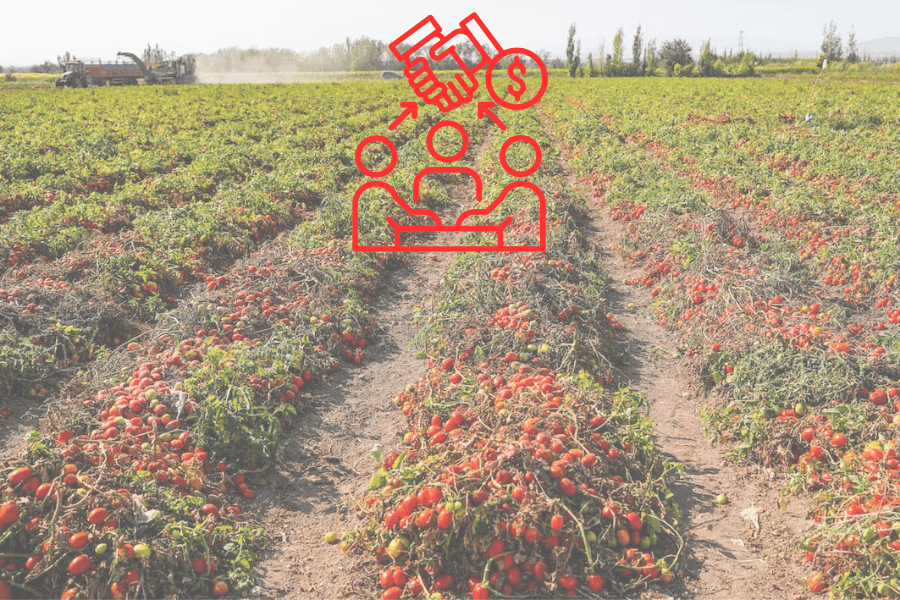
The total surface planted with tomatoes in China averaged about 60 000 ha over the last ten years, but rose to around 100 000 hectares in 2024, when about 20 new factories opened to reach a total of 106. Depending on the region, the season gets under way between July 20th and early August, and it can last about 50 or 60 days, until the beginning of October. Although the most commonly used varieties are locally bred hybrids, Heinz hybrids represent about a third of the total. More than half of the production is now machine harvested. Processors sign contracts either with official local structures such as village authorities, or directly with producers who rent the land that belongs to the state. Contracts determine the area to be planted as well as provisional volumes and set out a program for planting and harvesting and include supplies of seeds and plant health inputs.
Most of the Chinese crop is processed into paste with 80 to 90 % is used to produce 36-38 paste, with some 28 % paste and other products, including canned tomatoes. In 2023 and 2024, about 1.2 million tonnes of Chinese paste was exported to many regions and notably the Middle East, Africa, the Far East, Europe, South America, although due to some human right concerns about some customers now refuse to buy paste originating in Xinjiang.
While China is a huge consumer of fresh table tomatoes with about 50 kg per capita per year, the consumption of processed tomato products per capita is now estimated at 700 g. While in 2014, the annual consumption equivalent to bulk paste in China was estimated at 107,000 tonnes, in 2024 it was about 235,000 tonnes with an average annual growth rate of 6%. Tomato products are rapidly expanding their application scenarios in fields such as hot-pot, fast food, ready-to-eat meals, Western cuisine, beverages, driving rapid growth in local consumption.
The Chinese tomato processing industry is represented within WPTC by the China Chamber of Commerce for the Import-Export of Food (CCFNA).