News
Canada: processing tomato growers achieve an industry first
2021 Season
Ontario’s processing tomato growers have accomplished a unique goal. They have established the first grower-led program which collectively, as an industry, compiles a complete record of their crop protection use information. While growers of other horticultural crops keep records, they are not organized in the same format across the entire grower base. The industry-wide standard which has been established for this crop provides several advantages for growers. Being recognized by all processors is a good start. However, specifically for this article, they are ensuring that the regulatory system makes accurate decisions.
 Recognizing the need for a real-time documentation and notification system for crop protection products, Tomecek Agronomy Services based out of Chatham, Ontario developed SprayHub in collaboration with the Ontario Processing Vegetable Growers (OPVG). The program can be accessed via mobile app or through a desktop computer. It is first and foremost a system designed for ensuring worker safety and food traceability.
The primary goal of the program is to keep track of product applications for restricted-entry intervals and pre-harvest intervals. Growers create a spray record for each field and application and the system automatically calculates and monitors these intervals. Multiple individuals can be added where there are multiple applicators or custom operators working on a farm. Farm employees and others who visit fields regularly can be instantly informed before entering any fields with entry restrictions. Fields can also be monitored at harvest for when the pre-harvest interval has been met. Growers consent to sharing their records with their processor and the grower association in aggregate form; confidentiality is assumed.
Initially developed with funding from Growing Forward 2 and the Ontario Tomato Research Institute, the operational cost of SprayHub is now covered directly by the processing tomato growers. Growers agree in their contract to use SprayHub. As a result, enrollment in the program is industry standard with approximately 65 growers enrolled in 2021. Growers support the costs of running the program through their licensing fees which currently run at seven cents per tonne of production. The OPVG collects and processes this payment on their behalf.
The program is now in its fifth year of operation having collected data since 2017. With a multi-year history of data now accumulating, a new benefit has emerged – the ability to produce comprehensive aggregate summaries of crop protection use information. This represents the average use of crop protection products on the crop across the industry. What additional benefits does this bring?
Regulatory decisions made by the Pest Management Regulatory Agency (PMRA) rely on estimating how much of a particular product is used by growers. Unfortunately, availability of this information, particularly for horticultural crops, is poor. When conducting a product re-evaluation, in the absence of updated use information, PMRA assumes the worst-case scenario: the maximum number of applications at the maximum label rate. This results in the estimated usage being higher than actual use — many times higher would not be uncommon under this scenario.
With updated use data, PMRA revises risk assessments based on real usage which can make an active ingredient much more likely to successfully pass re-evaluation if there are challenges. The value of this is recognized by PMRA in the integrated approach model for re-evaluation proposed in 2020. Under the title of improved information for regulatory decisions, crop protection use information was mentioned as an important pillar.
 Providing crop protection use information is likely the most beneficial thing that growers can do to support re-evaluation decisions. As written in previous columns, this is about collecting provincial level summary statistics on how crop protection products are actually used by growers such as information on rate, number of applications and acres treated. This only requires aggregate, non-personal data and does not need to identify a farm or specific locations. Individual privacy is a key consideration in developing such summaries.
By accessing the SprayHub database, the OPVG can aggregate a set of crop protection use information from the processing tomato crop. This contains information on the product used, rate, acres treated, and time of application. The fact that the information is housed by the grower association ensures that this information is fully under the control of the growers and is only shared at their discretion.
Many of Ontario’s processing tomato growers are seeing the value of using SprayHub and the benefits it can bring in managing their own farming operations. Ensuring worker safety and food traceability remains paramount. However, the secondary benefit of aggregating crop protection use summaries has emerged which should provide dividends to processing tomato growers down the road. Requests for updated usage information are only going to increase as PMRA transitions to the new model for re-evaluation. Other horticultural sectors should consider their own approaches for how to collect, organize, and manage this information for their benefit.
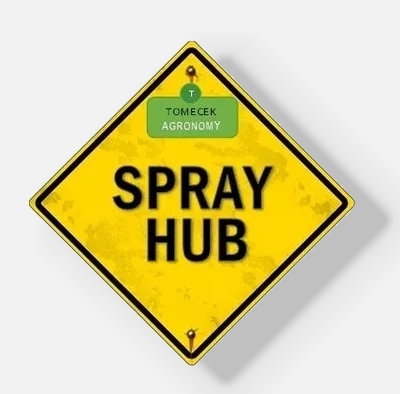
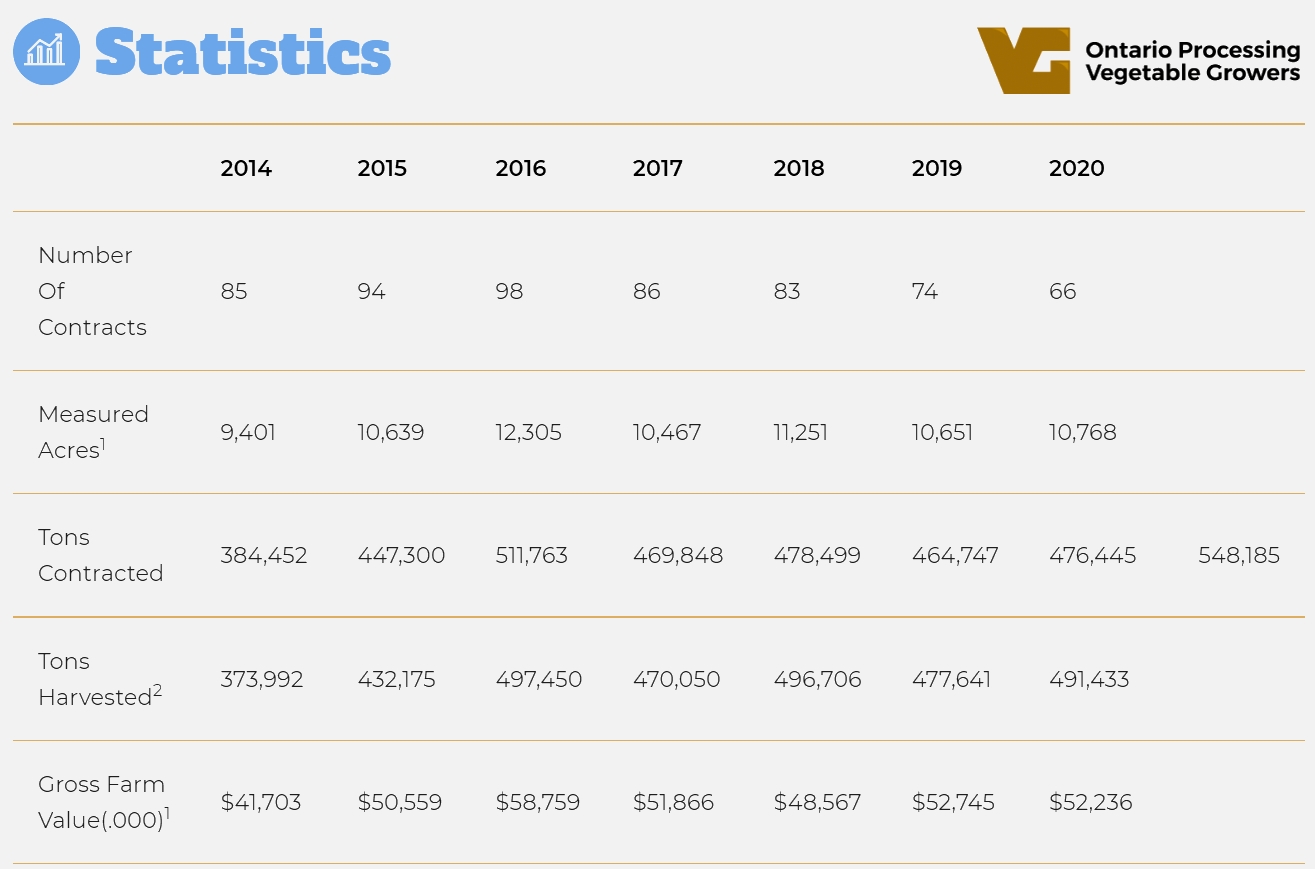
According to OPVG, there are more than 60 growers who have planted more than 4,800 hectares of tomatoes in Ontario this year. The season has been especially challenging for local growers as the weather has not been the best. Very heavy rains have stressed the plants and, in some cases, the field flooding has resulted in drowned plants.
The growers of these tomatoes are represented by the Ontario Processing Vegetable Growers association.
Some complementary data
https://tomecekag.ca/sprayhub%E2%84%A2
Sources: thegrower.org, chathamdailynews.ca, opvg.org