News
OI Pomodoro Nord Italy: discussion on supply chain challenges
Water, climate change, planning, and high production costs at the center of the meeting between the supply chain and Emilia-Romagna Regional Minister for Agriculture Alessio Mammi
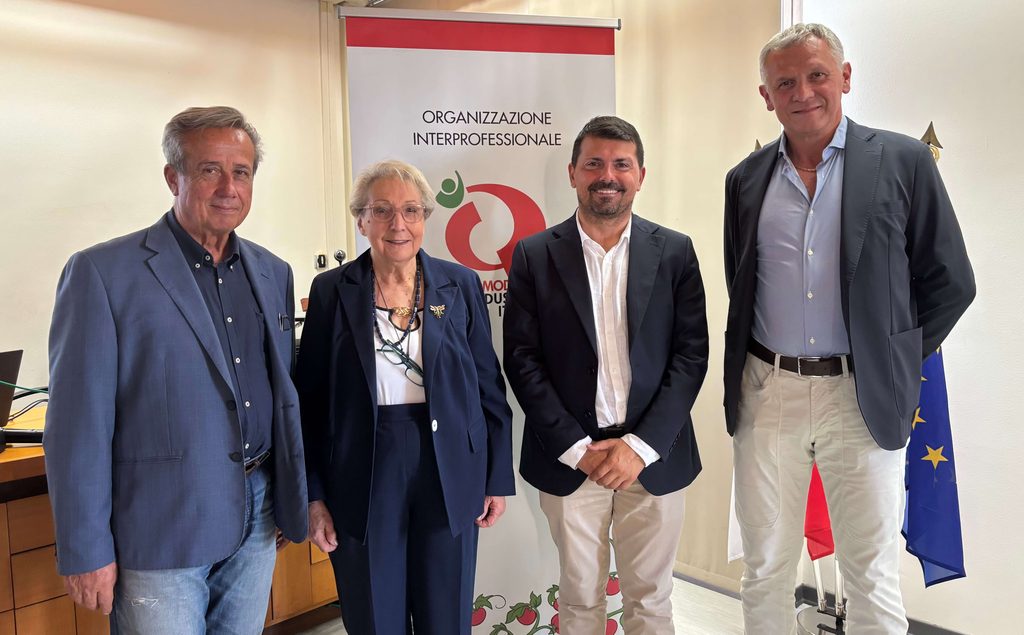
The 2026 campaign with its difficulties and the main challenges facing the sector were the central topics of a meeting between the tomato supply chain—represented by the Interbranch Organization (OI) Pomodoro da Industria Nord Italia—and Alessio Mammi, Regional Minister for Agriculture of Emilia-Romagna.
The 2026 Campaign: Early Start and Delivery Progress
Under the Framework Agreement for Northern Italy signed on March 27, 2026, the campaign was characterized by a particularly early start (July 10) and is now drawing to a close. As of September 13, with approximately 15% of the cultivated area remaining to be harvested, delivered tomatoes total 2,784,967 metric tons—below initial expectations.
Water Remains a Top Priority
Among the most critical issues for supply chain competitiveness is the availability of irrigation water. For the processing tomato sector, water is an increasingly decisive factor in guaranteeing production stability and raw material quality. Hence, the request to policymakers for greater storage capacity through the construction and upgrading of reservoirs.
Climate Change and Planning: A Difficult Relationship
Climate change is significantly altering production conditions for processing tomatoes, increasing yield variability and making production planning highly complex.
Historical data analyzed by OI Pomodoro da Industria Nord Italia show that in recent years, the relationship between cultivated area and yield is no longer direct. This means that cultivated area alone is no longer sufficient to reliably predict actual production quantities. Therefore, it is increasingly vital for the supply chain to have monitoring and forecasting tools that integrate data on acreage, transplanting trends, weather patterns, and plant health conditions that influence harvest and yields.
To this end, OI Pomodoro Nord Italia recently updated its Bylaws and Shared Rules, introducing and strengthening tools to collect weekly transplant data, project future deliveries, and track processing stocks. It also consolidated the mutual commitment between Producer Organizations (POs) and processors to share data, providing members with insights to support decision-making.
Production Costs: Pressure Across the Entire Supply Chain
Another major concern involves high agricultural and industrial production costs, which have risen steadily and peaked in March 2026 at the start of tomato seedling planting. Key cost drivers include fuel, fertilizers, seeds, seedlings, and crop protection products.
Research and Innovation to Face New Challenges
Priorities identified by the OI also include strengthening varietal research aimed at climate change adaptation, discussing the progressive reduction of authorized agrochemicals (particularly herbicides), and defining the new Common Agricultural Policy (CAP).
A Supply Chain to Plan Together
“The supply chain’s dialogue with the Emilia-Romagna Region is essential to address the transformations affecting the sector with a medium-to-long-term vision,” emphasizes Giuseppe Romanini, President of OI Pomodoro da Industria Nord Italia. “Processing tomatoes represent a strategic supply chain nationally and across Europe, requiring conditions that maintain competitiveness, economic sustainability, and production capacity.”
“The variability brought on by climate change makes production planning increasingly difficult,” he continues. “This requires data, predictive tools, research, and shared resource management. The water issue, in particular, must be addressed structurally by increasing storage capacity and ensuring water management aligns with production needs.”
The meeting with Minister Mammi provided an opportunity to discuss core priorities and the need to strengthen synergies between institutions like the Emilia-Romagna Region and the Interbranch Organization to support the sector through the coming years’ challenges.
“The processing tomato supply chain is one of Emilia-Romagna’s most crucial sectors—a strategic industry synonymous with quality, excellence, and organizational capability, thanks in part to the valuable work of OI Pomodoro da Industria Nord Italia. It is a heritage that must be protected and strengthened, especially during complex times like these where unity and collaboration among all actors are essential,” states Alessio Mammi, Regional Minister for Agriculture of Emilia-Romagna.
“I propose organizing a meeting in Brussels with the supply chain to address a concrete need: if certain agrochemicals are no longer permitted, valid and effective alternatives must be identified and made available to farmers to safeguard production and maintain competitiveness. At the same time, reciprocity must be guaranteed in trade relations and imports—products entering the European market must meet the same health and environmental standards required of our farmers. To this end, I support establishing a European customs control authority to ensure imported product inspections follow strict and uniform criteria across the entire European Union.”
Source: Press Office OI Pomodoro da Industria Nord Italia, Veronica Fumarola