News
Research: Tomato paste may have cognitive benefits
A clinical trial by researchers in Spain published in Antioxidants provides scientific evidence that daily intake of tomato paste may significantly improves cognitive performance and modulates brain connectivity in healthy middle-aged adults.
The study was a randomized, two-period crossover clinical trial involving 42 healthy adults aged 40–55 years. Participants underwent two distinct 3-month intervention periods, separated by a 1-month washout period: in one period, the participants added 0.5 grams of tomato paste per kilogram of body weight to their usual diet every day, in the second, control period, they followed their usual diet and limited lycopene-rich foods.
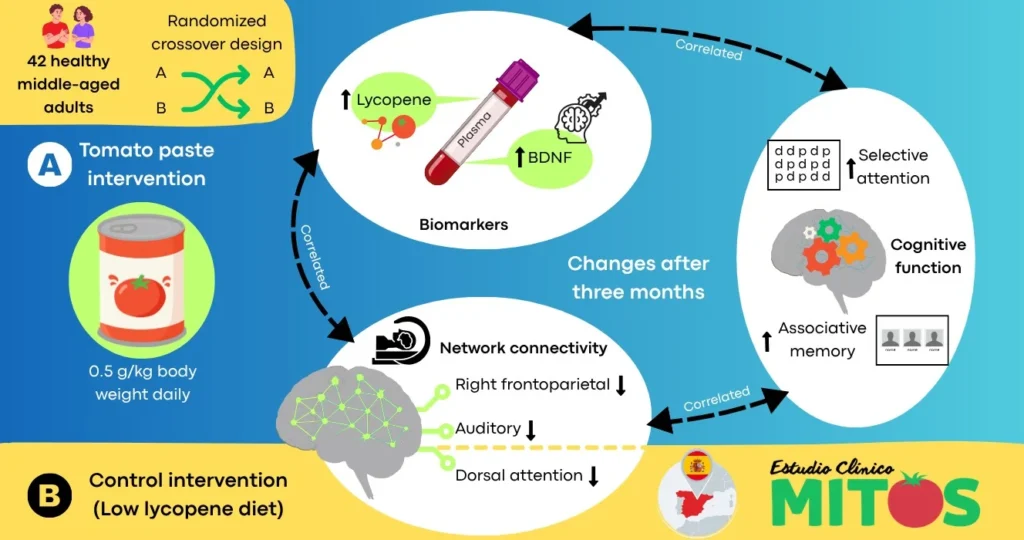
Researchers evaluated cognitive outcomes using a range of validated neuropsychological tests and biological and neural markers, including plasma lycopene levels. The trial demonstrated small but measurable improvements across multiple cognitive domains following tomato paste consumption: after each dietary intervention, scientists measured enhanced selective attention and a slight boost in associative memory on cognitive tests. There were distinct changes in participants’ blood as lycopene concentrations increased markedly on the tomato diet, and there was a borderline increase in a brain-growth protein called BDNF. Brain-scans showed reduced resting connectivity in the frontoparietal and auditory networks when a diet was high in lycopene. Conversely, when a diet was low in tomato, scientists observed reduced resting-state connectivity in dorsal attention networks.
“Together, these neural changes suggest that tomato intake promotes functional reorganization of large-scale brain networks, enhancing neural efficiency and adaptability through the pruning of redundant cross-network interactions.” declare the study authors, noting that similar adaptations have been observed after interventions to train a person’s working memory.
While the trial confirms that regular dietary intake of tomato paste may act beyond standard antioxidant protection to active cognitive enhancement, at a dosage easily achievable through routine diet (approximately 35–40 grams of paste daily for an average adult), the cognitive improvements were variable and modest. More research would be needed to determine whether the neural changes associated with tomato paste are sustained over time, or if they even translate into clinically meaningful brain changes, and if lycopene, which is thought to improve brain health by reducing inflammation and oxidative stress, is at play in these effects.
Reference : López-Solís, R.; Donat-Vargas, C.; Ramírez-Carrasco, P.; Gutiérrez-Romero, R.M.; Pérez, M.; Castellví, M.; Bosch, B.; Arancibia-Riveros, C.; Hinojosa-Moscoso, A.; Laredo, C.; et al. Tomato Intake Improves Cognitive Performance and Modulates Functional Brain Networks in Healthy Adults: A Randomized Crossover Clinical Trial. Antioxidants 2026, 15, 644.
Full text at : https://doi.org/10.3390/antiox15050644