News
Sabou Capital Injects $2M into Nigeria’s Tomato Jos
As Nigeria’s tomato sector undergoes a radical transformation following the federal government’s ban on imported paste, local heavyweight Tomato Jos Farming and Processing Limited has secured a critical financial boost to scale its operations.
Abuja-based investment firm Sabou Capital has announced a $2 million (naira-denominated) impact-linked debt facility for the Kaduna-based processor. The funding arrives at a pivotal moment for the industry, as domestic manufacturers scramble to fill the void left by an import market once valued at $400 million annually.
Nigeria is Africa’s second-largest producer of fresh tomatoes, yet for decades, up to 90% of processed demand was met by imports from China and Italy. The primary hurdle has always been post-harvest loss, with nearly 45% of crops rotting before reaching the consumer.
Founded in 2014 by Mira Mehta, Tomato Jos has spent a decade building a “vertically integrated” model to solve this exact problem. By combining its own primary farming with a network of over 3,000 smallholder farmers, the company ensures its Kangimi processing plant stays fed with a steady supply of raw materials—a hurdle that has famously frustrated even the largest industrial conglomerates in the region.
The deal is notable not just for its size, but for its structure. As an “impact-linked” facility, the cost of capital for Tomato Jos is tied to social performance. If the company hits specific targets—such as increasing the number of women-led farms in its supply chain or boosting rural employment—the interest rate can decrease.
“We structured this deal so that our financial return grows with the impact they create,” explained Surayyah Ahmad, Managing Partner at Sabou Capital. “Tomato Jos is exactly the kind of business we back—one that turns an import dependency into local jobs and a stronger domestic economy.”
For CEO Mira Mehta, the investment represents more than just a balance sheet expansion. It is a necessary shield against global economic pressures. While the import ban has created a captive market, the challenge of competing with global industrial giants remains.
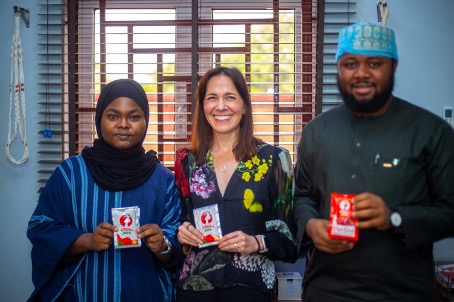
“The opportunity in front of us is real, but so is the competition; we’re up against international organisations with deep pockets,” Mehta noted.
She emphasized that the choice of investment partner was intentional, focusing on those who value the social fabric of Northern Nigeria. “We are grateful to investors like Sabou who understand why our business matters beyond the cheque they write and the financial return they will get, because supporting us means supporting a community of over 10,000 small farmers and their families,” Mehta added.
With the new capital, Tomato Jos intends to increase its processing capacity—currently at 70 metric tonnes of fresh tomatoes per day—and expand its branded presence across West African retail shelves.
As the “Tomato Belt” of Kaduna and Kano becomes the frontline for Nigeria’s food security ambitions, the success of Tomato Jos will prove whether homegrown, impact-focused agribusiness can truly hold its ground against international competition in a reshaped market.
Sources: Launch Base Africa, Empower Africa, Sabou Capital