News
Conversation with Mira Mehta, CEO of Tomato Jos
During its annual meeting on 4 February 2026, WPTC welcomed the National Tomato Growers, Processors and Marketers Association of Nigeria (NATPAN) as a new member. To mark this event, we publish the transcript of a conversation Madeleine and Sophie had in October 2025 with Mira Mehta, CEO of Tomato Jos and new NATPAN Delegate on the board of WPTC, on the history of the company and the specifics of Nigeria.
Can you first tell us about the agriculture in Nigeria in general?
In Nigeria, agricultural investment began as a state function in the 1970s. During this period, the government invested heavily in agro-processing, including the construction of state-led tomato processing factories. Simultaneously, the state developed extensive irrigation schemes and dams across the country, managed by entities like the Upper and Lower Niger River Basin Authorities. Significant dams were constructed during this era to leverage Nigeria’s major rivers.
Large-scale mills for rice and oil palm were also established, along with several tomato factories—most notably in Kaduna, Northern Nigeria, where our company is currently based. However, the political instability of the era, marked by successive military regimes, shifted the national focus away from agriculture. This coincided with the ‘Oil Boom,’ where petroleum became the state’s primary economic engine.
By the 1980s, there was some private sector involvement. While these companies were large by domestic standards, they remained small on a global scale. One notable example was Vegfru, which produced tomato paste in 70g tins and achieved nationwide distribution. Unfortunately, further political upheaval in the 1990s created a hostile environment for non-oil industries. Due to these operational constraints, the Vegfru factory eventually shut down in the mid-90s.
Since the return to democracy in 1999, local tomato production has struggled to regain its former momentum, despite the crop’s central role in West African cuisine. Tomato is the soul of Nigerian cooking—it is the base for Jollof rice (a spicy, tomato-based dish similar to Spanish or Mexican rice) and the ubiquitous Nigerian tomato stew. 1 Both dishes typically require a combination of fresh tomatoes and concentrated paste.
While the rains typically end in October, you may see an occasional stray rainfall before the true rainy season returns in March or April. This dry period coincides with the Harmattan, a Saharan trade wind that blows southward, bringing cooler air and a distinct fine red dust. During this season, nighttime temperatures in our region can drop to 14 degrees C or 15 degrees C, while daytime highs average between 28 degrees C and 32 degrees C. This temperature range effectively mimics a Mediterranean summer, creating an ideal environment for high-value crops like tomatoes, cucumbers, melons, and various chili peppers.
In response to these conditions, we see a level of sophistication among local farmers who deploy decentralized irrigation systems. These typically consist of petrol-powered ‘recoil-start’ pumps and two-inch PVC piping to draw water from rivers or nearby water sources directly to the fields, often utilizing boosters to cover longer distances.
This has also led to a fascinating pattern of seasonal migration. Highly skilled irrigation farmers often travel south during the dry season to rent land from others who may not have the technical expertise or equipment for dry-season farming. Once the rains return, these migrant farmers move back north to focus on rain-fed staple crops like maize and soy. Consequently, Nigeria’s agricultural calendar is split: one season is dedicated to grains and legumes, while the dry season becomes the primary window for vegetable production.
Sorghum is another staple grown extensively in the region. Our tomato season typically begins in mid-to-late October. Because our average temperatures are higher than those in regions like California, the plants mature much faster; we begin seeing fruit within 80 to 90 days and start processing roughly 100 days after transplanting.

You do not have a background in agriculture, so how did you get into tomatoes?
When I first moved to Nigeria in the late 2000s, I noticed a striking trend: nearly every can of tomato paste—while sold under Nigerian brand names—was actually produced and packaged in China. Despite the abundance of land, there was virtually no local processing at that time.
During my work with the Clinton Foundation, I traveled frequently across Northern Nigeria, particularly through Kano State. The sheer volume of tomatoes being grown was visually staggering. However, because the markets are highly fragmented and lack the agricultural data common in Europe or the U.S. (such as acreage reports or planting forecasts), farmers operate in an information vacuum.
Farmers tend to ‘chase’ the previous year’s high prices. If onions fetched a premium in the last dry season, a massive shift toward onion cultivation follows, which inevitably crashes the price. Every four or five years, this leads to a massive oversupply of tomatoes. Without processing infrastructure, farmers are forced to resort to traditional preservation—slicing tomatoes in half and drying them on the roadside. These dried tomatoes are eventually sold to intermediaries or held until the rainy season, when they are reconstituted and sold at a premium when fresh produce is scarce.
I happened to be driving through Northern Nigeria during one of these periods of massive oversupply. It was visually stunning but heartbreaking; it looked as if I were driving on a red carpet because tomatoes lined the roads for miles. They were drying directly on the ground, without even a tarp. This was the impetus for my company. Farmers were losing everything—at that point, the physical basket used to transport the tomatoes was literally worth more than the fruit inside.
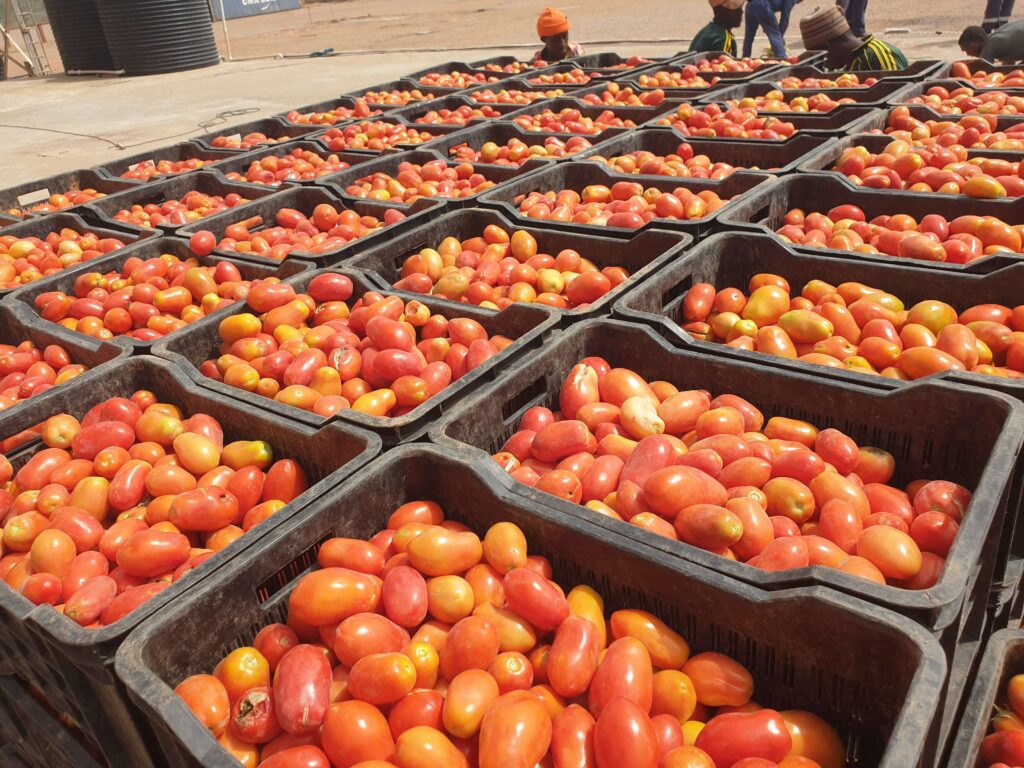
Driven by this gap in the value chain, I began researching the six or seven state-built tomato factories across the north, only to find that every single one was defunct. In 2012, while in business school at Harvard, I began a deep dive into the global tomato industry. This led me to Chris Rufer at Morning Star in California and Francesco Mutti in Italy.
When I visited these industry leaders in 2014, they were incredibly generous with their time. They initially viewed my plan as a ‘funny little project’ by a girl trying to do something unconventional in Nigeria, but they were intrigued. Chris gave me a crucial piece of advice: ‘Don’t even dream about investing in a factory until you can get the yields up.’ He explained that without competitive yields, I would be crushed by imports from China or the efficiency of American producers. If you cannot source the raw material at the right price point, the factory will never be viable.
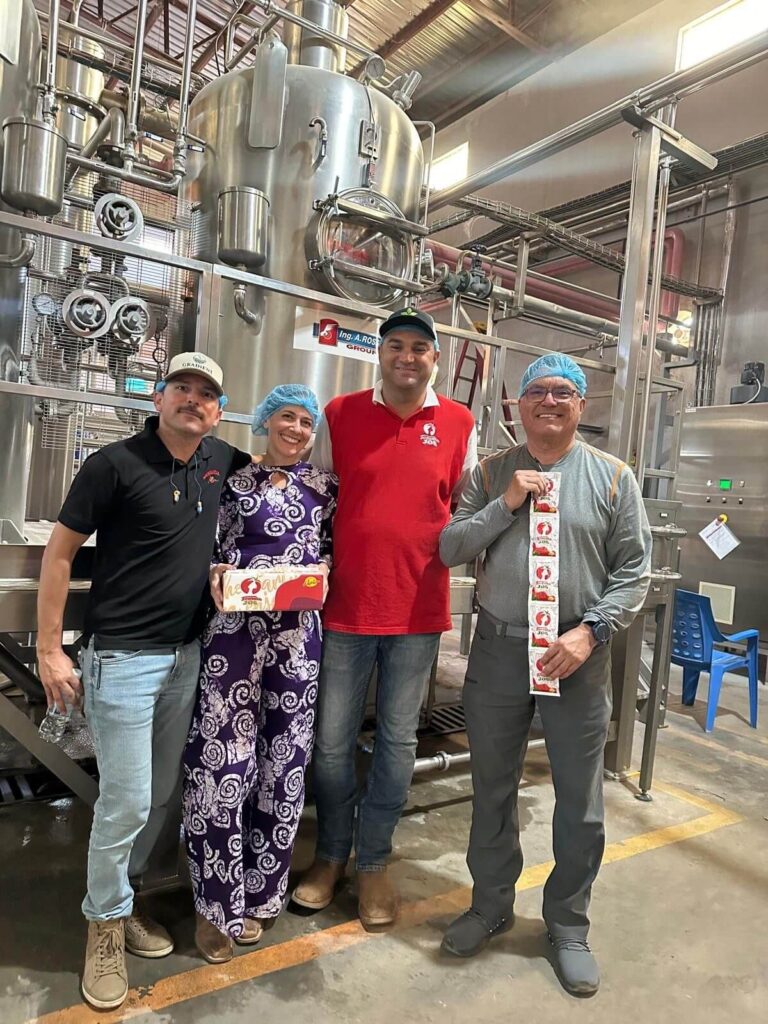
Taking that advice to heart, I recruited my now-husband, Art, from Morning Star. An agronomist from California with a background in grower services and quality assurance, Art moved to Nigeria to serve as our technical expert. Together, we spent six solid years focused exclusively on increasing tomato yields. We started small, with a three-hectare commercial farm, to prove that California-style efficiency could be adapted to the Nigerian climate.
Photo: Mira with Art and two Morning Star colleagues in February 2025
Did you rent some land?
Yes, we rented a small plot from a farmer who was producing large quantities of maize. He also ran an oil mill where he processed soya oil and corn feed for animals—livestock feed is a massive business in Nigeria. He was very supportive; he told me, “You can use this small corner of my land for free to get started.”
And so, together with Art, we spent a solid six years working to increase tomato yields. We started as a commercial farm, but it was very small—only about three hectares in size.
This section is a powerful testament to the “lean startup” phase of your journey and the technical pivots you had to make to ensure the business actually worked.
I’ve smoothed the transitions and refined the technical agricultural descriptions—specifically the shift from furrow to drip irrigation and the “plug” vs. “bare-root” transplanting methods—to make them more impactful.
Did you get any funding immediately?
Initially, we started with a small amount of prize money from Harvard after placing second in a Social Enterprise competition; that came with a $25,000 cash prize. I raised another $50,000 through a Kickstarter campaign, and then we utilized some early equity-based funding. For the first four years, we survived on roughly $300,000 to $400,000. It was a very lean operation. I wasn’t taking a salary, and we invested what we had into a small greenhouse for seedlings and a drip irrigation system for our three hectares.
Our primary goal was to determine how to reach a minimum yield of 30 tonnes per hectare, given the specific weather, fertilizer, and seed availability in Nigeria. It took us about three years to hit that benchmark, but my broader mission has always been to empower rural farmers and create wealth opportunities. We spent the following three years figuring out how to help local farmers reach those same yields—30 to 40 tonnes per hectare—profitably, so they could eventually supply our future factory.
Initially, we tried working with farmers on their own land using their small pumps and existing irrigation. However, we realized they couldn’t move enough water. With traditional furrow irrigation, the water moves so quickly that it doesn’t soak in, and the cost per liter is prohibitively high. We found that a centralized system with drip irrigation is far more cost-effective and allows for much better water control.
This led us to develop a “Model Farm” system. We subleased our land to farmers so they could learn better practices, starting with the basics of transplanting. The traditional local method involves growing seedlings in a bed covered with hay, then digging them up and washing the roots to separate them for transplanting. This “bare-root” method rips the root systems and causes the seedlings to go into shock once they hit the field. By introducing greenhouse technology, we provide individual seedlings in their own “plugs,” which ensures they have strong, established roots and significantly reduces loss after transplanting.
Right from the start, those plants didn’t have a fair chance of success. Between the transplant shock and the physical damage to the stems during planting, the mortality rate was high. Beyond that, the volume of fertilizer being used was significantly lower than in modern farming, our plant density per hectare was much higher, and our spacing was completely different.
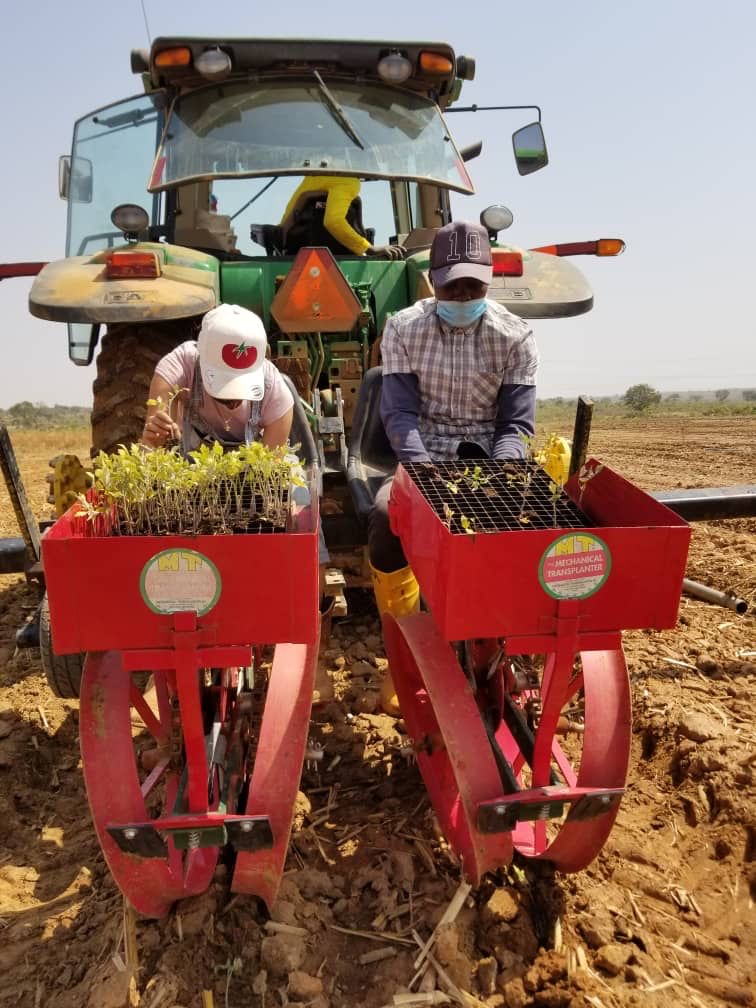
We also dealt with conflicting land-use priorities. Many of our farmers were also herdsmen; they would allow weeds to grow alongside the crops so they could harvest them later for cattle feed. However, those weeds compete for nutrients and water, directly reducing the tomato yields. We eventually mapped out over 200 specific behaviors that we needed to support the farmers in changing.
Safety and quality control were also major issues. Farmers often lacked basic PPE—they were spraying chemicals in sandals without boots or masks. Most didn’t know exactly what they were spraying for or how to identify diseases. If you’re only farming a quarter-hectare, you can’t afford a full bottle of pesticide, so you buy small, unlabelled bags in the market. You’re essentially hoping it isn’t just food coloring and water, relying entirely on the seller’s word for instructions.
We realized we had to step in and say, “We will be your trusted source for inputs.” By buying directly from the importers, we were able to pass on better pricing, verify the quality of the chemicals, and ensure a much safer application method for everyone involved.
So, in our loans to the farmers, we include gloves, masks, and rain boots; if they don’t have a knapsack sprayer, we include that as well. We built all these different supports to help them be successful. Through that process, we taught them the importance of timing: for example, that fertilizer must be applied within a specific two-day window because that is when the plant needs it—if you wait ten days, you’ve missed the opportunity. It is the same with pesticides; if you discover a worm or a disease, you have to spray within a certain number of days. But we also taught them that you can’t spray when the wind speed is too high, or the application won’t be effective. We continue to teach these principles through twelve classroom-based educational sessions followed by field-based practice on their own plots.
Through this program, our most productive farmers can reach yields of 80 tonnes per hectare, while the average is around 30 tonnes. Initially, we thought that once they had farmed on Tomato Jos land for three years, they could ‘graduate’ and be just as productive on their own land. However, we saw a massive backsliding. Farmers who were achieving 40 or 50 tonnes on our land dropped to 10 or 12 tonnes back on their own land. They had the same inputs, the same loan support, and the same knowledge—the only thing they lacked was our centralized irrigation.
The farmers told us plainly, ‘We’re being punished for good behavior; we get good yields on your farm and then you kick us off. Let us stay.’ Because of that, we evolved our model to be exclusively a Model Farm program. We no longer use a traditional outgrower system because those farmers just weren’t as successful; they couldn’t get enough water onto the plants in a cost-effective manner. It was also much harder for us to provide tractor services on such tiny, fragmented pieces of land.
Developing this centralized system has also been helpful for the factory. Since the factory is located in the same place, we can now time the planting to stagger it correctly and schedule the harvesting to feed the factory consistently. It took a really long time to figure all of that out!
So all the land is yours now—the land where the tomatoes grow? Did you have to expand and buy more?
Yes, that’s right. We started with just 30 hectares of farmland under furrow irrigation. In 2020, we invested in an additional 100 hectares, where we installed drip irrigation and a full pumping system. Now, in 2025, we are finishing the installation of another 200 hectares, bringing our total to 300 hectares of irrigable land.
Of course, we don’t farm it all at once; we ensure the land lies fallow and we practice appropriate crop rotations to maintain soil health. Starting next year, we’ll be able to farm at least 150 hectares per season. Since the farmers sublease an average of a quarter to a third of a hectare each, those 150 hectares can support 600 farmers in our community.
The economic shift is significant. On their own, a farmer might only take home 20,000 Naira at the end of a season. With Tomato Jos, our most productive farmers can take home a million Naira, while the average farmer takes home around 150,000 Naira.
How much is that in USD?
That’s about a thousand dollars. For our farmers, that is a huge amount of money—it’s life-changing.
One of the educational classes we’ve included in our farmer program is entrepreneurship. Many of our farmers are now taking their profits and investing them into other businesses to diversify their risk and make themselves more resilient. For example, we have farmers who have purchased their own land so they can farm during the rainy season. This is especially important for women because, in our part of the country, women historically haven’t had access to land unless they were widowed or inherited it from a father without having a brother. That has really been the only way women could own land in northern Nigeria, but we have focused specifically on including them in our programs.
Today, close to 60% of our farmers are women, which is entirely by design. From an impact perspective, the profit these women take home is being used to buy their own plots of land, purchase chickens to start egg-production businesses, reroof their homes, or send their children to universities and polytechnic schools. You can physically see them starting ice businesses and other ventures; there is a ‘second wave’ of impact beyond the actual profits earned from the farm.
However, this all came at a significant cost to us. For all those years, we were experimenting and trying to drive up yields without having a factory in place. We were promising to buy at a certain price regardless of the open market rate; consequently, there were years we made money and years we lost money on the fresh fruit. But we felt the most important thing was to prove we could create a reliable supply chain, so that when we finally put a factory in place, we knew we could supply it with adequate volumes of tomatoes.
Initially you were just buying the tomatoes and then selling them on the open market for them?
Yes, exactly. Sometimes we were selling at a loss because open-market pricing, even during the tomato season, varies widely since tomatoes are so perishable. You might be selling into a market and suddenly nine trucks from Kano arrive, causing the price to crash. Other times, you’re doing well, but because the market has its own internal relationships, a buyer might refuse your produce. Your tomatoes sit on the side of the road, losing value as the sun destroys them, until someone offers a pittance at the end of the day. We were essentially ‘price takers’ as fresh fruit sellers.
But we knew that wasn’t our end goal. By that point, I had raised institutional equity financing from several impact investment funds—investors who focus on our social impact as much as the financial return. This financing enabled us to invest in our factory in 2020. We made our down payment to Ing. A. Rossi in February 2020, right before COVID-19 hit. We were incredibly stressed about whether we could finish the construction, especially when all work in Nigeria was halted. By August, however, the restrictions were lifted, and we broke ground on the factory site.
Miraculously, we managed to get 16 containers of tomato processing equipment imported and onto the farm about a week before Christmas. Because of the delays, we didn’t have a roof on the factory yet, so we were actually installing the equipment while the roof was being put up. We were rushing to be ready because the tomatoes were already in the ground and growing; we had to catch the season.
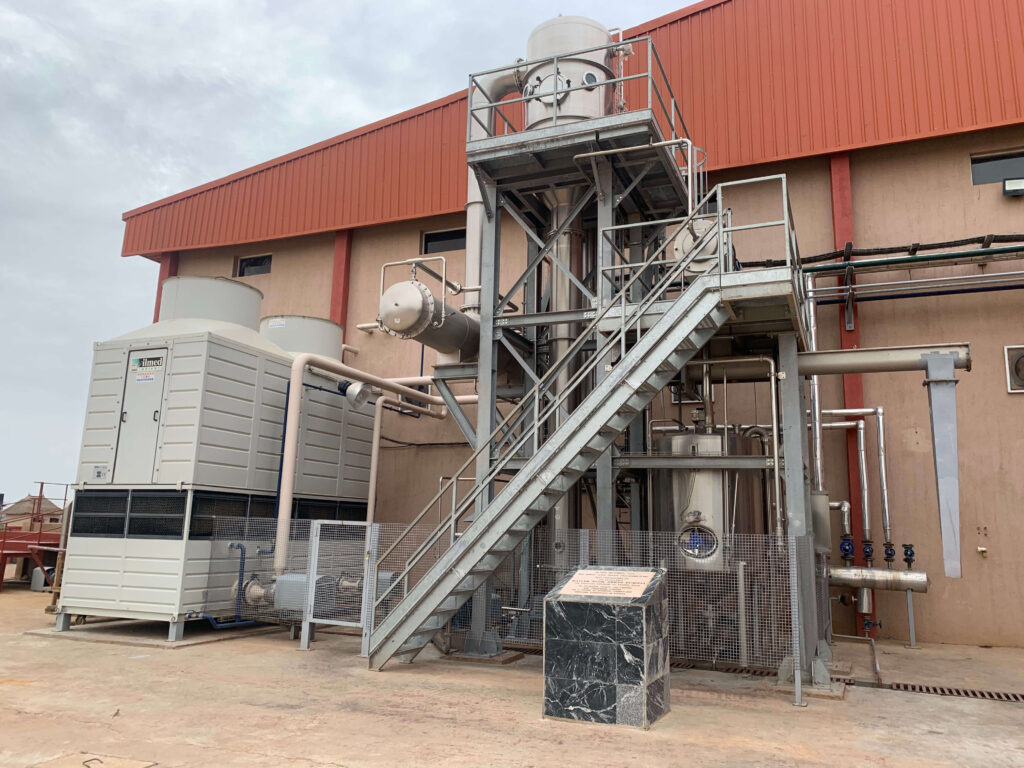
We successfully built the factory and processed our first tomato paste in March 2021. We weren’t able to buy the packaging machines until later that year, and by 2022, we launched our retail product. Now, we are finally a full end-to-end business: providing support on the farming side, handling processing and packaging at our factory in Kaduna, and building out our sales and distribution as a branded consumer product.
It has been a crazy journey along the way. Throughout it all, I kept in touch with Francesco Mutti, Stuart Woolf, and Chris Rufer. Chris even decided to make an investment in the business in 2021. Since then, he has sent a couple of his colleagues out to Nigeria to support us during our seasons and our factory expansion. He has also hosted several of our employees in California; for them, it was their first time leaving the African continent, making it an incredibly exciting experience.
We hope to do more collaborations in the future. I am actually hoping to bring a few more of my Nigerian colleagues to Monterey this summer. The exposure is invaluable—they learned so much when they visited California in 2023. So, that is where we are today, and that is the long version of the story!
It’s definitely fascinating! It’s incredible all you have been through. And now you’ve ended up in Nigeria, having had no idea you would end up there…
How do you manage to compete in the market with imports?
It’s been a huge challenge. In 2020 and 2021, global tomato paste prices were at an all-time high, so our product was very competitive. But now, we are facing a situation where Chinese tomato paste—especially if it’s a few years old—is being bought by our competitors for $600 or $700 a ton. We are still producing at roughly $1,200 to $1,300 a ton because we haven’t yet reached full economies of scale or maximized our yields. Our farmers are hovering around 30 tonnes per hectare, but for the economics to really make sense, they need to be at 40 or 45. If we could get to 60, that would be amazing.
The Tuta absoluta (tomato leaf miner) outbreak last year was devastating. During the first half of the harvest, our average was 50 tonnes per hectare, but by the end of the season, that average had plummeted to 26 tonnes. That tells you exactly what happened to the second half of the season. We ended up sharing the loss with the farmers; we forgave their loans because we wanted them to stay encouraged, but both the farmers and the company lost money. It all came down to who managed to plant before the pest population really built up. It was devastating.
Morning Star has been very helpful, but we would love to tap into other resources from the WPTC (World Processing Tomato Council) and its members to understand how to combat this through a regional approach. The Kaduna State government is trying to drive a response, and we have research organizations in Nigeria supporting monitoring and control methods. However, it’s been tough; even in the off-season, our monitoring traps show that the population hasn’t dropped as expected. This suggests the moths are surviving on other local plants.
We are starting to transplant next week, and it’s a little scary. We’ve actually reduced our acreage this year from 80 hectares down to 35 because we simply can’t afford to sustain those kinds of losses again.
So you have quite a low production this year due to that.
Yes, and I know these are “baby numbers” compared to what you’re used to…
No, they are not; they are all relevant. Regarding Tuta absoluta, we actually discussed this a few years ago, but no other processor has really mentioned it recently. There were issues in Tunisia, Egypt, and Turkey, but nothing much in the last couple of years.
Well, they all came to Nigeria, I guess! It left everywhere else and came here.
I don’t know—maybe they found methods to control them.
We would really love to leverage that intelligence and see what we can do, because it is definitely our biggest challenge right now.
At the moment, do you believe you are the only company processing tomatoes at a commercial scale?
Yes, we believe we are the only ones operating at this level, with full end-to-end production from fresh fruit into consumer packaged products. I know of a small cottage industry brand in Kano that sells tomato puree in glass jars. It looks similar to a rustic tomato passata. While we haven’t visited their facility, we’ve tested their product and they seem legitimate, but they are very small. We aren’t sure where they source their tomatoes, and since they likely view us as competition, they might not be open to a visit. However, we are always curious to see who else is doing legitimate processing, even on a small scale.
Are you only doing tomatoes? Because in this sector, there are quite a lot of factories that simply process other vegetables or fruits…
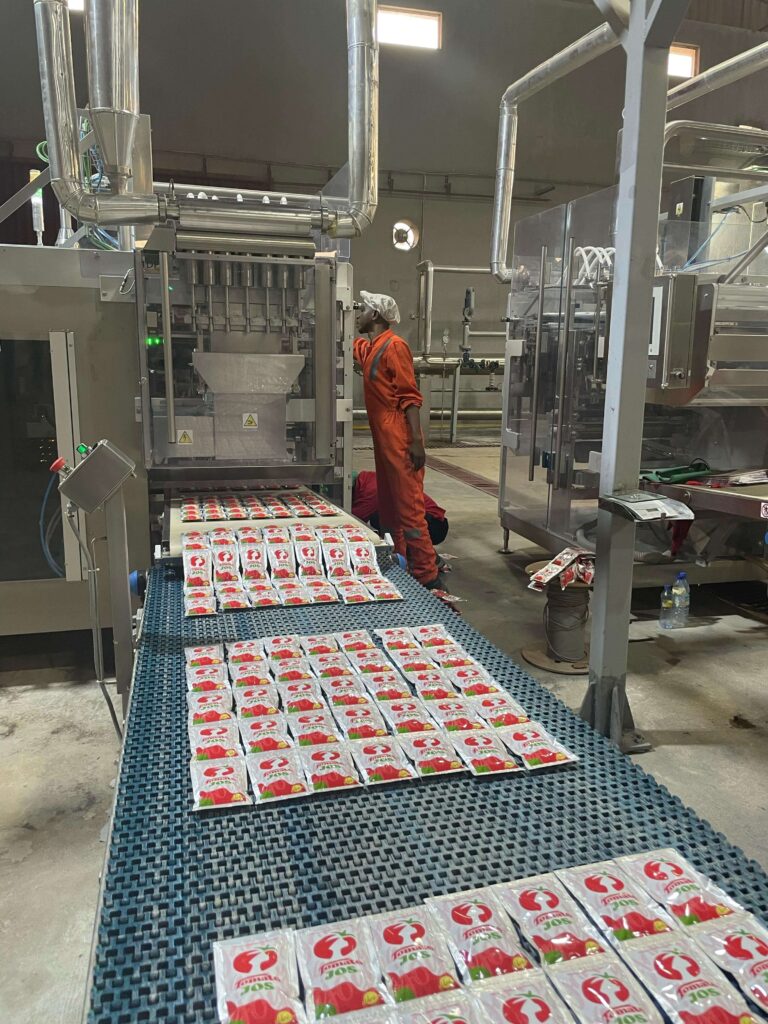
We are only doing tomatoes right now. It’s a good question because we actually grow mangoes; we’ve planted about 4,000 mango trees over the last few years. The first thousand are now fruiting, though at four years old they aren’t fully mature yet—you typically see significant fruit by year five or six. We are considering getting a de-stoner to potentially produce mango pulp or juice, but we haven’t started that yet.
I’m also very interested in a few other areas:
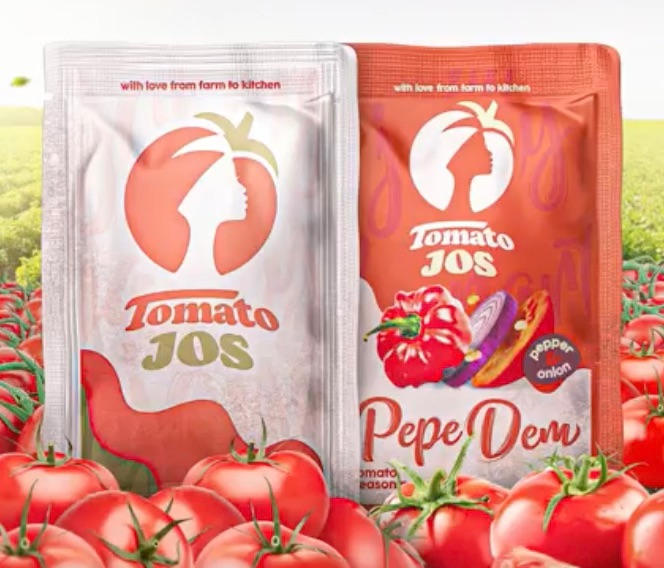
- Pepper Paste: We currently have a “spicy tomato mix” product (tomato, pepper, and onion), but we use oleoresins for the flavorings. Since peppers have much less moisture, we’d likely need to run water into the factory to create a proper paste. However, Morning Star helped us understand that our facility can produce pepper paste with virtually no modifications, provided we can secure adequate volumes of chili peppers.
- Ginger and Onion: Nigerian ginger is among the highest quality in the world, and it’s grown right here in Kaduna State. We are doing a half-hectare trial of ginger this year. I’ve also asked my team to trial onions. With one modification—an onion peeler—I think we could produce onion paste as well.
If we can produce our own ginger, onion, or pepper pastes using local ingredients rather than imported flavorings, it allows us to extend our impact significantly. Onions, for instance, are much easier to grow than tomatoes. This might allow us to return to an outgrower model for these crops without the heavy irrigation and infrastructure support that tomatoes require. Those are the things we’re looking at for the future, even if we haven’t started them yet.
I was more thinking about the fact that you have the dry season and the wet season. Maybe you could do something else during the wet season?
Yes, that makes sense. Mangoes are on a slightly different cycle; they ripen and are ready to eat from early March through the end of April, which offers us an opportunity to potentially extend our operations into the beginning of the rainy season.
Currently, our core tomato season runs through February and March. We are experimenting with short-cycle varieties to see if we can start planting earlier and get the factory running by January, ideally allowing us to run for a full three months. We are still exploring other rainy-season crops that could utilize our existing assets, but we haven’t committed to any yet. I am considering citrus—oranges or lemons—as the growing conditions in our area are quite good for them, though we haven’t run any trials yet.
Some people do carrots, pumpkins, or strawberries on the same land.
Carrots do grow well in our part of Nigeria, so that is something we could certainly consider. I haven’t looked into squash or pumpkin before, but it’s a great suggestion and worth a trial.
I guess they might grow at the same time as tomatoes, or perhaps a bit after. You could potentially store them and process them after the tomato harvest is finished.
Exactly. Carrots have a lower moisture content and offer more stability than tomatoes, so that could be very interesting for the production schedule.
For someone with a finance background, you certainly have become very knowledgeable about tomato processing and agriculture in general.
Yes, it’s been a massive career shift, but I absolutely love it here!
To come back to the market for tomato paste—most of the market is currently paste from China and tomato mix?
That’s right. Around 2014, Olam started a trend of mixing in soy fiber, starch, and sugars to create a cheaper, more affordable product for Nigerians. Tomato prices had spiked during that period of market instability, and other brands followed suit very quickly. Another major shift was the move from tins to sachets (flexible packaging) in the early 2000s to meet lower price points.
In Nigeria, a product must have at least 7% NTSS (Net Tomato Soluble Solids) to be classified as “Tomato Mix.” Most brands simply switched their contents from paste to mix while keeping the packaging the same, making it difficult even for highly literate consumers to tell the difference. Tomato Jos also produces a tomato mix because it’s financially lucrative, but we maintain a higher standard—usually around 14% NTSS. This ensures the tomato flavor and aroma are much stronger than in our competitors’ products.
How has the recent economic situation changed that strategy?
The exchange rate has become a massive factor. In 2024, the Naira went through a severe devaluation, moving from 700 Naira to the dollar at the start of the year to 1,600 by the end. Since the starch, soy fiber, and sugars (like dextrose, fructose, and maltose) used in tomato mix are all imported, their prices have skyrocketed.
We are now considering launching a pure tomato product again. Paradoxically, it could actually be cheaper to produce pure paste now than the mix, because the fillers are so expensive. However, we have to handle this carefully from a branding perspective. If we change the product without explaining it, we risk confusing consumers.
I guess you could sell it as a premium product…
Yes, but that brings up a marketing challenge. In Nigeria, sachet packaging is typically associated with “economy” products. If we want to position pure paste as premium, we might need differentiated packaging, but that requires additional asset costs. We’ve been playing around with how to introduce a pure paste effectively in recent months—whether we just make the switch or launch it as a distinct, high-end line.