News
Upcycling Pomace: From Processing Waste to Super-Food
In the global tomato processing sector, the pursuit of efficiency and sustainability has led to a renewed focus on tomato pomace. While this mixture of skins and seeds has traditionally been viewed as a high-volume, low-value by-product, recent scientific breakthroughs are reframing it as a sophisticated raw material. As the industry moves toward a circular economy model, understanding the specific bioactive potential of these residuals is becoming essential for processors looking to diversify their product lines and reduce environmental impact.
The nutritional density of pomace is remarkably high, often exceeding that of the primary pulp used for juices and sauces. Detailed analysis has identified nearly thirty different polyphenols within the waste stream, with flavonoids like naringenin chalcone and rutin making up the majority of this profile. These compounds are highly valued for their antioxidant properties and their ability to stabilize food systems naturally. Furthermore, when comparing standard tomato varieties to high-lycopene strains, research shows that the pomace from specialized crops can contain nearly double the carotenoid content. This suggests that the processing industry can segment its waste streams to produce premium-grade extracts specifically for the functional food market.
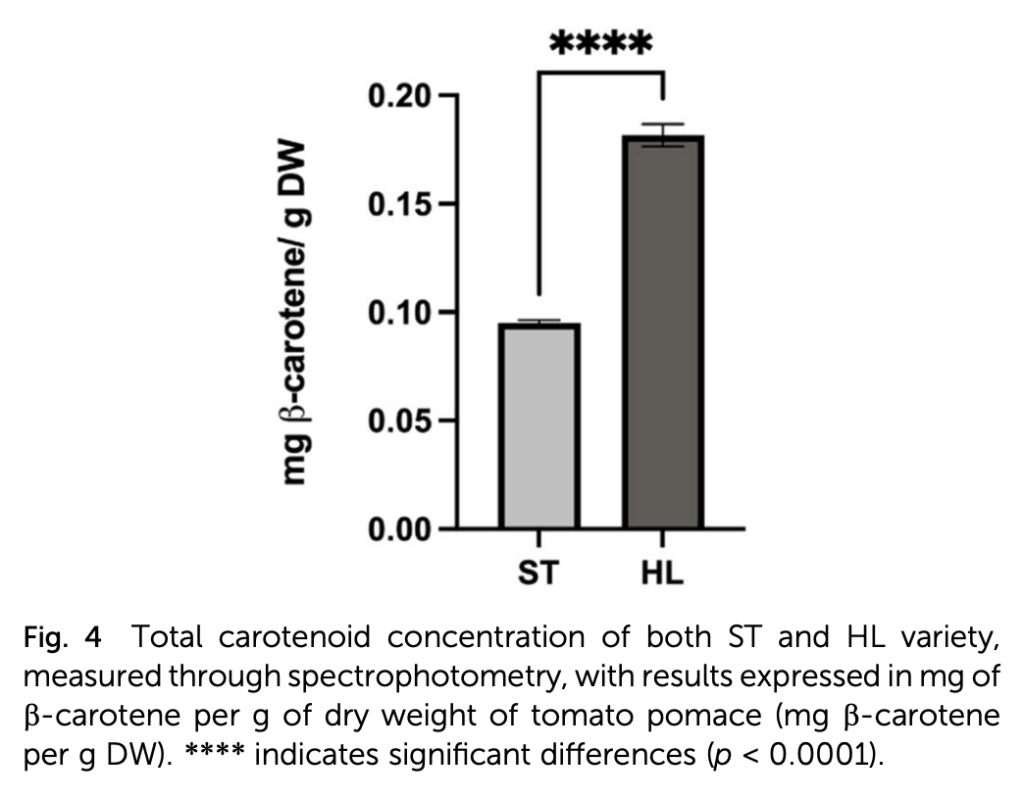
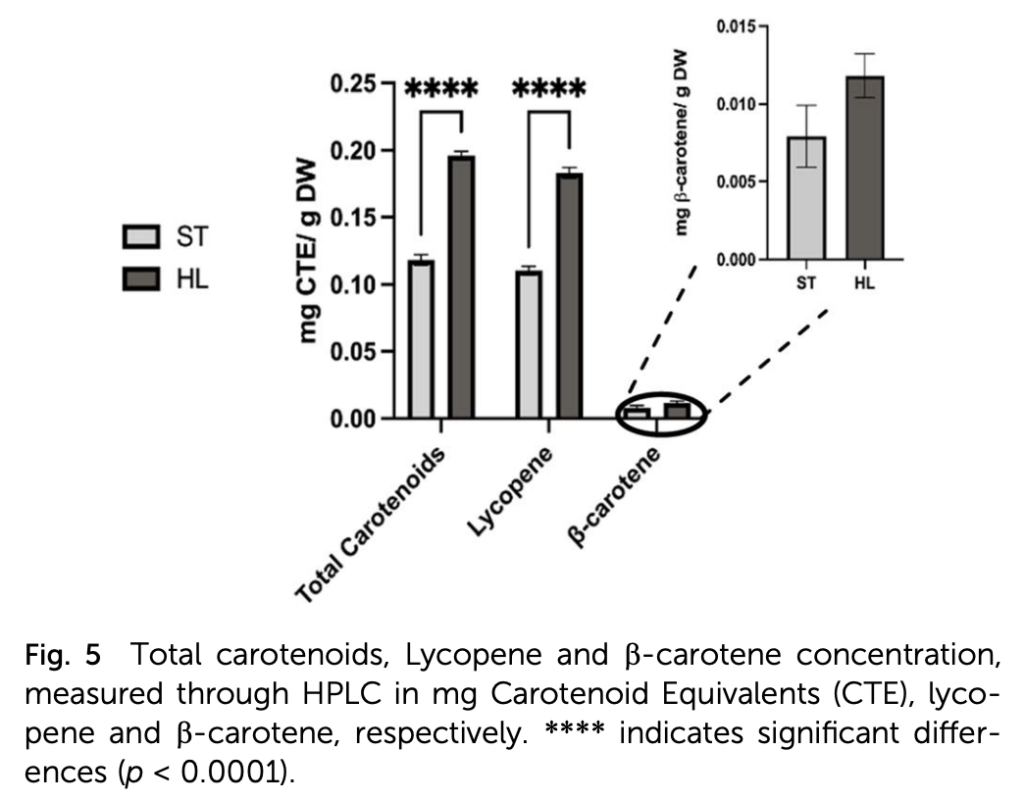
Comparative analysis of total carotenoids and lycopene levels between standard (ST) and high-lycopene (HL) pomace varieties.
Beyond the chemical benefits, the physical components of the pomace offer significant structural advantages for food formulation. The seeds are an excellent source of high-quality plant proteins and essential fatty acids, while the skins provide a concentrated source of dietary fiber. These elements are increasingly being used to “fortify” everyday products like breads, pastas, and snacks. By incorporating micronized pomace directly into formulations, manufacturers can improve the nutritional profile of their products without relying on synthetic additives, meeting the growing consumer demand for clean-label ingredients.
A particularly innovative area of study involves the antimicrobial properties of pomace extracts. Food safety remains a top priority for processors, and the discovery that these natural extracts can inhibit common pathogens like Staphylococcus aureus is a significant development. The research indicates that the effectiveness of these natural antimicrobials can even be enhanced through photodynamic inactivation—a process where light is used to “trigger” the compounds to fight bacteria more aggressively. This opens the door for the development of natural preservatives that could potentially extend the shelf-life of beverages and packaged foods.
Looking ahead, the valorisation of tomato pomace represents a major opportunity for the industry to transition from a linear “produce and discard” model to a circular one. By extracting high-purity lycopene, functional fibers, and antimicrobial agents, processors can turn a disposal cost into a new revenue stream. This approach not only addresses the environmental challenge of managing millions of tons of agricultural waste but also positions the tomato industry as a leader in the creation of the next generation of healthy, sustainable, and functional food products.
Source: Sustainable Food Technology
This article is based on the research paper: “Valorisation of tomato pomace: bioactive compounds, antimicrobial activity and photodynamic inactivation” by Raquel Nunes da Silva, Bárbara Maurício, Ana Fernandes, Iva Fernandes, Nuno Mateus, and Victor de Freitas (2026).
DOI: 10.1039/D5FB00729A (Paper) Sustainable Food Technol., 2026, Advance Article