News
As the 2026 tomato season kicks off in the Northern Hemisphere, the industry is facing a strange new reality. The extreme droughts that haunted us for years have mostly disappeared, but they’ve been replaced by “weather whiplash.” In some places, we have too much water; in others, the water is arriving months too early. For growers and processors, this year is no longer about finding enough water—it’s about managing the chaos of its timing.
The main culprit behind this year’s strange weather is a rapid shift in global climate patterns. We are currently in a “neutral” phase between major cycles (the transition from La Niña). Without a strong system to guide the weather, things have become unpredictable.
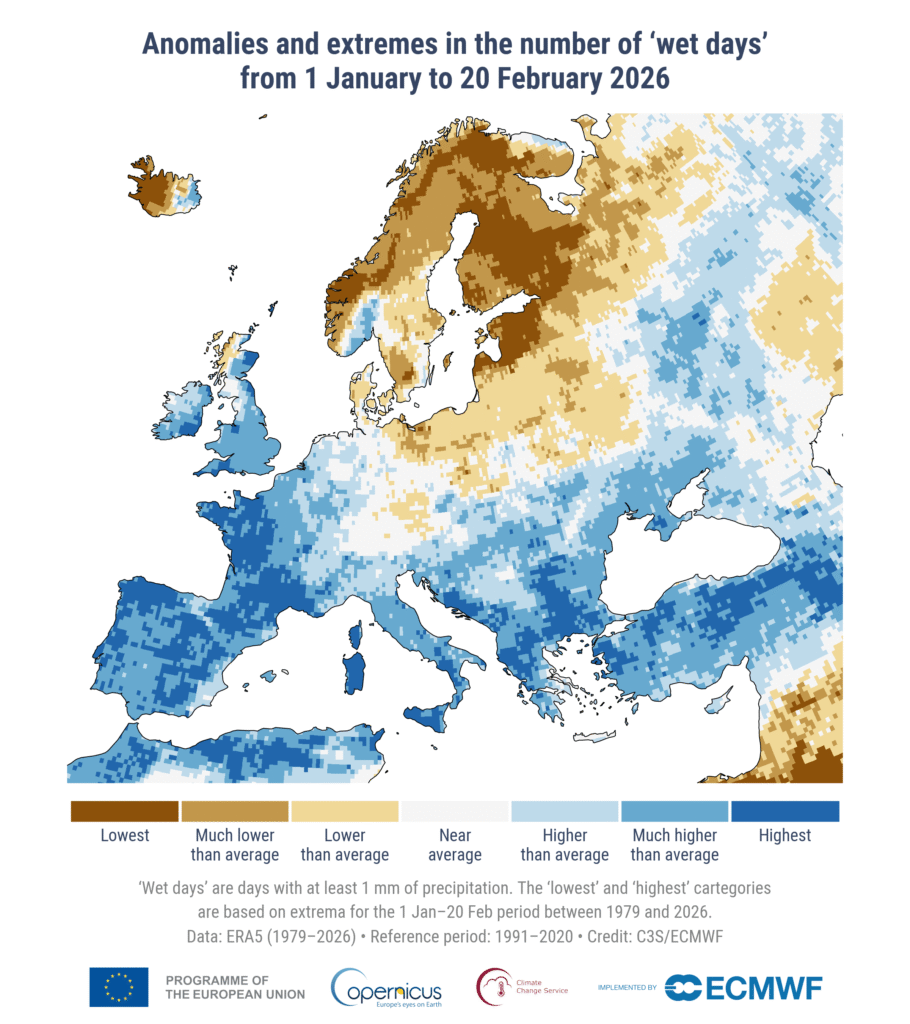
In Europe, this triggered a series of “Atmospheric Rivers.” Imagine these as giant, invisible conveyor belts in the sky that suck up moisture from the warm ocean and dump it over land like a fire hose. According to the Copernicus Climate Service, these sky-rivers brought the highest humidity we’ve seen since 2013. Because this happened right after the wettest January in 25 years, the ground in places like Spain was already like a soaked sponge—it couldn’t take any more water.
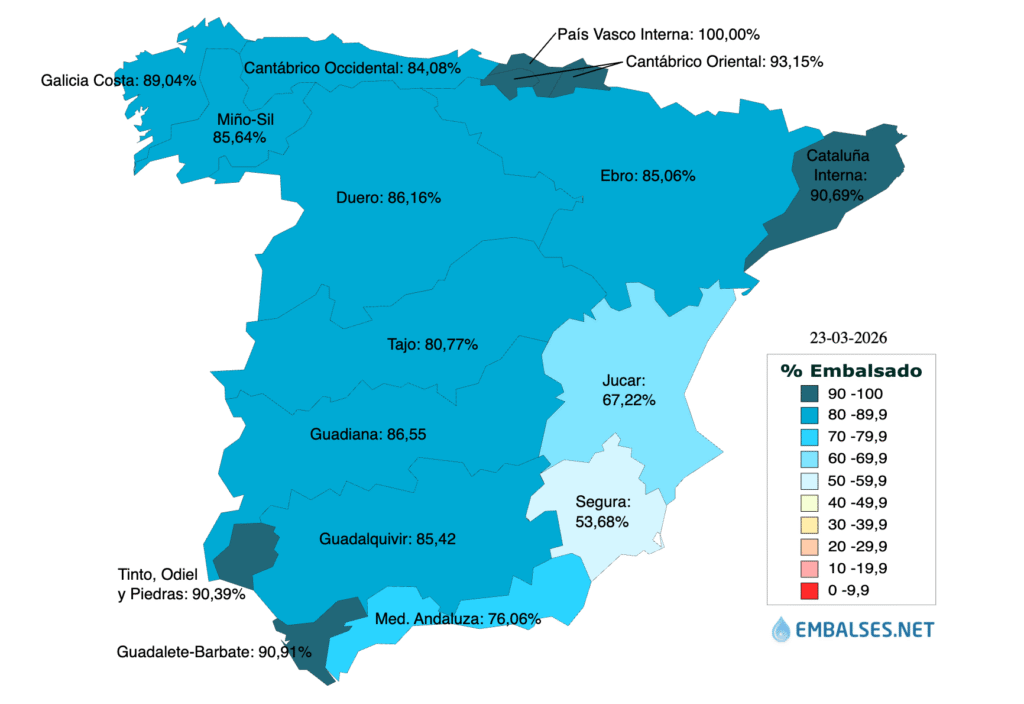
In Spain, the water crisis has vanished, but a new one has taken its place: field saturation. In regions like Andalucia, reservoirs are at their best levels in four years (over 80% full).
In Extremadura recently, the fields were very muddy, but this has resolved and won’t delay planting.
Transplanting has already started in Andalucia and should start beginning in Extremadura.
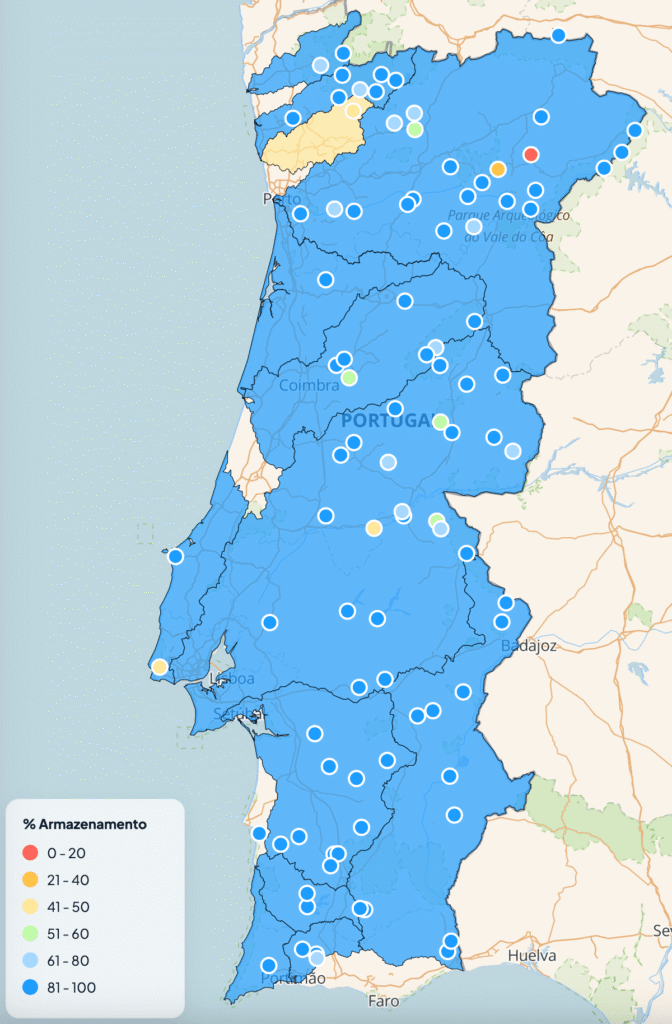
Portugal finds itself in a notably stable position for the 2026 season, with its reservoirs and soils well-charged following an exceptionally wet winter. However, this abundance has come with significant immediate challenges; a succession of intense storms earlier this year triggered severe flooding across key tomato-growing regions. As the Tagus River surged to levels not seen in decades, its banks gave way in several critical locations, allowing floodwaters to breach natural defenses and submerge the surrounding fields.
Fortunately, a window of favorable spring weather has now arrived. This timely dry spell is proving to be a turning point, providing the sunshine and warmth necessary to drain the remaining waterlogged areas. This natural recovery is expected to clear the way for soil preparation just in time for the start of the transplanting season, which remains on track to begin around the Easter window.
Italy enters the 2026 season facing a stark “distribution crisis” rather than a simple lack of water. Although the country is naturally water-rich—ranking fifth in Europe for average rainfall—the geography of that water rarely aligns with the needs of the tomato industry. According to the Proger Water Economy research, the root of this problem is largely structural. Most of Italy’s 531 large dams were constructed over 50 years ago and currently operate at roughly 35% below their original capacity because they have filled with sediment that has never been cleared. This “leaky bucket” effect is worsened by an aging pipe network that loses nearly 40% of its water to leaks before it ever reaches a farm.
This infrastructure gap is creating a precarious situation in the South. Fresh data from the Consorzio per la Bonifica della Capitanata shows the Occhito Dam holding approximately 102.05 million cubic meters at the end of March. While this represents a significant recovery from the record-breaking lows in 2025, it remains dangerously below the 150–180 million safety margin required for a stable, stress-free summer campaign. In the fields, growers are not waiting for a structural solution; instead, they are shifting their 2026 acreage away from lands dependent on these public reservoirs and toward areas with reliable private groundwater access. This move ensures they can meet their supply contracts even if rationing begins, a gamble driven by the fact that low cereal prices have left tomatoes as the only profitable crop for many southern farmers this year.
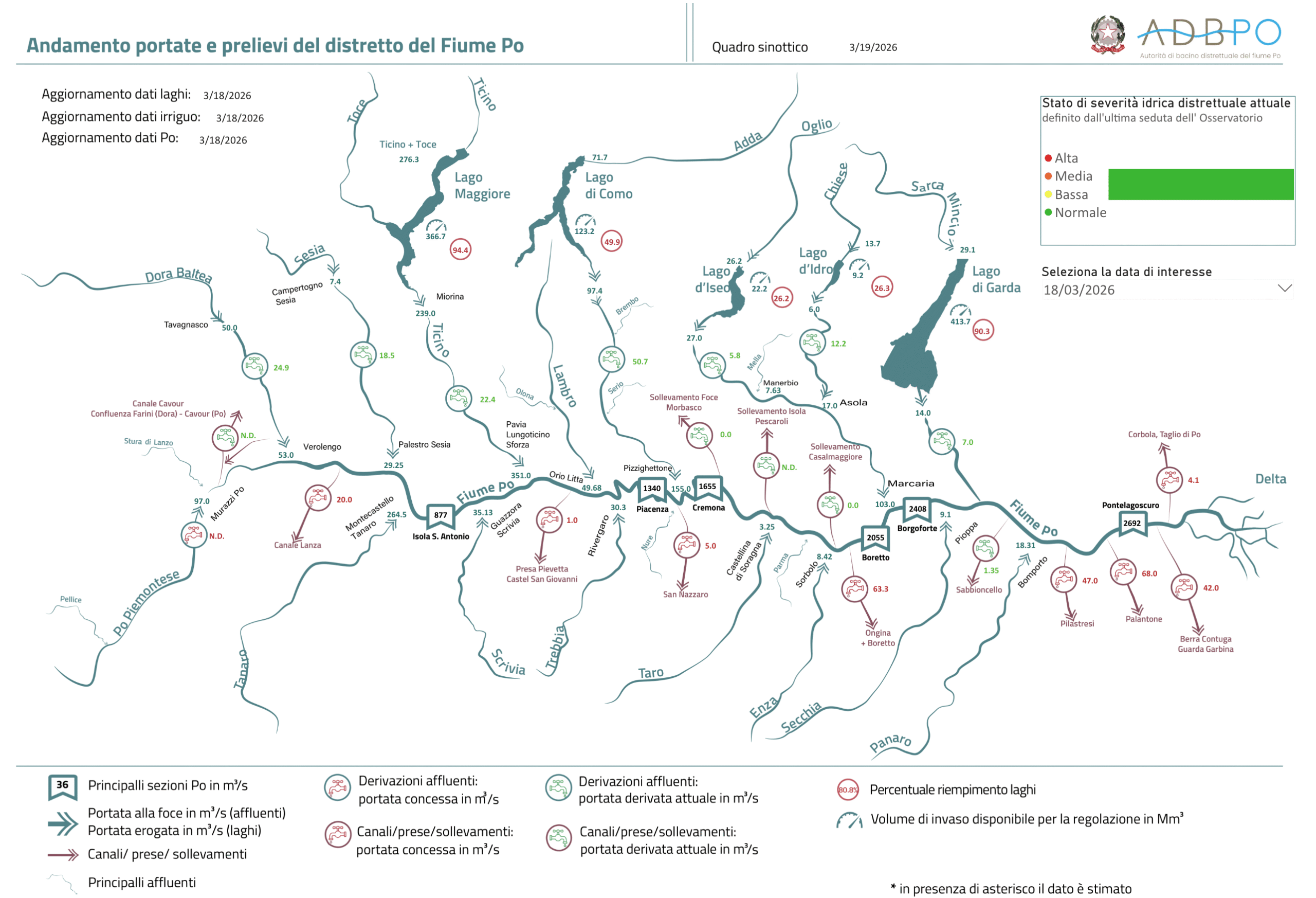
In contrast, Northern Italy is seeing a period of relative abundance that highlights the country’s hydrological divide. The Po River Basin Authority reports that river flows are currently running significantly above historical averages, providing a secure “water bank” for the start of the northern irrigation season. While southern growers face the anxiety of reservoir levels, northern producers in the Po Valley are entering the planting phase with high confidence in water availability.
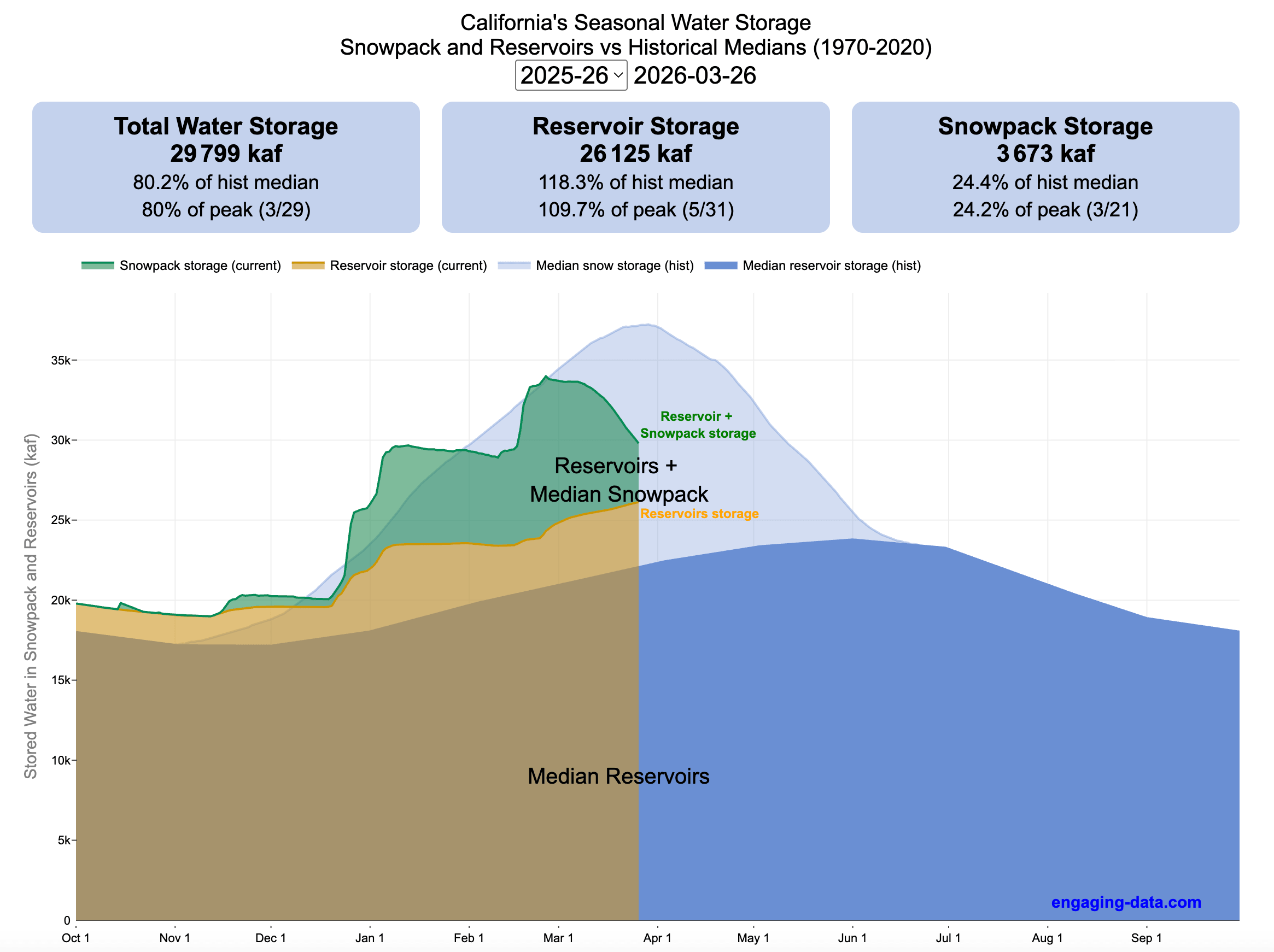
California enters the spring of 2026 in a unique and somewhat deceptive position. Major reservoirs like Shasta and Oroville are currently in excellent health, hovering between 114% and 127% of their historical averages. However, water managers are sounding the alarm over a record-shattering March heatwave that is prematurely decimating the Sierra Nevada snowpack. As of the end of March, the statewide snowpack has dropped to just 24% of the seasonal average. This “early melt” is a significant concern because the snow traditionally acts as a frozen reservoir that releases water gradually through July. In 2026, the melt is occurring two months early, which threatens late-summer irrigation supplies and increases the risk of soil thirst, where parched ground absorbs runoff before it can ever reach the valley floor for agricultural use. Although there is no worry for the 2026 season, there are already concerns regarding 2027 if next winter is dry.
As the Northern Hemisphere prepares for transplanting, the Southern Hemisphere is already facing the realities of 2026’s climatic instability. In Argentina, a series of significant hailstorms and unseasonable March deluges have forced a downward revision of the national forecast to approximately 400,000 tonnes. These “harvest rains” not only delay field activity but also threaten fruit quality during the critical final weeks of the campaign. Meanwhile, while Chile was reporting a solid harvest with a forecast of 1.3 million tonnes, until heavy rains mid-March put producers on high alert, with harvest stopped or slowed for a few days and the risk of a reduced crop size for the send of the season. The dual threat of increasing parasitic pressure from Broomrape and this late-season rains—a hallmark of the developing El Niño—means that the final figures for the Southern Hemisphere remain subject to late-season volatility.
The El Niño Factor
To understand the 2026 tomato season, one must look at the “engine” driving global weather: the transition of the El Niño Southern Oscillation (ENSO). Over the last two decades, El Niño events have been the primary architects of volatility in global agriculture. For an industry that relies on high-yield, mechanically harvested “hubs” like California, Italy, and China, these cycles translate directly into supply shocks and record-breaking contract prices.
California, which produces nearly 30% of the world’s processing tomatoes, serves as the global bellwether for El Niño impacts. During the powerful 2015–2016 and 2023–2024 events, the state faced intense summer heatwaves that pushed temperatures beyond the biological threshold for fruit setting. When temperatures exceed 38°C (100°F) during the flowering stage, “blossom drop” can occur, causing the plants to fail.
The 2024 season offered a stark example of this: production fell to 11.1 million tons—a 13% drop from the previous year—notably due to El Niño-induced heat stress on late-season plantings.
While El Niño’s impact on Europe is less direct, it often correlates with “atmospheric blocking” that leads to extreme weather anomalies. Italy, Europe’s processing leader, saw a 5.5% production dip during the 2016 cycle. More recently, as the current El Niño began forming in 2023, Northern Italy (Emilia-Romagna) suffered catastrophic flooding that destroyed roughly 1,500 hectares of crops.
Beyond raw tonnage, El Niño disrupts the processing industry through three specific technical levers:
- Water Volatility: While El Niño can bring rain, it often depletes the deep irrigation reservoirs necessary for the intensive “fertigation” schedules that processing tomatoes require.
- Pest and Disease Pressure: Warmer El Niño winters can allow pests like the Tomato Leaf Miner (Tuta absoluta) to survive in greater numbers, leading to higher infestation rates in the subsequent spring.
- The “Brix” Quality Gap: High heat during these cycles can lower the “Brix” (natural sugar content) of the fruit. Since processors pay based on solids, lower Brix means a lower payout for farmers and significantly higher energy costs for factories, which must spend more time and fuel evaporating excess water to create paste.
As we move through 2026, the industry remains in a “wait and see” mode. While the current transition toward a La Niña phase typically brings cooler conditions to the U.S., the legacy of the 2023–2024 “Super El Niño” continues to dictate the high floor for contract prices and the urgent push for “climate-hardy” seed varieties.
Major El Niño Events & their Impact (2006–2026)
| Period | Intensity | Key Industry Impact |
| 2009–2010 | Moderate/Strong | Severe droughts in SE Asia; volatile global paste pricing. |
| 2015–2016 | Very Strong | Extreme heat in California; 5.5% production dip in Italy. |
| 2023–2024 | Strong | Record-high $138/ton prices; Northern Italy floods. |
| 2026 (Current) | Transition | Shift to La Niña; focus on replenishing depleted global stocks. |
Sources: National Weather Service, Climate Prediction Center, Climate Impact Company, Copernicus Climate Change Service, engaging-data, embalses.net, barragens.pt, Proger.it, Consorzio per la Bonifica della Capitanata, ADBPO.it, AMITOM & WPTC reports, professional sources.
El Niño sources: National Oceanic & Atmospheric Administration, World Meteorological Organization, International Research Institute for Climate & Society