News
As the 2026 water year progresses, the world’s critical regions for tomato production—California, Spain, Portugal, and Italy—are reporting significant shifts in their water reserves. While recent storm activity has brought relief to some, a distinct “North-South divide” remains a major theme for the 2026 growing season across the Northern Hemisphere.
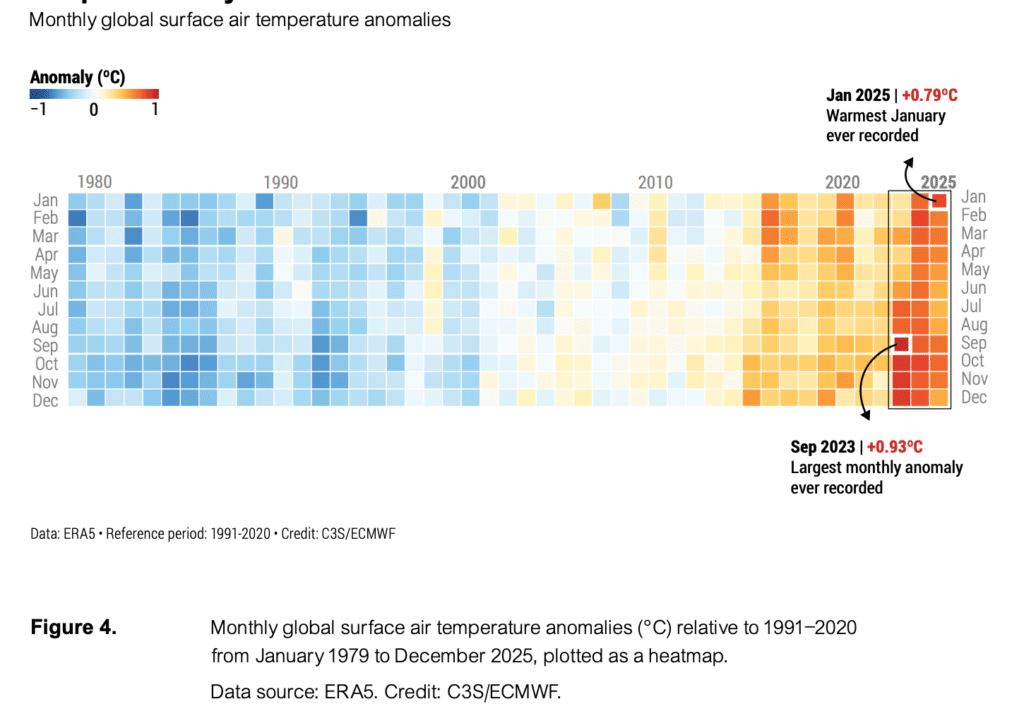
According to the Copernicus Climate Change Service (C3S) in its Global Climate Highlights 2025 report, the planet has just exited its third-warmest year on record. Crucially for global agriculture, the 2023–2025 period was the first three-year stretch to average more than 1.5°C above pre-industrial levels. This persistent heat is fundamentally altering hydrological cycles: January 2025 was the warmest January ever recorded, contributing to the “weather whiplash” seen in early 2026, where precipitation increasingly falls as rain rather than snow in critical mountain ranges.w.
In California, state water managers are reporting a mixed outlook for the 2026 water year. Following two wet winters, the state’s surface water storage is in a strong position, with major dams currently measuring at 123% of their historical average. This high reservoir level provides a substantial safety net for the agricultural sector, ensuring that water allocations for the upcoming tomato season start from a position of relative strength.
However, the mountain snowpack, which typically provides one-third of California’s annual water, remains a challenge. As of early January 2026, the statewide average stands at just 71% of the historical norm, with manual surveys at key locations like Phillips Station recording only 50% of the average snow water equivalent. This aligns with Copernicus findings that high-latitude and high-altitude warming is accelerating, reducing the state’s “frozen reservoir” capacity even when total precipitation remains near average.
Italy is experiencing a tale of two peninsulas according to data from the ANBI Observatory and ISPRA. In the North, the situation mirrors the snow challenges seen in California. The Alps are currently facing a 58% snow water equivalent deficit compared to the 10-year median, which poses a threat to the flow of the Po River during the peak summer irrigation window. A rare bright spot for the region is Lake Garda, which has reached a 77.9% filling level.
Conversely, the South has shifted from extreme drought to immediate excess. Intensive rainfall in mid-January 2026 filled regional tanks in Sicily and Calabria but also triggered emergency alerts for landslides. In Puglia, the Occhito Dam—a vital source for the Foggia tomato hub—has recovered to 49 million cubic meters. While this represents only 17% of total capacity, it is a vital improvement over the “zero-irrigation” status of 2025.
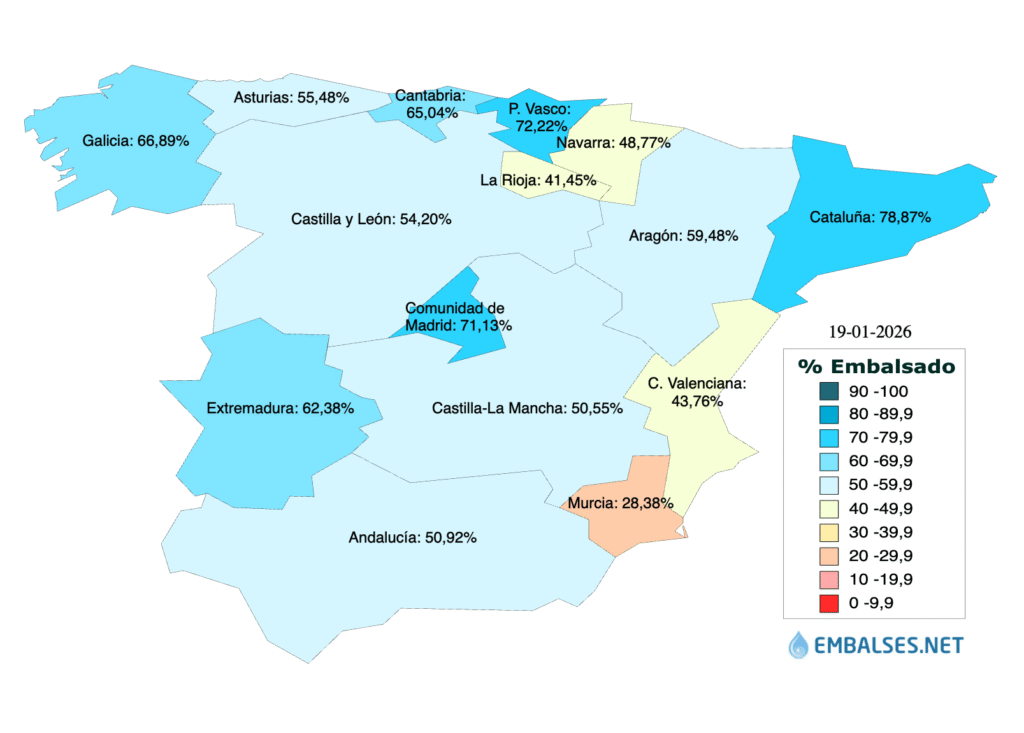
The hydrological situation in Spain shows marked improvement according to official data from the national water reserve. After years of sustained drought stress, the country is entering the new year with a national water reserve at 57.2% of its total capacity, holding approximately 32,056 hm³. This is nearly seven points above the 10-year historical average.
The recovery is particularly notable in Catalonia, where internal basins have risen to 84.9% capacity, effectively ending the drought emergency. In the south, the Guadalquivir basin—the largest in the region—now stands at 47.3% following six consecutive weeks of growth, signaling a more stable environment for Andalusian growers.
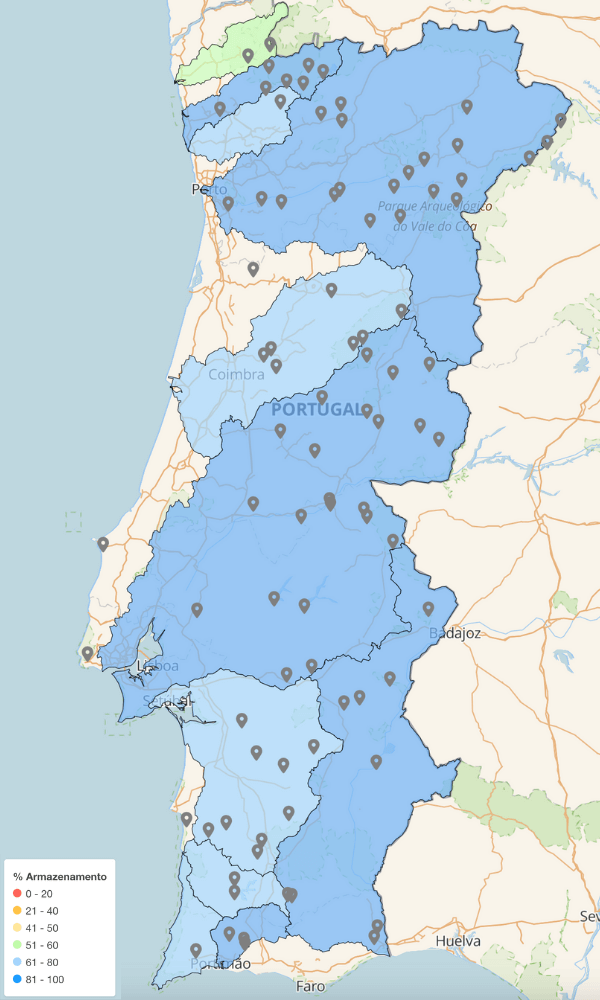
Portugal is reporting an exceptionally positive hydrological situation with historic highs in its southern regions. According to the SNIRH and the Portuguese Environment Agency, the average volume stored in Algarve reservoirs has reached 87%, exceeding the national average of 83% for the first time in recorded history. The Alqueva Reservoir, the largest in Western Europe, is currently at 86.5% capacity, prompting authorities to increase water allocations for the Alentejo agricultural sector this January.
The global outlook for tomato processors is cautiously optimistic. While the Iberian Peninsula is currently enjoying a surplus, California and Northern Italy remain dependent on late-season snowfall. As the Copernicus 2025 data suggests, the “new normal” of 1.5°C warming means that high surface reservoir levels are no longer just a luxury—they are the primary defense against increasingly volatile mountain snowpacks and summer heat stress.
Additional information:
On January 14th, the Copernicus Climate Change Service (C3S) and the World Meteorological Organization (WMO) published the 2025 Global Climate Highlights Report, which can be downloaded here.
Sources:
California Department of Water Resources (DWR), Spanish Ministry for the Ecological Transition (MITECO) & Embalses.net, SNIRH & Agência Portuguesa do Ambiente (APA), barragens.pt, ANBI Observatory & ISPRA.