News
The Processing Tomato Industry in Inner Mongolia
Development Status and Global Competitiveness
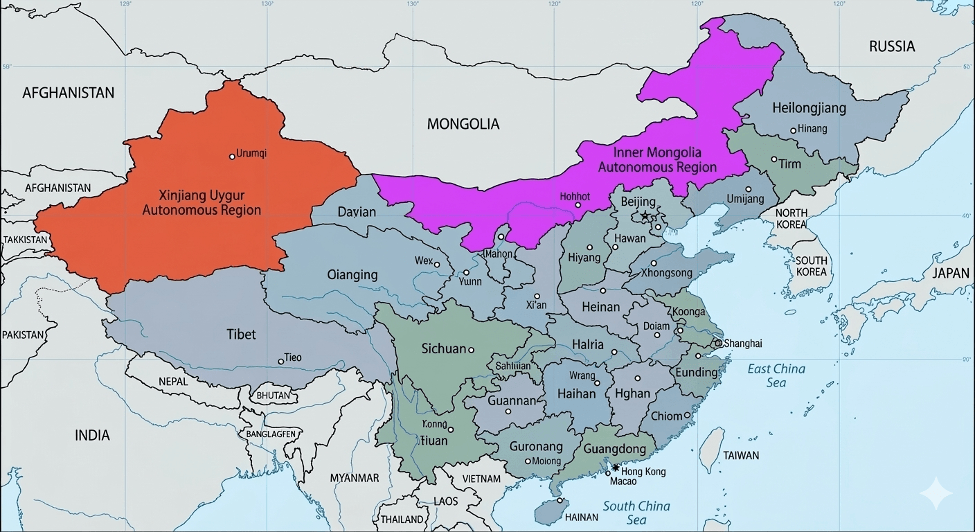
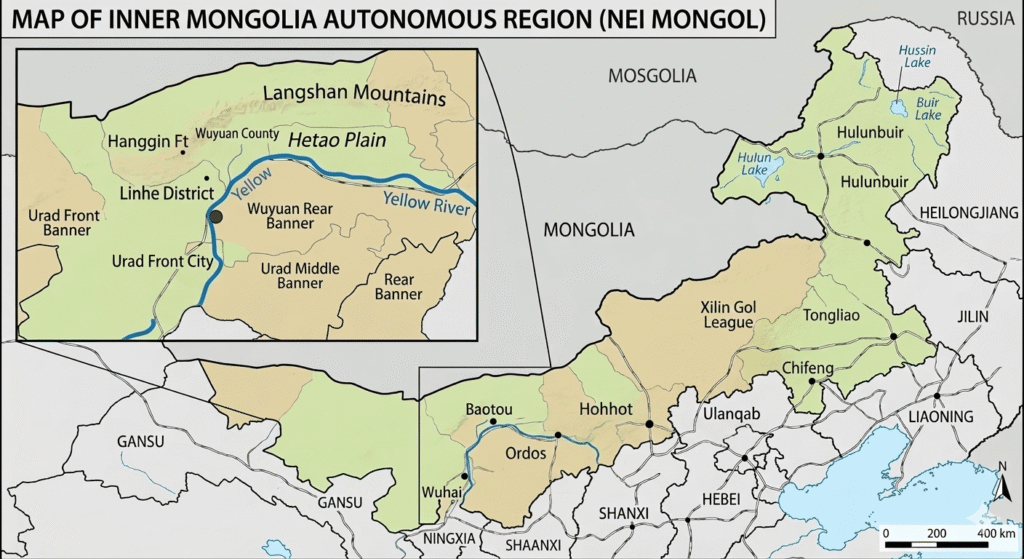
Inner Mongolia is the second-largest processing tomato industrial cluster in China, second only to Xinjiang. The industry is mainly concentrated in the Hetao Plain, which falls under the jurisdiction of Bayannur City. Located at 40° north latitude, this region enjoys sufficient sunlight and a large temperature difference between day and night, endowing the local tomatoes with superior traits such as high sugar content and high lycopene content.
After decades of development, Inner Mongolia has gradually formed a complete industrial chain covering tomato planting, raw material processing, and product export. In 2025, the global processing tomato industry entered a downward cycle marked by declining output and prices. Relying on cost-effective products and a solid industrial foundation, Inner Mongolia’s processing tomato industry has maintained its distinctive global competitive advantages.
Geographic Endowment and Industrial Layout
The processing tomato industry in Inner Mongolia is highly concentrated in the Hetao Plain of Bayannur City. The region features a typical temperate continental climate with abundant sunshine, a large diurnal temperature variation, fertile soil and sufficient water resources.
The average annual sunshine duration exceeds 3,000 hours, which is conducive to the accumulation of sugar, lycopene and dry matter in tomatoes. The Yellow River irrigation system provides a stable water supply for tomato cultivation, resulting in high soluble solids content and excellent flavor that meet the quality standards of the world’s top processing tomato-producing regions.
The tomato processing industry in Inner Mongolia started in the 1990s, promoted by Ms. Sophia, a French-Chinese entrepreneur, who introduced processing equipment from abroad through compensation trade. Many enterprises and institutions successively entered the sector. Following the restructuring of capital in China’s tomato processing industry in 2004, Fuyuan Group took over local sugar factories and built new production facilities. Leading enterprises such as COFCO Tunhe and Chalkis also established plants across Inner Mongolia. Later, with the rise of local equipment manufacturers, equipment investment costs dropped significantly, and small tomato processing factories were set up in various areas. Inner Mongolia has gradually formed a tomato processing industrial structure led by leading enterprises and supplemented by small and medium-sized factories, becoming an important hub for China’s tomato processing industry.
In the 2025 production season, the planting area of processing tomatoes in Inner Mongolia reached approximately 15,372 hectares, accounting for 21.4% of China’s total planting area. Its production volume ranks second nationwide, only after Xinjiang, making it a critical hub connecting China’s processing tomato supply chain with the Asian consumer market.
In the planting sector, the level of mechanization and standardization has been continuously improved. Large-scale planters have promoted standardized technologies including unified seedling raising, drip irrigation and fertilization management, effectively enhancing tomato yield per unit area and quality stability. Mechanized harvesting has been widely adopted, overcoming labor shortages during peak harvest seasons and improving raw material supply efficiency.
Proactive Capacity Control and Industrial Restructuring
In 2024, China’s fresh tomato processing volume hit a record high of 10.45 million tonnes. Inner Mongolia accounted for approximately 12%–15% of the national total, with its fresh tomato processing volume reaching about 1.2 to 1.5 million tonnes that year.
According to the latest industry data:
In 2025, there were 82 operational processing tomato factories nationwide, with a combined daily processing capacity of 214,000 tonnes; China’s total fresh tomato processing volume dropped to 4.9 million tonnes.
During the 2025 production season, 24 tomato processing plants were operational in Inner Mongolia, with a total processing capacity sufficient to absorb raw materials from 28,658 hectares of planting bases.
Some factories were established in the early stage of industrial development and are equipped with relatively old facilities. In recent years, many local plants have launched equipment upgrading and retrofitting programs to renew production equipment.
In the process of capacity adjustment, a number of inefficient and idle production capacities have been gradually phased out. The remaining operational enterprises are mainly large leading companies with advanced equipment and stable orders, further improving industrial concentration.
Inner Mongolia’s agricultural structure is undergoing profound transformation: although bulk tomato paste production for the B2B market remains the core of the industry, the region is accelerating its shift toward protected agriculture.
A smart greenhouse project with a total investment of 45 million yuan (approximately 6.3 million USD) has recently been launched in Tumed Left Banner, serving as a benchmark for industrial transformation.
Based on Internet of Things (IoT) technology, the project enables year-round cultivation of high-end “golden tomatoes” and various fresh-market tomato varieties.
| Company Name | Key Operations in Inner Mongolia | Estimated Capacity / Volume |
| Fuyong Agriculture (Fuyuan Group) | Operates Hanghou, Langshan, and Wuyuan bases. | Operates 3 integrated bases with a combined daily fresh intake of ~11,200 tonnes |
| COFCO Tunhe Tomato Co. | Multiple plants in the Hetao Region (Linhe, Hanghou). | Daily processing: ~11,000 tonnes (fresh). Regional annual paste capacity: ~150,000+ tonnes. Recently expanded via a 60% stake in Hetao Tomato Products. |
| Inner Mongolia Yufeng | Linhe District | One of the largest single-plant operations in the region, focusing on 90%+ export to the Middle East and SE Asia. |
| Food Junc Tomato Group | Bayannur (Chunhe, Lifeng, and Zhonghe plants). | Manages three plants (Chunhe, Lifeng, Zhonghe) with a focus on B2B bulk aseptic drums. |
| Xinjiang Chalkis | ndustrial presence/plants in Inner Mongolia and Gansu. | Group capacity: 360,000 MT of paste annually (China-wide). |
| Inner Mongolia Rongxin | subsidiary of Fuyong Agriculture, like Yufeng. (Langshan District) | Daily fresh processing:~4200 tonnes. Specialist in high-Brix concentrates (36-38%) for secondary processors. |
| Sino Tomato Products | Processing facility in Inner Mongolia using Italian technology. | Daily processing: 1,000 MT of fresh tomatoes. |
| Kingpeng Agricultural Park | Hohhot/Inner Mongolia | A newly launched 200-hectare modern park focusing on smart-greenhouse fresh and specialty tomatoes. |
Global Competitive Advantages and Future Development Trends
Despite facing multiple market challenges, Inner Mongolia’s processing tomato industry still maintains a unique global competitiveness, which serves as a solid foundation for its international market expansion. Relying on its profound agricultural heritage, Inner Mongolia’s tomato industry has developed in a steady and gradual manner. This very stability has become one of its core competitive strengths.
Inner Mongolia has long been an important granary in China, with agricultural cultivation deeply rooted in this land. Stable supply and reliable quality have become distinctive hallmarks of local agricultural development. Over the years, local tomato cultivation has achieved a leapfrog transformation from scattered smallholder farming of about a dozen mu per capita to intensive and large-scale cultivation. The fragmented small plots once managed by individual farmers have now been integrated into contiguous standardized planting bases, which not only greatly improved planting efficiency but also significantly enhanced the stability of raw material supply.
Located in the heart of Asia, Inner Mongolia borders key consumer markets such as East Asia, Southeast Asia and Central Asia, enabling it to quickly respond to changing demand in the Asian market. Notably, in addition to its solid international market presence, the local industry is also actively expanding into the Chinese mainland market. Through continuous innovation, it has launched diversified products including yellow tomatoes, diced tomatoes and tomato juice to cater to domestic consumer preferences. It is making steady progress in the domestic market, forming a stable dual-market structure covering both international and domestic sectors.
After decades of solid development, Inner Mongolia has built a complete industrial chain spanning planting, processing and export, gathering a large number of professional processing enterprises and skilled workers. Instead of blindly pursuing scale expansion, the industry has focused on consolidating its industrial foundation and enhancing processing capacity. Local leading enterprises have introduced internationally advanced equipment and technologies, with processing capacity and product quality meeting international standards. This enables the industry to satisfy the diversified demands of the global market as well as adapt to various consumption scenarios in the domestic market, further strengthening its competitive advantages.
Conclusion
As an important part of China’s processing tomato industry and a key node in the global processing tomato belt, Inner Mongolia has built unique competitive advantages through its exceptional natural endowments, solid industrial foundation, and cost-effective products.
Looking ahead, with the advancement of China’s agricultural supply-side structural reform and the restructuring of the global agricultural industrial chain, Inner Mongolia’s processing tomato industry will focus on quality improvement and value enhancement, strengthen raw material bases, promote industrial upgrading and digital transformation, optimize global market layout, and gradually transform from a major production region to a strong industrial hub.
This article was written in collaboration with Dexter Zhao, Inner Mongolia Fuyong Agriculture Development Co.,Ltd.
Sources: WPTC, COFCO Tunhe, Fuyong, China Chamber of Commerce of I/E of Foodstuffs (CFNA), Xinhua News Agency, Inner Mongolia Department of Science and Technology.