News
WPTC: The crop situation as of 10 March 2017
WPTC: The crop situation as of 10 March 2017
As of 10 March, the season's preparations were unfolding normally in all the countries of the northern hemisphere, with the only remaining unresolved issues being discussions about prices (see our articles on pages 5974 and 5971).
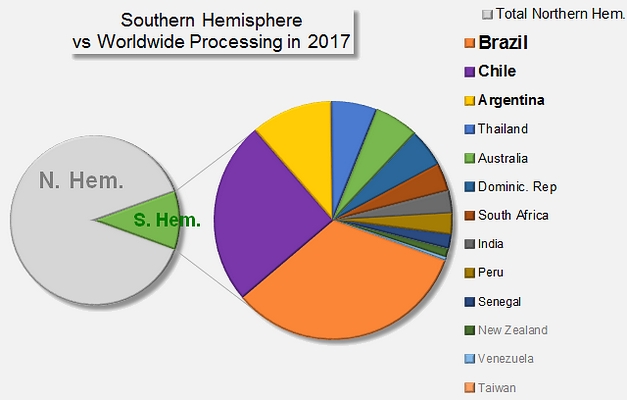
In the southern hemisphere, the harvest is well advanced in the countries of South America. In Argentina, more than 80% of the 470 000 tonnes programed have already been harvested and processed, in weather conditions that have been very satisfactory and have allowed the planned program to be carried out with good quality for the raw materials.
Technical requirements are increasingly focused on the soluble solids content, in order to satisfy the growing demand for purées and pastes. Next season will largely be determined by the launch of the Baggio and Alco factories and by the signing of contracts between these companies and growers (see our article in the February 2017 issue of Tomato News).
In Chile, weather conditions have been perfect and the harvest started a few days early due to a heatwave in January. Color has been satisfactory and quality has been normal. Yields have matched the forecasts, so the crop is still announced at 1.05 million tonnes, as expected.
As of 10 March, the Peruvian season is finished, with a final result of 110 000 tonnes.
At the same date, 40% of the harvest in South Africa had been carried out in the southern part of the country, with satisfactory yields and quality. In the northern region, the harvest of early varieties is expected in the first few days of April. Planting was delayed by one or two weeks due to heavy rains in February. The risk of flooding remains an issue if the abnormally high rainfall continues in Zimbabwe and Botswana.