News
Tomato Season Weather Review
The recent months have presented a varied and, at times, challenging weather landscape across key processing tomato growing regions, with significant implications for the 2025 harvest. Leveraging data from the Copernicus Climate Change Service (C3S) and industry reports, this analysis provides an overview of the climatic conditions and their observed and anticipated impacts on processing tomato cultivation.
Temperature Anomalies and Heat Stress
The period from April to July 2025 saw notable temperature deviations across Europe. April recorded predominantly above-average temperatures, particularly in Eastern Europe, Western Russia, Kazakhstan, and Norway. May also contributed to warmer conditions in parts of Southern Europe.
However, June and July brought the most significant thermal events.
Western Europe experienced its warmest June on record, with average temperatures 2.81°C above the 1991-2020 average. Two major heatwaves in June and early July severely impacted large parts of Western and Southern Europe, with “feels-like” temperatures exceeding 38°C in many areas and reaching up to 48°C in parts of Portugal.
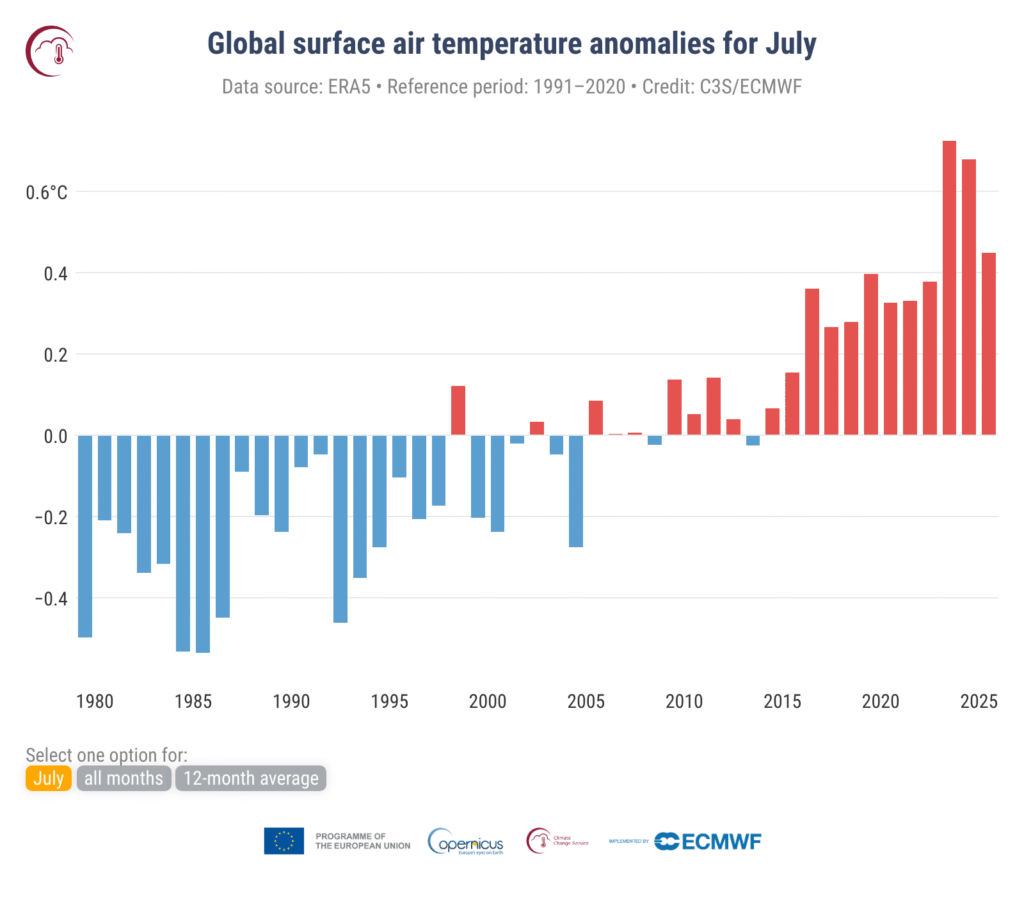
July continued this trend, ranking as the fourth warmest July for Europe, with temperatures 1.30°C above average, and Southeast Europe (including Cyprus, Greece, Croatia, Spain, Portugal and Turkey) specifically faced prolonged heatwaves. A marine heatwave also developed in the Western Mediterranean in June, recording the highest daily sea surface temperatures for the region.
While some regions, like Andalusia in Spain, reported normal yields despite hotter weather, the intensity and duration of these heat events raise concerns about potential impacts on fruit quality and Brix levels, especially for later-maturing crops. Reports from Turkey indicate temperatures reaching over 42°C in the south, with the potential for sunburn on fruits.
Varied Precipitation Conditions in Key Growing Regions
Precipitation patterns displayed significant variations across Europe’s processing tomato cultivation areas over the last few months.
Southern Europe (Iberian Peninsula, Southern France, Italy, Western Balkans): After a predominantly wet March, characterized by heavy rainfall and even floods in some areas (particularly Spain and Portugal, which saw their third and fifth wettest Marches on record, respectively), these regions experienced a significant shift. While these early rains replenished water reserves after previous dry spells, they also led to planting delays and compressed growing calendars for processing tomatoes. By April, while most of Southern Europe saw wetter-than-average conditions, June and July saw drier-than-average conditions emerging in the Eastern Mediterranean, increasing irrigation needs. Italy presented a mixed picture, with the North benefiting from better spring weather and water management, while the South continued to face drought concerns, potentially limiting yields for long tomatoes, especially in Puglia.
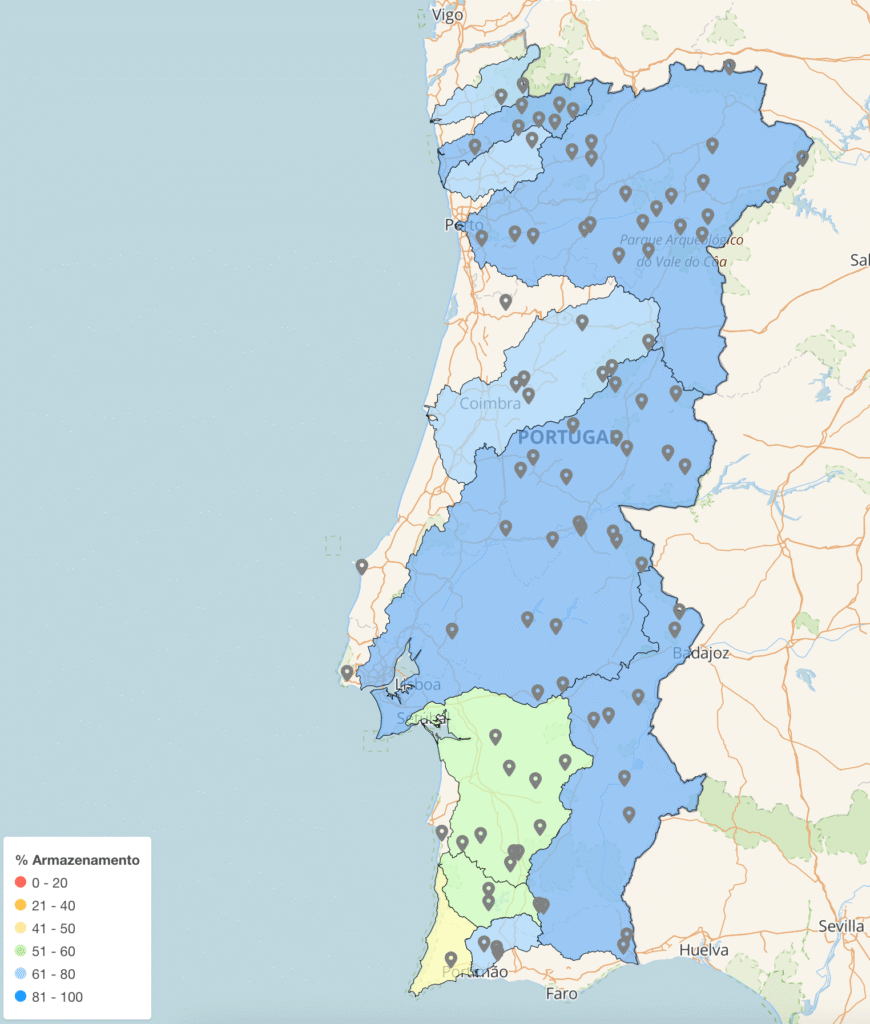
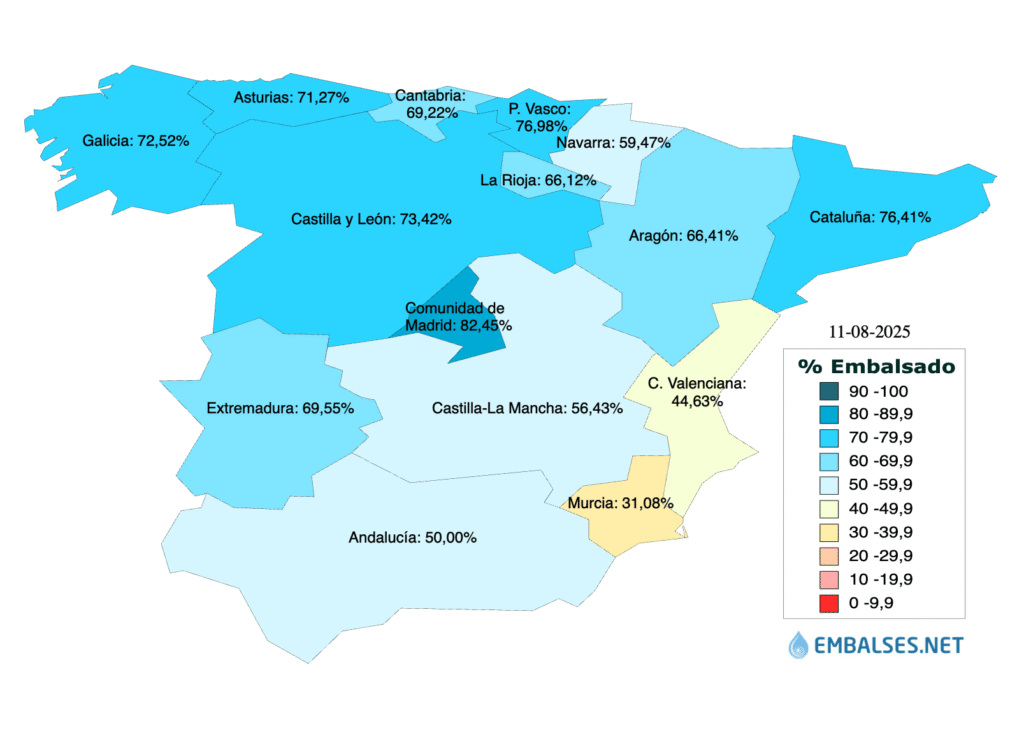
In Italy, the situation is split: Northern Italy experienced heavy spring rains, but Southern Italy has continued to struggle with limited rainfall, straining water supplies and forcing many growers to rely on well water. For instance, the Foggia area in the South has seen a significant reduction in planted surface due to low water levels in the Occhito dam.
Central and Eastern Europe (e.g., Poland, Hungary, Bulgaria): In Central and Eastern Europe, countries like Poland, Hungary, and Bulgaria, all of which have processing tomato cultivation, experienced notable precipitation events. Bulgaria reported heavy rains that delayed transplanting, though no major impact on crop size is expected. Hungary, on the other hand, faced concerns about frost in May.
Regional Impacts
The varied weather conditions have translated into a mixed outlook for processing tomato production across Europe:
Mediterranean Basin: The initial heavy rains followed by heatwaves have led to an anticipated 11.5% decline in overall Mediterranean tomato production compared to 2024. Spain and Portugal, in particular, are forecasting significant reductions in processing tomato volumes due to delayed planting and the challenging weather.
Italy: Despite some regional disparities, Italy’s overall processing tomato forecast remains stable, suggesting a degree of resilience, particularly in the North where conditions were more favorable.
Other Regions: Bulgaria reported heavy rains delaying transplanting, but no major impact on crop size is expected. Hungary faced frost concerns in May.
Global Perspective
Beyond Europe, other major processing tomato regions have also faced distinct climatic influences:
California, USA: The 2025 season in California began with mild spring temperatures and sufficient water allocations, allowing for transplanting without delay. Water availability for the summer heat was deemed sufficient. The crop is currently performing at or above contract statewide. Overall quality is very good in all aspects.
Argentina: Argentina’s harvest, particularly in San Juan, has been negatively affected by hailstorms in early 2025, leading to a reduction in the crop forecast. However, by mid-January, approximately one-third of the crop had been harvested, and the weather turned dry and warm, which was conducive for the remaining harvest. Frosts have also severely impacted production in Mendoza and other regions.
Australia: Australia’s processing tomato season began with plantings on schedule and minimal interruptions. Despite some early issues with storms and localized waterlogging in mid-to-late November, favorable warm to hot conditions throughout the growing period, despite high humidity at times, contributed to an optimistic outlook. There was a surge of blossom end rot in many blocks, associated with hot, windy conditions around Boxing Day, but healthy growth and fruit set offered hope for projected tonnages.
Brazil: In Brazil, the winter production areas experienced disruptions to their planting schedule due to heavy sub-tropical rainfall. However, plantings recovered and were back on schedule for a harvesting period from April to September 2025.
Chile: Chile’s crop estimate remains largely unchanged, with fair temperatures and no issues with water availability providing an ideal climate for growth as the harvest commenced in January.
The 2025 processing tomato season has been strongly influenced by the recent weather patterns, primarily characterized by widespread above-average temperatures and contrasting precipitation, leading to both delayed planting and heat stress in key growing areas. While some regions have managed to maintain stable outlooks or even benefit from initial rainfall, the overall European processing tomato production is anticipated to see a decline.
Sources: Copernicus Climate Change Service (C3S), WPTC crop updates, barragens.pt, embalses.net, Horti Daily