News
ToBRFV: several effective methods to eradicate the virus
Research shows: ozone kills ToBRFV in drain water
Disinfecting drain water with ozone very effectively eliminates present Tomato Brown Rugose Fruit Virus (ToBRFV). This is the conclusion of Groen Agro Control after research in its laboratory. The news is a boost for tomato growers and plant breeders. They can use this disinfection method to eliminate a risk factor for spreading the feared virus and safely reuse their drain water after disinfection.
 ToBRFV is a tobamovirus that can cause severe symptoms in tomato plants. The virus can spread both mechanically (through people and tools) and through contaminated drain water in tomato crops. When recirculating drain water, it is therefore important that ToBRFV is killed off during the purification step. At the request of Agrozone, which develops ozone installations for horticulture and industry, Groen Agro Control from Delfgauw, The Netherlands investigated whether ToBRFV in drain water survives treatment with ozone.
Trial design
Agrozone and Groen Agro Control have set up the test according to the standard settings as the ozone installations of Agrozone function in practice, a realistic practical test. The disinfected water was then used to inoculate five tomato seedlings. As a positive control, a treatment was also performed with non-disinfected drain water containing the virus. Both treatments were performed in two replicates.
After two weeks, the uninoculated leaves in the head of the plants were sampled and tested for the presence of ToBRFV using an ELISA test.
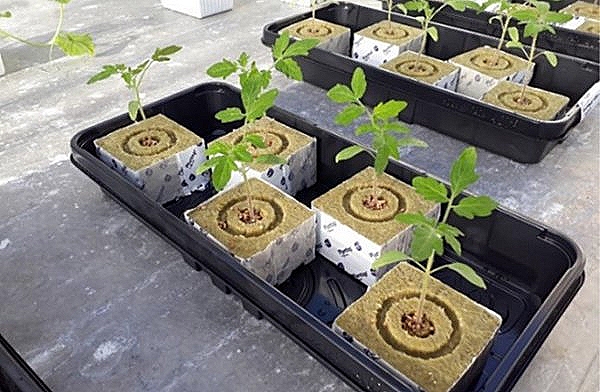 In the series with the untreated drain water (the positive control), ToBRFV infection was detected in four of the five inoculated plants in both replicates. The ozone-treated drain water did not result in infection in any of the five inoculated plants in either repetition. This means that no virulent virus was present in the treated water anymore. In other words, the virus did not survive the ozone treatment.
According to Roy Imming of Agrozone, ozone treatment is the first disinfection method that has been proven effective against ToBRFV. "That is one of the many advantages of ozone, no virus can survive against it. It's good that this has again been officially confirmed by an accredited lab, that's positive news for growers. We can also make a direct connection between the setpoint of our installations and the killing off of the virus. This can be adjusted and even remotely monitored so that abnormalities and risks can be spotted in time. Should virus end up in the drain water from a local source of infection, you can use an ozone plant to disinfect and reuse it in a responsible and controlled manner."
Powerful ultrasonic anti-virus method ready for use
For decades now, there's been ongoing research into disinfection methods to combat tobamoviruses. These viruses have been making life difficult for famers for a long time. There has been a technique that uses ultrasound against such viruses for years. And, according to Kees Luykx of Luykx Ultrasound, also against ToBRFV. "We now have a high-wattage ultrasound transmitter. It combats these tobamoviruses in drains and water supplies."
Kees sees that growers employ many disinfection methods against tobamoviruses. These include those that combat the Tomato Mosaic Virus (ToMV) and Tobacco Mosaic Virus (TMV). Many of these techniques have been scientifically researched. These studies were done to determine how effective such methods are against viruses such as these.
"A 2013 study considered various methods. It looked at not only acetic acid, hydrogen peroxide, hydrochloric acid, and sodium hypochlorite. But also dry heat, a hot water treatment, ozone, and UV disinfection," Kees says. "UV disinfection was shown to be one of the least effective treatments against Tobamoviruses. UV disinfection reduced pathogens by between 12 and 27%. That means 73 to 88% of the viruses present remained completely intact after UV treatment."
According to Kees, irradiating viruses through water would probably produce even worse results. That's important to note because ToBRFV is water transferable. That's why Luykx's focus is on combating the virus in drains and water supplies. "UV light moves with greater difficulty through water than air. That's because of the contaminants that are present in water."
"Practically, that means drainage water containing viruses, such as ToBRFV, will contain large quantities of viruses, even after UV decontamination. The farmer then reuses this water in the greenhouse. Then, I think it's a question of when the virus will strike, not if."
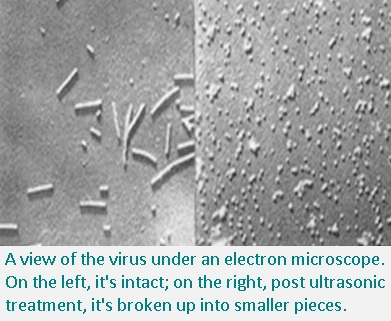 Ultrasonic technology was also researched, even as early as 1951. Luykx explains that this showed that ultrasonic sound can break up (tobamo) viruses. It renders them entirely harmless. "The technique has been around for decades and is still as effective." With this technology, Kees combatted the PIAM virus (Plantago Asiatica Mosaic Virus) in lily cultivation.
More powerful ultrasound
Until now, ultrasound couldn't be used on a practical scale. "There weren't any sufficiently strong underwater transmitters. We've now built such a transmitter. It has a much higher wattage than the usual 100 Watts. This transmitter emitted a very powerful output. It fights tobamoviruses effectively in drainage and supply water. That allows [growers] to rid the water of harmful viruses and also other pathogens, such as bacteria and fungi."
ToBRFV is very troublesome. According to Luykx, his ultrasonic technology breakthrough is, therefore, crucial. That's for tomato growers who are affected by this virus and its threat of infection. But this ultrasonic method can be employed against bacteria and fungi too.
"Ultrasonic technology can reduce the failure rate caused by crazy roots. So, growers get higher yields. That's thanks to a lower pathogen count in their supply water. Turnover increases, and there are fewer rejects. The ultrasonic equipment can, therefore, pay for itself in no time. You could have a return on investment within a year," concludes Kees.
Source: hortidaily.com