News
Sponsors needed to grow tomatoes in space
A team of Chilean and French scientists are looking for sponsors to grow tomatoes on the ISS to better understand how they can adapt to extreme conditions
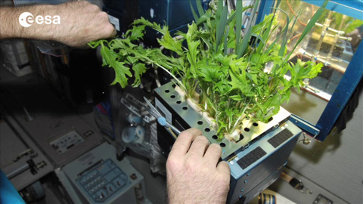 Under the current scenario of global climate change, the discovery and characterization of plant species adapted to extreme environmental conditions has become increasingly important. Desert plants have naturally evolved to flourish under such conditions. Therefore, understanding the underlying mechanisms for their adaptation can potentially help to ensure food security. To address this question, we take advantage of a unique natural laboratory, the Atacama Desert. Despite extreme drought, nutrient-poor soils and high radiation levels, a diverse set of plant species manage to grow there. Among them, some species even served as food for local inhabitants, which is a focus of our studies. These plant species represent an outstanding model system to (i) identify mechanisms for extreme abiotic conditions and (ii) serve to develop new crops for marginal unused soils and/or more adapted to climate change.
For this project we focus on an edible extremophile species from the Atacama desert, Solanum chilense, which produces a wild tomato fruit. It will be compared to what we call a sister species: Solanum lycopersicum (tomato), a taxonomically close model species, which is not adapted to extreme environments. With the completely different set of extreme conditions encountered in space it is a unique opportunity to speed up our knowledge and unravel the existence of genetic mechanisms involved in plant resistance to stress.
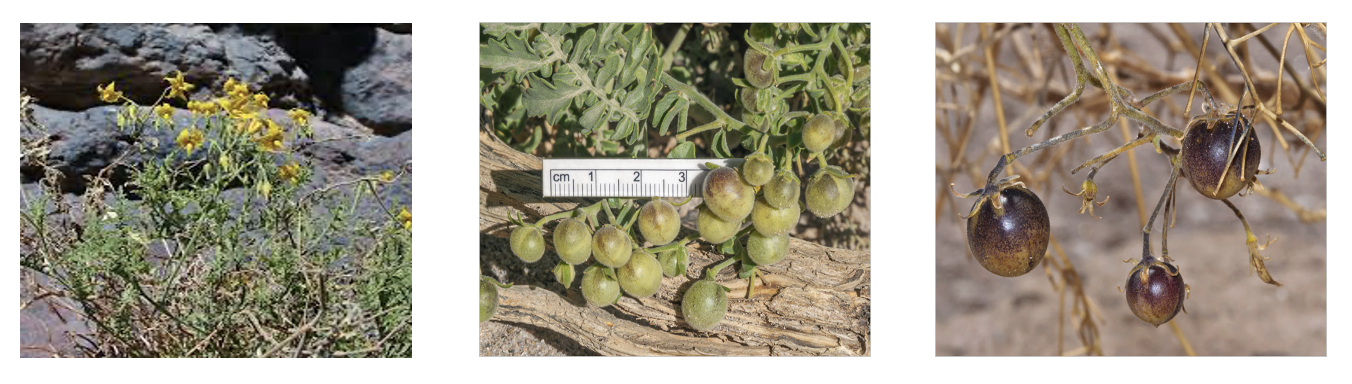
For this purpose, we will (i) compare the capacity of Solanum chilense and Solanum lycopersicum to grow in space and (ii) perform gene expression analysis to understand the mechanisms involved in plants adaptation to extreme conditions.
Understanding these mechanisms will provide (i) new useful criteria for selecting plants adapted to environmental constraints due to global warming on earth and(ii)candidate genes for the creation of new species of agronomic interest by CRISPR-Cas9, for example. Furthermore, by using edible extremophile species it presents an immediate interest for food production to increase and preserve the biodiversity of the species cultivated on earth. Over the past few years, one of the best examples to support the use of edible extremophile species in agriculture is the reintroduction of quinoa. Since its reintroduction in the United States, it has spread to more than 70 countries in the past 20 years.
This project will be conducted by a team composed of:
 – Dr. Laurence Lejay, a French research director at INRAE, with a renowned scientific expertise in the field of plant nutrition,
– Dr. Rodrigo Gutierrez, a full professor at P. Universidad Católica de Chile, who pioneered the combined use of biology, genomics and bioinformatics approaches to unravel molecular mechanisms of plant form and function
– Mr. Jacob Scoccimerra, who leads the space program at Interstellar Lab, a French start-up specialized in developing environment-controlled pods and systems that create ideal conditions for plants to grow on Earth, in LEO, on the Moon, and on Mars.
– Mr. Jacob Scoccimerra, who leads the space program at Interstellar Lab, a French start-up specialized in developing environment-controlled pods and systems that create ideal conditions for plants to grow on Earth, in LEO, on the Moon, and on Mars.
Dr. Lejay and Dr. Gutiérrez have a long history of collaboration over the last decade. Dr. Gutierrez has led interdisciplinary initiative to understand plant adaptations to the extreme conditions found in the Atacama Desert. In the meantime, Dr Lejay revealed in the model plant Arabidopsis thaliana, that redox metabolism seems to be at the heart of the regulations allowing carbon and nitrogen metabolism to adapt to environmental constraints.
**** To launch this experiment on the ISS we are looking for sponsors to gather USD 150 000 ***
You can get more information on how you could be part of the adventure and associate your (company's) name to new ground-breaking discoveries by contacting Dr. Laurence Lejay at laurence.lejay@inrae.fr
Institute for Plant sciences of Montpellier (IPSiM), 2 place Pierre Viala, 34060 Montpellier cedex 2 (France)
Institute for Plant sciences of Montpellier (IPSiM), 2 place Pierre Viala, 34060 Montpellier cedex 2 (France)