News
Research: Benefit of rhizophagus intraradices in drought conditions
Increasing drought, under current climate change scenarios, will reduce the sustainability of tomato cultivation in the Mediterranean region. A new study evaluates the effect of Rhizophagus intraradices inoculation on tomato plant physiology and yield in response to progressive water deficit conditions.
Two commercial products (Prod1 and Prod2) containing only Rhizophagus (R.) intraradices were tested at two different concentrations (1% and 5% of the substrate volume) using three methods of inoculation: (a) mixed to substrate, (b) dissolved in water, (c) spread on seedlings root blocks before transplant. The highest mycorrhization of root fragments (F%) was found with Prod2 at 1% w/w at 40 days after sowing (DAS); this product was therefore used in a second experiment to inoculate tomato plants and test their physiological response to progressive water deficit induced withholding irrigation.
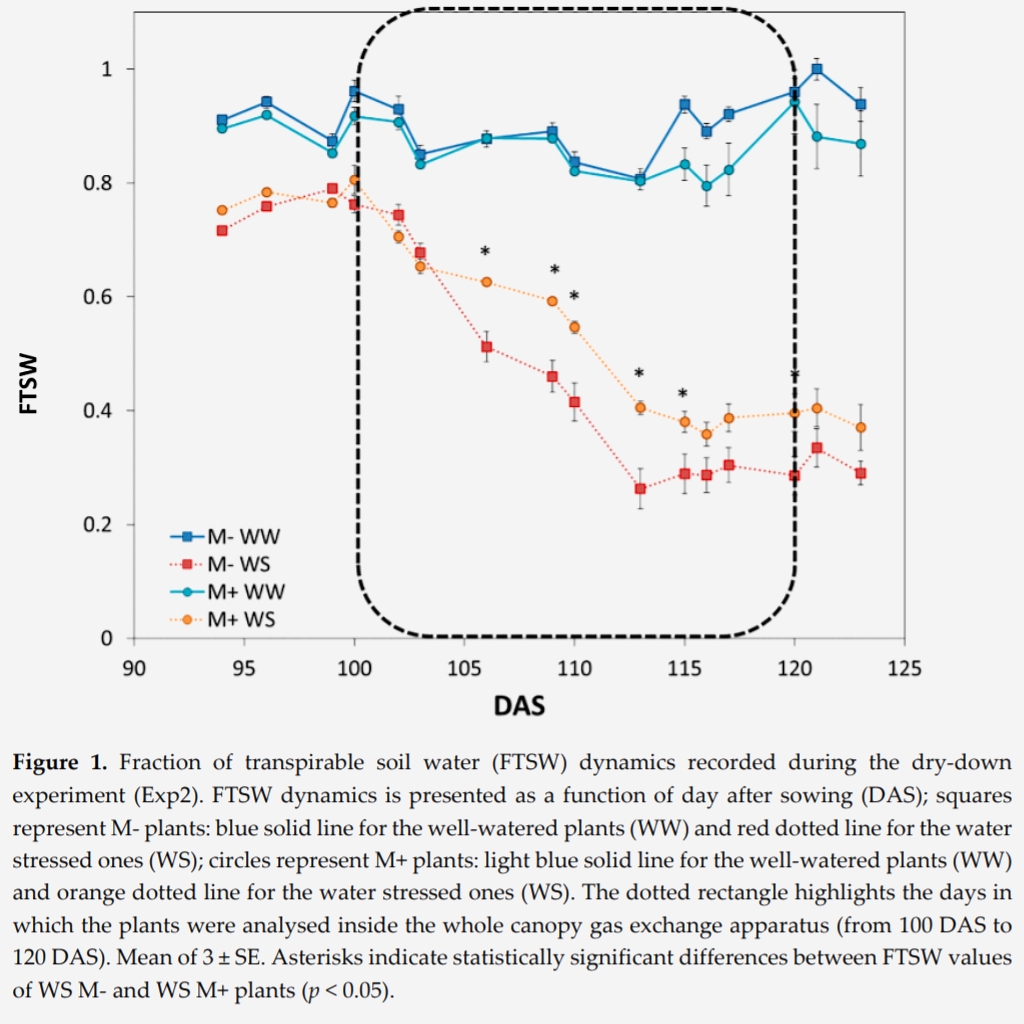
Phenology, plant height, stem diameter, chlorophyll content and fluorescence, whole canopy gas exchange, biomass production and partitioning and phosphorus content were investigated in inoculated and not inoculated tomato plants under well-watered and water stressed conditions. Vegetative period and plant height were shorter in inoculated than in control plants; moreover, inoculation with R. intraradices increased fruit production by enhancing chlorophyll content under water stress condition, PS2 efficiency, electron transport rate, maximal quantum yield of photosystem II, net photosynthetic rate and whole canopy intrinsic water use efficiency.
Reference: Fracasso, A.; Telò, L.; Lanfranco, L.; Bonfante, P.; Amaducci, S. Physiological Beneficial Effect of Rhizophagus intraradicesInoculation on Tomato Plant Yield under Water Deficit Conditions. Agronomy 2020, 10, 71.
Full article at MDPI Agonomy
Sources: hortidaily.com, MDPI Agronomy