News
Prefer project: the environmental impact of tomato products
How to integrate the "greenhouse effect" into the consumer's "shopping trolley"
While the approach that analyses the environmental impacts of a product throughout its life-cycle has developed consistently since the 1990s and now features among the tools used by the private sector and also in a number of public policy decisions, the worries linked to climate change have given rise, over the past 15 years, to an interest in establishing the carbon footprint of products (impacts of a product on climate change in terms of the emission of greenhouse gases generated throughout its life cycle), including in company communications with consumers, mostly in the form of voluntary labeling.
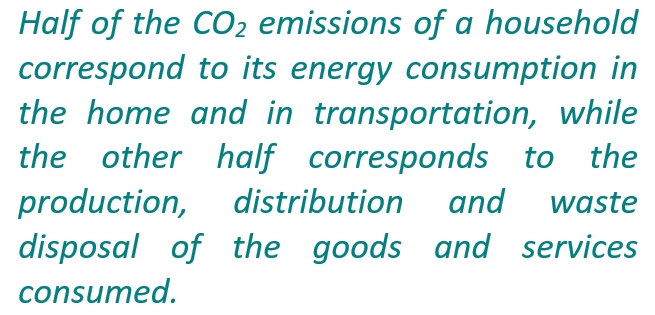 With the increasing sensitivity of consumers to the origin, nature, production chain and quality of the products manufactured by the industrial sector in general and by the food industry in particular, the definition, evaluation and control of the environmental impact – and sometimes social impact – of each retail product have become unavoidable issues for processing companies.
Beyond the qualities of a product – whether sanitary, dietary or taste-related – and in compliance with the increasingly constraining regulatory framework being imposed on processing activities, the CO2 impact of products being offered to the public currently conditions a large part of the image associated with a company brand or private label. It has become essential, for brands of any repute, to determine and communicate the carbon footprint of their products. The ability of processors to differentiate themselves from competitors by reducing their carbon footprint now features among the main commercial arguments being put forward. What is at stake here is to turn environmental concerns (the greenhouse gas effect) into a consideration that influences the consumer's shopping trolley.
 In Europe, in the continuation of the British PAS 2050 (the first standard or quasi-standard adopted in 2008 for estimating the carbon footprints of products), international initiatives to this end have multiplied, in France, Belgium, etc.; But it is naturally in Italy, historic birthplace and European leader of the processing tomato sector, that the tomato industry first started to focus on quantifying its environmental impact.
Several major names of the processing industry, under the leadership of the Pomodoro Nord Italia IO, lent their support to the PReFER project (PRoduct Environmental Footprint Enhanced by Regions), with co-financing from the European Commission's Life Plus program, with the aim of testing a new harmonized methodology for evaluating the environmental footprints of products ("PEF") and services, based on an assessment of the life-cycle (Life Cycle Assessment or "LCA"). Tomato processing is one of the eight sector groups that were selected for this experimentation (paper, textiles, wine, agriculture, wood, etc.). The PReFER project has a budget of more than EUR 1.5 million, and is designed to function over a 39-month period (October 2013 – December 2016).
The processing tomato sector of northern Italy
The north of Italy, and the city of Parma in particular, has been distinguished since the end of the 19th century by the development of a major national hub for the production and industrial processing of tomatoes. In the last decades, the area where processing tomatoes are grown has expanded into neighboring regions due to the conversion of farms to other crops and the emergence of farms that are run by processors.
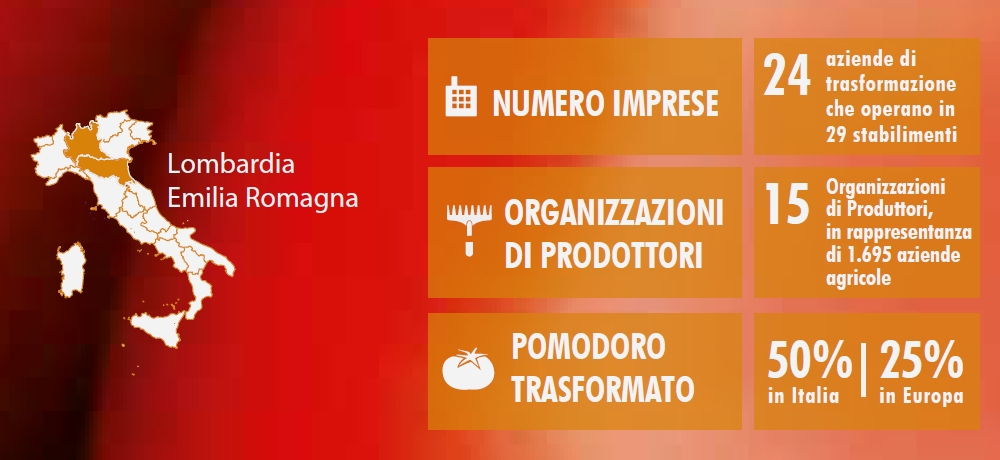 Overall, the district includes the regions of Emilia-Romagna, Lombardy, Veneto, Piedmont and the autonomous province of Bolzano. However, the project has only mobilized the first two of these regions, as they are more representative in terms of planted surfaces and processed tonnage and represent respectively 60% and 20% of the production and more than 80% of total processing capacity. The district also hosts fifteen Producers' Organizations, which altogether represent approximately 1 700 farms and twenty-four processing plants. The POs and companies have joined forces within the Pomodoro Nord Italia Interbranch Organization, which totals 2.5 million tonnes processed each year, accounting for about 50% of Italy's tomato processing operations and 25% of the sector's European operations. The project also involves two nurseries, about 800 tomato growers and seven processing companies, in particular the companies Mutti and Rodolfi Mansueto.
The stages of the process and the products being studied
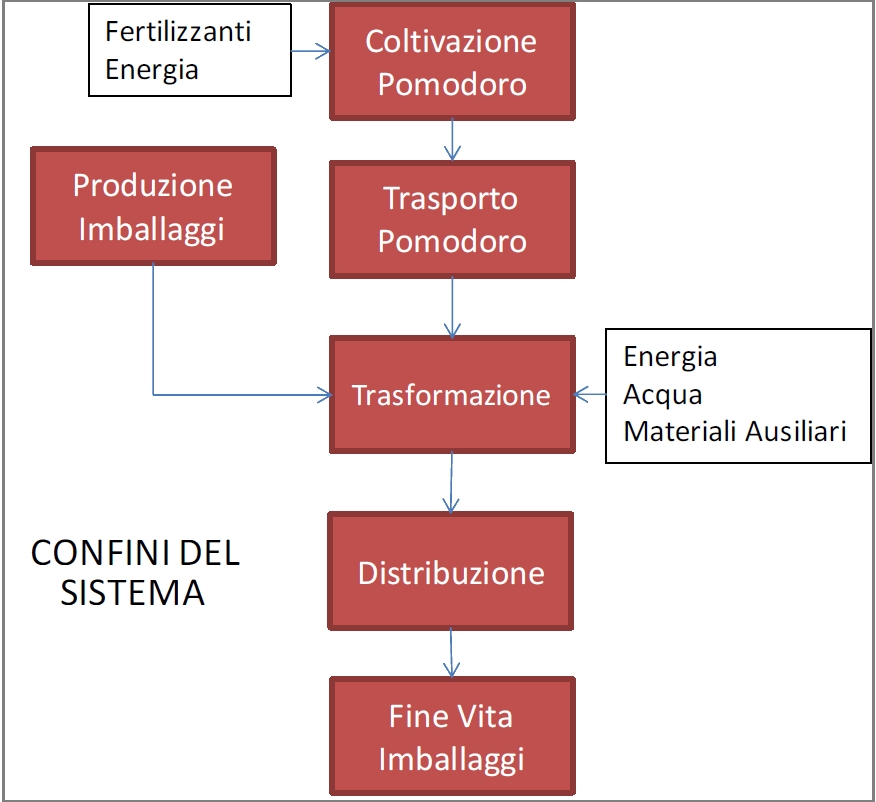 Passata (or purée), pulps and tomato paste have been identified as products that are representative of the group's productions as a whole. The results presented are based on an average obtained from the various participating companies and therefore represent an average value for the environmental impact of the district's production.
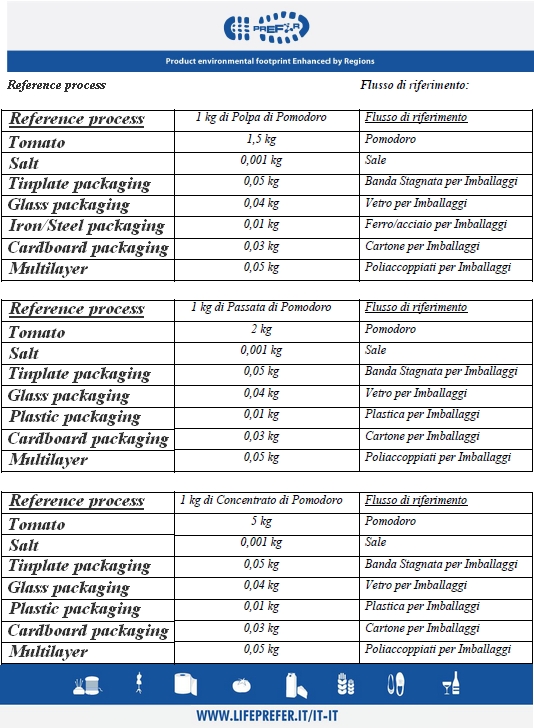
In order to make things simpler, it was estimated that the raw materials being used have an average soluble solids content of 5°Brix, whereas the products obtained respectively feature average values of 7°Brix for pulps (technological yield of 1.4 kg of raw material per kg of finished product), 10°Brix for passata (technological yield of 2.0 kg/kg), and 28°Brix for pastes (technological yield of 5.6 kg/kg).
The extent of the LCA (Life Cycle Assessment) includes all of the stages in the life of a product, from its origin to its end. These stages are the following:
- Tomato growing (including the production of seedlings in greenhouse nurseries);
- Transport of the tomatoes;
- Industrial processing;
- Production of packaging elements;
- Distribution of the finished products;
- End of life.
The final utilization stages of the finished products were excluded from the system because the products being studied are often used as ingredients or adjuncts for other preparations or dishes, so it is impossible to reliably determine the modalities of usage (types of energy employed, conservation methods, raw or cooked consumption, etc.) and the environmental impacts of their end use.
Fifteen impact categories
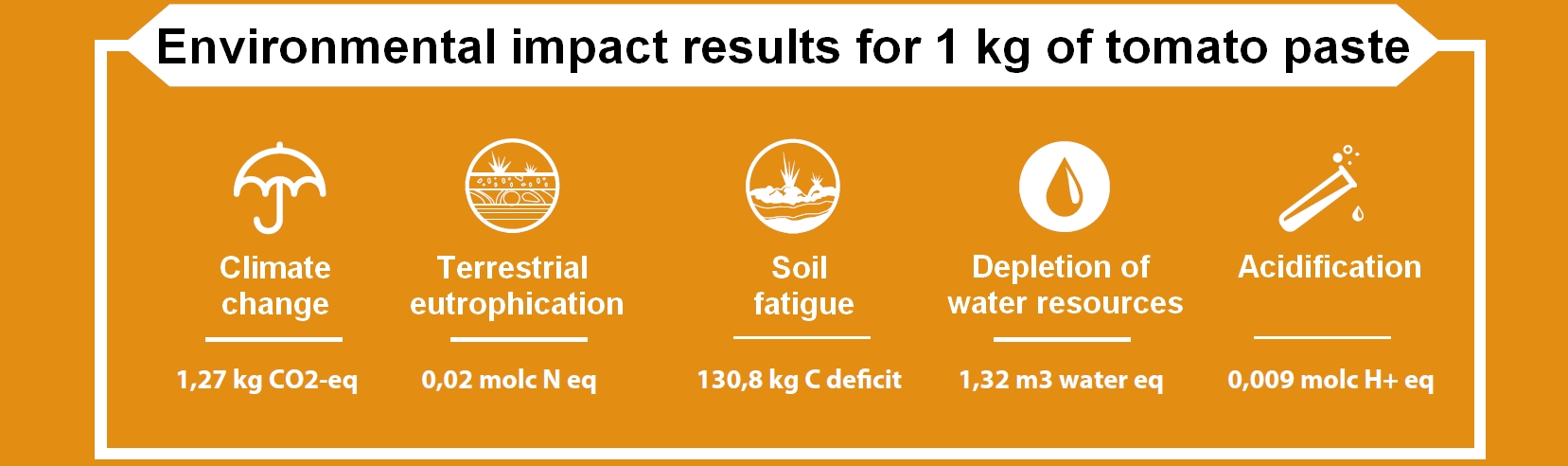
Global warming leading to climate change, depletion of the ozone layer, toxicity for humans (carcinogenic and non-carcinogenic effects), emissions of inorganic particles, ionizing radiation, creation of photochemical ozone, eutrophication phenomena, ecotoxicity, land use, depletion of mineral resources… Many parameters have been studied in order to define as closely as possible the environmental impacts of the three categories of products selected for analysis. Some of these impacts in particular attracted the attention of industry experts.
- Global warming: this is the capacity of a greenhouse gas to influence changes in the average worldwide temperatures of the air at ground-level (expressed in units of CO2 equivalent, for a period of 100 years).
- Eutrophication: this is an excessive accumulation of a number of nutritional elements (generally nitrogen and phosphorus), resulting from the disposal of waste water and the fertilization of agricultural land, which accelerates the growth and proliferation of plants in various environments (land, aquatic, marine) where it occurs. The degradation of the corresponding organic matter leads to an increased consumption and lack of oxygen that can, in some cases, go as far as causing the decline and disappearance of the biological species in place. The degree of eutrophication is measured in nitrogen equivalent kilograms or in phosphate equivalent kilograms.
- Land use: this impact category is the degree to which the land and soil are affected, in terms of occupation and alteration, by human activities (agriculture, roadways, habitats, mining activities, etc.). The term "occupation" defines the effects of land use in terms of services and duration. The term "alteration" is used to measure the extent of the changes that the soil undergoes in terms of quality.
- Acidification: this refers to the impact linked to the accumulation of acidifying substances in the environment, a consequence of the emissions of NOx (composed of nitric oxide and nitrogen dioxide mainly produced by the combustion of fossil fuels), NH3 (ammonia) and SOx (sulfur oxide compounds). These compounds contribute to the acidification of the soil and water when they are emitted in areas where the buffer capacity is low, which in turn leads to the decline of forests and the acidification of lakes.
Agriculture and packaging…
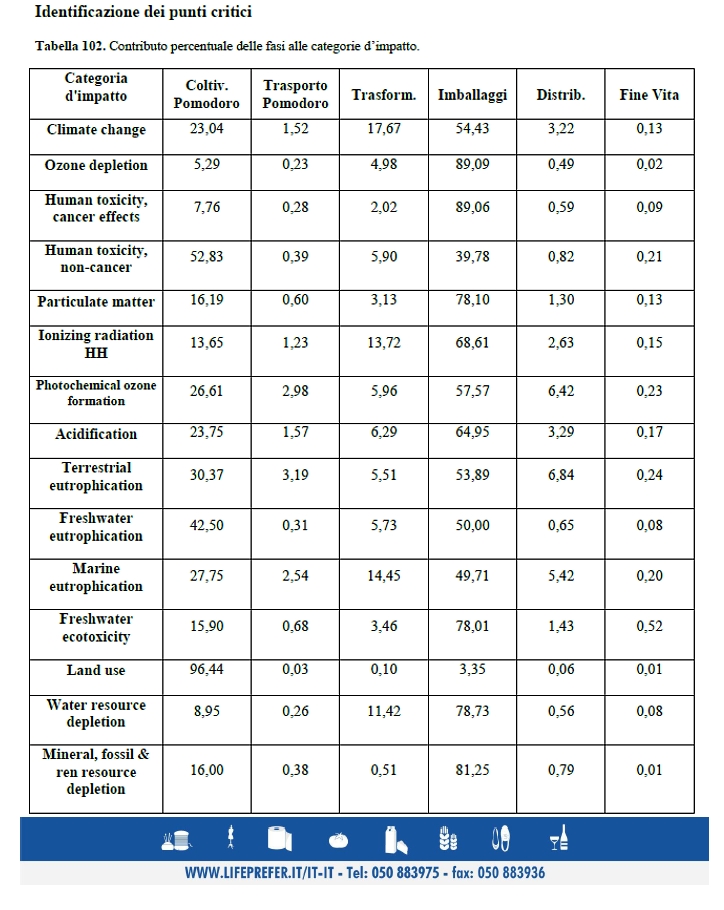
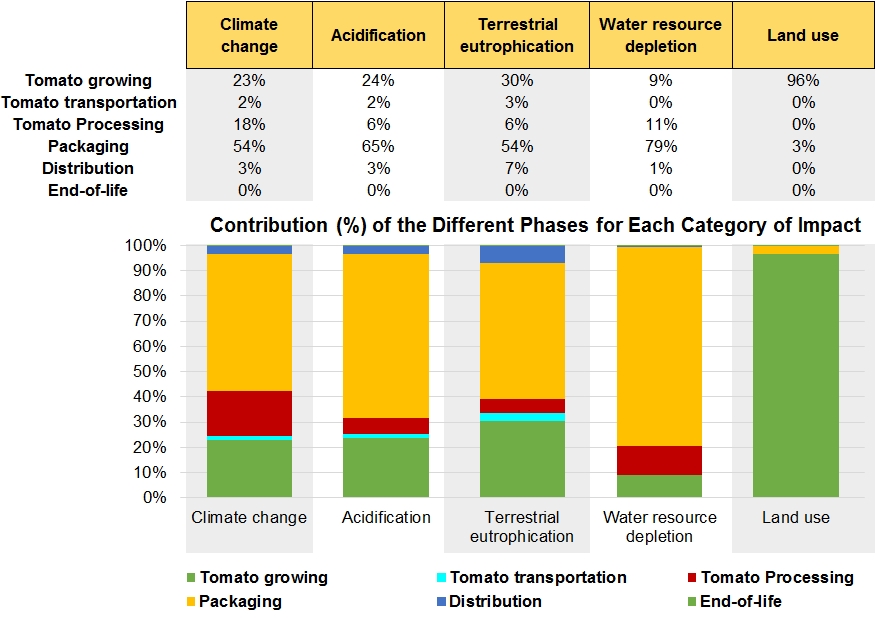
The two most critical phases in the long process leading from the seed to the end-of life-stages of a product are the cultivation of the tomato and the production of packaging. This secondary process in the production of tomato products is the biggest contributor to most of the impact categories (except for land use and alteration), particularly in terms of the depletion of the ozone layer (of which it accounts for 89% of the total impact) and toxicity (carcinogenic effects) for humans (also 89% of the total impact).
The other critical phase is the cultivation of the tomato as a raw material for the industry, which logically represents the biggest share of the responsibility in terms of soil fatigue (96% of the total impact is due to agricultural activity) and in terms of human toxicity (non-carcinogenic, 53% of the impact, caused by the regular applications of plant-health inputs).
The results collected show that phenomena of eutrophication (terrestrial, aquatic and marine) are mainly linked to agricultural production operations and to the manufacturing of industrial packaging. For these three impact categories, tomato cultivation represents an average of a good third (33.6%) of the total impact of the industry as a whole, whereas a large half (51.3%) is due to the manufacturing of packaging.
The actual processing phases – after delivery of tomatoes shipped to the factory and before distribution of the finished products – actually only have a limited environmental impact. Of the categories with the greatest impact, the industrial production of purees, passata and pastes only accounts for 18% of climate change, 14% of the marine eutrophication process and of the emissions of ionizing radiation, and only 11% of the depletion of water resources. The transport of tomatoes (from field to processing plant) and the distribution of finished products only account for a minute share of the sector's general impact (between 0% and 7% of the total impact with regard to eutrophication, climate change and acidification). The room for improvement of environmental performances is therefore relatively limited for these impact categories.
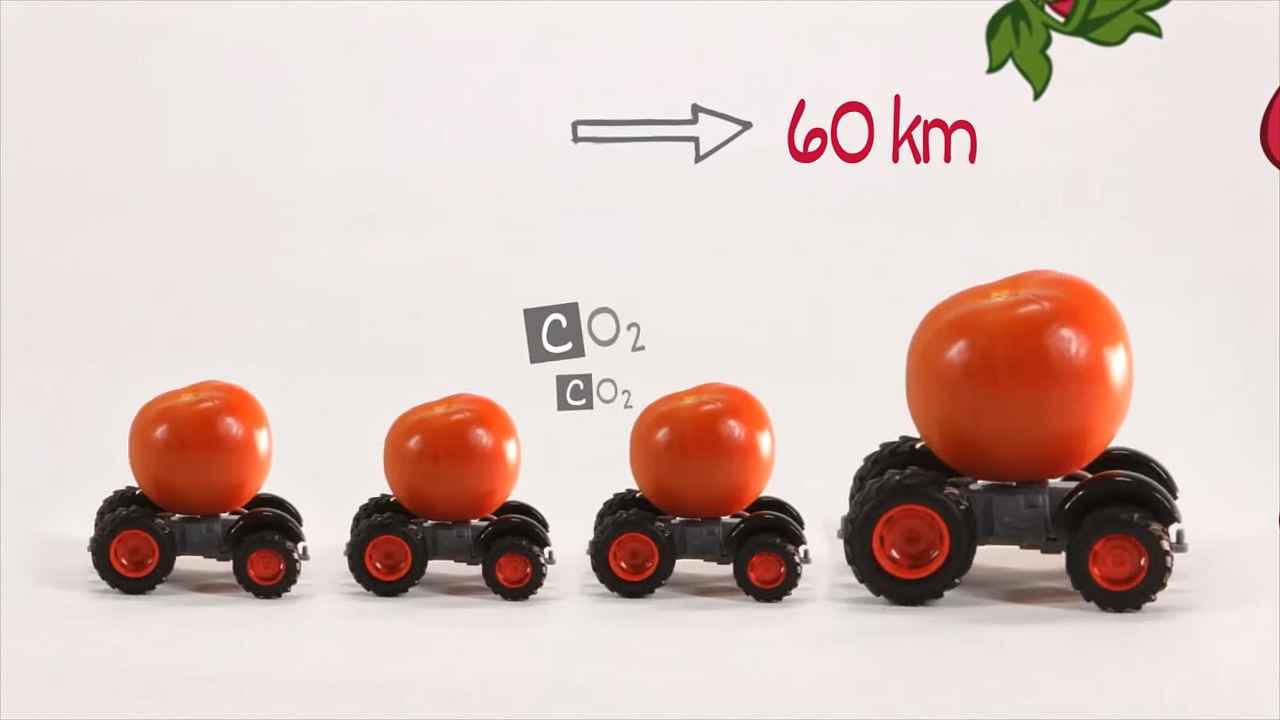 On this point, the IO Pomodoro Nord Italia has insisted on the importance of "territoriality" for raw materials and on the environmental gains achieved by reducing as much as possible the distances that separate growing fields from processing plants (on average 60 km overall for the plants studied in the survey). In its conclusions, the IO has pointed out that the production of packaging is a critical issue and is therefore the stage in the process that should be a focal point for efforts to reduce environmental impacts. In terms of energy use, the IO has suggested an acceleration of the program to replace fuel oil with natural gas to power the processing plants, and it has proposed the promotion of self-produced electrical power by installing photovoltaic systems on production farms.
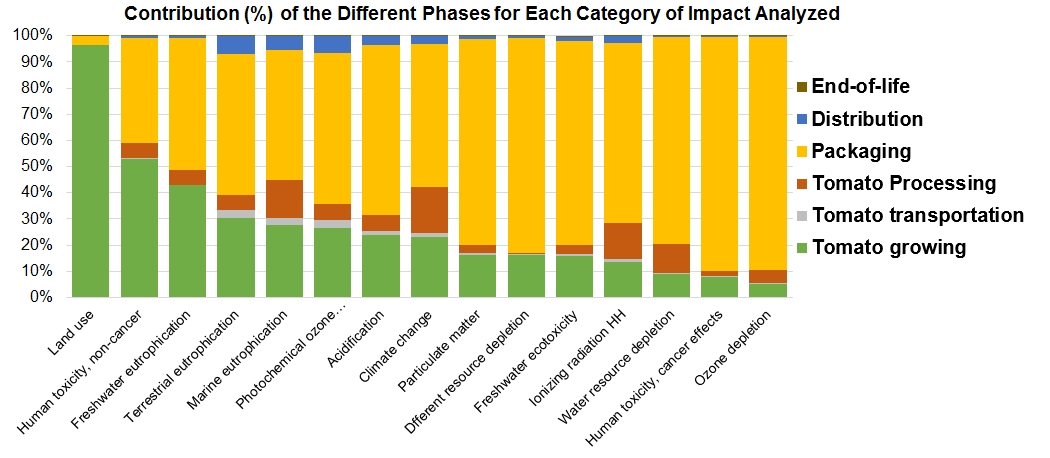
The two most critical phases in the life-cycle of tomato products are the growing stage and the manufacturing of packaging. While the first stage depends on decisions taken in consultation with agricultural operators, the second stage depends neither on the skill nor on the authority of processing operators.
Some complementary data
The environmental impact of the production of tomato products has turned out to be noticeably higher, at least for the agricultural stage, than the impact of other product categories, with the exception of land use, where contributions to the overall impact are similar.
Conversely, the impact of the "packaging" and "distribution" stages on the environment is considerably higher for passata and purées than it is for pastes.
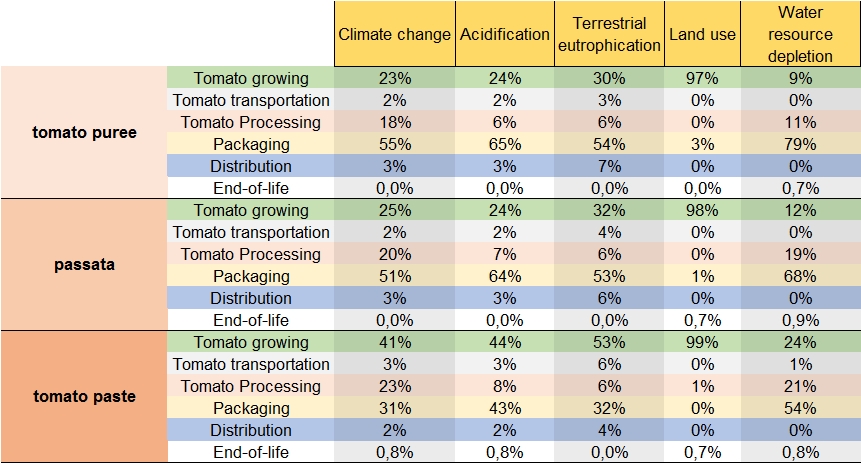
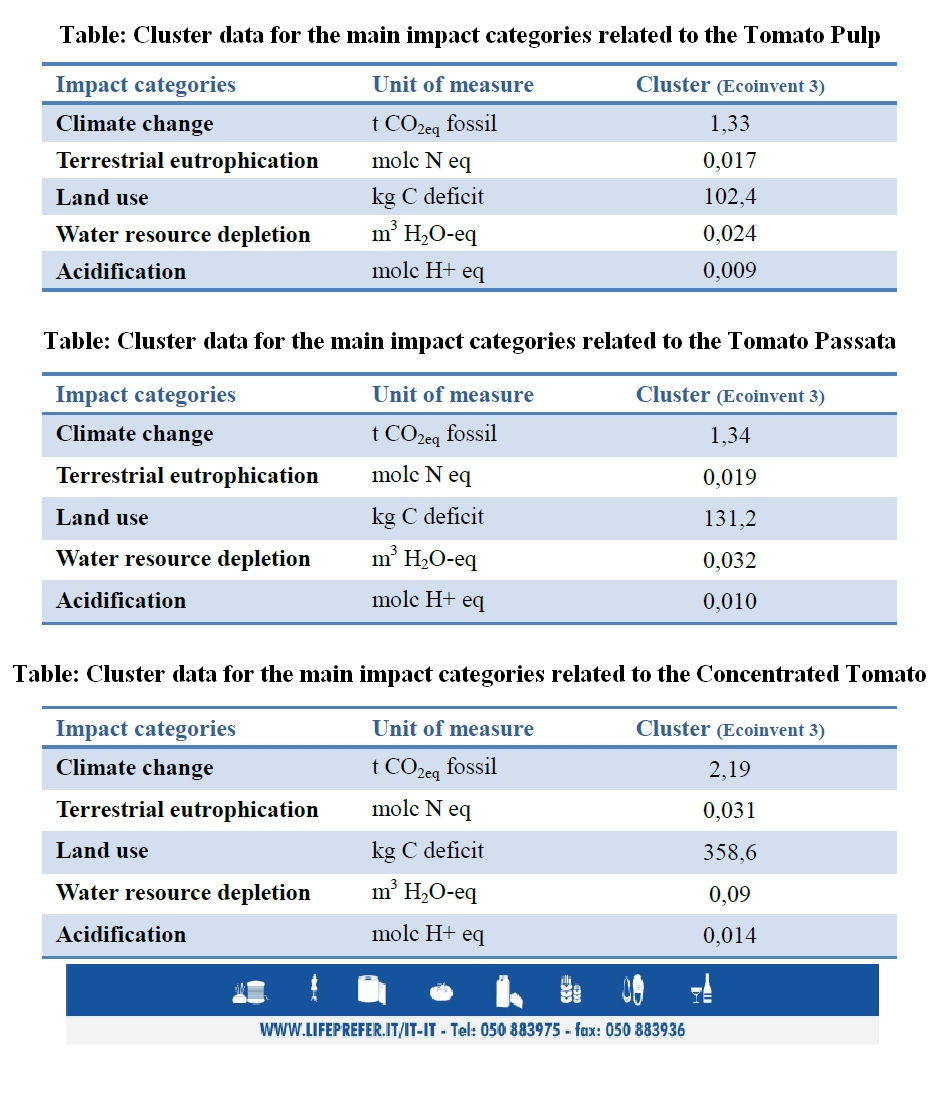
Summary of the results of the six stages of the life cycle of tomato products ("average product", industrial sectors linked to the Pomodoro Nord Italia IO) for the main impact categories.
Appendices/Annexes
Process and reference data
Process and reference data
General table of the study's results, in terms of contribution (percentage) of each process stage to each impact category