News
Northern Italy: sharp contraction of planted surfaces
Northern Italy: sharp contraction of planted surfaces
6 550 hectares less than in 2016
According to a recent statement published by the Pomodoro Nord IO, the production of processing tomatoes is due to decrease this year in northern Italy because of the reduction in the surfaces planted under contract for 2017. After the excessive production of 2016, contracted volumes have been aligned with targeted objectives.
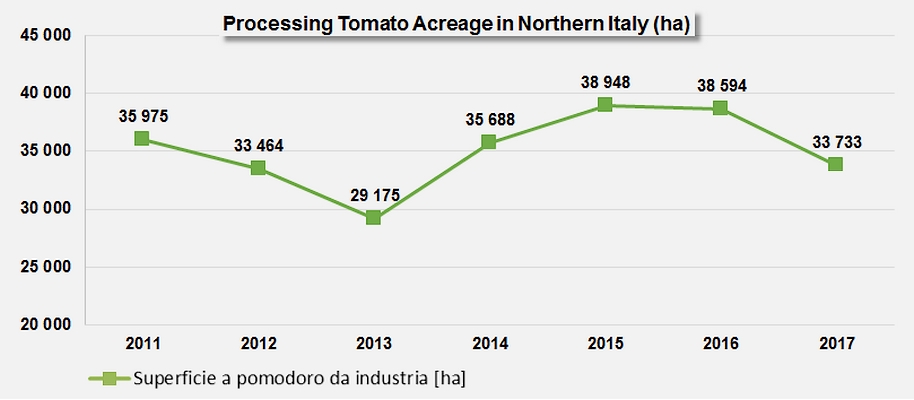
An analysis of the 145 contracts filed with the Pomodoro IO shows that the surfaces planted with tomatoes by the Producers' Organizations affiliated with the IO cover 33 733 hectares this year, a drop of 6 548 ha (-16.25%) compared to 2016, in line with the volume targets determined when the framework agreement was signed at the beginning of March.
"According to data collected by the IO," explained the President of the IO, Tiberio Rabboni, "we have observed a major contraction of the surfaces dedicated to tomatoes, compared to last year, as this led to an excessive crop, caused sanctions against growers and complicated the commercial positioning of products.
 As an interbranch organization, we have checked the conformity of the contractual commitments between POs and processors in terms of the overall objective of the framework contract for the region of northern Italy. The IO is now aware of the production targets of each PO and can identify those that are likely to exceed these objectives and be vulnerable to the penalties of EUR 20 /tonne that have been stated in the framework contract."
The impact of the drought
The Pomodoro Nord IO has clearly established the conditions in which it hopes the 2017 tomato season will be conducted in order to remain within the production limits that match distribution capacities, which have been estimated at about 2.4 or 2.5 million tonnes (depending on actual yields) for 2017.
According to local sources, replanting started at the beginning of April and progressed in satisfactory conditions thanks to good weather, particularly in terms of temperatures. A few concerns remained mid-April, given the low rainfall and the insufficient level of groundwater in the southern parts of the Pô Basin, where a number of crops have already required irrigation, two months ahead of the usual schedule.
The situation of water resources is enough of a worry for growers' associations to have launched a nationwide alert at the beginning of April, stating an average temperature that is 2.5°C lower than normal, and more importantly, rainfall that is 53% below seasonal levels. At the beginning of April, the level of the Pô river was the same as last June.
A few days before mid-April, Confagricoltura Emilia-Romagna stated its worry regarding the potential impact of the drought on budgets, pointing out that "the weather of recent months, the absence of rain and the early irrigation requirements have seriously affected the crops in northern Italy and have led to a 10% increase in overall production costs that growers are finding very difficult to bear."
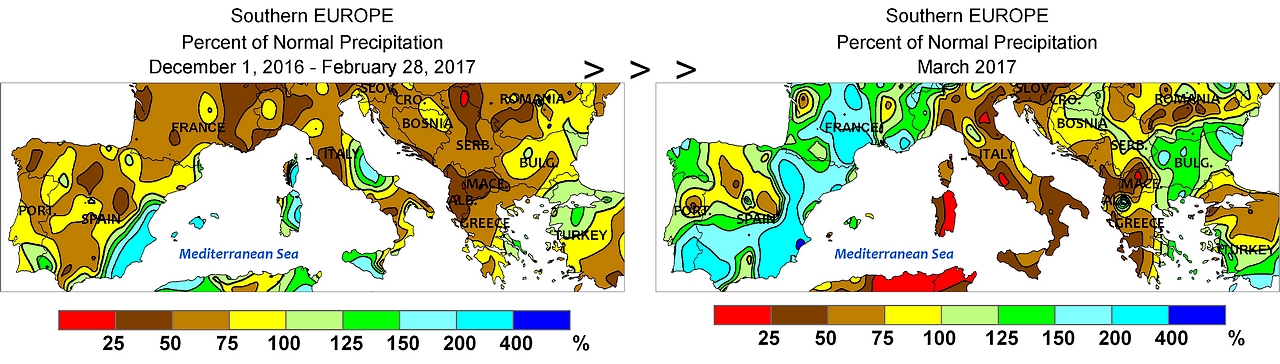
Rainfall percentage compared to seasonal averages, from 1 December 2016 to 28 February 2017 (on the left) and from 1 to 30 March (on the right)
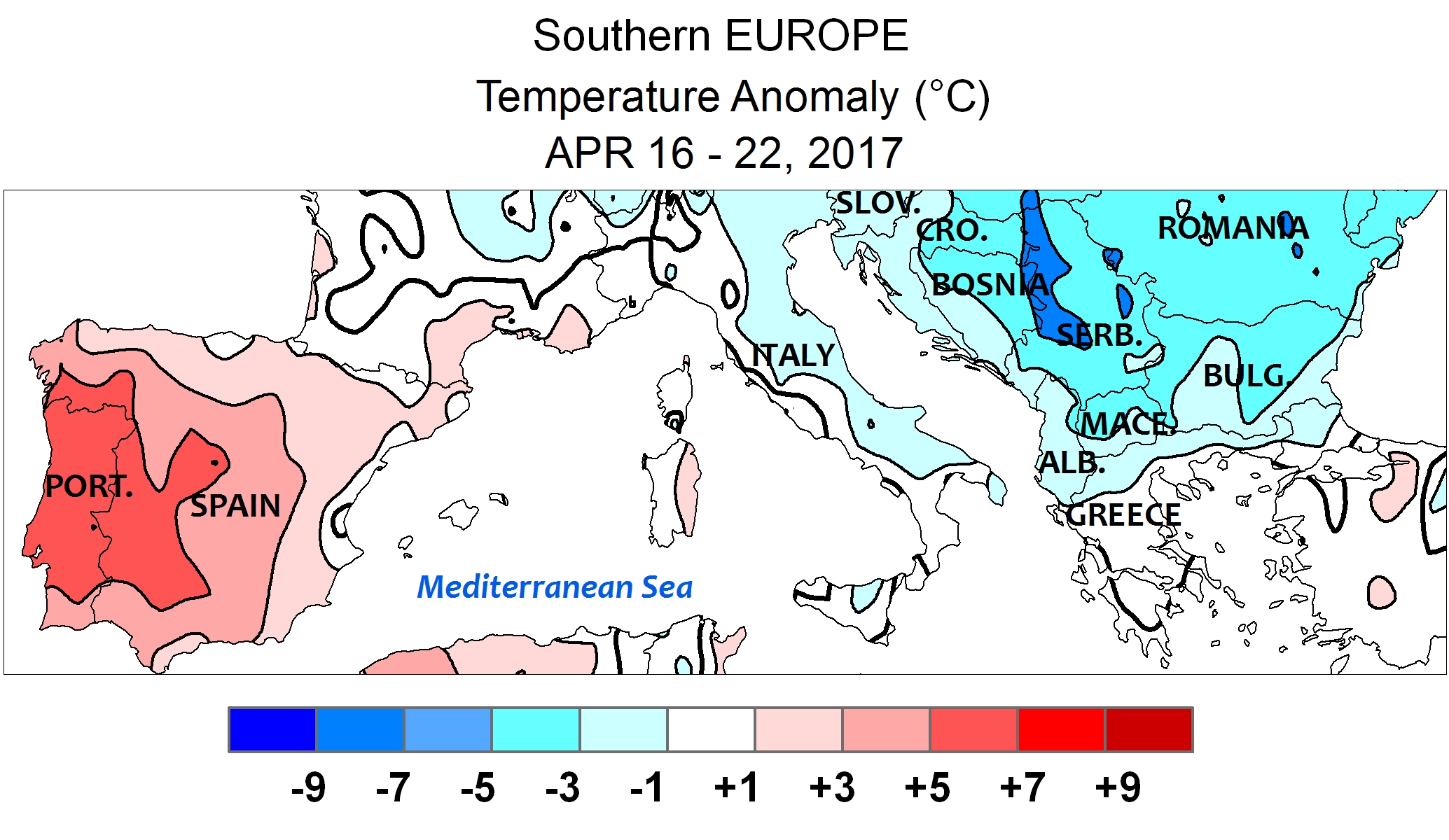
The development of crops and, therefore, the season's results, could be affected by these difficult conditions, which occurred at the beginning of the production cycle. The situation could be further complicated by the negative temperatures (-3°C) that hit Italy, particularly in the north of the country, between 18 and 20 April. Several million plants that were ready to be transplanted have been affected in the regions of Piacenza and Parma and in other localities of the Pô valley, right up to the region of Ferrare.