
News
North Italy 2025 Tomato Season: High Quality, Lower Yields
The OI Pomodoro’s take on the campaign in Northern Italy with Alessio Mammi, Emilia-Romagna Regional Councilor for Agriculture
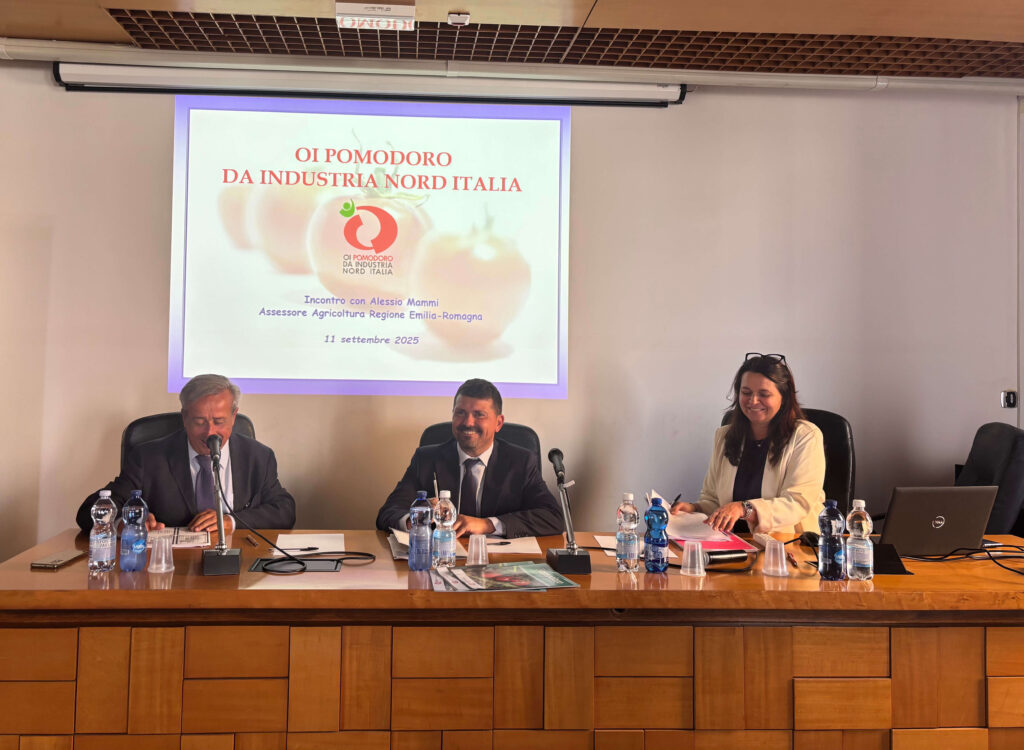
Parma, September 11, 2025 – This afternoon, the members of the OI Pomodoro da Industria Nord Italia (Northern Italy Industrial Tomato Organization) met with Alessio Mammi, Emilia-Romagna Regional Councilor for Agriculture. The meeting took place in Parma, at the OI headquarters, and provided an opportunity to take stock of the 2025 campaign.
Data and outlook for the 2025 campaign
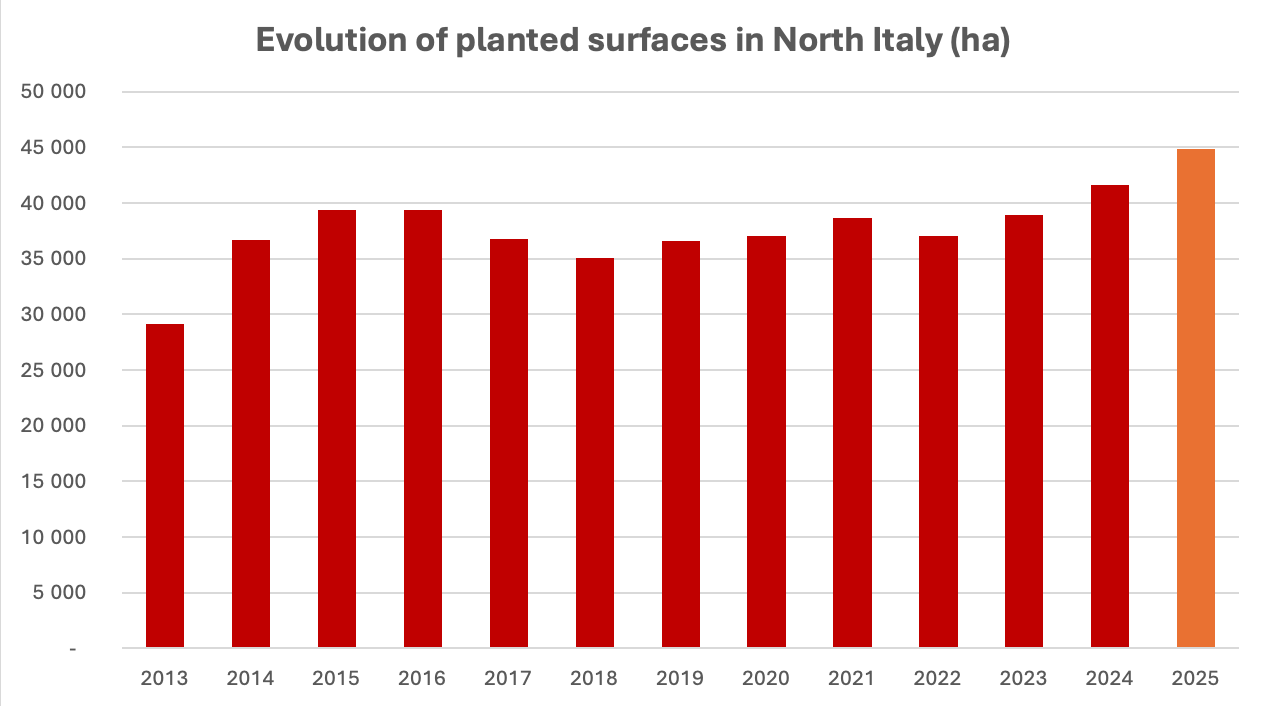
Transplanting was fairly consistent, and the even distribution of planting times—thanks to the organized and professional agricultural efforts of the POs—created the conditions for optimal harvesting and processing.
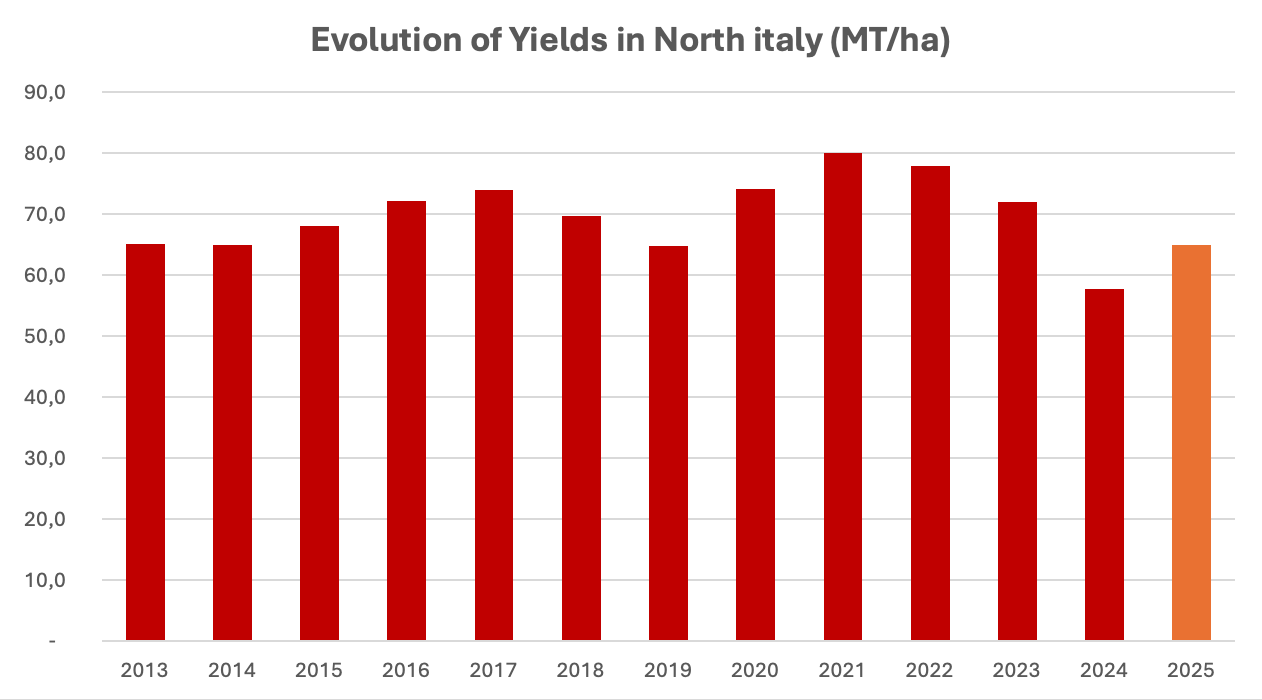
While rainfall and flooding caused difficulties in the last two years, this year it was the abnormal and persistent high temperatures in June and early July that caused the plants to suffer, leading to flower drop and lower than expected yields in the field.
According to data collected and processed weekly by the OI Pomodoro for the whole of Northern Italy, the tomatoes delivered to factories as of Sunday, September 7, amounted to 60.52% of the quantity contracted for the 2025 season. This is much lower than expected from the areas harvested so far.
Yields are therefore currently below the five-year historical average for the area (more than 73 t/ha), probably between 60-70 t/ha. The positive note for the 2025 season is the quality: excellent, with a Brix degree of 5.15, which has been above the maximum value ever recorded for all weeks of harvesting.
The challenges facing the industrial tomato supply chain
After presenting the campaign data, Giuseppe Romanini, president of OI Pomodoro da Industria Nord Italia, emphasized that “there are numerous challenges that the industrial tomato supply chain must face in order to maintain its position as world leader in quality and sustainability.”
Romanini then presented some current issues, which were the subject of the debate that developed with Councilor Mammi.
Picture: From left to right, Giuseppe Romanini, Alessio Mammi, Maria Chiara Cavallo
1. The problem of water availability and investment in storage infrastructure in the area.
2. Plant protection: the progressive depletion of usable plant protection products due to European regulations and the need for effective and sustainable alternatives.
3. Research and experimentation: research into tomato varieties suitable for the area in response to climate change.
4. International trade relations: the need to respect the principle of reciprocity both for sustainability standards and for trade tariffs on products imported from other producing countries.
5. CAP: concern about the EU Commission’s proposal for the new CAP 2028-2034 to reduce resources and establish a single fund for agricultural and cohesion policies, compounded by concern about maintaining and strengthening the CMO fruit and vegetable instrument.
Statements by Councilor Alessio Mammi
“We are going through a very complex period, with wars, tariffs, and climate emergencies. Despite this, if Emilia-Romagna is recognized as Food Valley, we also owe it to the tomato supply chain, a symbol of our ability to work together as a system, as demonstrated by OI Pomodoro da Industria Nord Italia,” says Alessio Mammi, Councilor for Agriculture of the Emilia-Romagna Region. Today more than ever, quality and productivity must go hand in hand: because without productivity, there is no competitiveness or efficiency. Made in Italy is an extraordinary calling card, but price and value also matter. This is why clear strategies and investments are needed, both at the regional and company level. As an institution, we are accompanying and supporting companies in this direction and are committed to making our voice heard in order to present the supply chain’s demands to national and European institutions.”
Sources: OI Pomodoro Nord, WPTC















