News
Italy: sensors on tomato plants to reduce water consumption
In order to reduce water consumption, Mutti is taking part in a monitoring experiment using an innovative sensor capable of analyzing a plant's fundamental physiological processes.
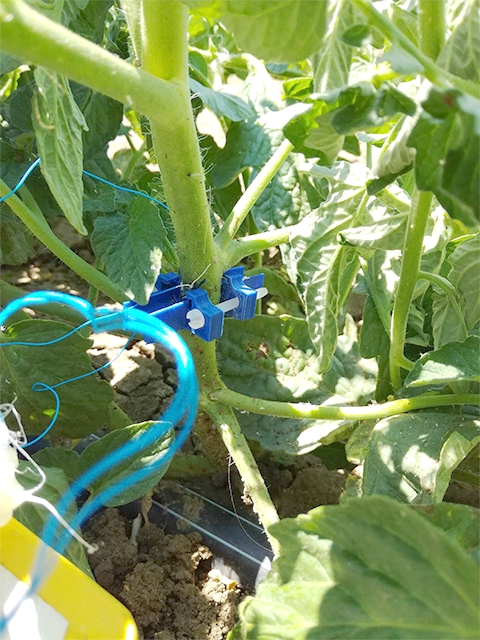 To reduce water consumption and improve the quality of agricultural production, Mutti, one of Europe's leading companies in the tomato products market, and the National Research Council's Institute of Materials for Electronics and Magnetism (IMEM-CNR), have launched the first monitoring experiment using Bioristor on tomato plants.
The Bioristor, an innovative sensor applied directly to the stem, is capable of monitoring plant health in real time, analyzing the fundamental physiological processes involved, and communicating directly with growers, thanks to photovoltaic energy and the IoT connection system.
"Global agriculture, responsible for 70% of the world's freshwater consumption, is facing increasingly pressing challenges as a result of ongoing climate change. With temperatures gradually rising and rainfall decreasing, it is crucial to adopt new technologies to deal with the water emergency," said Massimo Perboni, Mutti's Agricultural Service Manager.
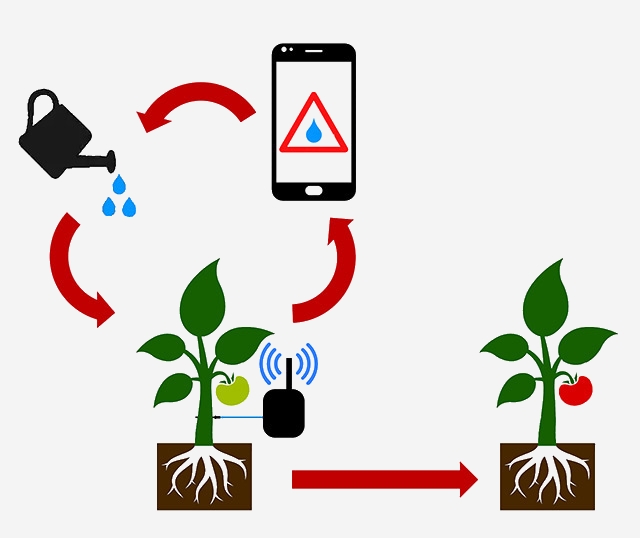 "The Bioristor offers an unprecedented opportunity in our sector to monitor and optimize the use of water on crops, helping to guarantee the quality of products in an ever more efficient and responsible way."
The Bioristor has been successfully used to monitor kiwifruit, grapevines and apple trees during the production season and, for the first time in 2023, was used in a trial run jointly by IMEM-CNR and Mutti. This experiment, carried out on the Stuard farm near Parma, demonstrated the effectiveness of Bioristor in optimizing water use under extreme drought conditions. Thanks to an artificial intelligence-based irrigation protocol developed by IMEM-CNR, it was possible to achieve water savings of 45%, compared with conventional methods. Despite a slight drop in gross field yield, there was a significant increase in Brix (the soluble part of the tomato and an indicator of its quality) and in product conformity.
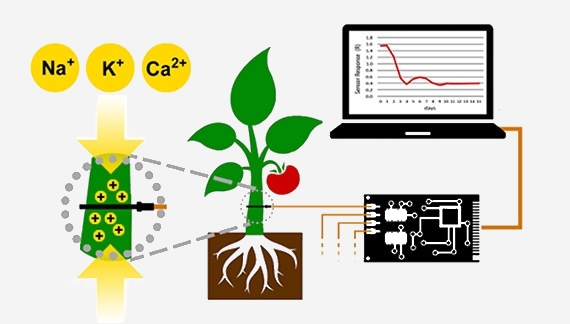 "The experiment conducted by Mutti and IMEM-CNR highlights the technology's potential to improve the efficient use of agricultural resources, such as water, and increase the sustainability of the sector," said Michela Janni, researcher at IMEM-CNR. "The Bioristor, combined with the artificial intelligence algorithm, represents a step forward in precision agriculture, maximizing irrigation efficiency and achieving high-quality production even under unfavorable conditions."
From next season onwards, the aim will be to further refine the tools and algorithm to ensure optimal management of water resources on farms, and then to extend their use on a large scale, helping to promote greater environmental and economic sustainability in the agricultural sector.
Some complementary data
Infographic:
https://www.imem.cnr.it/sites/default/files/2020-11/Infografic_bioristor_LAST.pdf
Sources: corriereortofrutticolo.it, imem.cnr.it