News
India: Punjab’s ketchup supply challenge
Despite Punjab's rich agricultural potential, its ketchup factories face a paradox: abundant tomatoes, yet scarce processed puree. Under-equipped facilities and a narrow harvest window hinder production, creating a significant supply chain challenge.
Despite its favourable agricultural potential, Punjab struggles to supply tomatoes to its own ketchup factories, including the Kissan factory of Hindustan Unilever Limited (HUL). This paradoxical situation is mainly due to challenges in processing tomatoes into puree, a basic product for ketchup manufacturing.
The problem is not the quantity or variety of tomatoes grown in Punjab. The region has sufficient land and varieties suitable for processing, such as the ‘Punjab Ratta’ developed by the Punjab Agricultural University (PAU). However, local processing facilities, mainly those of the Punjab Agro Industries Corporation Limited (PAIC), are under-equipped and do not have the capacity to handle the large volumes required by ketchup factories.
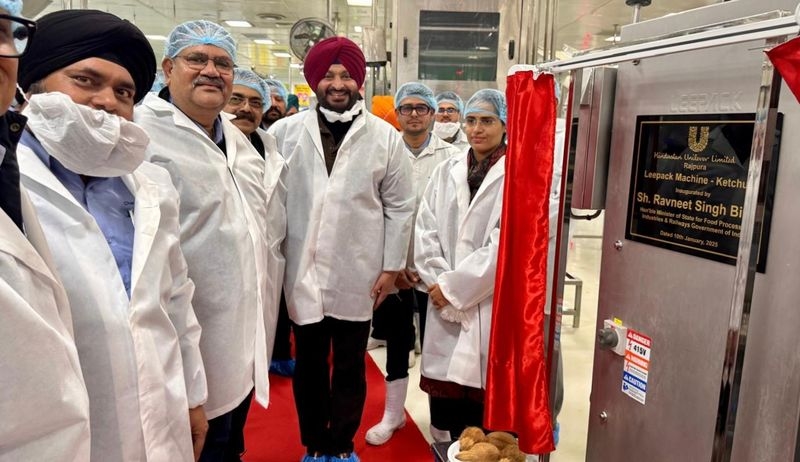 Union Minister Ravneet Singh Bittu visits Hindustan Unilever Limited plant in Rajpura
Several factors contribute to this situation. First, the state’s processing capacity is inadequate: ketchup factories are focusing on sourcing concentrated tomato puree, but primary processing units in Punjab are unable to meet this demand. The two units of the Punjab Agro Industries Corporation Limited at Hoshiarpur and Abohar require major technical upgrades. The industries are also faced with an extremely limited seasonal harvest window: the optimum period for harvesting processing-quality tomatoes is very short in Punjab, around 35-40 days, due to climatic conditions. According to Dr. Salesh Kumar Jindal, a principal vegetable breeder at the Department of Vegetable Sciences, Punjab Agricultural University, “tomatoes are grown thrice a year in Punjab. The best tomato crop is harvested in the third cycle starting with transplanting in February and the fruit is available from mid-May to mid-June. Almost 70 per cent of tomatoes in Punjab are grown in this period when the total soluble solids and colour value are perfect for processing. But the fruit availability window is only 35-40 days due to environmental and weather conditions”.
Ketchup production requires products that meet strict quality requirements: the tomato concentrates used must meet high standards, including a soluble solids content of 28 to 30 degrees Brix and a dark red colour (1.8 to 2.2). Only certain varieties and growing conditions allow these criteria to be met, in quantities that are notoriously insufficient at the moment. In addition to these difficulties in supplying raw materials, there are logistical and management problems; producers complain about the poor management of production programmes, inadequate facilities and late payments in the units of the Punjab Agro Industries Corporation Limited. They prefer to sell their tomatoes to private companies that offer better conditions. According to Dr. Jindal, several other private companies manufacturing ketchup in the state such as Cremica, Del Monte, Harraj Agro, TOPS, etc., procure tomatoes as per their requirement but only the government-owned Punjab Agro could manage the bulk processing in the state.
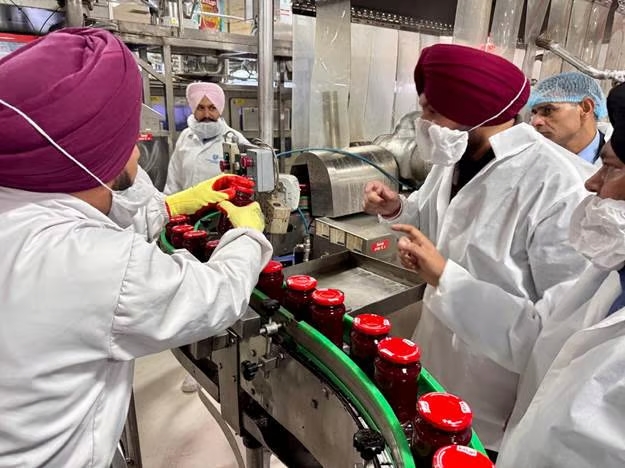 The Punjab government and PAIC are working to modernise processing facilities and improve supply chain management. The aim is to increase local production of tomato paste and reduce dependence on other states. Amritsar, Kapurthala, Jalandhar, Tarn Taran, Faridkot and Sangrur districts produce tomatoes in the ideal window, whereas the August cycle is mostly followed in Patiala and Fatehgarh Sahib, which is not suitable for processing, Dr. Jindal said.
“We have 10,700 hectares under tomato cultivation. To make 10,000 t paste, 70,000 tons of raw tomatoes are required which can be produced in 2,000-2,500 hectares. So, the area is also not an issue,” he said.
Sources: indianexpress.com, tribuneindia.com, foodtechbiz.com, theweek.in, goodreturns.in