News
Harvest forecasts stand at 227,000 mT
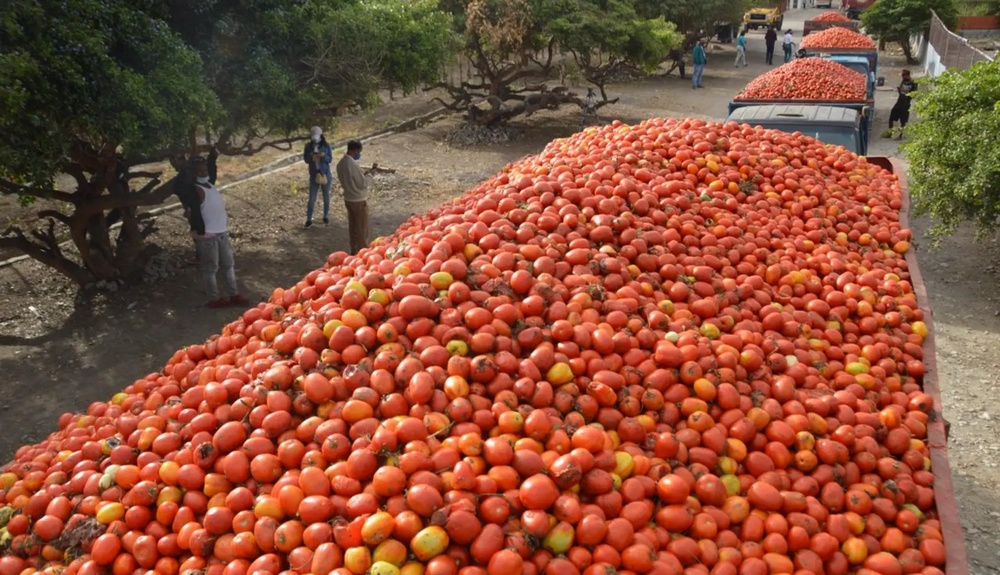
Tomato growers in the Dominican Republic started the harvest on 11 February, with the production target for this year fixed at 5 million Dominican quintals (227,000 metric tonnes), which is a 25% increase compared to the results of the 2020 season (181,000 mT).
According to Félix García Castellano, President of Industrias Linda and Afconagro (Asociación de Fabricantes de Conservas del Agro), processing tomatoes “cover some 70,000 tareas (4,400 ha), which are cultivated by 7,000 growers. Average yields are expected at approximately 51 mT/ha. Industry stakeholders altogether, including the companies that provide transport, cultivation services, plant health inputs, packaging and other supplies, are responsible for the livelihood of approximately 40,000 families.”
 Ahead of the harvest, the Minister of agriculture Limber Cruz said in a conference that was organized to present the agro-industrial program with attending government representatives, as well as representatives from the world of business and from other companies of the sector (Industrias Victorina), declared that the government is putting together a plan to promote tomato cultivation throughout the country. The Minister mentioned the purchase of equipment aimed at installing wells in order to ensure the necessary water supply for irrigation.
In the context of demands by representatives of the agricultural sectors to increase production capacity, Fernando Durán, administrator of the Banco Agrícola, stated that interest-free loans had been granted, for a total amount of 378 million Dominican pesos (EUR 5.4 million, USD 6.5 million), which were distributed among 916 small-holding growers who signed a contract to sell their processing tomato crops to the companies Peravia, Linda and Victorina, which are the main tomato processors of the country.
Durán also mentioned the focus of the Banco Agricola on promoting contractual agriculture, which guarantees secure markets for growers who need outlets for their crops, contributes to the transfer of technologies and encourages the implementation of best agricultural practices among the smaller growers. “Our aim is that all those who want to invest in this industry can be assured that it will be profitable,” he declared, after pointing out the value to be found in promoting the use of new technologies in running smaller farms. Durán also reminded listeners that “growing tomatoes represents a real challenge in this country, due to weather conditions and to the presence of insects and pests that affect the crops, a situation that makes it essential to collaborate with authorities.”
As for infrastructures, the Minister Limber Cruz mentioned that “300 km of local roads are currently being repaired in order to facilitate transport of products throughout the country.”

A four-year agreement has also recently been concluded between industrial processors and tomato growers in order to set up a joint strategy for planning and investments, which will be linked to planted surfaces so as to guarantee production and fix fair prices for each quintal of product. The agreement includes the possibility of adjusting prices every month of July, as well as the requirement for planting programs to comply with sanitary protocols determined by the Ministry of agriculture.
In the context of this agreement, with the approval of growers and landowners, cultivation will also be rotated between processing tomatoes and other crops like maize, sorghum, and other productions, in order to break the biological cycles of whitefly, viruses and fungal infections, in coordination with agricultural advisors, whose job it will be to determine feasibility.
In the context of this agreement, with the approval of growers and landowners, cultivation will also be rotated between processing tomatoes and other crops like maize, sorghum, and other productions, in order to break the biological cycles of whitefly, viruses and fungal infections, in coordination with agricultural advisors, whose job it will be to determine feasibility.
Some complementary data
*1 Dominican quintal = 45.359 kg
1 tarea = 0.063 hectare
Source: eldia.com.do, almomento.net, acento.com.do