News
CTAEX: lower salt content and better nutritional quality
Results presented during the 15th ISHS Symposium (Greece, June 2018)
Reduced consumption of salt is associated with a reduced risk of cardiovascular diseases and is one of the most viable and cost-effective measures for improving public health on a global scale. Considerable research has been undertaken in the search for a viable alternative to common salt in the diet, without compromising organoleptic qualities.
A team of researchers at the CTAEX (Technological Agro-Food Center of Extremadura) has been working on reducing the salt content in a number of tomato products by introducing salt water into the recipe, which improves the nutritional quality of the final product. Sea water is one potential alternative, as, in comparison to common salt which is 100% sodium chloride, seawater contains only 86% of the substance, with the remaining 14% made up of a comprehensive and balanced range of minerals and trace elements. For this reason, a range of new tomato products have been developed, which deliver reduced sodium levels and higher nutritional quality.
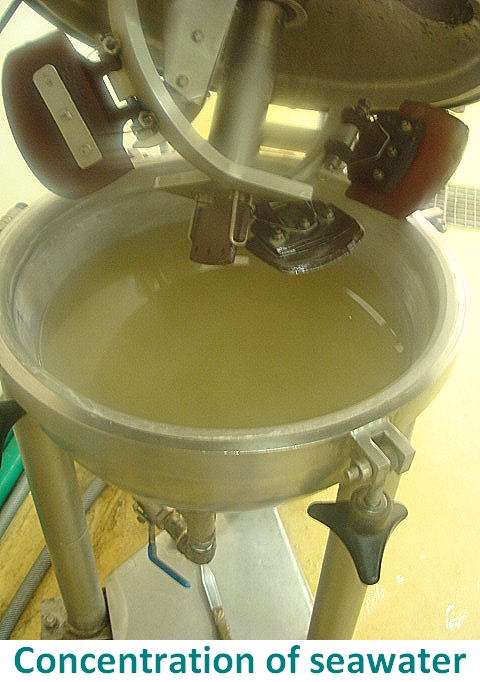 The R&D head of CTAEX, María José Riballo, explains that this research has enabled a 33% decrease of the sodium chloride content of traditional tomato frito sauce. The project used products made by the Tomalia Company, and has been carried out over the past two years, but should end next September. After that date and following the results of market surveys, Tomalia may launch the product on the market.
Adding seawater, which is brought in from the Mediterranean to Extremadura by an Alicante company, involves a fairly simple process, according to María José Riballo. Several different tests have helped determine the required concentration and exact proportions of seawater and salt, while demonstrating that no pretreatment is required for this adjustment. Although the cost linked to adding seawater is slightly higher than that of ordinary water, the extra cost remains negligible for this economical tomato product.
 In addition, this new approach presents advantages for human health, in so far as the sodium chloride of common salt is generally used in higher concentrations than those proposed by the CTAEX project, and is a common cause of high blood pressure. Furthermore, seawater provides a number of minerals and trace elements that are potentially beneficial for human health.
Source: finanzas.com
Complementary data: