News
Information received from companies and associations around the world
"…some words of positiveness and awareness"
Today, March 25, 2020, the Coronavirus pandemic continues to spread. Many countries, most recently the United Kingdom and several US states, have decreed the containment of their populations. Everywhere, however, vital industries continue to work and strive to guarantee continuity of supplies, especially food, on a regular and health-safe basis. Our industry is participating in this global effort; for its part, considering that information can contribute to responsible management of this crisis situation, Tomato News continues to publish the testimonies received from companies and professional structures around the world.
This article will be updated as information is sent to us spontaneously by our contacts.
AMITOM, March 24, 2020
"…some words of positiveness and awareness"
 “Dear Colleagues, Suppliers, Customers, Technical teams and Friends,
It has taken me a while to say something because I have been trying to process what is happening around us. It feels surreal. We don’t know what tomorrow brings but we take some solace in knowing we are all in this together.
I do believe that there’s a reason for everything, although it might be impossible to see right now. We have to.
Unfortunately, my words can’t be more than solidarity and support to all the countries suffering with so many human losses.
There are dramatic cases as the ones of Italy or Spain which sadly will be occurring all over the world and in so many more countries where our Tomato Industry is.
However, I would also want to bring to you some words of positiveness and awareness.
First, positiveness because I believe we will recover. We will all heal. Some of the injuries will be deep, others superficial and many will stay for long. We will certainly do everything to continue worldwide with our tomato production in the best possible way. It will be crucial to try to continue to support our chain of business: growers, industry, suppliers, technicians, traders, brokers, customers, consumers and so many more that are part of this worldwide business.
Secondly, awareness. We will have a difficult economic period. There’s no doubt. The impact in this Industry in the entire supply chain will be hard. Our customers will also have to be prepared to be looking to this reality as it will be step by step changing and adapting.
Finally, we will be alright. Independently of having, or not, religious convictions, in moments like the ones we are going through, we all find our way of Faith. I have Faith that we will make it. We will have a more troubled and difficult season, but we will still be here.
I sincerely wish and hope to all of us that this tragic period goes away quickly. We will soon be travelling, meeting, discussing, arguing, and in the end of the day laughing gathering together around a nice meal with an even better glass of wine!
Be safe, think positive, be resilient. “
Sónia Neves da Silva
President of Amitom
ANICAV, Italy, March 19, 2020
Covid-19: “Additional certifications are absolutely unnecessary”
 “Processed tomato remains a safe product and a symbol of Made in Italy”
Covid-19: “Additional certifications are absolutely unnecessary”
 “Processed tomato remains a safe product and a symbol of Made in Italy”
The ANICAV (National Association of Processors of Vegetables and Canned Foods) represents over 100 member companies. This makes it the largest association representing tomato processing companies in the world by number of members and quantity of processed products. The Association has responded to requests from abroad for extra quality certifications for tomatoes processed in these days of national emergency due to Coronavirus.
Giovanni De Angelis, General Manager of the ANICAV, has stated: “In these days, [Italian tomato processing companies] have received requests for additional certifications from foreign customers regarding the safety and health standards of our products, in particular with regards to the risk of infection with Covid-19. Additional certifications are to be considered absolutely useless, as the processed tomato is a perfectly safe product thanks to the particular industrial processing procedures and to the techniques used.”
De Angelis continued: “In addition, the entire process of processing the raw material – from harvest to conditioning – is controlled and guaranteed according to hygiene and health protocols, with personnel subjected to strict safety standards. Processing takes place with the aid of high temperatures, in sanitized working environments and with the use of sterilized machinery. Furthermore, there are no dangers of contamination by the product which, being naturally acidic, creates conditions that are unfavourable to the proliferation of microorganisms. Finally, after being closed, each box is subjected to further sterilization with microbiological and enzymatic inactivation of the contents.”
De Angelis added that even the EFSA has declared that “there is no evidence that food is the likely source or route of transmission of the virus. Italian tomato represents excellence and has always been considered a symbol of Made in Italy around the world, a product whose goodness and wholesomeness is universally recognized.”
HANSIN, China, March 23, 2020
“Dear all customers,
The virus is spreading, but the confidence should never go down. The victory is ahead and may God bless all countries be free from the temporary difficulties.
 Hansin as a leading manufacturer of aseptic liquid packaging always takes responsibility. As we all know, aseptic packaging is very crucial in food processing which makes this a mission that we have to be back to our position 100% at the first time.
Early February, with good preparation, Hansin was qualified to re-start the production, after the Chinese New Year holiday all people started to come back to the office preparing the orders from all over the world. In the same time, we are strictly implementing the sanitizing policies published by government.
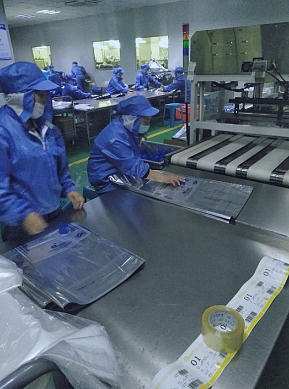 Though the virus is practically disappeared in all China, we keep the high safety rules. Body temperature of all people who go into the plant will be check and all electric motorbikes or other vehicles will be sanitized as well when it goes into the plant. In the canteen, we have body temperature check before we enter and, we keep a safe distance for the meal. The offices are sanitized in the morning and in the evening and all workers keep wearing mask when we are with other people.
With serious and efficient methods, we declare zero contamination case in our company. And under strong and workable control by government, there is no any confirmed case in the city we located in.
Now all the production is running and with our GMP100000 clean room, we are able to keep providing high-quality product and our fast-response service.
We believe that all countries will recover soon.
Hansin wishes you all a healthy and wealthy life.
We will always stand with you.”
Croatia, March 18, 2020
Coronavirus: the issue of self-sufficiency raised by farmers
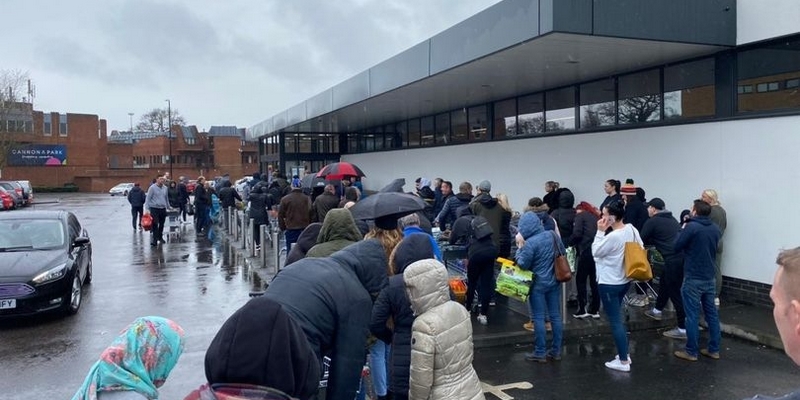
 According to Croatian press, the issue of self-sufficiency in production is increasingly being raised in Croatia, especially when it comes to food and medicines; and while Croatia's residents are stepping up food their game in purchasing bulk supplies and standing in line in stores as coronavirus tightens its grip, the Croatian Government is making decisions on limiting the prices of food, hygiene supplies and protective equipment.
Farmers' associations have often raised this issue in the past, pointing out that domestic production in Croatia is falling year by year. It turns out that Croatia is far more than sufficient (+117.8%) when it comes to the production of cereals, but self-sufficiency in terms of vegetable production, at least back in 2017, amounted to Croatia's needs at the level of a mere 61.9%, but not one type of vegetable is doing well enough (potato 70%, cabbage 86%, onions and garlic 43%, fruit 40% of the domestic market's needs).
Podravka CEO Marin Pucar says that the market works excellently when it comes to profit, and current crisis “is perhaps an opportunity to redefine strategic production". "[…]I'm not saying that production can happen without any cost-effectiveness criteria, but the question is whether Podravka would have the production of processed tomatoes it boasts today had that been decided solely on the basis of profit. If Podravka had been taken over by a large international corporation, it might be said that only Vegeta's production of ready-made soups, medicines and baby food would be profitable,'' says Pucar, whose company is constantly reassuring the public that there is enough food and medicine for all.
''I don't know how many people know that in tomato processing, we cover up to 30% of the [Croatian] market and that we're the only one doing that in Croatia. This isn't particularly profitable production, since we're paying higher prices to the subcontractors in Istria than we are to those in Italy, but we've not stopped producing,'' Pucar notes.
Asked if the solution might be that consumers prefer to opt for Croatian production, Pucar said pointed out that this is a situation where one really has to discuss self-sufficiency of strategic products.
_ _ _ _ _ _ _ _ _ _ _ _ _ _ _ _ _ _ _ _ _ _ _ _
Sources: AMITOM, ANICAV, freshplaza.it, Hansin, total-croatia-news.com