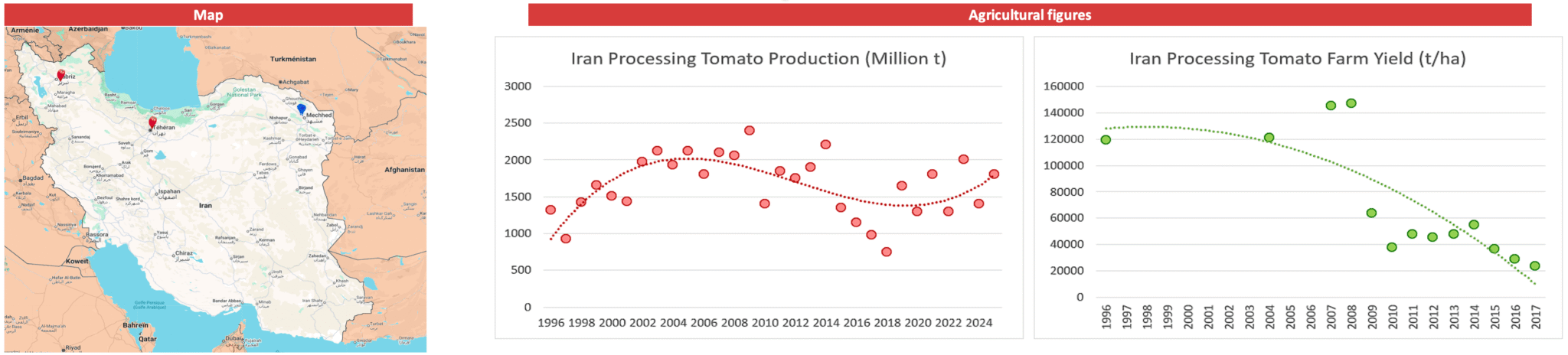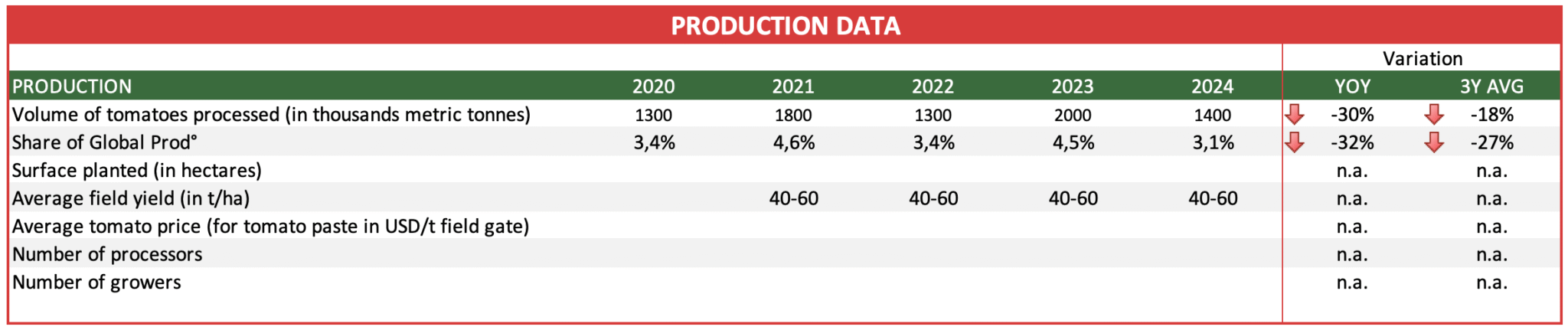
It is estimated that an average of 1.5 million tonnes of tomatoes were processed in Iran over the last five years, out of a total volume of about 7 million tonnes of tomatoes produced, although it is difficult to have a precise umber to to the absence of official data.
In Iran, tomatoes can be grown in open fields all the year round from north to south of the country thanks to the range of climate, although the winter crop is not suitable to produce paste and peeled tomatoes because of its poor colour. Summer crops benefit from ideal climate for tomato cultivation with full sunshine for the right number of days, and suitable differences between daytime temperature and night-time temperature produce tomatoes that are good in colour, which results in good colour quality paste. Tomatoes for processing are mainly cultivated in the centre-north and northern provinces during the summer season while in the south tomatoes are mainly grown for the fresh market mainly throughout the winter season, and in the central provinces where harvesting starts in March, small volumes go to processing. Tomatoes are mainly grown on small farms (2-5 hectares) employing family labour and are mostly harvested by hand and with no contracts with processors. Water is not plentiful but was not expensive in relation to other factors in previous years, and the farms were irrigated by furrows, but recently, subsidy payment for energy carriers stopped, so the farmers are tending to install drip irrigation which enable to get yields of 60 tonnes per hectare compare with 40 tonnes with furrow irrigation farms.
There are approximately 140 tomato processing factories, with a nominal capacity of 600 000 tonnes of paste per year, but a dozen or so large factories equipped with modern and high performance technology process about 60% of the total crop.
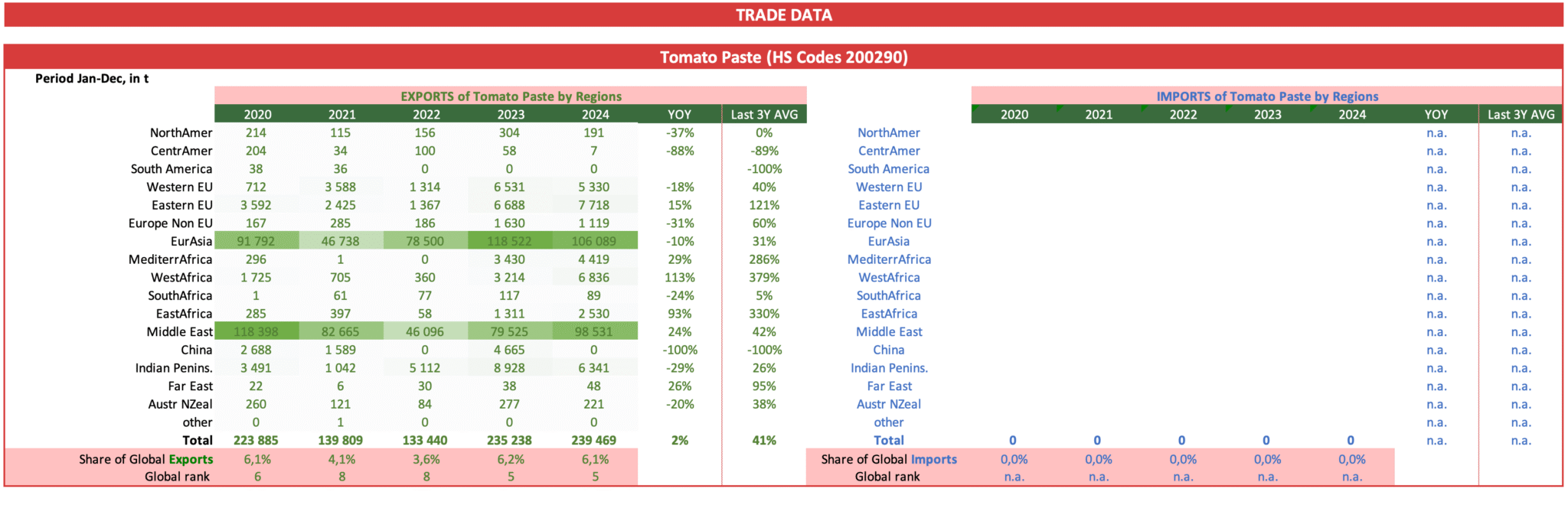
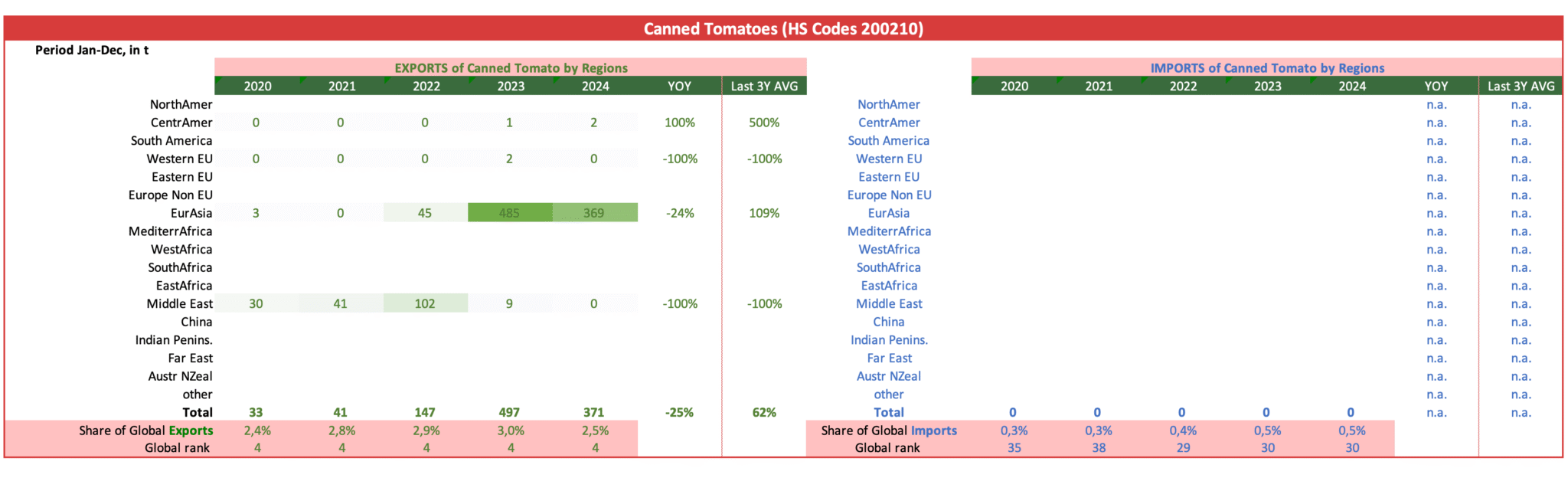
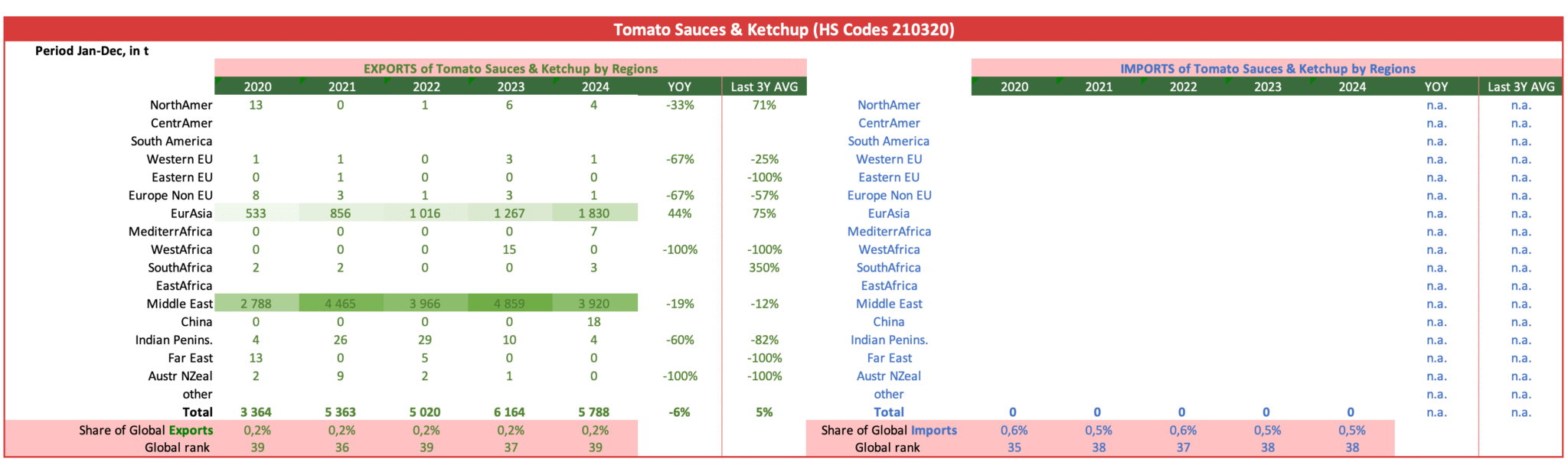
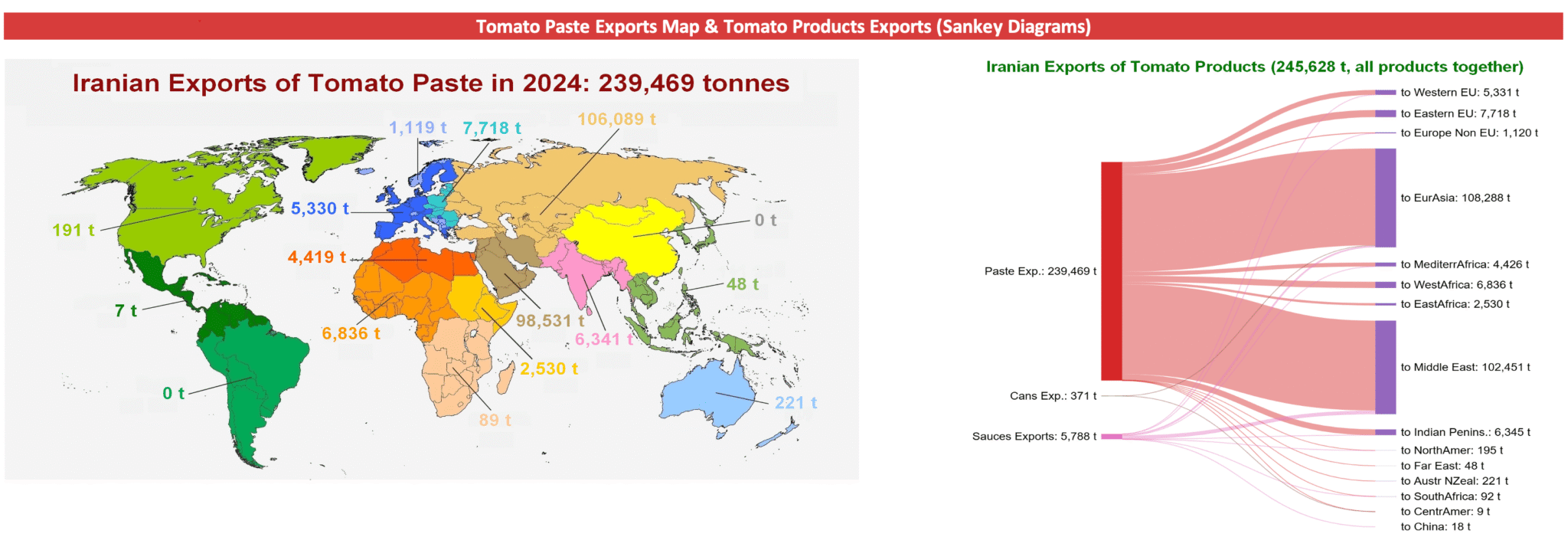
Tomatoes, both fresh and processed are an essential item in the Iranian diet and the country is one of the biggest consumers in the world. Processed tomatoes are mainly bought as tomato paste packed in 850 g cans. Smaller volumes are sold as ketchup, tomato based sauces or ready meals. Iran’s factories meet the local demand of paste estimated at 350 000 tonnes annually, but a proportion of the production is exported, mainly to neighbouring countries in the middle East.
The tomato processing industry of Iran is represented within AMITOM and WPTC by tomato processor Ilkin.