News
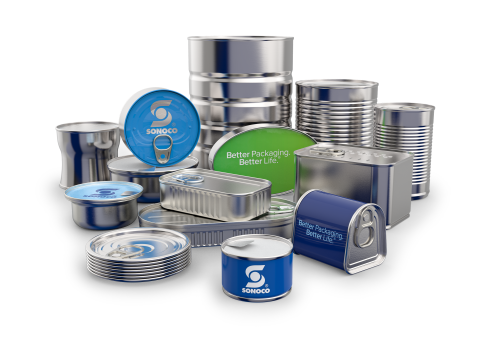
We recently had a conversation with SONOCO, a leading supplier of metal packaging for industrial tomatoes. This discussion offers insights into their market position, the advantages of metal cans in the sector, and their views on market evolution, sustainability, and regulatory impacts.
What market share do you have – in industrial tomatoes specifically – compared with other suppliers? SONOCO is the leader, but do you have many competitors and which ones?
We don’t disclose our specific market shares by segment, but we can confirm that we are one of the leading players in metal packaging for tinned tomatoes in Europe. Our customers include some of the biggest players in the sector, which testifies to the trust placed in the reliability, food safety and durability of our solutions. In terms of consumption, canned tomatoes represent a significant share of the market, complementing fresh and frozen versions. It’s worth noting that cans have a 100% penetration rate in French households – in other words, everyone has at least one can in their kitchen. Its main advantage lies in its practicality: it’s available all year round, with no need for refrigeration throughout the supply chain and right up to the consumer’s doorstep, enabling out-of-season consumption while avoiding food waste. They are canned just a few hours or days after harvest, preserving all their nutrients. We operate in a competitive market with other packaging suppliers, but our know-how, capacity for innovation and local industrial presence make all the difference to our customers.
Who are your customers for industrial tomatoes?
We work with the main players in tomato processing, notably for products such as peeled and crushed tomatoes, ready-made sauces and concentrates. Our packaging is used for brands in supermarkets, foodservice and B2B. Italy, Europe’s leading tomato processor, is a key market for us – as is Spain – where we manufacture dedicated formats in plants located right next to our customers.
Do you know the proportion of cans versus other packaging (glass, bags, cartons, etc.) in the industrial tomato market? How is the market evolving? Have there been any major changes since covid? Is there an erosion of the market with the new types of packaging, Recart etc?
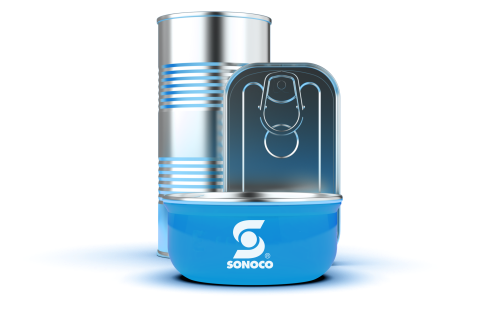
Metal cans are still in the majority, especially for peeled, crushed or concentrated tomatoes, because of their robustness, long shelf-life without refrigeration, and infinite recyclability without loss of quality.
Glass, combined with metal lids, is also present, notably for premium ready-to-use sauces.
Flexible pouches or carton packs are still very much in the minority (15% for cartons, 0% for pouches in Europe), posing challenges in terms of recyclability and lacking practicality (generally not reclosable, impossible to empty completely).
From a logistical point of view, metal cans are stackable, rigid and crush-resistant, making them an ally for logisticians, distributors and consumers who have less and less storage space. Metal and glass packaging remain the benchmark choice for industrial tomatoes (75%+ for metal in Europe), combining food safety, preservation of product qualities and environmental performance in a circular economy model.
How do you see the impact of Trump’s tariffs on the market?
Volumes destined for the United States mainly concern products with a high-end positioning. In this segment, quality and reputation take precedence over price, which reduces sensitivity to the cost of metal. The impact on the industry therefore remains marginal.
Where do you source your raw materials?
In Europe, our supply chain is deeply rooted in the local environment. We mainly source from European steel mills, often located less than 200 km from our plants. And our customers themselves are located at similar distances. This proximity model considerably reduces the carbon footprint associated with transport and strengthens the resilience of our logistics.
In terms of sustainability: is there much recycling of cans? Do you use recycled cans/metal to make new cans or not at all?
Absolutely. Metal cans are the champions of recycling. In Europe, over 80% of steel cans are recycled, making it the most recycled packaging material. Steel is a “permanent” material: it can be recycled ad infinitum with no loss of quality.
Recycled metal returns directly to the steel mills, where it is remelted without being forced into a product loop like plastic but can be used to create a material loop and manufacture new steel coils, which are then used to produce new cans as well as trains, steel for construction, automobiles, wind turbines and so on. It’s a real virtuous circle, and yes, steel today already contains a significant proportion of recycled material – 67% in Europe. All the steel collected is effectively recycled, it’s easy to collect (with simple magnets) and highly valuable, with a host of possible applications. But this circularity is nothing new: since the dawn of time, people have been melting steel to reuse the material. In fact, 75% of the metal manufactured since man first used it is still in circulation and in use today.
We invite you to read our ESG report in the Environment category, where you’ll find a wealth of data on the subject. https://heyzine.com/flip-book/bfe4c39954.html
Do you follow the evolution and price levels of raw materials (flat steel, hot roll coiled) and finished cans (by type (1/4, 1/2, 4/4, 5/1, etc. and other formats); and according to the alloys used?
Of course, we keep a close eye on raw material prices, especially steel, which accounts for a significant proportion of the cost of metal packaging. That said, prices vary according to many factors: each steel supplier has its own pricing levels, influenced by its investments, innovation, operating efficiency, energy mix and logistics.
As for finished cans, their price depends not only on type and format, but also on thickness, innovation, equipment efficiency, quality and service levels, etc. It’s therefore a complex market, where direct comparisons can be complicated without taking all these data into account.
What impact do you expect PPWR to have on your Group and on the canned tomato market?
PPWR does not represent a constraint for us, quite the contrary. We’re already on track to meet our 2030 targets: the recycling rate for packaging steel in Europe is now 80.5%, exceeding the 80% target. For aluminum, we are also ahead of expectations, with a rate of 76.1% against a target of 60%.
So our customers can rest easy: choosing metal means anticipating regulations. For the tomato canning market, this reinforces the relevance of choosing metal packaging, which combines circularity, food safety and compliance with long-term European requirements.
Some useful links:
https://www.steelforpackagingeurope.eu/
https://flateurope.arcelormittal.com/updatedec17/section3.html

Our special thanks to
Abdel Kader Bouaza, Directeur Commercial Ouest Europe, Sonoco Metal Packaging EMEA
and
Isabelle Le Graet, Corporate Communication & Customer Experience Manager @ SONOCO,
for providing us with this information!