News
Persistent drought dominates the Western landscape
According to the outlook published in mid-October by the National Oceanic and Atmospheric Administration’s Climate Prediction Center (NOAA), the La Niña climate pattern is expected to worsen existing drought conditions in California in the coming months. The forecast covers the period between December 2020 and February 2021.
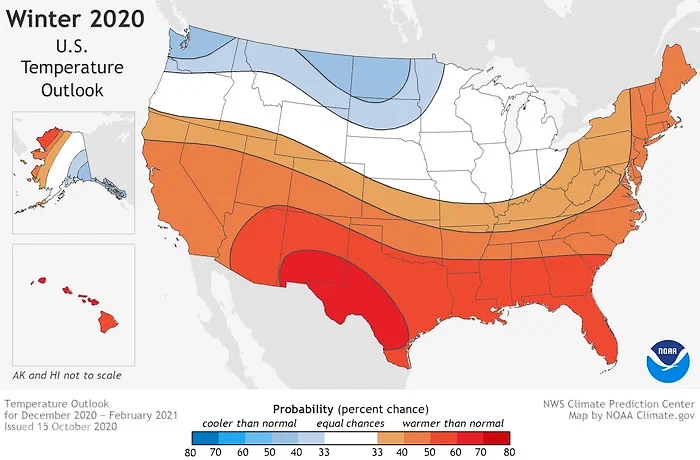
The U.S. Winter Outlook 2020-2021 map for temperature shows above-average temperatures are likely in the South and below-average temperatures likely in parts of the North.
 (NOAA Climate.gov, using NWS CPC data)
La Niña refers to the cooling of ocean surface temperatures in the Pacific Ocean near the equator that affects wind patterns and weather. It means that most of California has a good chance of warmer-than-normal winter temperatures, according to the forecast. This is coupled with a greater chance of drier conditions.
The 2020-2021 U.S. Winter Outlook map for precipitation shows wetter-than-average weather is most likely across the Northern Tier of the U.S. and drier-than-average weather is favored across the South.
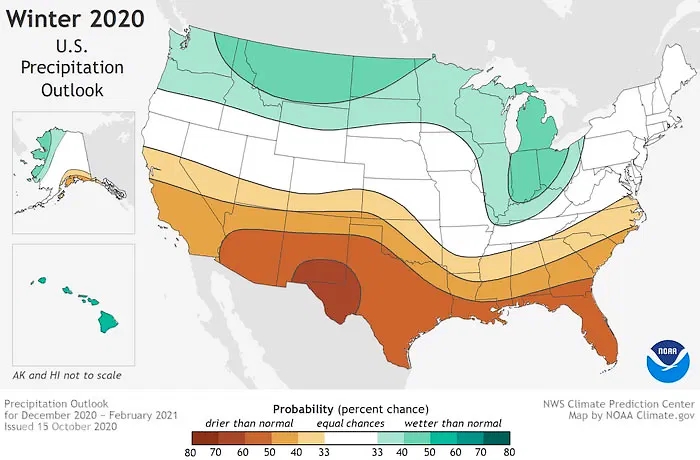 These conditions would worsen ongoing drought in the state in the near term. In fact, drought is greatly affecting large areas in the West as a result of the weak Southwest summer monsoon season and temperatures that were near record highs, according to the report. The brutal wildfire season in the West also is a byproduct of this.
In a recent comment, the Washington Post explained that “the largest and most intense drought in years is engulfing the West and threatens to grow larger and more severe in the coming months.
The drought has already been a major contributor to record wildfire activity in California and Colorado. Its continuation could also deplete rivers, stifle crops and eventually drain water supplies in some Western states”.
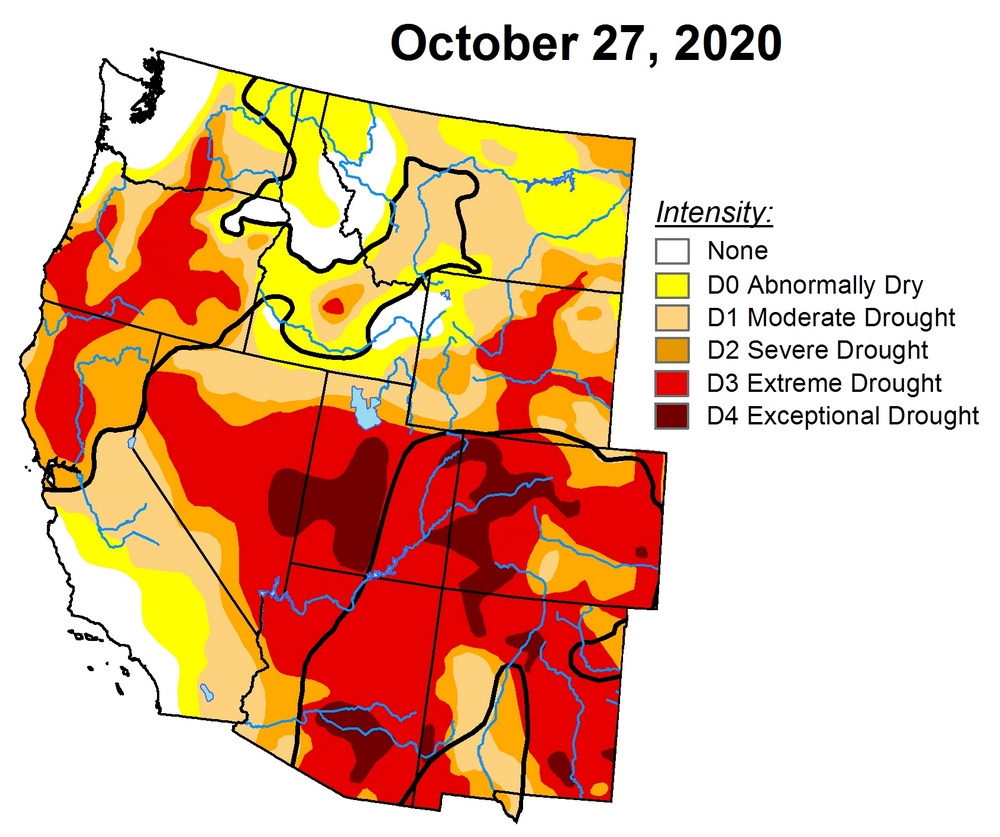 Nationwide, drought has expanded to its greatest areal coverage since 2013; 72.5 million people are in areas affected by drought. More than one-third of the West is in “extreme” or “exceptional” drought, the two most severe categories, according to the federal government’s U.S. Drought Monitor.
In recent months, drought has surged to extreme levels along parts of the West Coast, including Northern California, much of Oregon and the Cascades in Washington. Soils have been sapped of moisture, with intense heat waves drying out vegetation even further. This has led to rampant and sometimes explosive wildfire growth. Elevated temperatures have further helped to dry out the soil, exacerbating the drought and making fire weather conditions even more hazardous. California, for example, had its warmest August on record, and a severe heat wave in early September led to a deadly spate of wildfires.
2020 has been a particularly bad year for wildfires, obliterating records in California with more than 4.1 million acres (1.6 million ha) scorched. This is more than twice the acreage burned during the previous record wildfire season.
Some complementary data
Further details are available at:
https://droughtmonitor.unl.edu/
and
https://www.noaa.gov/media-release/us-winter-outlook-cooler-north-warmer-south-with-ongoing-la-nina
Video available at:
https://www.youtube.com/watch?v=Wd64xdXLccM&feature=emb_logo
Source: NOAA, Washington Post, mercurynews.com