News
Blossom-end rot-resistant mutations: advancements in tomato cultivation
Tomatoes are often at risk from blossom-end rot (BER), but a new study has found that a mutation discovered in the 1950s, adpressa, actually makes these mutated tomatoes resistant to the rot without substantially negatively impacting their growth,
Tomatoes are one of Europe's favourite fruits, and are involved in a wide range of meals from pizza and pasta to salad. Several advancements have introduced new insights into tomato cultivation.
The tomato mutation adpressa was discovered as early as the 1950s. However, it is only now that researchers, in a study published in the Journal of Experimental Botany, are discovering how its mutants are different from other tomatoes,
Adpressa means that tomatoes grow closer to the ground, as they cannot sense gravity. This is caused by a mutation in a gene that abolishes starch synthesis, which in turn causes major transcriptional and metabolic remodeling.
One of the major changes this provokes is the increase in soluble sugars during the fruit's growth, as well as enhancing the growth itself.
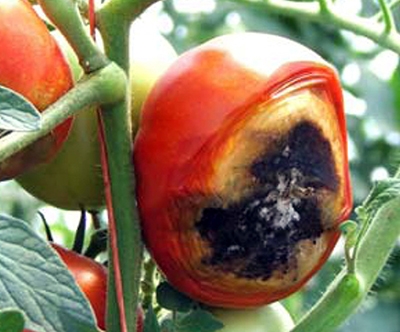 Another major benefit of the mutation is that it makes the tomato completely resistant to BER. BER is a rot caused by lack of calcium in the fruit, rather than any interference by pests. It is usually indicated by greenish brown or black blotches at the end of the fruit where the flower was, furthest from the plant (the 'blossom end').
"Our findings with the adpressa mutant are quite promising" said Phillipe Nicolas, one of the researchers.
"Contrary to what was previous/y thought, the lack of starch did not alter fruit development and ripening. In fact, adpressa fruits were slightly larger and accumulated more sugars during growth. The most remarkable discovery is the resistance to blossom-end rot. These findings open new avenues for improving fruit yield and quality, especially under stressful environmental conditions."
Some complementary data
Sourced From: Journal of Experimental Botany
'Starch deficiency in tomato causes transcriptional reprogramming that modulates fruit development, metabolism, and stress responses’
Authors: Philippe Nicolas, Richard J Pattison, Yi Zheng, Taly Lapidot-Cohen, Yariv Brotman, Sonia Osorio, Alisdair R Fernie, Zhangjun Fei, Carmen Catalá
Published on: 2 June 2023
DOI: https://doi.org/10.1093/jxb/erad212
Sources: foodnavigator.com, Journal of Experimental Botany