News
April: a wave of cold weather
April: a wave of cold weather
There have been two major items of news for our industry over the past month…
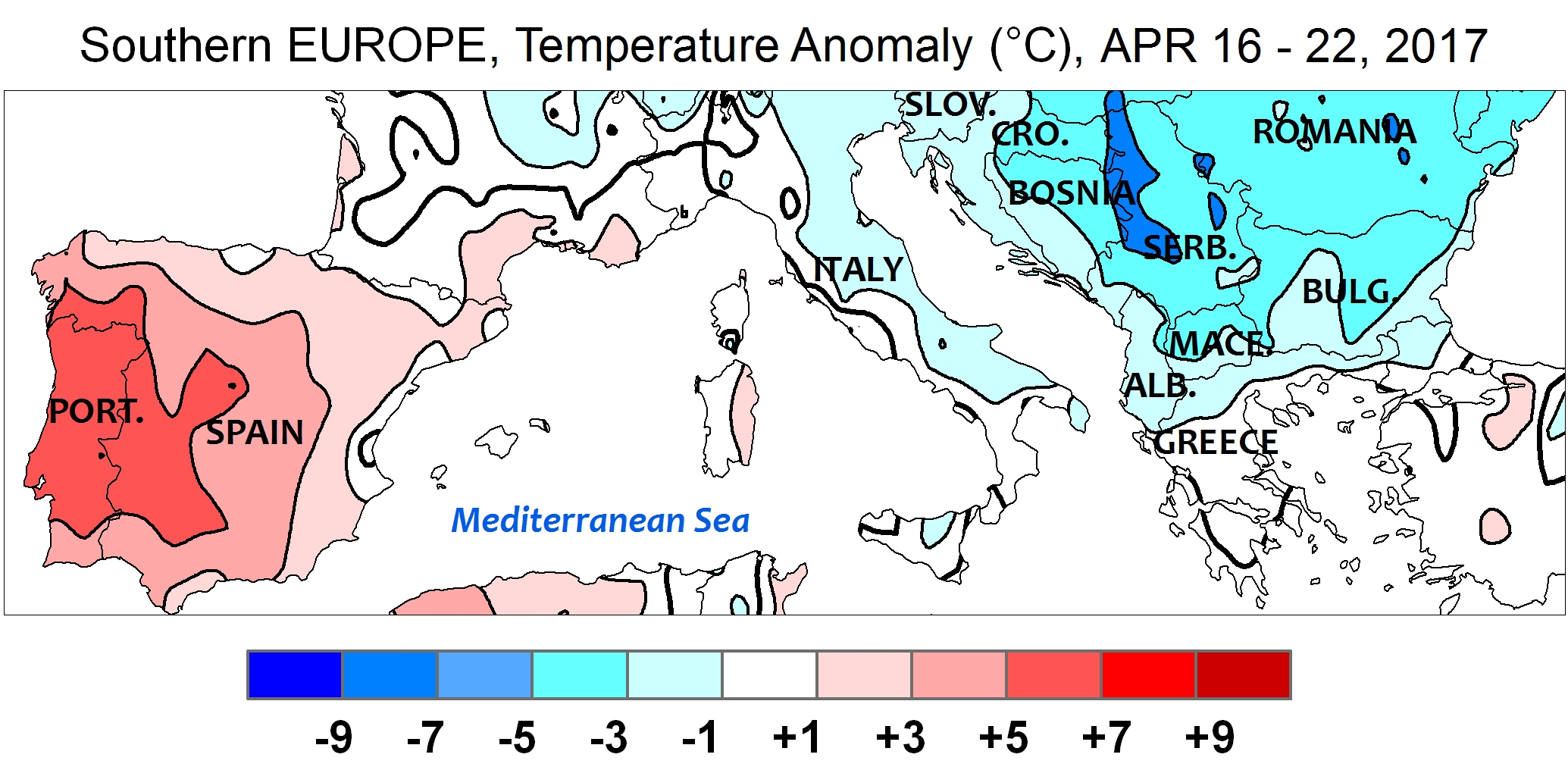
Around the Easter weekend, a wave of cold weather drifted in from Ukraine towards southwestern Europe, notably Italy, where it badly affected the development of plants. According to local operators, the negative temperatures mainly hit the orchards and vineyards, sometimes with devastating consequences. As for processing tomatoes, more than one third of the surfaces had already been planted and only 4 million plants, already in the ground (in weeks 14 and 15) or still in the nurseries, were damaged to a point that may result in a slight delay in development or extra costs for some fields. As things stand, this episode is unlikely to impact production volumes.
The second major event to have occurred in April was the unusually late conclusion of price negotiations for raw materials in the Californian industry. The length of these discussions, which have continued into early May for a number of companies, can be attributed to the difficulties in finding a consensus around the substantial drop in price requested by processors…
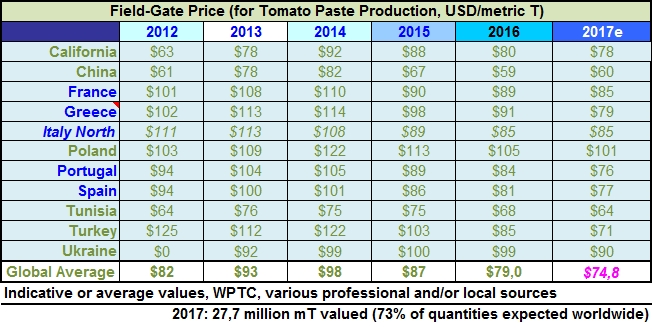
In the final count, Californian tomatoes will be negotiated – excluding late-season premiums – at around USD 70.5 /sT (between EUR 71 and 72 /mT depending on the currency exchange rate) this year. There is no doubt that this price level, even before it was officially published, exerted strong pressure on competing industries, particularly in Europe, during the process of deciding on this year's price for the season. The effects of this situation are being felt around the world, with a compression of about 5% of the average price for raw materials grown during the 2017 season (weighted estimation, for 73% of the planned volumes).