News
From 900 Field Photos to Offline AI Disease Detection
When we came across a recent scientific article on AI-driven crop disease detection, its potential for processing tomato growers was immediately clear. But we wanted to explore how these algorithmic breakthroughs actually translate to practical day-to-day farming.
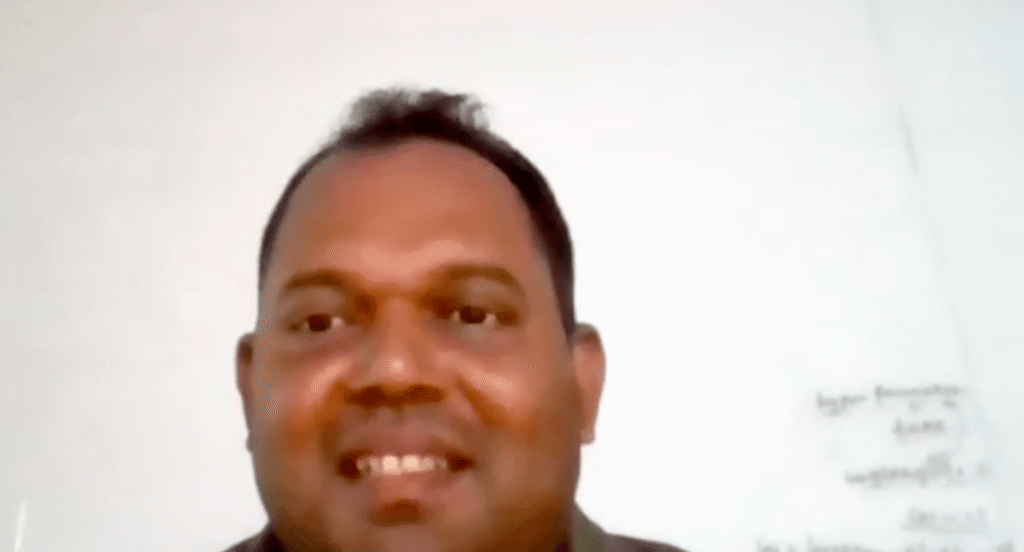
We sat down with computer scientist Dr. Thuseethan Selvarajah, Lecturer in Information Technology at Charles Darwin University (CDU), to talk about how his joint research team trained an artificial intelligence model to think like a seasoned plant pathologist, and why making it work offline is a total game-changer for field adoption.
The core spark behind the project came directly from discussions with regional growers. In vast agricultural regions across Australia—and similarly in many rural production zones worldwide—mobile internet reception in the field is often weak or completely absent. While many existing smart agriculture tools rely on cloud connectivity to analyze photo uploads, Dr. Selvarajah’s team set out to build lightweight deep learning models that could live directly on
a grower’s mobile phone or tablet. This enables instant in-field diagnosis without needing a single byte of cellular data.
Building a reliable field diagnostic tool required rethinking how training data is collected. Most historical datasets for plant disease recognition rely on clean photos taken in laboratory settings, where a plucked leaf is imaged against a pristine white backdrop. Real fields are far messier, full of harsh sunlight, shadows, mud, and tangled leaves. To tackle this, study lead author Romiyal George from the University of Peradeniya and the research team built the Sri
Lankan In-Field Tomato dataset. They gathered 890 raw in-field images, had them carefully annotated by three plant pathologists across healthy leaves and seven prevalent diseases, and then applied advanced augmentation techniques to expand the collection into 8,934 annotated field photos.
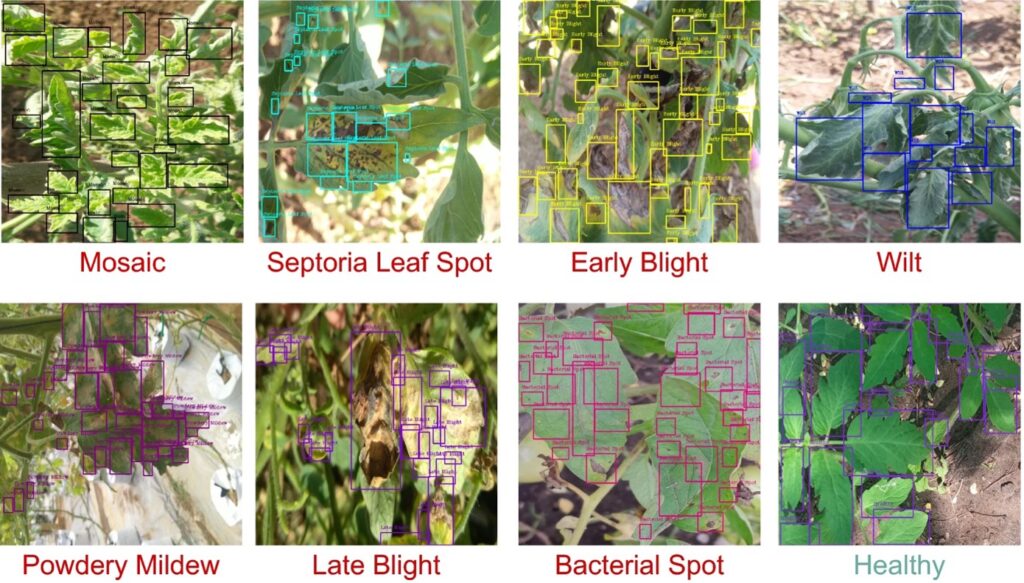
To ensure the app could run smoothly on basic mobile hardware without getting tripped up by background clutter, the researchers implemented a specialized algorithm called IR-CBAM. Instead of scanning every single pixel in a photograph equally, the model mimics a trained human eye. It learns to highlight crucial visual clues like specific discoloration, leaf edge anomalies, and textures, while automatically filtering out irrelevant noise like surrounding soil or overlapping healthy foliage. This targeted focus allowed the lightweight AI model to achieve over 99 percent accuracy on complex field photos, a level of precision previously only seen in controlled laboratory conditions.
The project has already moved into practical testing, with trial versions of the app handed over to growers who are providing direct feedback to refine the software further. Looking ahead, Dr. Selvarajah hopes to secure additional funding to broaden the disease catalog to include pathogens common in European and North American tomato regions, while also extending the core framework to other high-value crops like eggplant and mango. By pairing field-realistic data with offline mobile processing, the team is delivering a truly practical step toward accessible, data-driven precision agriculture.
Sources: Charles Darwin University website, interview with Dr Thuseethan Selvarajah
Reference: George, R., Thuseethan, S., Ragel, R.G. et al. SLIF-Tomato: Inverted Residual Convolutional Block Attention Module for In-field Tomato Leaf Disease Recognition. Neural Comput & Applic 38, 554 (2026). https://doi.org/10.1007/s00521-026-12271-0