News
Postcard from Tunisia
In July, Sophie and Madeleine traveled to Tunisia during what proved to be one of the hottest week of the summer, a brutal heatwave that tested both field operations and industrial infrastructure. The visit was hosted and organized by Khouloud, Wael, and Mohamed from GICA (Groupement des Industries de Conserves Alimentaires), who arranged a comprehensive itinerary of company and field tours across the nation’s key processing regions. The week began with a detailed presentation by GICA, offering a complete macro overview of Tunisia’s processing tomato industry, its agronomic footprint, and its structural evolution in 2026.
GICA and the Tunisian industry
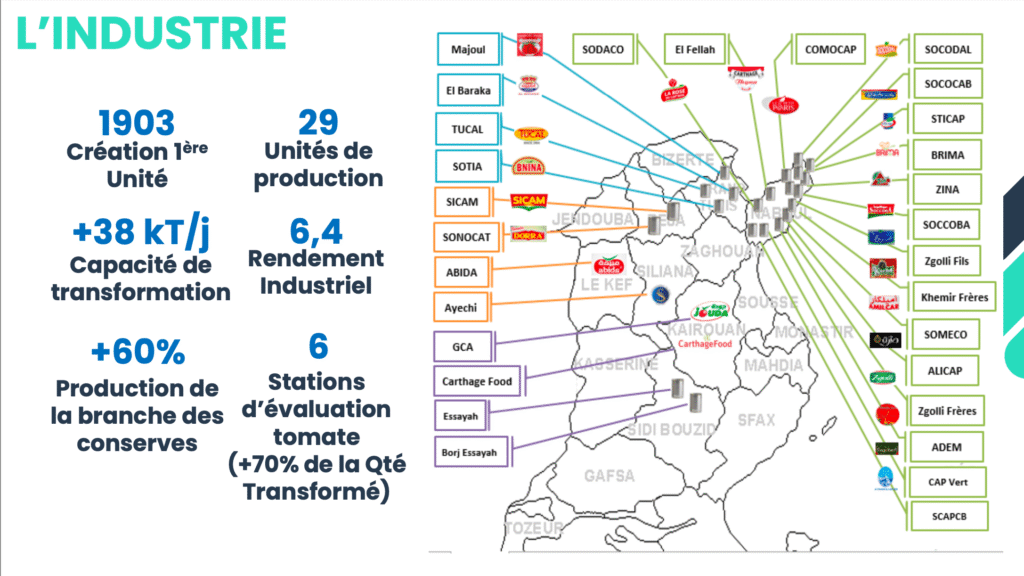
Tunisia’s tomato processing sector is supported by a robust national infrastructure comprising 29 production units distributed across four primary growing zones, with the Cap Bon region concentrating roughly 46% of total facility capacity alongside operations in the North-West and Center. Nationwide, industrial processing capacity stands at 38,000 tonnes per day, backed by six strategic quality evaluation stations that cover 70% of total national output.
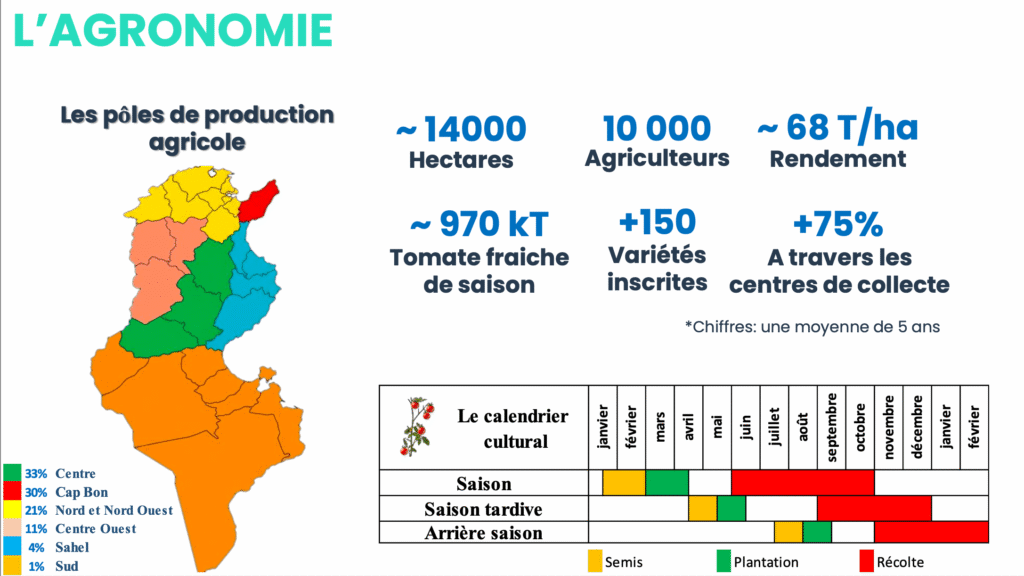
At the agricultural level, the industry spans approximately 14,000 hectares tended by 10,000 growers. The sector has access to more than 150 commercial tomato varieties officially registered in the Ministry of Agriculture’s catalogue; however, industrial production is concentrated on a limited number of the most widely demanded and commercially suitable varieties. Irrigation management is fully modernized, with 100% of processing acreage equipped with drip irrigation systems yielding a national average of 68 tonnes per hectare. While mechanization is expanding across larger farming regions, traditional hand-picking remains the dominant harvest method in Cap Bon due to local parcel constraints.
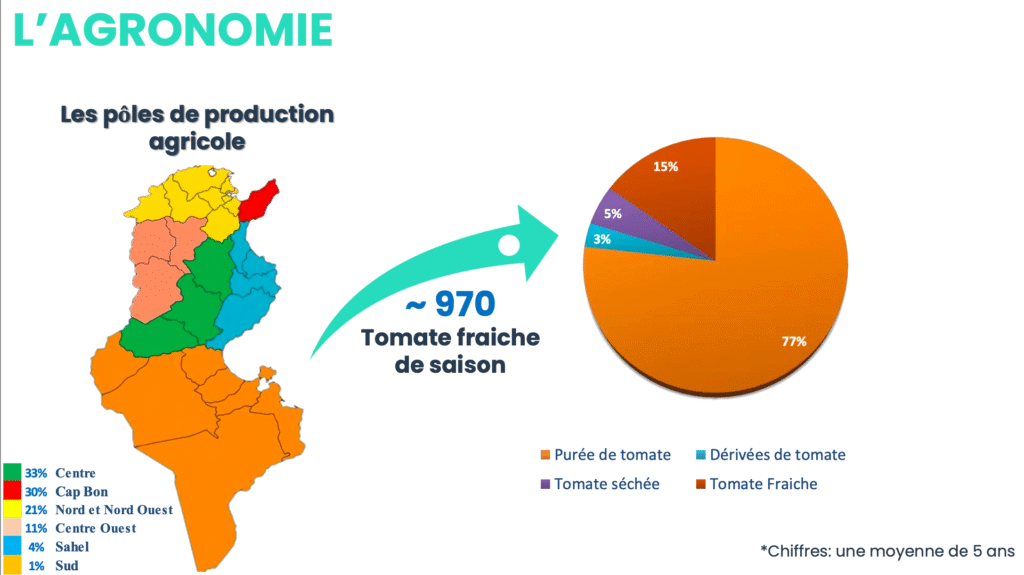
In terms of processing utilization, tomato paste remains the primary driver of the sector, absorbing 77% of total raw tomato production—following a historic peak in paste output of 153,000 tonnes recorded in 2024. Fresh tomato consumption accounts for 15% of total volumes, while sun-dried tomatoes represent 5%, and specialty derivatives make up the remaining 3%.
By 2026, the industrial landscape is demonstrating clear structural consolidation among processing units to boost operational efficiency. On the commercial front, Tunisian tomato processing maintains a broad international footprint, exporting standard tomato paste to over 37 global destinations and value-added tomato derivatives to more than 49 markets worldwide.
Day 1: SICAM
As the clear industry giant in Tunisia, SICAM (Société Industrielle des Conserves Alimentaires de Medjez El Bab) transformed last year 35% of the total processed tomatoes. Founded in 1969 and operating as a core pillar of the Bayahi Group, the company runs two primary processing facilities with a massive combined capacity of 8,800 tonnes per day. To support this scale, SICAM employs 838 full-time equivalent staff, expanding by another 1,800 seasonal workers at the height of the campaign. Tomatoes account for 71% of total business volume, with the remainder dedicated to peppers and jams.
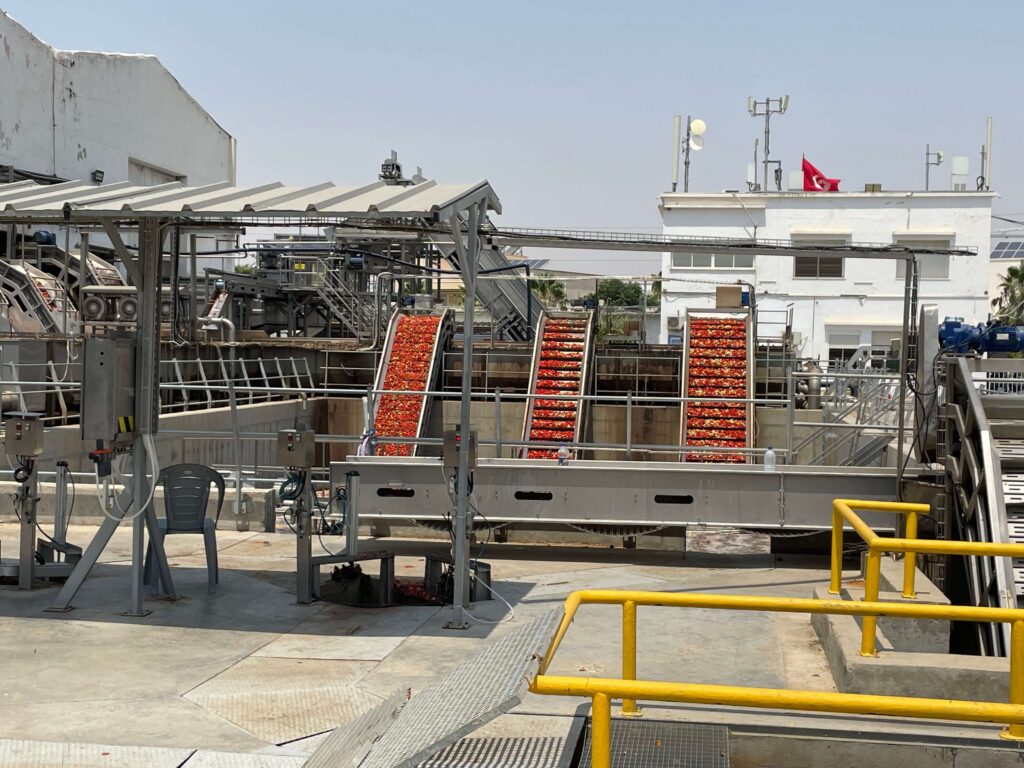
SICAM operates a fully vertically integrated model supported by a network of specialized subsidiaries: SICAM Agri coordinates raw material supply; SICAM Agri+ deploys roughly 30 specialized agronomists to procure and distribute inputs; Procan manufactures 210 million cans annually; and France-based Plant SAS manages international trading. On the supply side, the processor partners with approximately 2,000 growers through structured tripartite agreements between SICAM, the individual grower, and local collectors. SICAM absorbs substantial upfront financial exposure by supplying seedlings, fertilizers, and cash advances directly to its farmer base.
For the 2026 season, contract acreage reached 5,700 hectares—representing one-third of Tunisia’s total tomato cultivation area. While average national yields are projected at 65 to 70 tonnes per hectare, top-tier growers in the Kairouan region have achieved exceptional peaks of up to 200 tonnes per hectare. To boost overall farm productivity, SICAM actively guides growers on best agronomic practices and has partnered with Heinz Seeds to trial 16 promising new varieties. Mechanization is also advancing: the company owns a fleet of 14 mechanical harvesters, covering roughly 1,000 hectares (15% of its total footprint), while utilizing satellite tracking to monitor parcel development. This field support is especially critical given that farmgate raw tomato prices have remained static for the past three years.
Quality and sustainability drive the company’s long-term strategy. Following the rollout of an Integrated Pest and Disease Management (IPDM) program in 2023, SICAM achieved formal certification in 2025 for its “Zero Residues de Pesticides” (ZRP) product line, positioning the firm third across the entire Mediterranean basin for zero-residue products. Industrial sustainability is backed by heavily capitalized infrastructure: since 2022, the group has invested 200 million TND to construct a dedicated wastewater treatment plant and convert processing operations from heavy fuel oil to natural gas.
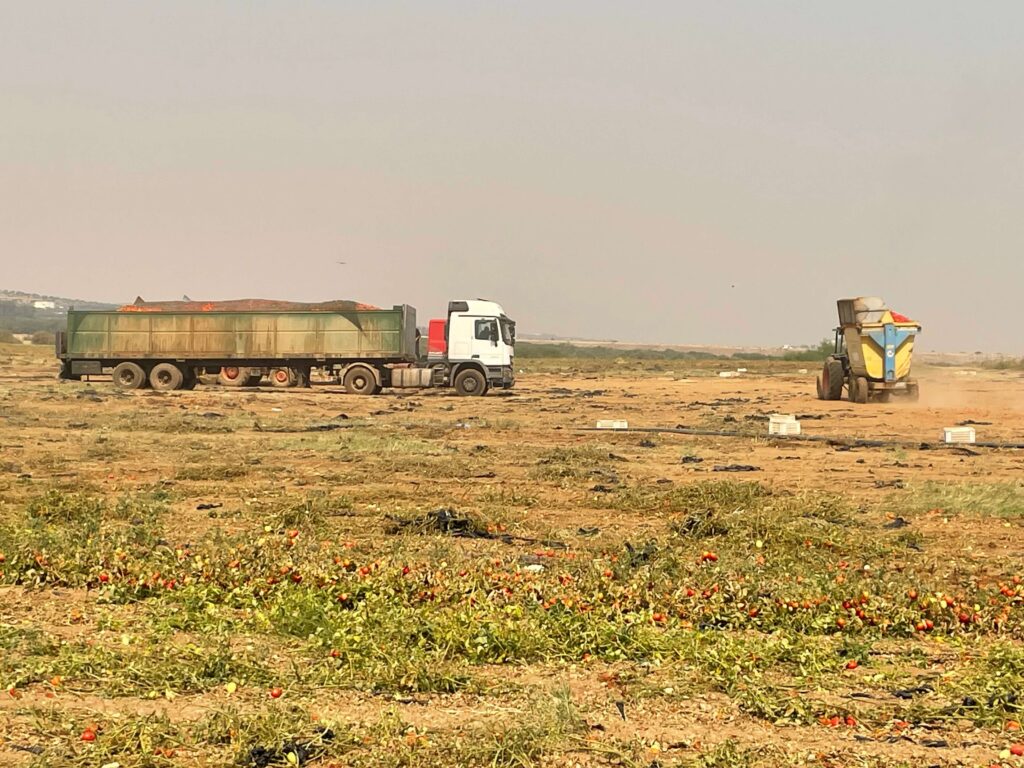
Commercial distribution is heavily export-oriented, backed by long-standing relationships with major European retail chains. Looking ahead, SICAM’s strategic roadmap focuses on four pillars: boosting agronomic yield performance, expanding its international footprint, executing strategic group acquisitions, and maximizing industrial efficiency and raw material recovery values.
Day 2: Generale Conserve Alimentaire (GCA)
Established in 1975 as part of the diversified Khafallah Group—which also holds interests in Biscuiterie Kif in Sfax and a carton packaging operation in Tunis—the processor behind the well-known Jouda brand stands as another long-standing pillar of the industry. Under the leadership of its current director since 2002, the company processes both tomatoes and red peppers into an array of double tomato concentrate, harissa, purees, tomato sauces, and specialty harissa derivatives.
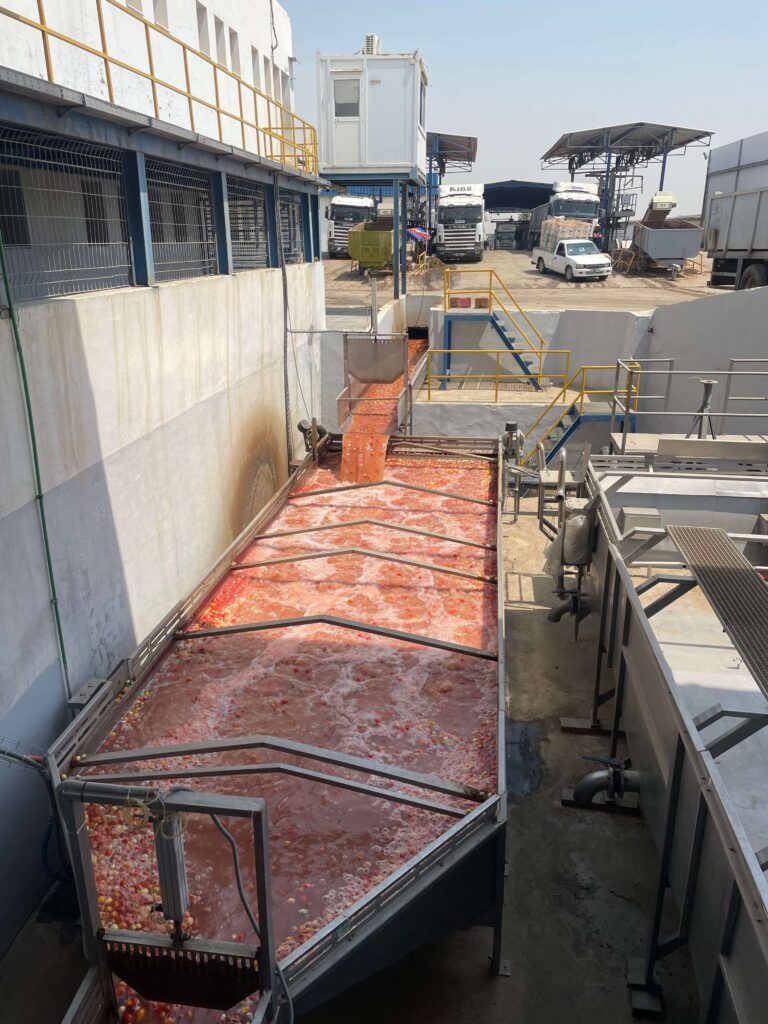
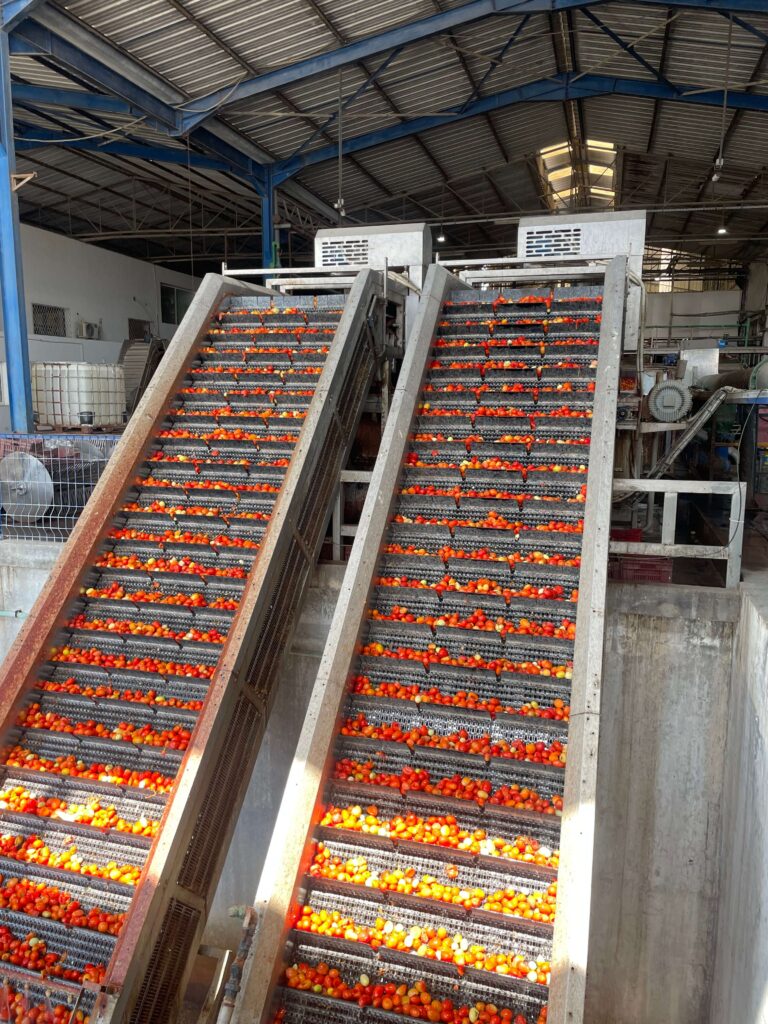
The facility boasts a daily processing capacity of 3,000 tonnes for tomatoes alongside 400 tonnes for red peppers, utilizing a versatile packaging line that spans traditional cans, flexible tubes, and modern aseptic formats. Industrial processing relies on three primary evaporators with capacities of 500, 1,000, and 1,500 tonnes per day, supplied by industry leaders including SIG Manzini and Rossi & Catelli. To further elevate production standards and yield quality, the company is actively pursuing new investments in optical sorting technology.
The processing campaign launched on June 25th, strategically kicking off with raw materials sourced from the early-ripening Kairouan region before expanding its supply footprint to growers further afield. While the factory has been operating at 60% to 70% of its total potential output, production has remained steady: the company is targeting a total seasonal volume of 90,000 to 95,000 tonnes of tomatoes and had already achieved 80% of this goal at the time of reporting.
On the commercial front, 80% of total output serves the domestic market, while the remaining 20% is directed overseas. The company’s export reach extends to Russia, Cameroon, Chad, and neighboring Libya—a key regional outlet serving 4 million Libyan nationals and an estimated 9 million foreign residents. However, trade across sub-Saharan Africa remains hampered by persistent logistical hurdles, high transit costs, and complex cross-border financial transfer mechanisms. Meanwhile, regional market dynamics continue to shift, as neighboring Algeria, once a primary destination for Tunisian tomato exports, rapidly expands its own domestic processing capacity.
Day 3: COMOCAP – Société de Conserve Moderne de Cap Bon
Founded in 1961, Le Petit Paris is now driven by its third generation of family ownership. Operating as a cornerstone of Tunisia’s tomato processing industry, the company maintains a core workforce of 136 permanent staff, swelling to nearly 540 employees during peak season as 400 seasonal workers join the line.
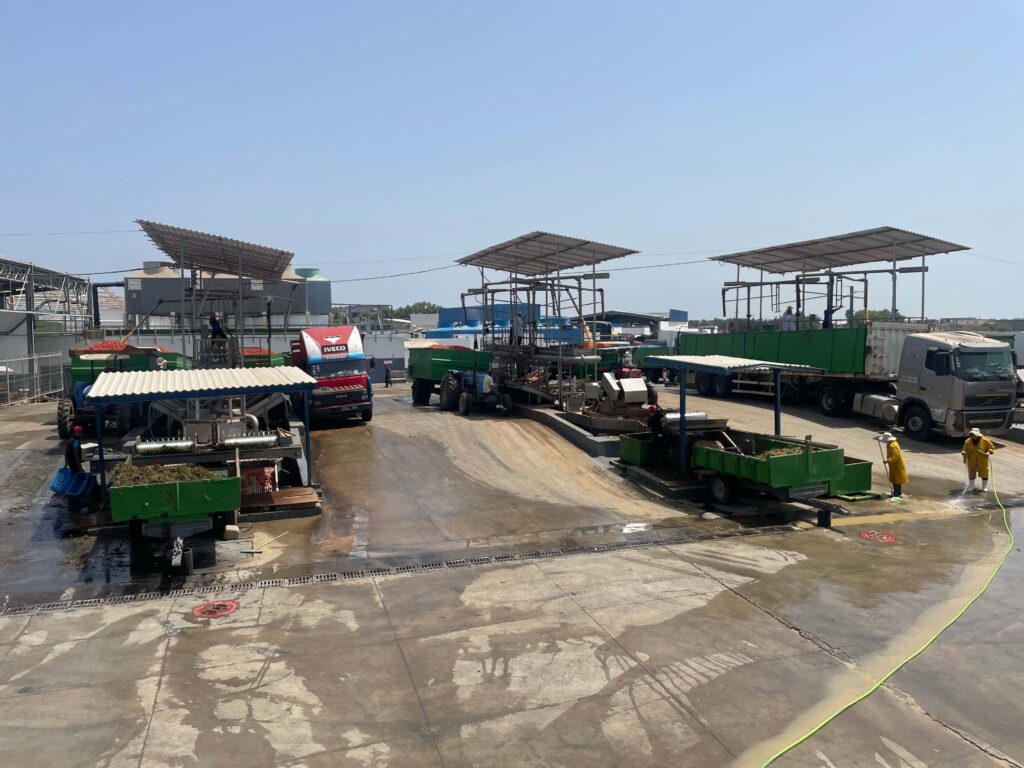
While the facility holds a daily processing capacity of 4,800 tonnes, operations have topped out at 4,000 tonnes per day this year, processing a total seasonal volume of between 90,000 and 110,000 tonnes. The plant specializes exclusively in cans and jars, forgoing aseptic packaging, to produce double concentrate, pizza sauces, and diced tomatoes, alongside regional staples like harissa and fruit jams. Quality standards remain a priority: the firm is actively pursuing ISO 22000 Food Safety System certification and participates in the Projet de Production Propre Tunisien (Tunisian Clean Production Project) to promote sustainable processing.
To stretch processing operations across as wide a timeframe as possible, Le Petit Paris draws its raw material from five key growing areas: Cap Bon (which supplies 90% of total volume), Sidi Bouzid, Kairouan, Gafsa, and Béja. The company partners with roughly 140 growers managing farms ranging from 1 to 25 hectares. For 2026, contracts covered 1,450 hectares with an average application rate of 250 kg of nitrogen per hectare, projecting an initial yield potential of 112,000 tonnes. By the time of our visit, 60,000 tonnes had already been transformed, though crop losses were estimated between 10,000 and 15,000 tonnes. Harvesting is carried out by hand alongside a fleet of five mechanical harvesters; however, the small, fragmented parcel sizes typical of Cap Bon remain a major bottleneck to expanding mechanized harvesting.
The 2026 campaign faced significant environmental and operational headwinds. Early-season torrents during transplanting were immediately followed by extreme heat waves and severe irrigation shortages in July, while field pressures from Pseudomonas, mildew, acariens (mites), and Tomato Yellow Leaf Curl Virus took their toll. Compounding these agronomic pressures were frequent electrical outages and logistical bottlenecks—including lengthy transport delays and extended waiting times at both farmgate and factory receiving points. As a result, average yields dropped from a historical 80 tonnes down to 64 tonnes per hectare.
Despite these climate and infrastructure challenges, Le Petit Paris maintains a resilient market footprint. The domestic market absorbs 85% of its output, while the remaining 15% reaches international consumers across France, Italy, Libya, Canada, and the Gulf States.
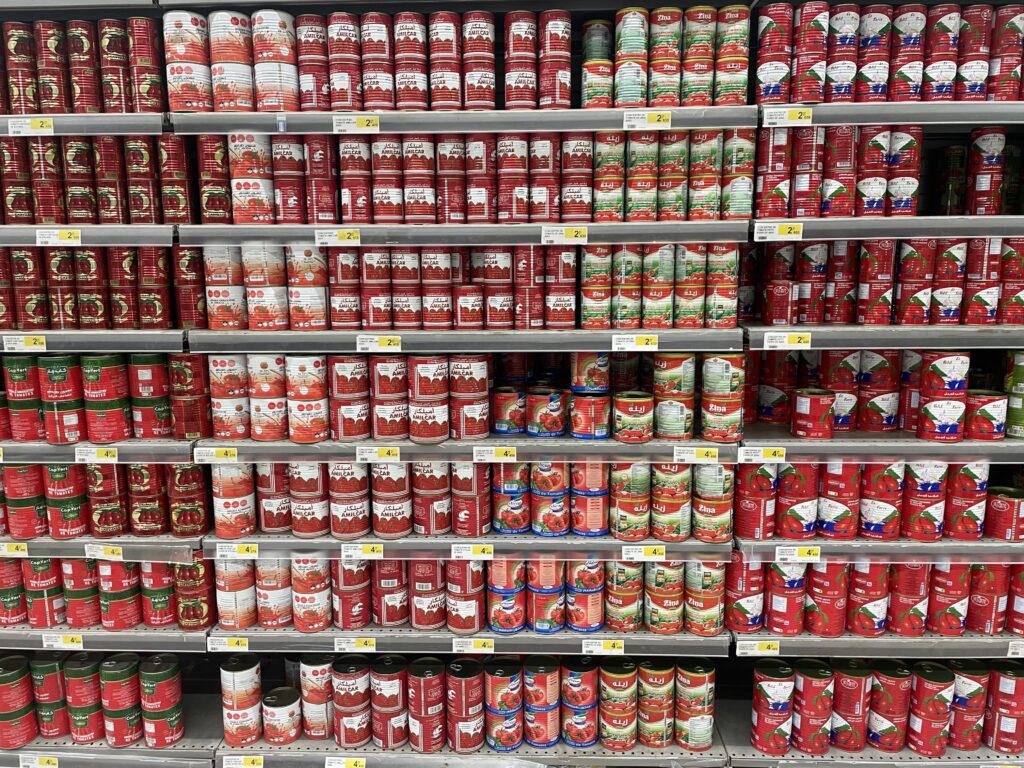
Photo of the (tomato products) shelves in a supermarket in Bordj Cédria, governorate of Ben Arous
We extend our warm thanks to the team at GICA and all our hosts. Their insightful presentations, guided facility tours, wonderful meals, and generous hospitality made our visit to the Tunisian tomato industry both productive and truly memorable.
See Tunisia country profile at https://tomatonews.com/countries/tunisia/
Sources: GICA, SICAM, GCA, COMOCAP