News
NAVIGATING FOOD PACKAGING RECYCLING MANDATES:
CHALLENGES AND POTENTIAL SOLUTIONS
From the presentation of Samantha Kappalman, VP of Corporate Affairs, Public Policy US & Canada, Tetra Pak
The True Foundation of Global Food Security
That was a lot of data to take in, and I know we do not talk about environmental legislation every single day. However, looking at who we are at Tetra Pak helps explain exactly why we view these impending regulatory shifts through a unique lens. Founded in Europe, Tetra Pak today operates as a global food system solutions provider spanning more than 160 countries. We draw on this deep international expertise daily, but our core mission always returns to a single, fundamental truth: it starts with food.
Food is the foundation of human health, societal stability, and economic prosperity. It represents culture, human connection, and celebration. If you think back to any major milestone you have ever celebrated, excellent food was almost certainly at the center of it. Yet, as everyone in this room understands, that food does not simply materialize on the table. It must be planted, produced, processed, packaged, and protected. Doing that safely and sustainably on a global scale requires immense collaboration, which is why our guiding purpose is to make food safe and available, everywhere.
Driving Circularity Across a Global Supply Chain
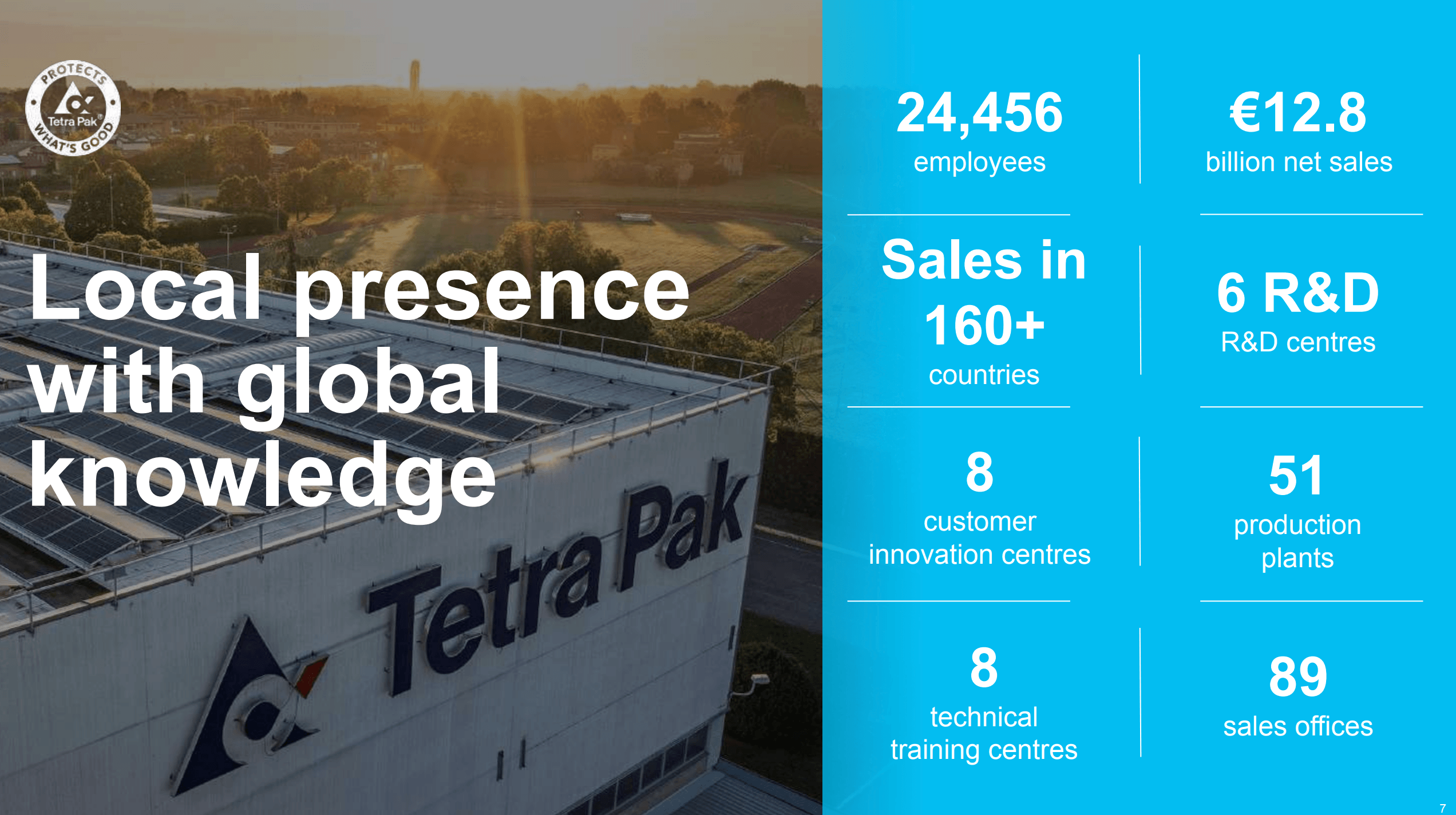
Operating a network of this scale involves more than 24,000 dedicated employees worldwide. Because we manufacture high-tech processing and packaging equipment, we work in lockstep with global brands to keep food moving safely through the value chain. This proximity to daily operations shapes our commitment to protecting what is good—specifically food, people, and the planet. On the processing side, we continually innovate to minimize energy use, slash water consumption, and eliminate production waste. While Europe faces an intense legislative timeline starting this August, the United States requires a highly holistic approach and think about why this is important, what we are trying to achieve, and what we want this end-of-life packaging system to actually look like. The primary hurdle in the United States is a deeply fragmented recycling landscape. You often think of Europe as this huge, interconnected continent, but the geographic realities in America are entirely different.
Consider a non-continental state like Hawaii—due to unique geographic constraints, they cannot have traditional landfills, so they actually burn almost all of their waste. You would think a beautiful island environment would have a perfectly circular recycling system focused on turning old products into new things, but they actually burn everything.
Across the country, every single one of our 50 states runs a completely localized program, culminating in more than 9,000 separate recycling systems nationwide. Even within California, what I can recycle at home in Modesto is completely different from what you can recycle here in Monterey. If you are not living and breathing this policy all the time, it is something you are simply not going to understand.
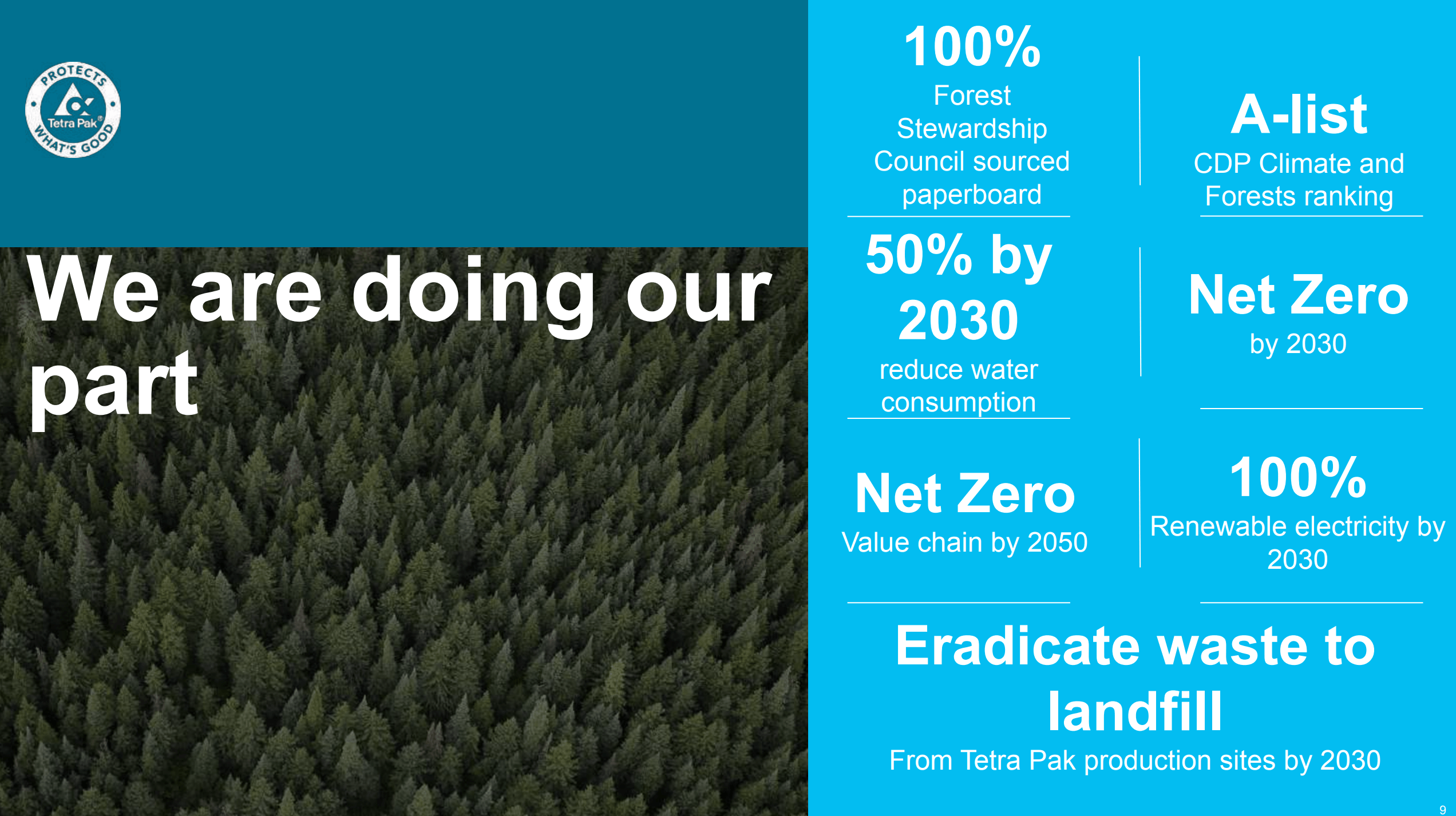
At Tetra Pak, we believe in practicing what we preach by setting aggressive, measurable sustainability benchmarks. We are actively tracking toward 100% Forest Stewardship Council sourced paperboard and a 50% reduction in operational water consumption by 2030. Furthermore, our U.S. operations have already achieved 100% renewable electricity, moving us closer to our goal of completely eradicating waste sent to landfills from our production sites by 2030.
The Fragmentation Problem: 9,000 Independent Recycling Systems
Nearly two decades ago, Tetra Pak co-founded the Carton Council alongside major North American carton manufacturers. We recognized early on that a responsible manufacturer cannot simply produce packaging and walk away; we had to actively invest in building the recycling infrastructure to support it.
Compounding the issue, many material recovery facilities operating today are 50-year-old facilities now. They started back in the mid-1970s, and a lot of them haven’t fundamentally changed since then.
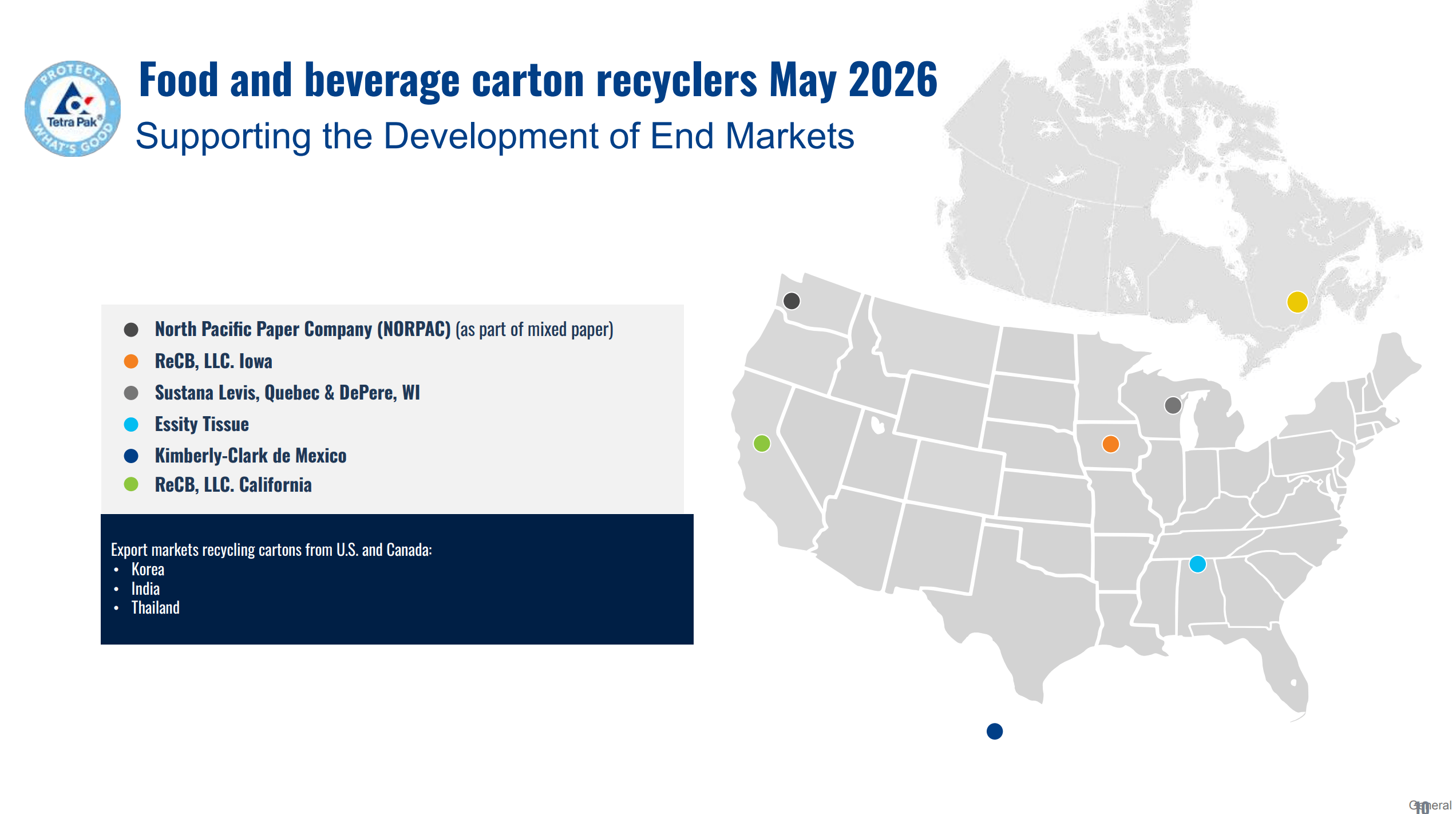
In addition to sorting, we are actively supporting the development of end markets. If you look at the map of North America on the screen, you can see the little dots indicating exactly where we have invested in paper mills to build out these end markets. Right here in California, just about a month ago, a full carton recycler opened up. This means we can have more recycling facilities right here in the state recycling directly into a carton stream to be manufactured into entirely new things, which is incredibly exciting.
Specifically, the material gets transformed into commercial industrial building products. It is stronger than gypsum, completely withstands severe hail, has a 45-year lifecycle, and can go right back through the system as recycled content to be remade into the exact same thing again. These are the precise types of consistent investments we need to make things truly circular, but that infrastructure map is also vital for the broader policy discussion.
Policy Pitfalls and the Reality of the Supply Chain
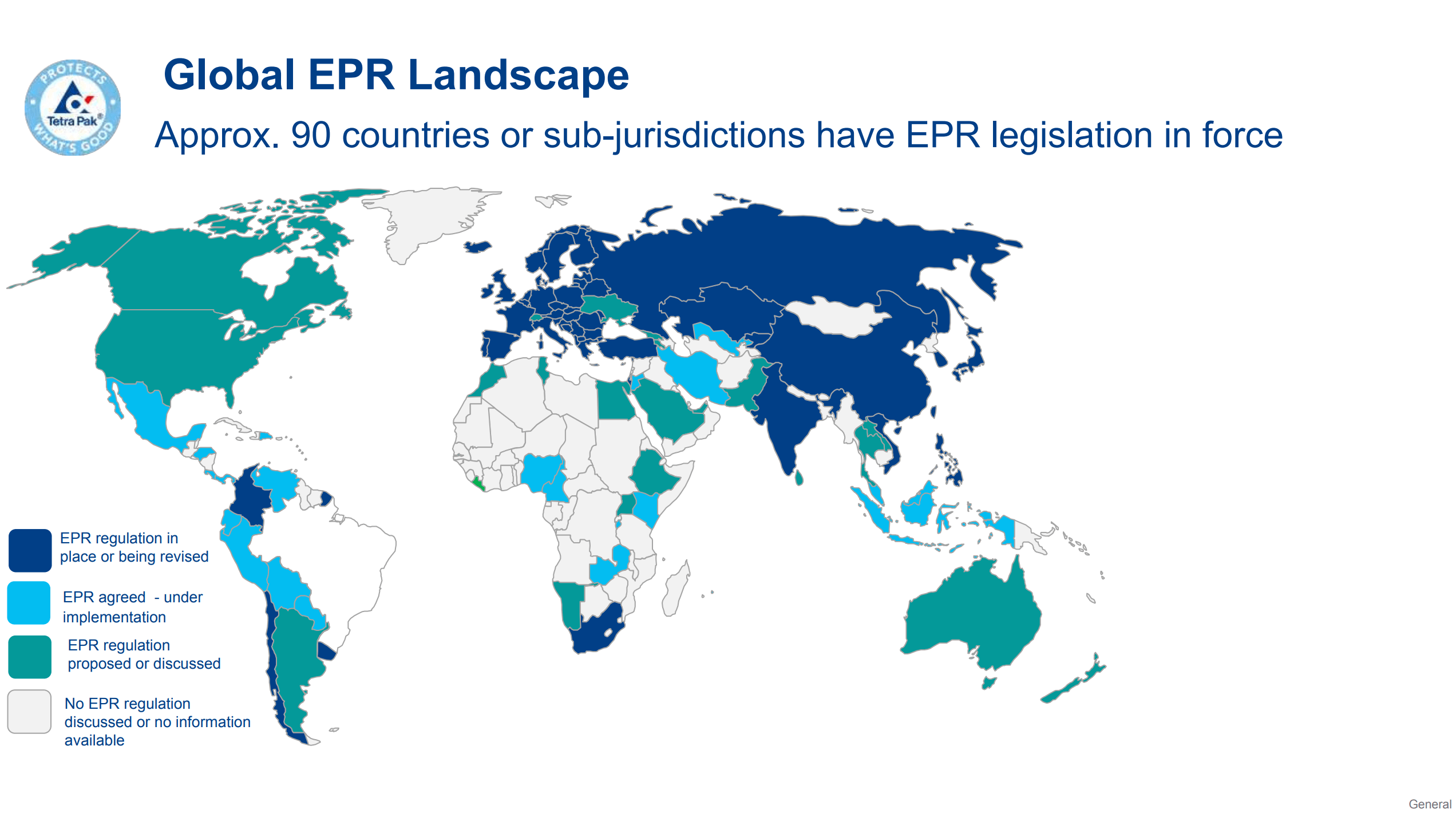
So, what is the core challenge? You just heard about all the moving parts and different aspects of what is currently happening in Europe. Globally, there are now about 90 countries or sub-jurisdictions with Extended Producer Responsibility systems in force. We are certainly not alone, but none of them are sophisticated enough or have been in place long enough to give us all the definitive answers we need. However, the individual member states in Europe have learned a lot of lessons from their localized programs, and in Canada, many provinces run established EPR systems that we can study to inform our approach in the U.S.
Under typical U.S. EPR rules, the “producer” is defined as the brand owner or the retailer utilizing a private label. While Tetra Pak acts strictly as the material supplier, these regulations fundamentally dictate how our customers must operate.
The steepest obstacle we encounter in state capitols is that policymakers simply do not have the technical facts. Many state legislators are part-time politicians. In Maryland, the legislative session lasts a mere 90 days out of the year. In Washington state, lawmakers convene for just 60 days every other year. In stark contrast to Europe, where technical directives undergo years of rigorous expert debate, an American lawmaker can introduce a bill, push it through both chambers, and have it signed into law within 30 days.
Because these representatives are rarely experts in packaging chemistry or logistics, we must constantly educate them on supply chain realities. However, a multinational supplier cannot be the only voice in the room. They need to hear directly from the agricultural community. When the engineer who processes the tomato or the coordinator managing truck logistics explains the system, lawmakers listen. My very first mentor loved to say that if you are not at the table, you are on the menu, and that has never been truer for the food industry than it is today. Well-meaning advocacy groups frequently pressure politicians to ban packaging entirely, suggesting consumers simply bring reusable containers to the grocery store. Living in rural North Carolina, I can tell you that is entirely unworkable. Blanket packaging bans ignore strict food safety standards, eliminate shelf life, and trigger a massive spike in food waste, which ultimately inflicts a far more devastating footprint on our planet.
State of Play: California’s Rollout vs. New York’s Chemistry Hurdle
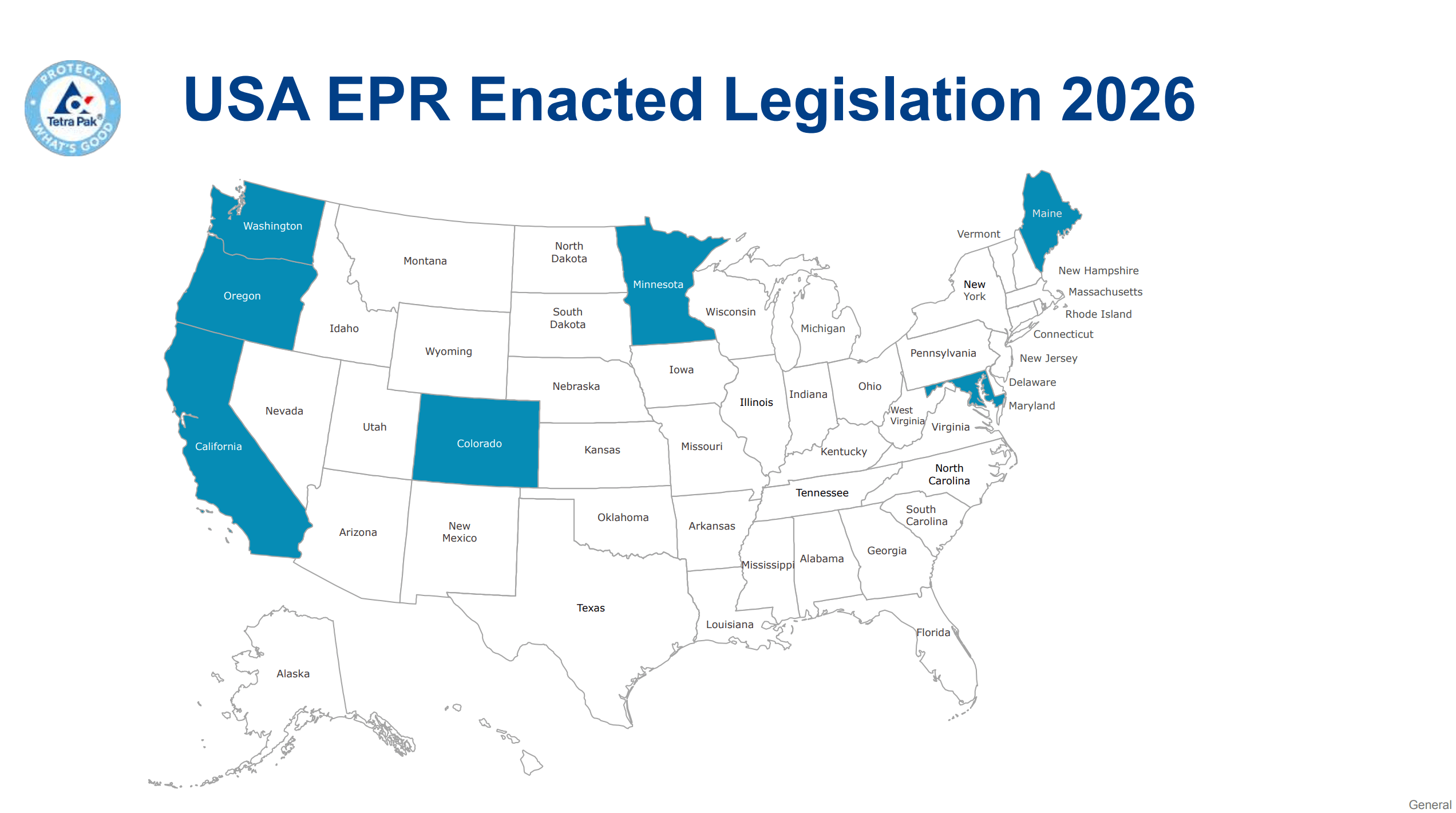
The domestic EPR landscape is moving at breakneck speed, with seven states having enacted formal legislation by 2026. Maine was the first to pass a bill, yet they continue to struggle with implementation due to the immense operational complexity.
California’s landmark program under SB 54 is finalized and moving toward its initial implementation milestones. The law originally materialized to head off a chaotic ballot initiative that would have established a massive environmental fund devoid of technical guidelines. Following years of intense regulatory debate, public commentary, and needs assessments, the framework is set. Producers are now required to register with the approved Producer Responsibility Organization, the Circular Action Alliance, and submit their baseline data. A draft plan is slated for this July, followed by a final plan in October, leading into full implementation.
Concurrently, other states are taking wildly divergent paths. New York has debated variations of an EPR bill since 2019. This past session, intense political pressure mounted to pass the bill before its sponsor retired, resulting in deeply flawed legislation drafted without proper industry consultation. The bill mandated that manufacturers completely reformulate their packaging within a tight two-year window. We had to intervene to explain that at Tetra Pak, even a minute material adjustment requires months of internal testing in FDA-approved labs, followed by extensive federal regulatory review. Furthermore, lawmakers regularly misunderstand basic chemical science. New York attempted to pass a blanket ban on chemicals like toluene and formaldehyde, failing to distinguish between intentionally added compounds and naturally occurring environmental trace elements. Paper naturally contains trace amounts of formaldehyde well within safe FDA thresholds, meaning an absolute ban would have inadvertently outlawed virtually all paper packaging in the state. To keep these bills workable, we have to consistently translate complex chemical realities into clear, accessible concepts for non-scientists.
The Highway Contamination Phenomenon and Tariff Pressures
A prime example of these regulatory misunderstandings is how a compound like toluene interacts with logistics. Toluene is a volatile compound commonly found in vehicle exhaust along major transportation corridors. When delivery trucks transport wrapped pallets of finished food products or raw packaging materials long distances, airborne toluene from highway traffic actually penetrates the transport wrap and migrates directly into the packaging material. This is an environmental exposure completely beyond the control of a manufacturer, yet without constant industry education, regulators will pass laws penalizing companies for these unavoidable logistics realities.
To add further friction, state-level environmental mandates are colliding directly with geopolitical trade realities. For the past two years, the industry has carefully tracked the impact of heavy tariffs on metal packaging. Aluminum cans face massive import tariffs, and while the U.S. possesses robust residential recycling capabilities, we severely lack the domestic sorting and smelting infrastructure required to meet demand. Building out that infrastructure will take a decade or more, and in the interim, these tariffs directly erode operating margins.
When a food processor adapts to these tariffs by transitioning from an aluminum can to a highly recyclable, renewable carton, they completely reshape their regulatory profile. Moving from a rigid plastic container to a carton containing minimal plastic represents a massive, unforced source reduction. Under California’s eco-modulated fee structures, optimizing your material mix in this manner radically reduces compliance fees owed to the PRO.
A Nauseating Patchwork and Global Opportunities Ahead
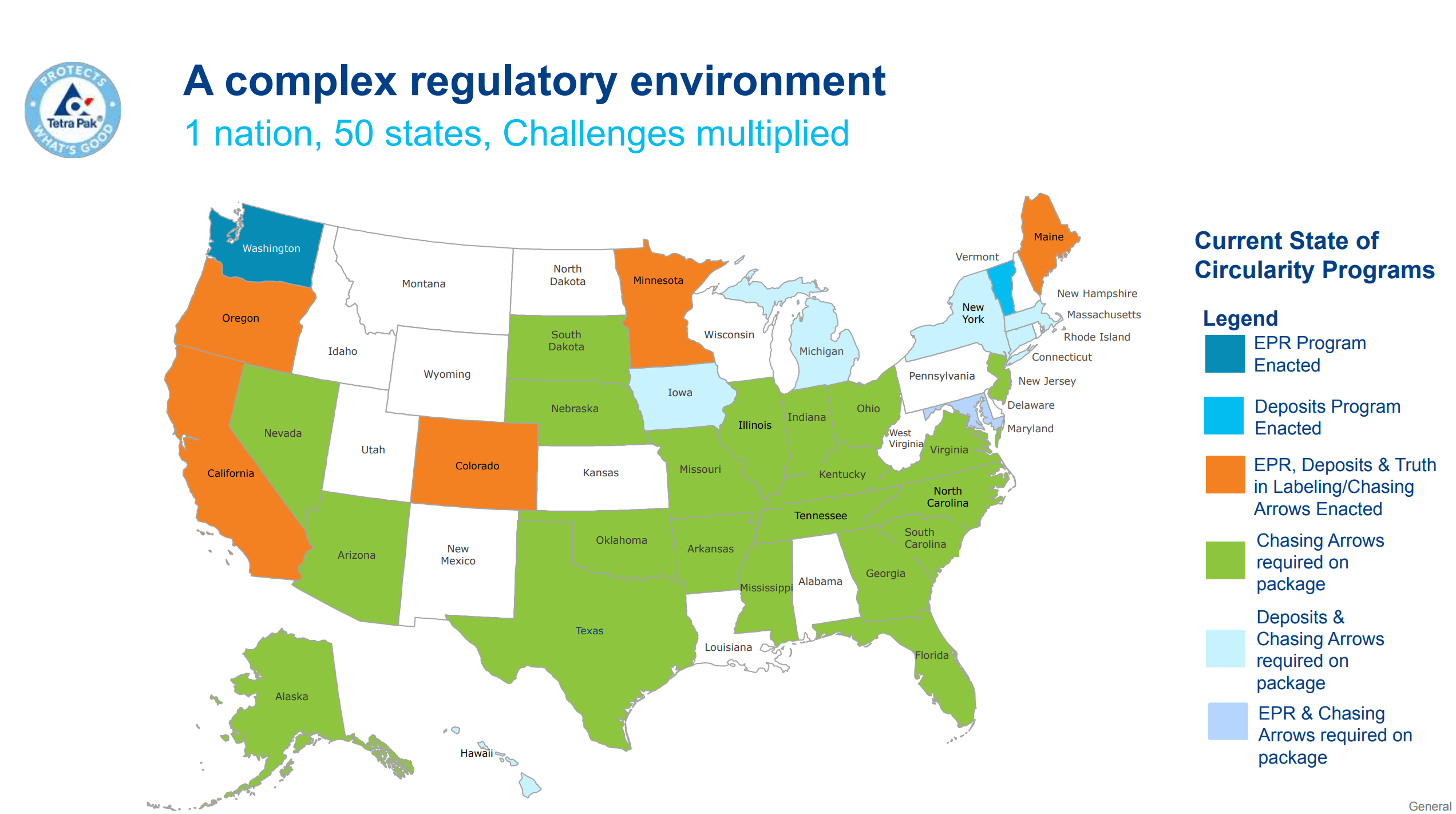
Looking across the remainder of the country reveals a chaotic, shifting patchwork of state laws popping up like popcorn. New Jersey has established rigid post-consumer recycled content mandates for plastics. Thirteen other states enforce specific resin identification codes, while California passed a conflicting “Truth in Recycling” law under SB 343 that strictly dictates what can legally bear the chasing-arrows symbol based on rigid household access and processing sortation thresholds. This creates a logistical nightmare: how is a national food brand supposed to design uniform, cost-effective packaging when individual state laws actively contradict one another?
Unsurprisingly, this regulatory whiplash has triggered a massive wave of litigation. The moment California finalized its EPR text, six separate lawsuits were filed within a single week, and Colorado’s system faces similar legal challenges. While courts will likely be tied up for years, we fully anticipate another three to five states will pass their own distinct EPR frameworks over the next five years.
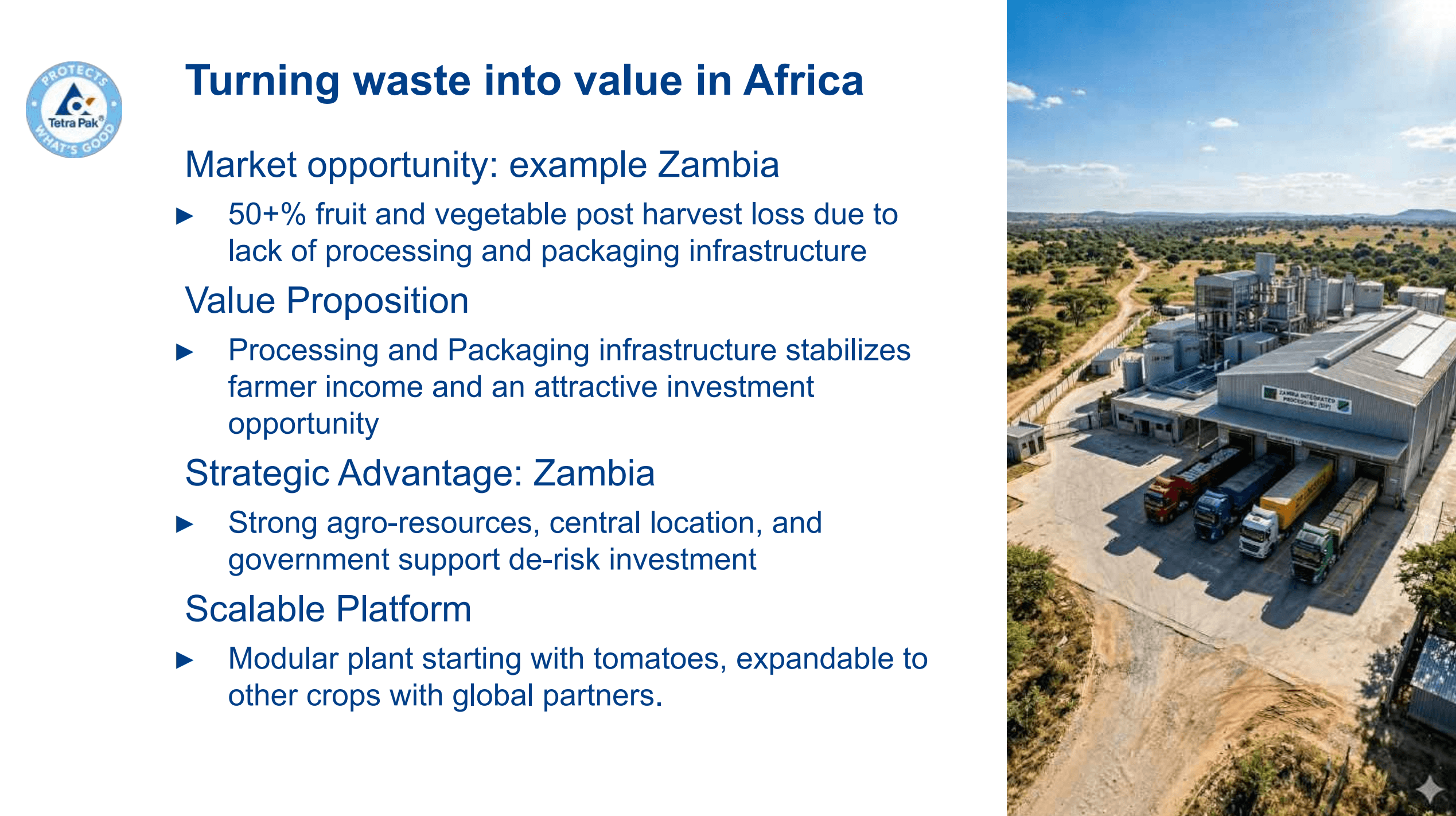
Nevertheless, when built correctly alongside infrastructure, these frameworks unlock massive opportunities. In Zambia, a direct partnership with Tetra Pak leveraged advanced processing and packaging infrastructure to stabilize farmer incomes, address a devastating 50% post-harvest loss, and build a resilient agricultural sector from the ground up.
Closer to home, we are actively collaborating with the Agrifood Minister’s office in Canada. They are moving aggressively to secure domestic supply chains and guarantee that Canadian-grown fruits and vegetables remain available to consumers year-round. Achieving true food security in cold northern climates without relying entirely on volatile import lines requires advanced shelf-life technology. This is precisely where modern aseptic packaging excels, keeping essential nutrition safe, fresh, and shelf-stable for up to 14 months without requiring an energy-intensive cold chain. The policy road ahead is undeniably complex and messy, but by maintaining an active seat at the legislative table and investing in real-world circular infrastructure, we can successfully protect both our businesses and the global food supply.
Source: Samantha Kappalman, Presentation during the 2026 WPTC Congress
Related Companies









Latest news
California: Weekly tonnage as of 17 October 2026
Heritable and Kagome Partner on AI-Driven Disease-Resistant Crops
Final results of the 2026 campaign in Northern Italy: yields among the lowest in recent years
Global Tomato Paste Trade in 2025/2026: slow emergence of secondary origins
Global Exports of Tomato Paste, Updated October 15, 2026