News
Australia-EU FTA: Securing the Tomato Supply Chain
The long-awaited conclusion of the Australia-EU Free Trade Agreement this March 2026 marks a turning point for the global processing tomato industry. While much of the mainstream media has focused on automotive growth and luxury car taxes, the real story for the vegetable processing sector is one of structural reliance. Data from the last five years reveals that Australia’s appetite for European tomato products is no longer a matter of consumer preference but has become a fundamental dependency for the nation’s food security and retail stability.
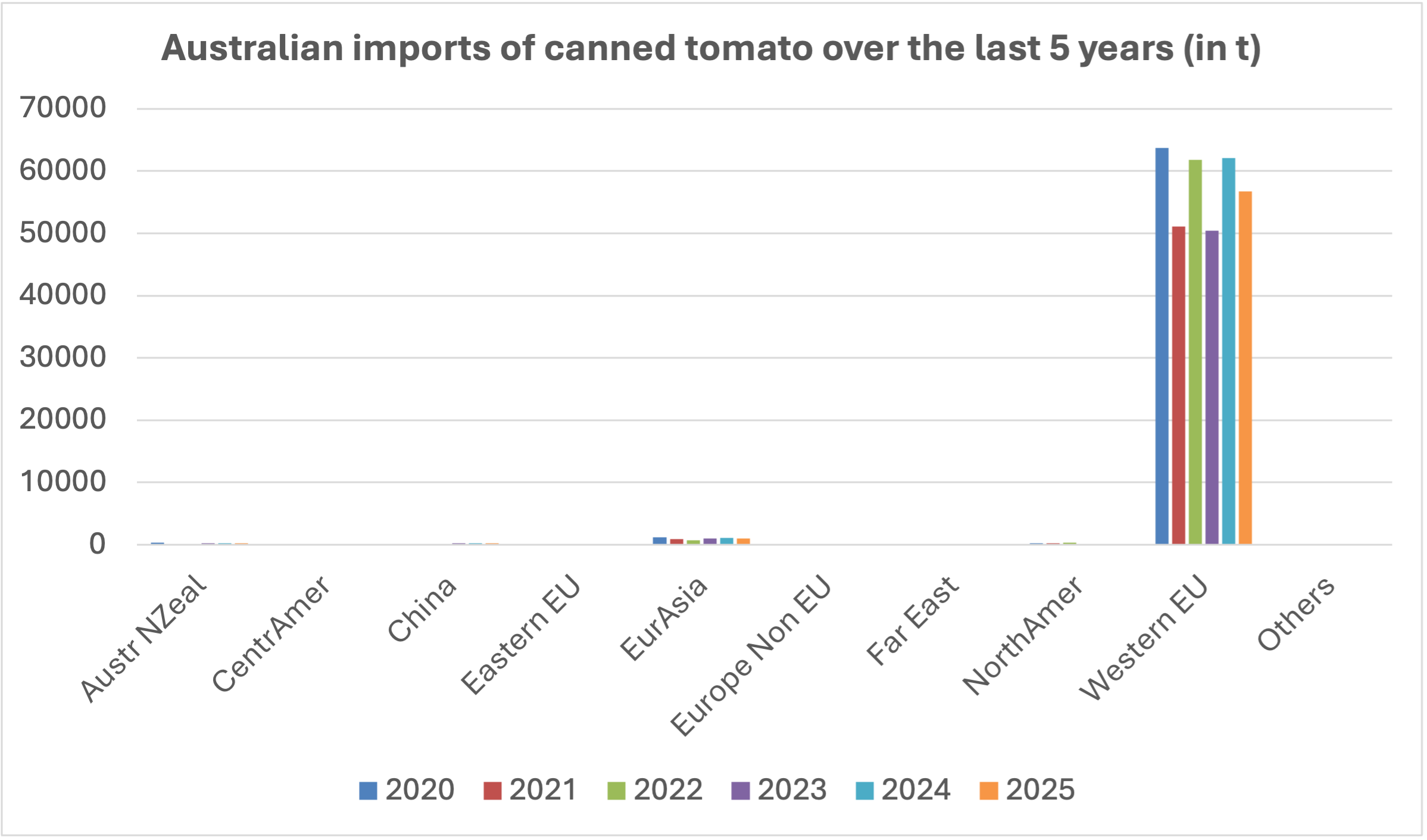
Analysis of Australian import data between 2020 and 2025 shows a remarkably consistent reliance on European production hubs. In the category of whole and peeled tomatoes, Australia imports nearly 60,000 tonnes annually from global markets, with Italy and Western European producers consistently providing the bedrock of this volume. Even during the peak of global supply chain disruptions in 2022, the flow of European “red gold” remained the stabilizing force for the Australian retail shelf, ensuring that domestic shortages did not translate into empty aisles.
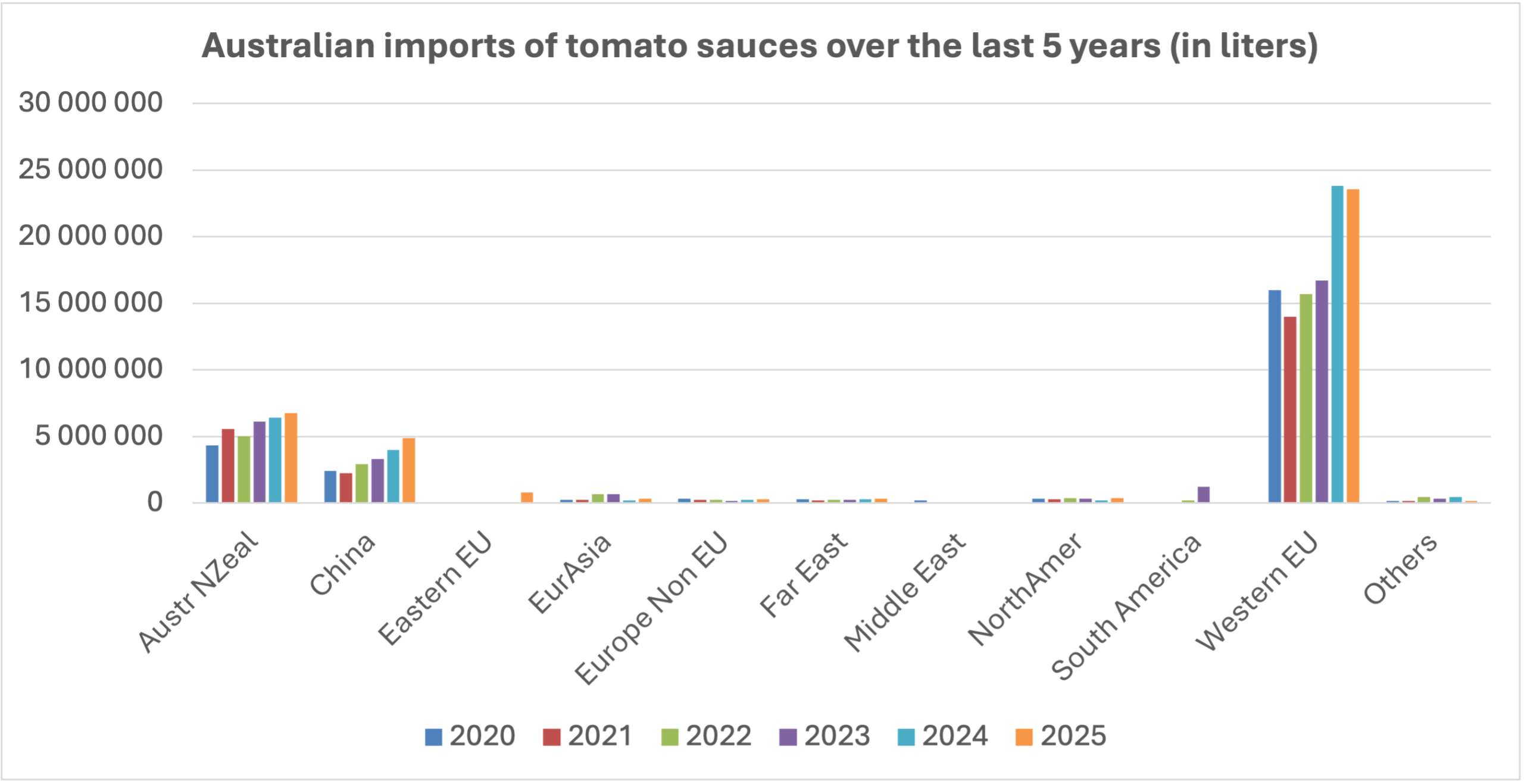
This dependency is even more pronounced in the value-added sectors. The market for tomato ketchup and prepared sauces has seen explosive growth, with total Australian import volumes climbing from 24 million liters in 2020 to over 37 million liters by the end of 2025. Europe has been central to this 54% increase in volume, positioning itself as the primary high-volume supplier for Australia. By removing the 5% to 11% tariffs that previously hampered these exports, the new agreement transforms European processors from premium niche players into the most competitive primary suppliers in the region.
The strategic importance of this deal extends beyond mere pricing. The data indicates that while imports from other regions fluctuate wildly from year to year, the European supply line has shown unparalleled stability. For Australian food manufacturers, securing zero-tariff access to European paste and puree—which saw imports rise to over 61,000 tonnes last year—is a move toward de-risking their own supply chains against geopolitical shocks.
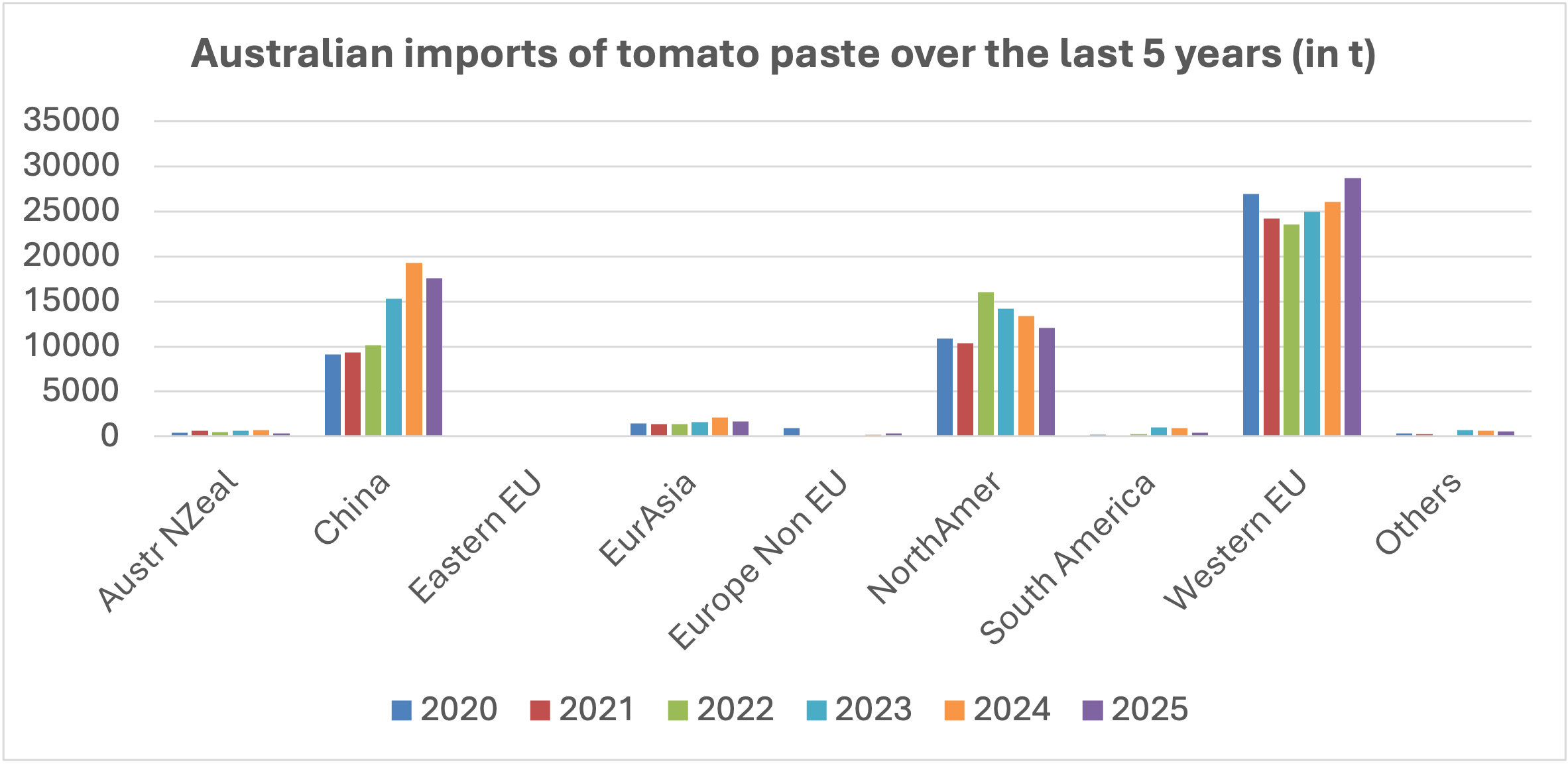
By formalizing this trade partnership, Australia is essentially locking in its most reliable agricultural partner. For European processors, the agreement provides the legal certainty and stable rules needed to integrate more deeply with Australian logistics and digital trade infrastructure. As we move into the implementation phase of the FTA, the industry must recognize this not just as a cost-saving measure, but as the formalization of a partnership where Europe provides the essential volume and quality that the Australian market requires to function.
Sources: The European Commission, Agrisole, TDM