News
Research on Alternaria toxins at SSICA
Among the areas of interest of the research conducted by SSICA, particular attention has been devoted to the study of the Alternaria genus and the management of contamination from its toxins in the various stages of industrial tomato processing.
Introduction
The industrial tomato (Solanum lycopersicum L.) is one of the main crops of high economic interest for the national industrial sector, as well as one of the main commodities of Italian primary production (FAO). The importance of this sector is well represented by the data obtained from the 2025 tomato campaign, with production volumes recorded at close to 5.8 million tonnes of processed raw material (ANICAV). In addition to constituting a national agricultural heritage, processed tomato products, such as preserves, generated exports worth approximately €3 billion in 2024 alone (ANICAV). It is important to note that tomatoes and their industrial derivatives also play a significant role from a nutritional point of view. In fact, a substantial proportion of the global daily intake of vegetables is represented by the consumption of tomatoes and their derivatives. Processed tomato products – such as preserves, juices, concentrates, soups and sauces – therefore contribute substantially to the overall intake of vegetables in the diet (Sandei, 2018).
Given climate change and its global effects, tomatoes, like other fruit and vegetables grown in the field, may be susceptible to increasing fungal contamination (Berni et al., 2025).
Among phytopathogenic species, those of the genus Alternaria are recognised as agents responsible for diseases both in the field and in the form of post-harvest rot (Bertuzzi et al., 2021; Schmey et al., 2024), resulting in economic losses (Javidan et al., 2024), agronomic yield and industrial product quality (Chen et al., 2021).
Aware of the importance of deepening knowledge and understanding the critical issues related to the presence of contaminants and their impact on industrial production, the SSICA Research Foundation is actively engaged in the development of dedicated research projects aimed at generating concrete results that can be transferred to the canning industry and all stakeholders in the national and international agri-food sector. This commitment is accompanied by constant updating of knowledge through critical analysis of the data available in scientific literature and the integration of new experimental evidence, with the aim of producing information that is useful not only for the tomato supply chain but also for other sectors of the food industry directly or indirectly affected by the above issues.
FURTHER INFORMATION
Alternaria and mycotoxins
Contamination and development of Alternaria spp. is one of the most harmful and widespread plant diseases affecting tomatoes (Sodikov et al., 2023). Fungi of the genus Alternaria are ubiquitous, present in the soil as natural components of microflora and capable of living both as saprophytes and as plant pathogens. These fungi are capable of producing a wide variety of secondary metabolites, some of which have toxic properties for both animals and humans and have been highlighted by the European Food Safety Authority (EFSA, 2016). Several species are known to produce toxic substances, such as Alternaria citri Ellis and Pierce, Alternaria brassicola and Alternaria alternata, and Alternaria tenuissima (Chen et al., 2021). Among the species mentioned above, Alternaria alternata is the most common and one of the most significant in the production of these toxic metabolites (EFSA, 2011).
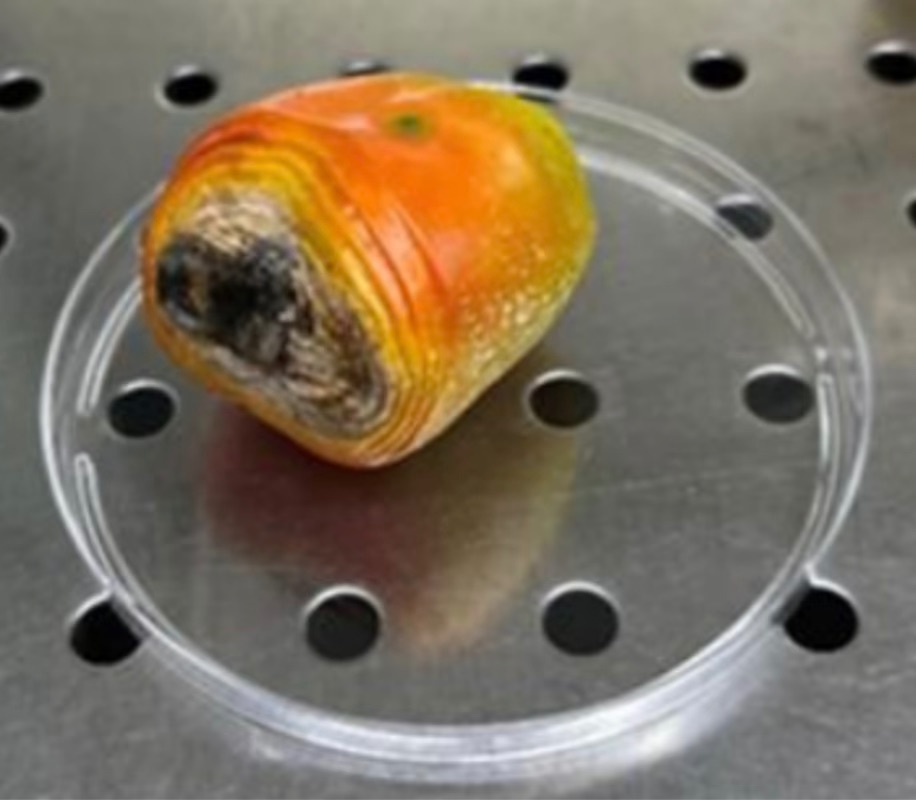
In tomatoes, A. alternata penetrates the tissue mainly through wounds or openings during the pre-harvest or harvest period, remaining dormant for a few days before manifesting itself as black spots that cause the typical rot, as shown in Figure 1. These lesions cause fruit deterioration, reduce marketability and result in significant losses during post-harvest and industrial processing (Rizwana et al., 2021).
These lesions cause fruit deterioration, reduce marketability and result in significant losses during post-harvest and industrial processing (Rizwana et al., 2021).
Figure 1. Tomato berry contaminated with Alternaria. Photo SSICA.
In addition to this defect on the berries, A. alternata is responsible for the production of several mycotoxins, including Tenuazonic Acid (TeA), Alternariol (AOH) and Alternariol Monomethyl Ether (AME), molecules that are of particular concern to EFSA due to the negative effects they may have on human health (EFSA, 2016).
According to scientific literature, the mycotoxins of greatest concern for human health are: Alternariol (AOH), Alternariol Monomethyl Ether (AME), Altenuene (ALT), Tenoctoxin (TEN) and Tenuazonic Acid (TeA). In particular, ALT and TeA have shown toxic effects in both in vitro studies and animal experiments, while AME and AOH have been associated with mutagenesis and carcinogenesis, as well as cytotoxicity and genotoxicity (Gonçalves et al., 2022).
Contribution of SSICA
Among the areas of interest of the research conducted by SSICA, particular attention has been devoted to the study of the Alternaria genus and the management of contamination from its toxins in the various stages of industrial tomato processing. Identifying concrete strategies to limit their presence is one of the goals that would ensure quality and safe products. In particular, the research currently being studied aims to investigate the effectiveness of specific control measures applied to individual operations in the production process, assessing their potential as tools for mitigating the risk of mycotoxins. Through this approach, SSICA intends not only to deepen scientific knowledge about these contaminants, but also to provide useful and applicable guidelines for food safety management throughout the entire tomato supply chain.
The Experimental Station intends to develop and implement an operational protocol capable of improving tomato processing conditions and, at the same time, generating results and strategies that can be transferred to other food industries in the fruit and vegetable processing sector. To this end, both established evidence in scientific literature and data from studies and experiments conducted internally at the Experimental Station are integrated. This combination of knowledge will make it possible to accurately identify the critical stages of the production process, so that every intervention is based on rigorous and up-to-date information. Among the Experimental Station’s projects, the one carried out during the 2023 tomato campaign stands out for its importance.
The main objectives were to evaluate the mechanisms of spread of different strains of Alternaria alternata in fruit, in order to verify whether contamination could also affect uninfected berries; to study the behaviour of the main mycotoxins (TeA, AME and AOH) during industrial processing and the effectiveness of heat treatment as a mitigation strategy; and to estimate the concentrations of AOH, AME and TeA in accordance with Article 20 of Regulation (EC) No 396/2005 (Berni et al., 2025).
An analysis of the available scientific literature on the main stages of tomato processing in relation to mycotoxin risk management shows that:
– The storage phase of the raw material is a critical moment in which the control of parameters could influence fungal growth (Estiarte et al., 2018b; Troncoso-Rojas and Tiznado-Hernández, 2014), considering that Alternaria species grow at low temperatures (LCI, 2020).
– Intensifying the washing phase through the use of sodium hypochlorite solutions could, on the other hand, promote the reduction of AOH and AME mycotoxins (Estiarte et al., 2018a). Furthermore, the management of washing water during the berry immersion phases plays a critical role: suboptimal control of water exchange could lead to high contamination of the bath, possibly increasing the risk of mycotoxin transfer (Estiarte et al., 2018b).
– During sorting, it would be interesting to explore berry selection techniques using rapid, non-destructive methods such as integrated hyperspectral camera systems and machine learning to identify fruit contaminated by fungi (Soni et al., 2022) and assess their potential and practical applicability in an industrial context.
At present, mitigation strategies focus on the stages prior to heat treatment (Estiarte et al., 2018a), since, in light of current results, the mycotoxins produced by Alternaria appear to be heat-resistant or, in any case, the times and temperatures required for their reduction may not be entirely compatible with the process parameters applied during tomato processing (Berni et al., 2025).
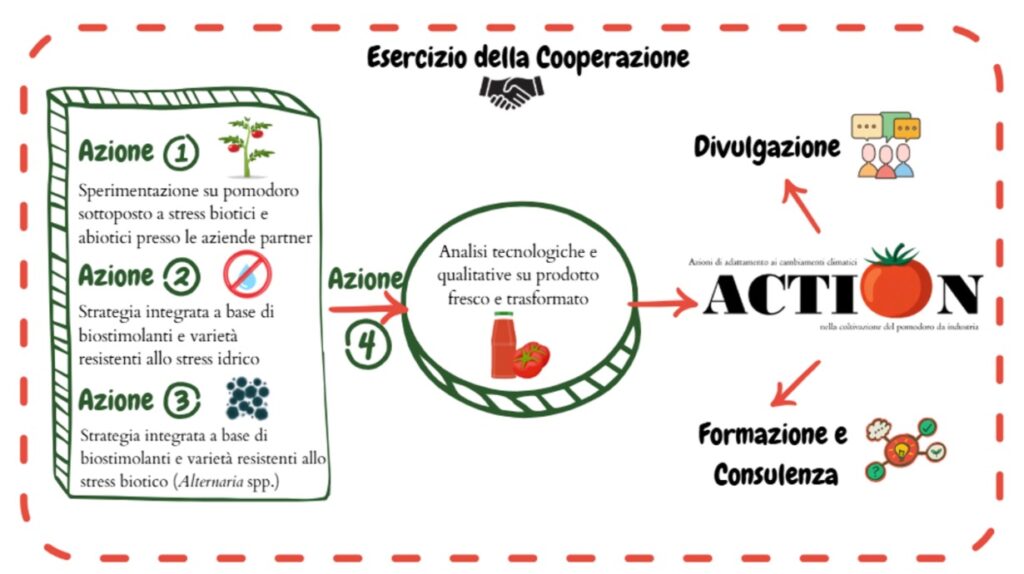
SSICA actively participates in the research partnership of the FEASR “ACTION” project funded by the Emilia Romagna Region Actions to adapt to climate change in industrial tomato cultivation’, of the ACTION Operational Group, to which SSICA contributes by providing scientific support in a specific phase of the project, with particular reference to the problem of Alternaria (https://www.copsr-action.it/).
EFSA and EUROPEAN UNION on Alternaria Mycotoxins – Risk Assessment and Management in Europe
In 2011, the European Commission asked the European Food Safety Authority (EFSA) to produce a scientific opinion on the risk associated with the presence of Alternaria toxins in food and feed. The toxins studied were: AOH, AME, TeA, iso-Alternariol (iso-TaA), Alternaria toxins (ATXs), Tentoxin (TEN), Altenuene (ALT) and Alternaria alternata f. sp. Lycopersici toxins (AAL toxins). This initial risk assessment highlighted the need to fill the knowledge gaps on this issue. In particular, there is a need for: certified reference materials and standardised performance criteria for the analysis of toxins in food and feed; representative data on distribution in European countries in order to estimate population exposure levels; studies on the effect of food and feed production processes on toxin concentration; and studies on the toxicokinetics of mycotoxins and genotoxicity data (EFSA, 2011). Subsequently, the European Commission defined monitoring programmes to support the needs expressed by EFSA (European Commission, 2012).
In 2016, EFSA produced a new Opinion aimed at estimating the exposure of the European population to mycotoxins through food. The analysis showed that the most contaminated foods include tomato products, nuts, oilseeds, cereals and fresh fruit. Furthermore, the categories of individuals most exposed were toddlers, other children, infants and consumers following a vegetarian diet (EFSA, 2016). Among those characterised and reported as toxic are Alternariol (AOH), Alternariol Monomethyl Ether (AME), Tenuazonic acid (TeA) and Tenthotoxin (TEN), whose chemical structure is shown in Figure 2.
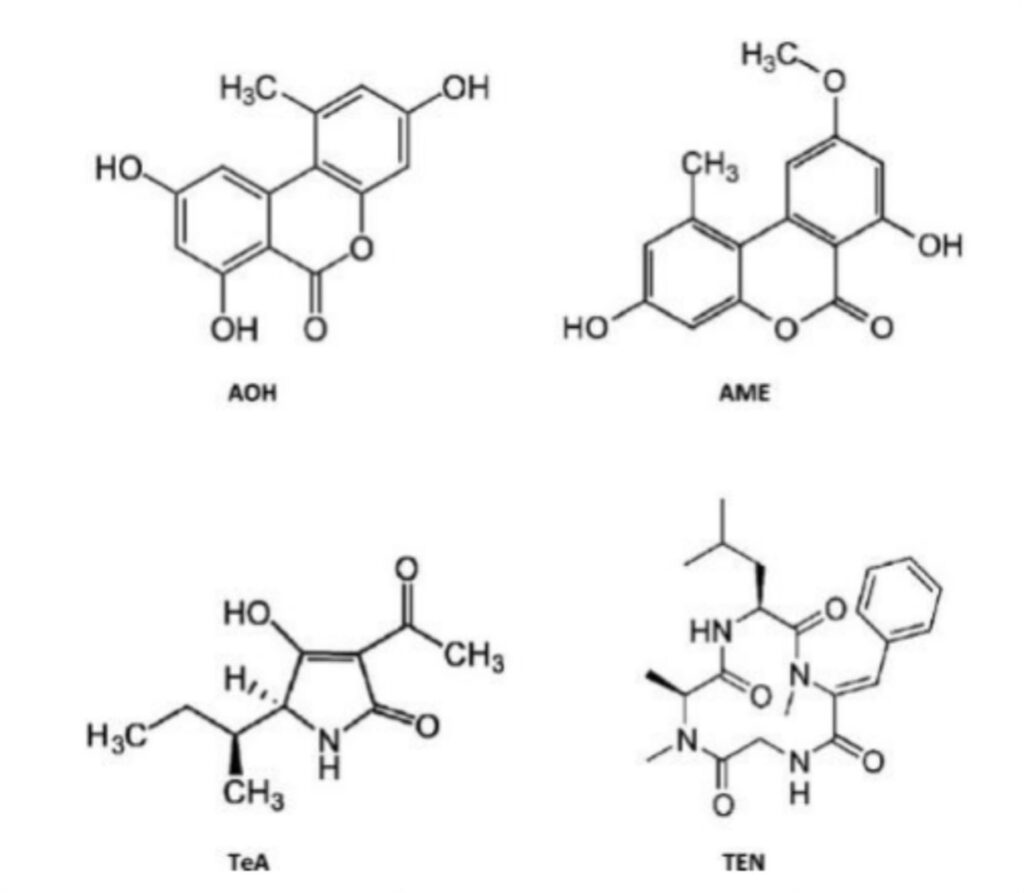
Figure 2. Chemical structure of some mycotoxins: AOH (Alternariol), AME (Alternariol Monomethyl Ether), TeA (Tenuazonic Acid), TEN (Tenthotoxin). (EFSA, 2016).
There is therefore a need to develop more sensitive and accurate analytical methods capable of reducing the uncertainty associated with the presence of Alternaria toxins, due to the high percentage of censored data. In addition, the need to generate more analytical data on toxins in foods such as fruit, tomatoes and tomato-based products, as well as cereal-based foods for infants and young children, was highlighted (EFSA, 2016).
In this regard, in 2022, the Commission adopted Recommendation (EU) 2022/553 of 5 April 2022, emphasising the importance of monitoring mycotoxins in the matrices most at risk, including processed tomato products. This monitoring must be carried out: in accordance with the sampling procedures laid down by the Commission; with reference to the limits of quantification (LOQ) for Alternariol, Alternariol Monomethyl Ether and Tenuazonic Acid; identifying the factors that influence levels and how the processing process affects concentration. Member States and FBO are required to report the data obtained to EFSA to contribute to the creation of a single database. The Commission has therefore defined indicative (not safety) levels for Alternariol, Alternariol Monomethyl Ether and Tenuazonic Acid for certain food matrices (European Commission, 2022).
Bibliography available in the original article in Italian at: https://drive.google.com/file/d/1A3xmTMJVeOw3MFcL6i9A5fMh8cG4gWh0/view
Source: SSICA