News
California: drought picture grows more bleak for agriculture
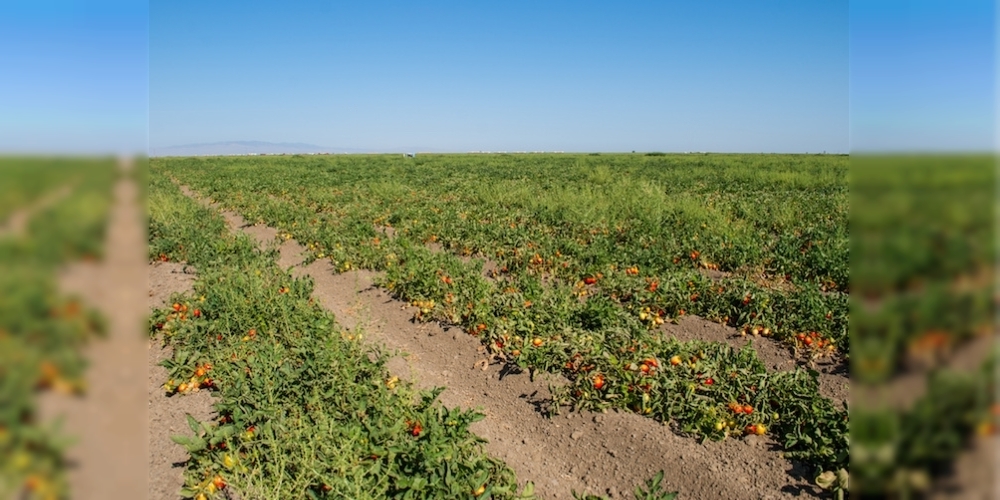
As California toils through a third consecutive drought year, many Sacramento Valley farmers are facing water-supply challenges that are worse this season than in previous dry years.
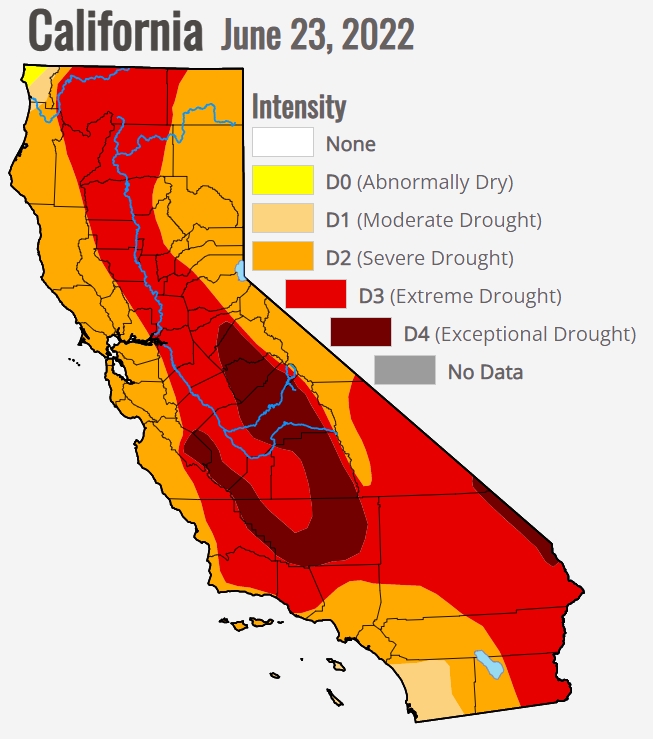 "This drought is hitting Northern California really hard and in some unprecedented ways," said Ellen Hanak, director of water policy for the Public Policy Institute of California, speaking early June on drought at a meeting of the California State Board of Food and Agriculture. Drought conditions are different this year due to particular impacts in the North State. Hanak said Northern California "is the wetter part of the state and is the reservoir for supplies to a lot of other parts of the state." But "unlike in previous years when Sacramento Valley farmers have been able to make water available through transfer markets," she said, "I don't think we're going to see a whole lot of that this year."
In mid-June, Yolo County farmer Frank Muller said the California Tomato Growers Association expects the season's processing tomato crop for the state to be lower than the 11.7 million tons projected by the U.S. Department of Agriculture National Agricultural Statistics Service. "The underlying factor here is that we are not going to be able to produce enough tomatoes in California," Muller said, adding that California produces 96% of the U.S. tomato supply and roughly 32% of the world's tomato supplies. "We're eating into our inventories, and our inventory levels should drop lower than the sector's historic lows, so that is a concern."
Muller said he is not as affected as others on water supplies this year. He said he achieved a 40% reduction in his documented water use by switching to drip irrigation.
"Growers have made a tremendous investment in drip irrigation and irrigation technology, and that's really helped our industry," Muller said. "I think most farmers prioritize: Where is the biggest bang for your buck per drop of water? You grow crops that are going to give you the highest returns, and tomatoes are right up there."
During the meeting, many participants mentioned a pressing need to prepare for future years by increasing the state's water-storage capacity. "We need to accelerate action on water infrastructure and be innovative in supporting the vital long-term role that agricultural lands have in this state's future," said California State Board of Food and Agriculture President Don Cameron, who farms in Fresno County.
European Drought Observatory
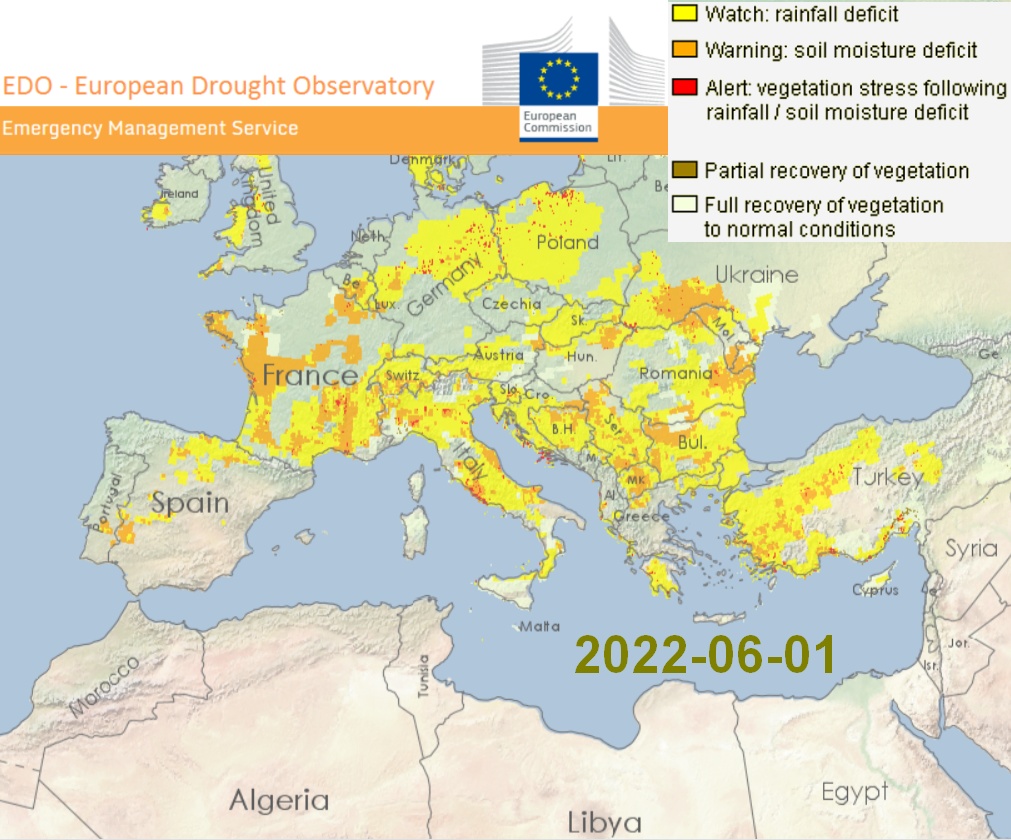
The situation in the major European processing tomato production areas has deteriorated rapidly and sharply in recent years and months, particularly since the beginning of May 2022.
According to Amitom, some localized hailstorms in Greece and France lead to the loss of few thousand tonnes of tomatoes; succession of heat waves and abnormally low temperatures could affect the start dates of the harvest and, despite some concerns about water availability, crop forecasts in the Mediterranean basin however remain practically unchanged at the end of June.
Here is presented the situation for drought over the Mediterranean basin as of June 1, 2022.
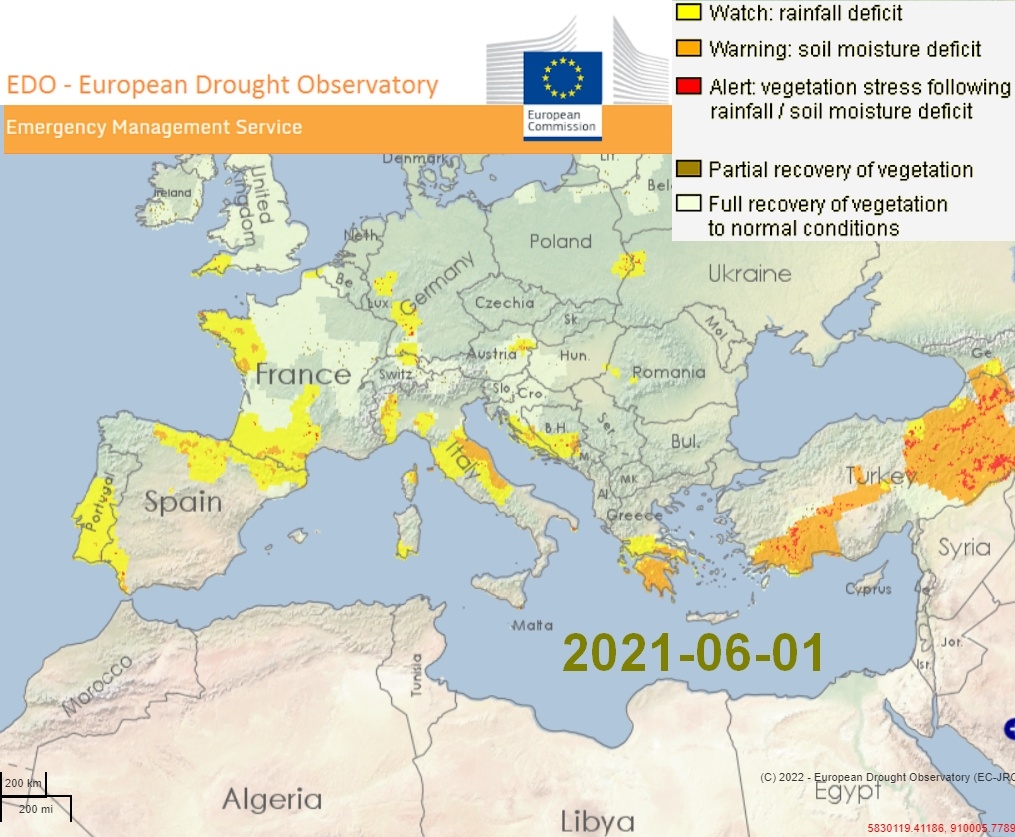
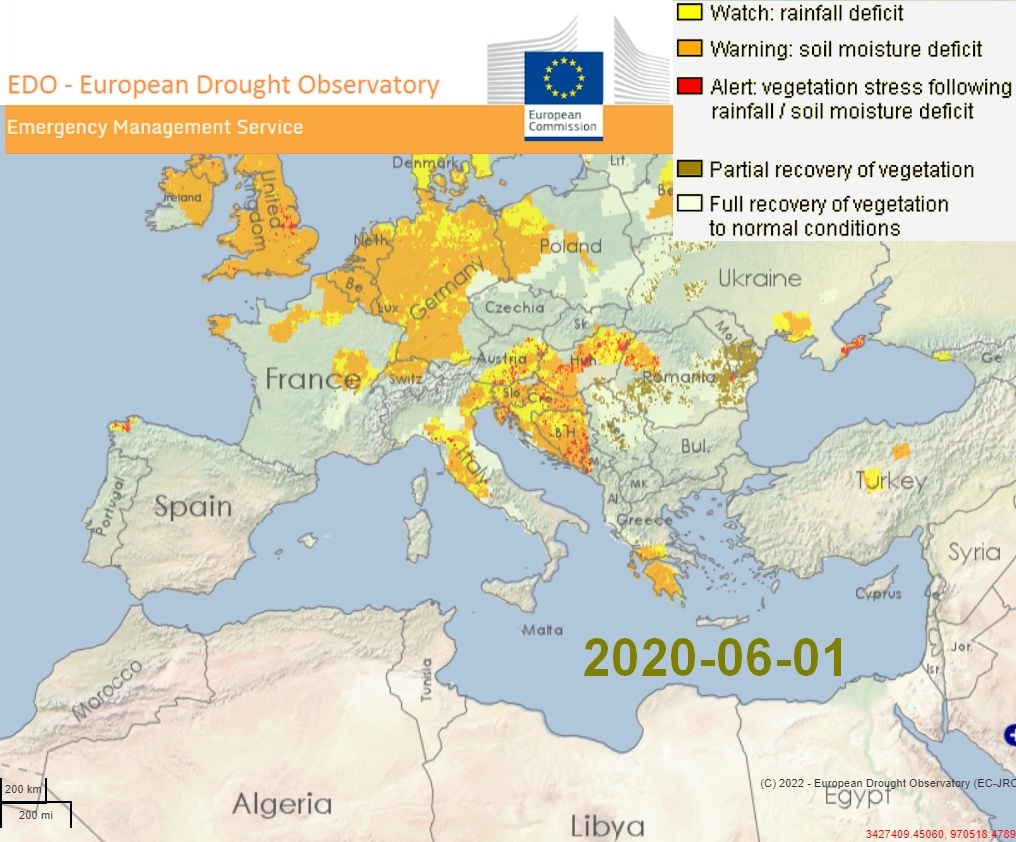
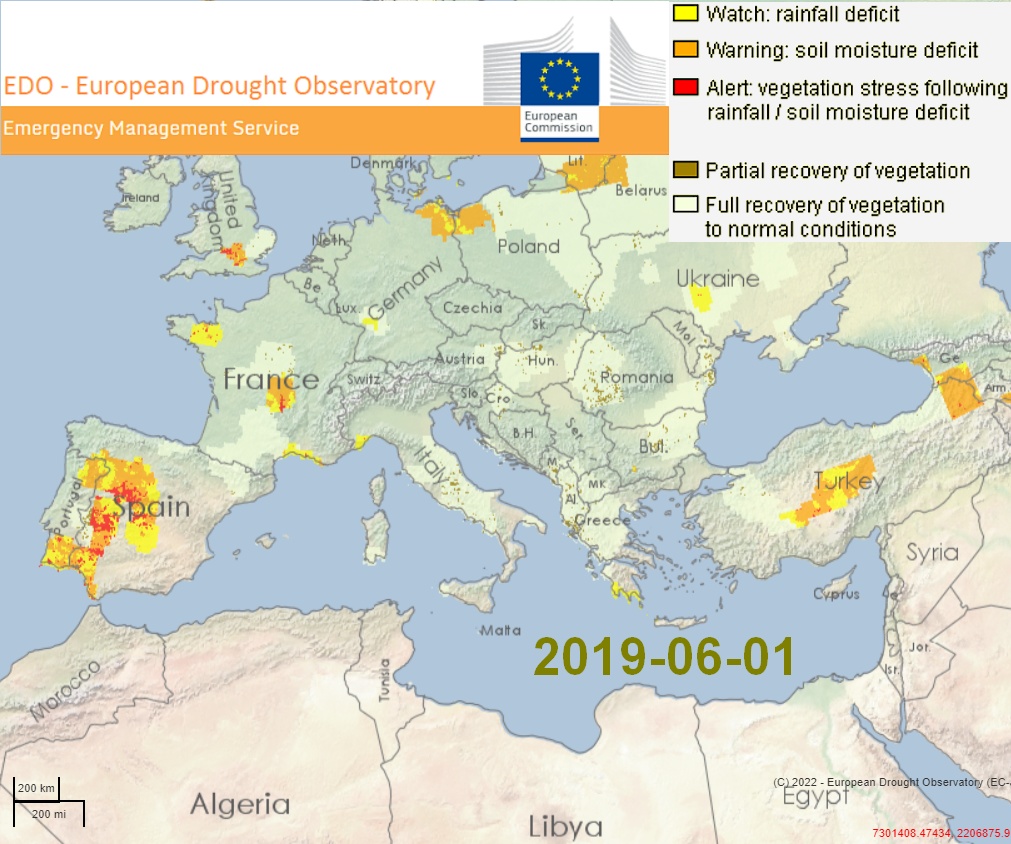
For information and comparison, below are presented the situations for the same region on June 1 of the three previous years:
June 1, 2021
June 1, 2020
June 1, 2019
Some complementary data:
For further information, indicators and reports, please visit: https://edo.jrc.ec.europa.eu/edov2/php/index.php?id=1000
Global Drought Observatory:
https://edo.jrc.ec.europa.eu/gdo/php/index.php?id=2001
Source: edo.jrc.ec.europa.eu